Kirjojen hintavertailu. Mukana 11 244 527 kirjaa ja 12 kauppaa.

Kirjahaku

Etsi kirjoja tekijän nimen, kirjan nimen tai ISBN:n perusteella.

1000 tulosta hakusanalla Darlene J Koop

A Yielded Heart

A Yielded Heart

Darlene J Koop

Lulu.com
2015
nidottu
At eighteen, Seth Taylor is driven by ambition and the allure of success. But when everything begins falling apart and he cannot find answers to his frustration and grief, he runs away, determined to prove that he doesn't need anyone - least of all God. While he finds some success, his life choices are challenged by circumstances, and the love he longs for seems unattainable. What will it take for Seth to discover his calling, and find the peace and fulfillment he desires? This is his journey of faith, a story of struggle and searching, of surrender and of discovering purpose in life.
Path of Healing

Path of Healing

Darlene J Koop

Lulu.com
2017
pokkari
Newlywed Katrina Neillson is excited to start a family. But when disaster strikes and leaves her alone and troubled by unresolved questions about her husband's death, she moves away, seeking a fresh start. As time passes, Katrina's future begins to grow more hopeful, but she is suddenly faced with a painful and seemingly impossible request that tests her faith. Then a serious illness occurs and an unexplained physical pain lingers. What will it take for Katrina to find healing for her soul and learn to love again? This is her story of tragedy and fear, of choosing to forgive, and of finding healing and peace.
The Seeing Gift

The Seeing Gift

Darlene J Koop

Lulu.com
2021
pokkari
A story of a young woman's journey to understanding and accepting her unusual gift of dreams. Follow along with her as she meets many different people and discovers unique opportunities to share with them the life-changing message of God's love.
Nelson Pereira dos Santos

Nelson Pereira dos Santos

Darlene J. Sadlier

University of Illinois Press
2003
nidottu
Nelson Pereira dos Santos is the first book in English to provide a full critical discussion of the films of Latin America’s most important living director. A leader of the Cinema Novo movement, dos Santos is responsible for some of Brazil’s most socially important and artistically engaging movies. Through a discussion of his films, Darlene J. Sadlier chronicles the filmmaker's epic career--his leftist-committed cinema, his concern with the national and the popular, his chameleon style, and his links to canonical Brazilian literature. She charts his moves from neo-realism to Godardian experimentation to a kind of popular realism and includes two highly informative interviews that reveal dos Santos’s cultural, intellectual, and philosophical formation.
The Lilly Library from a to Z

The Lilly Library from a to Z

Darlene J. Sadlier

Indiana University Press
2019
sidottu
What do locks of Edgar Allan Poe's hair, Sylvia Plath's attractive handmade paper dolls, John Ford's Oscars, and Ian Fleming's James Bond 007 cigars have in common? They are just a few of the fascinating objects found in the world-famous Lilly Library, located on the campus of Indiana University Bloomington. In this beautifully illustrated A-to-Z volume, Darlene J. Sadlier journeys through the library's wide-ranging collections to highlight dozens of intriguing items and the archives of which they are a part. Read about life and death masks of John Keats, Abraham Lincoln, and Theodore Dreiser; Walt Whitman's last pencil; and vintage board games, mechanical puzzles, and even comic books. Among the more peculiar items are a pair of elk teeth and an eerily realistic wall-mount bust of Boris Karloff. Sadlier writes engagingly about the Lilly Library's major historical collections, which include Civil War diaries and a panopticon of the war called the Myriopticon; War of 1812 payment receipts to spies; and the World War II letters and V-mail of journalist Ernie Pyle. This copiously illustrated, entertaining, and educational book will inspire you to take your own journey and discover for yourself the wonders of the Lilly Library.
Brazil Imagined

Brazil Imagined

Darlene J. Sadlier

University of Texas Press
2008
pokkari
The first comprehensive cultural history of Brazil to be written in English, Brazil Imagined: 1500 to the Present captures the role of the artistic imaginary in shaping Brazil's national identity. Analyzing representations of Brazil throughout the world, this ambitious survey demonstrates the ways in which life in one of the world's largest nations has been conceived and revised in visual arts, literature, film, and a variety of other media.Beginning with the first explorations of Brazil by the Portuguese, Darlene J. Sadlier incorporates extensive source material, including paintings, historiographies, letters, poetry, novels, architecture, and mass media to trace the nation's shifting sense of its own history. Topics include the oscillating themes of Edenic and cannibal encounters, Dutch representations of Brazil, regal constructs, the literary imaginary, Modernist utopias, "good neighbor" protocols, and filmmakers' revolutionary and dystopian images of Brazil. A magnificent panoramic study of race, imperialism, natural resources, and other themes in the Brazilian experience, this landmark work is a boon to the field.
Americans All

Americans All

Darlene J. Sadlier

University of Texas Press
2012
nidottu
Cultural diplomacy-“winning hearts and minds” through positive portrayals of the American way of life-is a key element in U.S. foreign policy, although it often takes a backseat to displays of military might. Americans All provides an in-depth, fine-grained study of a particularly successful instance of cultural diplomacy-the Office of the Coordinator of Inter-American Affairs (CIAA), a government agency established by President Franklin D. Roosevelt in 1940 and headed by Nelson A. Rockefeller that worked to promote hemispheric solidarity and combat Axis infiltration and domination by bolstering inter-American cultural ties.Darlene J. Sadlier explores how the CIAA used film, radio, the press, and various educational and high-art activities to convince people in the United States of the importance of good neighbor relations with Latin America, while also persuading Latin Americans that the United States recognized and appreciated the importance of our southern neighbors. She examines the CIAA’s working relationship with Hollywood’s Motion Picture Society of the Americas; its network and radio productions in North and South America; its sponsoring of Walt Disney, Orson Welles, John Ford, Gregg Toland, and many others who traveled between the United States and Latin America; and its close ties to the newly created Museum of Modern Art, which organized traveling art and photographic exhibits and produced hundreds of 16mm educational films for inter-American audiences; and its influence on the work of scores of artists, libraries, book publishers, and newspapers, as well as public schools, universities, and private organizations.
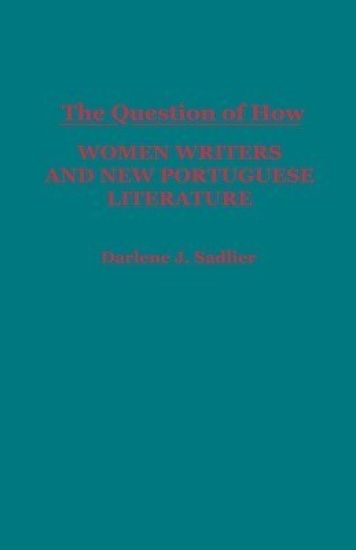
The Question of How

The Question of How

Darlene J. Sadlier

Praeger Publishers Inc
1989
sidottu
Sadlier's study of women writers in Portugal after the 1974 revolution is a useful contribution to a neglected European literature, in which women are making a forceful contribution; and it is one of the few sources of such information in English. . . . Works analyzed include the famous Novas Cartas Portuguesas (Lisbon, 1972) by Maria Isabel Barreno, Maria Teresa Horta, and Maria Velho da Costa, Xerazade e os outros (Lisbon, 1964) by Fernanda Botelho, Lidia Jorge's O Dia dos Prodigios (2nd ed., 1980), Helia Correia's Montedemo (Lisbon, 1983), and Teolindo Gersao's O Silencio (1981). These studies are followed by an appendix on the background of women's rights and feminism in Portugal. Although Sadlier has chosen these works because of their common tradition of literary modernism and aesthetic experimentation, her readings are descriptive rather than theoretical and provide an excellent introduction to representative works and themes of major contemporary women writers. ChoiceContemporary Portugal offers a fascinating mixture of social revolution, literary experiment, and feminist practice. Since the revolution in 1974, the country has produced a large number of writings by and about women. In fact, for the first time in Portuguese history, there are at least as many women as men writing books.The Question of How: Women Writers and New Portuguese Literature presents an analysis of texts by the Three Marias, Fernanda Botelho, Lidia Jorge, Helia Correia, and Teolinda Gersao. The first book to be written in English on contemporary Portuguese women writers, it investigates what Portuguese literary women have to say about their culture. In addition to showing how specific works of fiction are inflected by gender and ideology, Sadlier also presents a brief historical account of feminism in Portugal. The only book of its kind in the field, The Question of How: Women Writers and the New Portuguese Literature will be of interest to both students and specialists of Hispanic literature, West European studies, Women's studies, literary theory, and criticism.
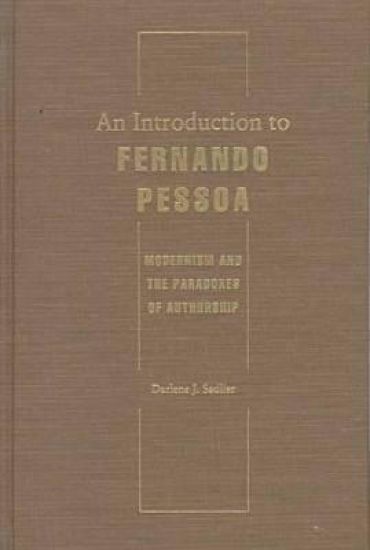
An Introduction to Fernando Pessoa

An Introduction to Fernando Pessoa

Darlene J. Sadlier; S.E. Gontarski

University Press of Florida
1998
sidottu
A commentary on Pessoa's work exploring some of the cultural, political and personal implications of the artistic impersonation that made him a figure of modern literature. The book demonstrates the scope of Pessoa's writing and traces the ways in which his four main ""authors"" are related.
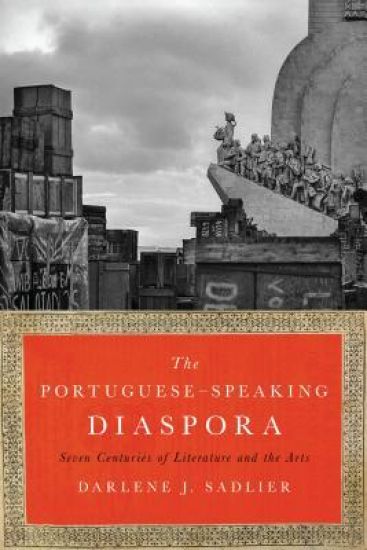
The Portuguese-Speaking Diaspora

The Portuguese-Speaking Diaspora

Darlene J. Sadlier

University of Texas Press
2016
nidottu
Long before the concept of “globalization,” the Portuguese constructed a vast empire that extended into Africa, India, Brazil, and mid-Atlantic territories, as well as parts of China, Southeast Asia, and Japan. Using this empire as its starting point and spanning seven centuries and four continents, The Portuguese-Speaking Diaspora examines literary and artistic works about the ensuing diaspora, or the dispersion of people within the Portuguese-speaking world, resulting from colonization, the slave trade, adventure seeking, religious conversion, political exile, forced labor, war, economic migration, and tourism.Based on a broad array of written and visual materials, including historiography, letters, memoirs, plays, poetry, fiction, cartographic imagery, paintings, photographs, and films, The Portuguese-Speaking Diaspora is the first detailed analysis of the different and sometimes conflicting cultural productions of the imperial diaspora in its heyday and an important context for understanding the more complex and broader-based culture of population travel and displacement from the former colonies to present-day “homelands.” The topics that Darlene J. Sadlier discusses include exploration and settlement by the Portuguese in different parts of the empire; the Black Atlantic slave trade; nineteenth-century travel and Orientalist imaginings; the colonial wars; and the return of populations to Portugal following African independence. A wide-ranging study of the art and literature of these and other diasporic movements, this book is a major contribution to the growing field of Lusophone studies.
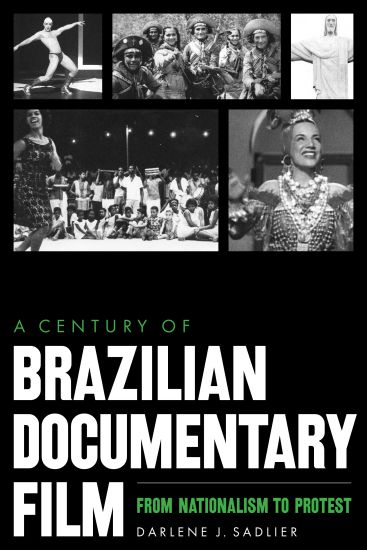
A Century of Brazilian Documentary Film – From Nationalism to Protest
Since the late nineteenth century, Brazilians have turned to documentaries to explain their country to themselves and to the world. In a magisterial history covering one hundred years of cinema, Darlene J. Sadlier identifies Brazilians' unique contributions to a diverse genre while exploring how that genre has, in turn, contributed to the making and remaking of Brazil.A Century of Brazilian Documentary Film is a comprehensive tour of feature and short films that have charted the social and political story of modern Brazil. The Amazon appears repeatedly and vividly. Sometimes-as in a prize-winning 1922 feature-the rainforest is a galvanizing site of national pride; at other times, the Amazon has been a focus for land-reform and Indigenous-rights activists. Other key documentary themes include Brazil's swings from democracy to dictatorship, tensions between cosmopolitanism and rurality, and shifting attitudes toward race and gender. Sadlier also provides critical perspectives on aesthetics and media technology, exploring how documentaries inspired dramatic depictions of poverty and migration in the country's Northeast and examining Brazilians' participation in streaming platforms that have suddenly democratized filmmaking.