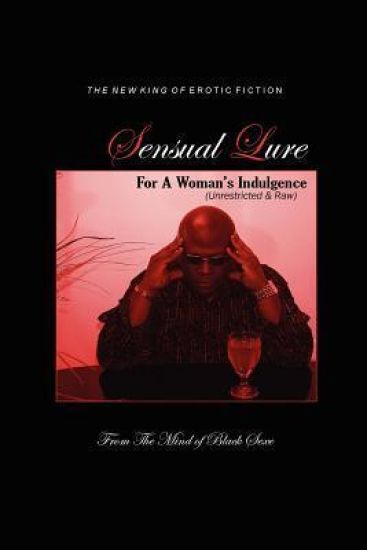
NYMPH. . . . by modern psychology as referring to a female being who "desires to engage in human sexual behavior at a level high enough to be considered clinically significant". But in reasoned sanity we see it as a deepening desire to fulfill and please a lingering nostalgia that rips at the core of who you are and what you are This fictional tale of outlandish passion for sex, intimacy and love will concur the thoughts that whatever you call it, you will know its "Damn" good Now can one have an erratic behavior and still keep it confined to the inner realm of your own relationship and not go outside of it? Well it's soon to be told and this you shall see. . . . .
"There are three main types of money: currency, bank deposits, and central bank reserves. ...Most money in the modern economy is in the form of bank deposits, which are created by commercial banks themselves." Bank of England, Money in the Modern Economy (2014)"The most outstanding fact of the last depression is the destruction of 8 billion dollars - over a third - of our "check-book money" - demand deposits." Irving Fisher, 100% Money and the Public Debt (1936)"The process by which banks create money is so simple that the mind is repelled." John K Galbraith, Money: Whence it Came, Where it Went (1975)Commercial banks create the money supply in the form of the deposit account money supply: by making repayable loans of newly-created bank deposits to private sector loan account debtors and to government bond debtors.Making a bank loan or bond purchase creates a linked pair of credits/debts: a new spendable, cashable, credit balance (a new bank deposit: e.g. ]$1000) in the debtor's bank deposit account; and an equal new interest-bearing repayable debt balance (-$1000) in the debtor's bank loan or bond account.Debtors spend their new bank loans and bond sale proceeds.Debtors pay the new credit balances to payees - by check, direct deposit, online banking, debit card, etc - within the bank-operated payments system of debiting payer accounts and crediting payee accounts.The new credit balances are debited out of the debtors' bank deposit accounts and credited into the first payees' bank deposit accounts.That's where the deposit account money supply - the spendable, investible, savable (and cashable) credit balances in our bank deposit accounts - comes from, in the first place.Then payees create the spendable cash money supply by making cash withdrawals, and paying with debits to our deposit account credit balances.But most bank deposits are never cashed out.Most money never exists in any other form than credit balances in payees' bank deposit accounts.Debtors owe all the credit balances back to their creditor-banks, as payment of the debtors' loan account and bond debt balances.Repaying a bank loan; or redeeming a bank-held bond; un-creates - extinguishes; cancels out to $0/$0 - the deposit account credit balance (+$1000) and the loan account or bond debt balance (-$1000) that were created by making the bank loan or bond purchase.The deposit account money supply - which is over 95% of all money that exists - only exists so long as debtors' debts remain unpaid. But debtors can't pay their loan account and bond debts because payees have all the deposit account money.The Road to Debt Bondage describes how the commercial banks' debt-based "repayable bank loan and bond purchase" money supply creation monopoly creates ever-increasing totals of payees' bank deposit account balances that are owed back to banks as payment of debtors' unpayable loan account and bond debts, until debtors finally default en masse and the banking system descends into a financial crisis of creditors' uncollectable money that is owed as debtors' unpayable debts.Financial crisis is historically resolved by writing off our bank deposit account balances to relieve the commercial banking system of its unpayable deposit liability debts.Which is what bankruptcy Trustees did in the 1930s, and the Dodd-Frank depositor bail-ins program plans to do this time.Which plunges the spending-driven producer-consumer economy into Debt-Deflation Depression by writing off ruinous amounts of commercial banks' unpayable deposit liability debts - which used to be our spendable deposit account "money supply."Monetary system reform - government issuance of debt-free (non-repayable) money that breaks the banks' longstanding monopoly of debt-based money supply issuance - can solve the unpayable debts problem, prevent banking system failure, and eliminate the need to write off our 'money in the bank'.
This is the first publication in the Democratic Marxism Series, which seeks to elaborate the social theorising and politics of Democratic Marxism. Marx’s writings on and ideas about social transformation have figured prominently in the global Left imagination for more than 150 years. At the end of the twentieth century a number of factors seemed to converge to mark the end of Marxism’s influence on the world and, as a result, by the late twentieth century the relevance of Marxism was under question by both the Left (including Marxists) and Right. The decline was relatively short-lived, however, as the 2008 economic crisis brought into sharp relief the catastrophic effects of financialised capitalism and the need to (re)find alternatives. In the second decade of the twenty-first century, the revival of Marxism is finding new sources of inspiration that revolve around four primary factors: the importance of democracy for an emancipatory project; the ecological limits of capitalism; the crisis of global capitalism; and learning lessons from the failures of Marxist-inspired experiments. This is not simply a return to nineteenth and twentieth century understandings of Marxism. Rather, the twenty-first century has seen enormous creativity from movements that seek to overcome the weaknesses of the past by forging fundamentally new approaches to politics that draw inspiration from Marxism along with many other anti-capitalist traditions such as feminism, ecology, anarchism and indigenous traditions. The Marxism of many of these movements is not dogmatic or prescriptive, but rather open, searching, dialectical, humanist, utopian and inspirational. This edited volume introduces some contemporary approaches to Marxism and explores some of the ways in which Marxism has been used in Africa.
Darryl Cook is a man who seems to have everything: a quiet home in Western Oregon, a beautiful wife, and a lot of friends to fuck her while he watches. But as he explores the cuckolding lifestyle, he finds himself tugging at threads that threaten to unravel his marriage, his town, and himself. With empathy and humor, debut author Jackie Ess crafts a kaleidoscopic meditation on marriage, manhood, dreams, basketball, sobriety, and the secret lives of Oregonians.
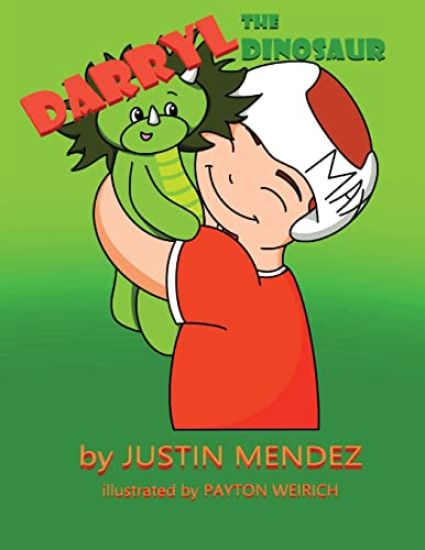
Wonderfully illustrated, Darryl the Dinosaur tell the introductory story of a dinosaur stuffy who longs for a child to take him home. An error in manufacturing was left him unwanted and unloved, until one day a special boy comes into his life to show him love and acceptance. A story of accepting and appreciating the differences in each of us.
Darryl's Reunion is the story of a young boy, killed in his first year of high school. His murder goes unsolved for nineteen years. The interest of the town's newest detective is drawn because it is an unsolved murder and peaked when he finds out the victim's intended graduating class from the local high school is holding it's fifteenth year reunion. Detective Ian McLarry meets with the reunion committee and begins asking questions. "We know who did it," claim the committee members, "We just can't prove it."As detective McLarry begins his investigation, one of the committee members begins their own plan to find justice.
Following a busy evening playing pirates, Darryl M. Jean and his friends were exhausted. They lay on the grass looking at the blue sky and the moving clouds. After a long moment observing the scenery, they discussed what they wanted to be when they grew up. The quietest of the boys, when pressed by his friends on what he wanted to be when he grew up, he simply replied that he wanted to be a vampire. The boys were amazed. Never had they thought of that. Prince mentioned a vampire was spotted at the graveyard, and he planned to meet him there. The children quickly gave way to their imagination. They formed a vampire club and all agreed to accompany Prince for the initiation. The children woke up in the middle of the night to meet the vampire, but when they were spotted in the streets and later at the graveyard, the whole town was set in terror.
This book is suitable for ages 5 to 7 years. Under the rule of the just king Andrew the lion, all animals lived peacefully in a thick green forest. Darryl the deer needed to go to another forest called Pretty Leaves to find a rare healing plant which would help his mother to get well. Freddy the fox wanted to go merely to have other animals talk about how brave he was. Under the protection the king's name provided, Darryl was saved from all kinds of danger and welcomed by other animals on his journey. Freddy, however, had to deal with all the troubles by himself.
Darryl is one of the most popular journalists in Openworld thanks to his power to travel between realities. His adventures are legendary, but he takes his role as a reporter seriously. When he investigates the disappearance of a Giant, he uncovers a conspiracy by a mysterious individual who would exploit magic for unknown purposes. Based on the popular European YA novel series by Olivier Peru, DARRYL OPENWORLD is an imaginative adventure through a magic-filled world of anachronistic beauty and intrigue, like a steampunk Harry Potter.
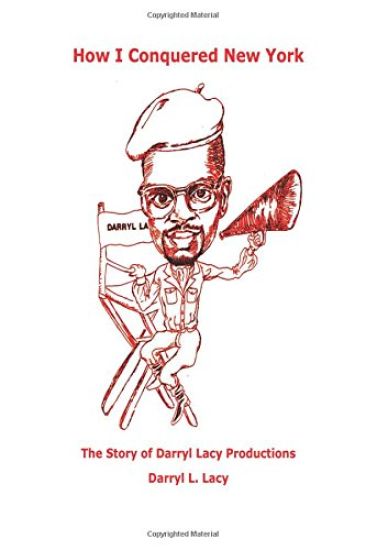
I was an actor, writer, director, and producer when I founded Darryl Lacy Productions in Harlem, New York in 1987. How I Conquered New York: The Story of Darryl Lacy Productions tells how I developed the theater company and became a performing arts manager.