"A black comedy about the AIDS crisis that is by turns raunchy, hilarious, and heartrending"--The Advocate The national bestselling novel of a young gay man living in NYC at the height of the AIDS epidemic. At times dark, at others funny, and as important today as when it was first published, Eighty-Sixed follows the live of B.J. Rosenthal as he searches for a boyfriend and tries to find meaning and purpose within a city suffering from the fear, loss, loneliness that accompanies the HIV/AIDS crisis. Over only a few years, B.J.'s life changes shape dramatically, and he finds himself navigating the ever more frightening landscape of an epidemic-rattled 1980s NYC, where he's as likely to go on a hook up with a new prospect as he is to attend a funeral for a friend. This must-read piece of classic LGBTQIA+ literature provides a crucial look at what it meant to be gay and seeing love, safety, and community in a rapidly shifting and increasingly dangerous world.
"A funny, often moving book about being single, Jewish, gay, and HIV-positive . . . both urgent and convincing."--The New York Times Book Review In this sequel to David Feinberg's national bestseller Eighty-Sixed, B.J. Rosenthal navigates life with an HIV-positive diagnosis amidst the "constant tide of deaths" in New York City during the AIDS crisis.
“The ultimate gadlfly of the epidemic . . . here’s one book that truly deserves a place in a time capsule.”—Armistead Maupin "This is as close to the truth as I can get," writes David Feinberg in what he calls his "personal Portrait of the Artist as a Young Diseased Jew Fag Pariah." Queer and Loathing is a collection of autobiographical essays, gonzo journalism, and demented Feinbergian lists about AIDS activism and living, writing, and dying with AIDS.
Chronicles the experiences of the gay community as seen through the eyes of B.J. Rosenthal, whose life and world change drastically as AIDS has its impact on gays and nongays alike. Reprint.
David Brown Milne (1882 - 1953) was one of the great artists of his generation in North America, according to the American art critic Clement Greenberg, who compared Milne with John Marin and Marsden Hartley. This comprehensive and fully illustrated Catalogue Raisonné of Milne's paintings is the first catalogue on this scale to be published for any Canadian artist, and it will be a standard for many years to come. The nearly three thousand paintings in oil and watercolour that David Milne produced in his long career are presented here in chronological order. There are also two hundred large-format colour reproducitons of his work. Milne has long been a favourite of artists, art historians, curators, and collectors, and his high intelligence and fine sensibility are evident on every page of this remarkable work. Over a span of more than fifty years Milne devoted himself to painting and also to writing about painting - assessing his achievements against his goals, analysing aesthetic problems, describing a sequence or process, illuminating the origins of his inspiration. He wrote many hundreds of pages of notes, letters, and autobiographical accounts, most of them directly or indirectly about his art. Substantial quotations from his writings make the Catalogue Raisonné a highly readable reference work. Each entry in the catalogue contains a black-and-white reproduction of the work, the basic information about the medium, size, and date, its full provenance and exhibition history, all printed references to it, a complete list of the documents in which it is referred to, and supplementary information, such as comments by the authors, related drawings, and cross-references, as appropriate. Short essays introduce each period of Milne's life, providing useful biographical details and information on the paintings and their subsequent history. The Catalogue Raisonné also contains the major lists of paintings prepared by Milne over the years, key documents for any study of his work. There is a list of nearly six hundred exhibitions in which his work appeared with full details and a 1600-item bibliography. A comprehensive title index is also included.
David B didn't want to go home to Comfy Cove. He wanted to stay up late, like the big boats. As day turned to night, David B sang, "chug-chug-chug" in the moonlight. When the moon set he remembered a tale of boat-eating rocks that would come to life on moonlit nights. In the dark, he hears something. It's not the scary rocks. It's something else
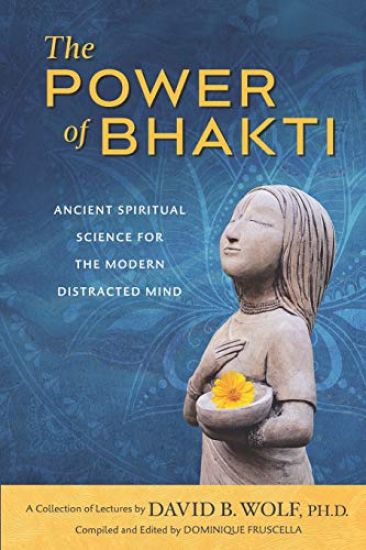
What happens when a handyman dad and a homeschooling mom invite the Hare Krishnas into their living room? Once a month. For 5 years... What is so captivating about the teachings of A.C. Bhaktivedanta Swami Prabhupāda, that Gaetano, Dominique, and their two young children embark on a new spiritual path? One that clarifies the terms yoga, dharma, karma, mantra, and the elusive mysterious person God... The Power of Bhakti reveals it all. This book is a birds-eye view into Gaetano's and Dominique's living room, when they first encountered "bhakti-yoga" and experimented with mantra meditation to awaken spiritual consciousness. Eight extraordinary gatherings, facilitated by Dr. David Wolf. DISCOVER FOR YOURSELF: - How to remember your life purpose, up to 24 hours per day- What to accept and what to reject if you want to be an instrument of God- Why empathy is essential for spiritual transformation- How to not crash and burn on the path to enlightenment- How to cultivate mastery in self-realization, in the midst of our fast-paced world George Harrison wrote, "...the maha-mantra has been prescribed as the easiest and surest way for attaining God-Realization in this present age." With The Power of Bhakti learn to consciously guide and direct your mind, instead of letting it control you, through the sublime and ancient practice of maha-mantra meditation. David B. Wolf, Ph.D., is the founder of Satvatove Institute, author of Relationships That Work: The Power of Conscious Living, and a world leader in the field of mantra research. He has practiced and taught bhakti-yoga since the early 1980s. David's mission is to authentically represent the teachings and spirit of A.C. Bhaktivedanta Swami Prabhupāda, the foremost scholar and proponent of the Vedas in modern times.
This book is a selection of articles by David Zilberman, a prolific author, whose tragic untimely death did not allow to finish many of his undertakings. Zilberman’s work represents a fresh word in the way of philosophizing or philosophy-building and the technique of modal methodology. This book comprises of thirteen independent articles that are not related by content. The point of thematic convergence of these articles is the way they reflect the new way of methodological thinking through the application and benefits of modalization or modal methodology that unfolds unbound possibilities of philosophic elaborations. By shifting constantly from one position to another, Zilberman disclosed the antinomicity of all types of thought. Such an approach led him to outline for the first time his major attempt to start creating not "systems" but "sums" of philosophies so that the philosophical activity would be able to re-emerge on the slopes of such "sums." The book can be used as a starting point of a discussion, especially in study of philosophy. We imagine it can be used in undergraduate classes on World Philosophies or Intercultural Philosophy courses. With that, it can serve as a useful resource for adding intercultural elements into Western-centered courses.
This book is a selection of articles by David Zilberman, a prolific author, whose tragic untimely death did not allow to finish many of his undertakings. Zilberman’s work represents a fresh word in the way of philosophizing or philosophy-building and the technique of modal methodology. This book comprises of thirteen independent articles that are not related by content. The point of thematic convergence of these articles is the way they reflect the new way of methodological thinking through the application and benefits of modalization or modal methodology that unfolds unbound possibilities of philosophic elaborations. By shifting constantly from one position to another, Zilberman disclosed the antinomicity of all types of thought. Such an approach led him to outline for the first time his major attempt to start creating not "systems" but "sums" of philosophies so that the philosophical activity would be able to re-emerge on the slopes of such "sums." The book can be used as a starting point of a discussion, especially in study of philosophy. We imagine it can be used in undergraduate classes on World Philosophies or Intercultural Philosophy courses. With that, it can serve as a useful resource for adding intercultural elements into Western-centered courses.
In 1982, David B. Barrett released his 1,000-page World Christian Encyclopedia, which presented a comprehensive quantitative assessment of World Christianity for the first time. This book is the first historical project to analyze Barrett’s archival materials, which shed light not only on the production of the Encyclopedia, but more importantly, on the development of World Christianity as a discipline and the importance of both African Christianity and quantitative perspectives in its history. This book captures innovations at the intersection of World Christianity, mission studies, and the sociology of religion – the kind of interdisciplinary research that makes World Christianity studies unique.