Kirjojen hintavertailu. Mukana 11 244 527 kirjaa ja 12 kauppaa.

Kirjahaku

Etsi kirjoja tekijän nimen, kirjan nimen tai ISBN:n perusteella.

1000 tulosta hakusanalla David Brakke

The Gospel of Judas

The Gospel of Judas

David Brakke

YALE UNIVERSITY PRESS
2022
sidottu
A new translation and commentary on the extracanonical Coptic text that describes Judas’ special status among Jesus’ disciples Since its publication in 2006, The Gospel of Judas has generated remarkable interest and debate among scholars and general readers alike. In this Coptic text from the second century C.E., Jesus engages in a series of conversations with his disciples and with Judas, explaining the origin of the cosmos and its rulers, the existence of another holy race, and the coming end of the current world order. In this new translation and commentary, David Brakke addresses the major interpretive questions that have emerged since the text’s discovery, exploring the ways that The Gospel of Judas sheds light on the origins and development of gnostic mythology, debates over the Eucharist and communal authority, and Christian appropriation of Jewish apocalyptic eschatology. The translation reflects new analyses of the work’s genre and structure, and the commentary and notes provide thorough discussions of the text’s grammar and numerous lacunae and ambiguities.
Demons and the Making of the Monk

Demons and the Making of the Monk

David Brakke

Harvard University Press
2006
sidottu
Demons--whether in embodied form or as inward temptation--make vivid appearances in early Christian monastic literature. In this finely written study of demonology and Christian spirituality in fourth- and fifth-century Egypt, David Brakke examines how the conception of the monk as a holy and virtuous being was shaped by the combative encounter with demons. Brakke studies the "making of the monk" from two perspectives. First, he describes the social and religious identities that monastic authors imagined for the demon-fighting monk: the new martyr who fights against the pagan gods, the gnostic who believes he knows both the tricks of the demons and the secrets of God, and the prophet who discerns the hidden presence of Satan even among good Christians. Then he employs recent theoretical ideas about gender and racial stereotyping to interpret accounts of demon encounters, especially those in which demons appear as the Other--as Ethiopians, as women, or as pagan gods.Drawing on biographies of exceptional monks, collections of monastic sayings and stories, letters from ascetic teachers to their disciples, sermons, and community rules, Brakke crafts a compelling picture of the embattled religious celibate. Demons and the Making of the Monk is an insightful and innovative exploration of the development of Christian monasticism.
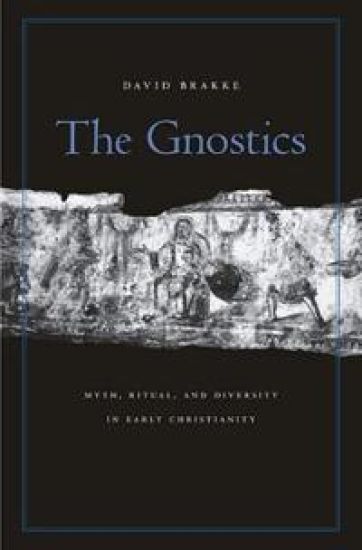
The Gnostics

The Gnostics

David Brakke

Harvard University Press
2012
nidottu
Who were the Gnostics? And how did the Gnostic movement influence the development of Christianity in antiquity? Is it true that the Church rejected Gnosticism? This book offers an illuminating discussion of recent scholarly debates over the concept of “Gnosticism” and the nature of early Christian diversity. Acknowledging that the category “Gnosticism” is flawed and must be reformed, David Brakke argues for a more careful approach to gathering evidence for the ancient Christian movement known as the Gnostic school of thought. He shows how Gnostic myth and ritual addressed basic human concerns about alienation and meaning, offered a message of salvation in Jesus, and provided a way for people to regain knowledge of God, the ultimate source of their being.Rather than depicting the Gnostics as heretics or as the losers in the fight to define Christianity, Brakke argues that the Gnostics participated in an ongoing reinvention of Christianity, in which other Christians not only rejected their ideas but also adapted and transformed them. This book will challenge scholars to think in news ways, but it also provides an accessible introduction to the Gnostics and their fellow early Christians.
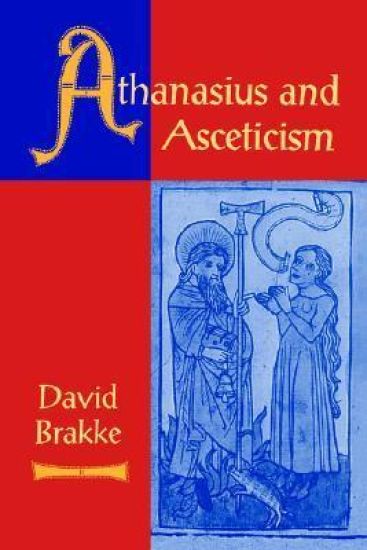
Athanasius and Asceticism

Athanasius and Asceticism

David Brakke

Johns Hopkins University Press
1999
pokkari
It is often assumed that early Christian asceticism drew its followers completely away from worldly concerns into the realm of pure spirituality. But the life and thought of Athanasius, Bishop of Alexandria (AD 328-73), shows just how worldly-and deeply political-ascetic theology could be. David Brakke examines this important church leader's efforts to reconcile asceticism's compelling intensity with the more conventional needs of the families and everyday believers on whom the Church relied for support and stability. Brakke describes how Athanasius joined with other fourth century bishops to create a strongly unified Christian church in Egypt, bringing both the solitary monks of the desert and the female ascetics in the cities under church authority by organizing them into auxiliaries of the emerging local parishes. By carefully integrating ascetic values and practices into a comprehensive vision of the church as a heavenly commonwealth, Brakke argues, Athanasius unified a community of Christians practicing diverse versions of their faith and helped to establish the lines of administrative and pastoral authority that would be essential to the church's future success. This illuminating study of the turmoil of fourth century Christianity also includes the first English translations of many of Athanasius's ascetic and pastoral writings.
Shifting Cultural Frontiers in Late Antiquity

Shifting Cultural Frontiers in Late Antiquity

David Brakke; Deborah Deliyannis

Routledge
2016
nidottu
Shifting Cultural Frontiers in Late Antiquity explores the transformation of classical culture in late antiquity by studying cultures at the borders - the borders of empires, of social classes, of public and private spaces, of literary genres, of linguistic communities, and of the modern disciplines that study antiquity. Although such canonical figures of late ancient studies as Augustine and Ammianus Marcellinus appear in its pages, this book shifts our perspective from the center to the side or the margins. The essays consider, for example, the ordinary Christians whom Augustine addressed, the border regions of Mesopotamia and Vandal Africa, 'popular' or 'legendary' literature, and athletes. Although traditional philology rightly underlies the work that these essays do, the authors, several among the most prominent in the field of late ancient studies, draw from and combine a range of disciplines and perspectives, including art history, religion, and social history. Despite their various subject matters and scholarly approaches, the essays in Shifting Cultural Frontiers coalesce around a small number of key themes in the study of late antiquity: the ambiguous effects of 'Christianization,' the creation of new literary and visual forms from earlier models, the interaction and spread of ideals between social classes, and the negotiation of ethnic and imperial identities in the contact between 'Romans' and 'barbarians.' By looking away from the core and toward the periphery, whether spatially or intellectually, the volume offers fresh insights into how ancient patterns of thinking and creating became reconfigured into the diverse cultures of the 'medieval.'
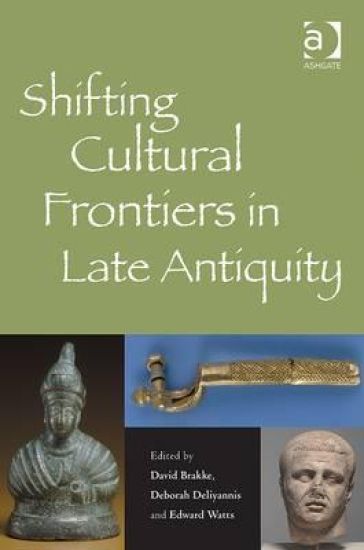
Shifting Cultural Frontiers in Late Antiquity

Shifting Cultural Frontiers in Late Antiquity

David Brakke; Deborah Deliyannis

Ashgate Publishing Limited
2012
sidottu
Shifting Cultural Frontiers in Late Antiquity explores the transformation of classical culture in late antiquity by studying cultures at the borders - the borders of empires, of social classes, of public and private spaces, of literary genres, of linguistic communities, and of the modern disciplines that study antiquity. Although such canonical figures of late ancient studies as Augustine and Ammianus Marcellinus appear in its pages, this book shifts our perspective from the center to the side or the margins. The essays consider, for example, the ordinary Christians whom Augustine addressed, the border regions of Mesopotamia and Vandal Africa, 'popular' or 'legendary' literature, and athletes. Although traditional philology rightly underlies the work that these essays do, the authors, several among the most prominent in the field of late ancient studies, draw from and combine a range of disciplines and perspectives, including art history, religion, and social history. Despite their various subject matters and scholarly approaches, the essays in Shifting Cultural Frontiers coalesce around a small number of key themes in the study of late antiquity: the ambiguous effects of 'Christianization,' the creation of new literary and visual forms from earlier models, the interaction and spread of ideals between social classes, and the negotiation of ethnic and imperial identities in the contact between 'Romans' and 'barbarians.' By looking away from the core and toward the periphery, whether spatially or intellectually, the volume offers fresh insights into how ancient patterns of thinking and creating became reconfigured into the diverse cultures of the 'medieval.'
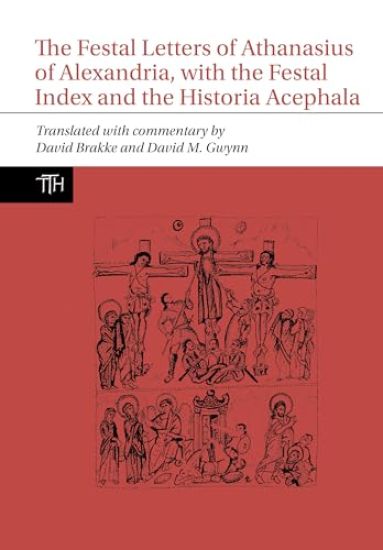
The Festal Letters of Athanasius of Alexandria, with the Festal Index and the Historia Acephala
Athanasius of Alexandria (bishop 328-373) is one of the great personalities of late-antique Christianity, and he is well-known to theologians and historians alike as a champion of orthodoxy against the ‘Arian’ heresy and a proponent of the ascetic life. His Festal Letters, written annually to announce the date of Easter, offer unique insight into another side of this towering figure—his work as a pastor and leader of the Egyptian Church. These letters have often been neglected, because they survive fragmentarily in Syriac and Coptic translations and nearly all the original Greek text has been lost. Yet his Easter messages provide a priceless glimpse into Athanasius’ thought and how a leading fourth-century bishop confronted the pastoral challenges of a rapidly changing world. This book presents the first complete English translation of all the known fragments of the Festal Letters. Introductions and annotations give the essential historical and literary background to the texts and how they illuminate Athanasius’ teachings and practice. The letters are supplemented by fresh translations of the Syriac Festal Index and the incomplete Historia acephala preserved in Latin, which furnish crucial evidence for the chronology of Athanasius’ career. Taken together, these works afford a more comprehensive picture of Athanasius as both bishop and pastor.
The Festal Letters of Athanasius of Alexandria, with the Festal Index and the Historia Acephala
Athanasius of Alexandria (bishop 328-373) is one of the great personalities of late-antique Christianity, and he is well-known to theologians and historians alike as a champion of orthodoxy against the ‘Arian’ heresy and a proponent of the ascetic life. His Festal Letters, written annually to announce the date of Easter, offer unique insight into another side of this towering figure—his work as a pastor and leader of the Egyptian Church. These letters have often been neglected, because they survive fragmentarily in Syriac and Coptic translations and nearly all the original Greek text has been lost. Yet his Easter messages provide a priceless glimpse into Athanasius’ thought and how a leading fourth-century bishop confronted the pastoral challenges of a rapidly changing world. This book presents the first complete English translation of all the known fragments of the Festal Letters. Introductions and annotations give the essential historical and literary background to the texts and how they illuminate Athanasius’ teachings and practice. The letters are supplemented by fresh translations of the Syriac Festal Index and the incomplete Historia acephala preserved in Latin, which furnish crucial evidence for the chronology of Athanasius’ career. Taken together, these works afford a more comprehensive picture of Athanasius as both bishop and pastor.
The Pop, Rock, and Soul Reader: Histories and Debates

The Pop, Rock, and Soul Reader: Histories and Debates

David Brackett

Oxford University Press
2019
nidottu
Featuring more than 100 readings from a wide range of sources and writers, The Pop, Rock, and Soul Reader has established itself as the #1 reader on the market for popular music studies. It provides a rich and engaging introduction to the development of American popular music and the important social and cultural issues raised by its study. Editor David Brackett brings together a vast array of selections from sources that include mainstream and specialized magazines, newspapers, scholarly journals, interviews, and autobiographies of musicians and other music industry insiders.
Interpreting Popular Music

Interpreting Popular Music

David Brackett

University of California Press
2000
pokkari
There is a well-developed vocabulary for discussing classical music, but when it comes to popular music, how do we analyze its effects and its meaning? David Brackett draws from the disciplines of cultural studies and music theory to demonstrate how listeners form opinions about popular songs, and how they come to attribute a rich variety of meanings to them. Exploring several genres of popular music through recordings made by Billie Holiday, Bing Crosby, Hank Williams, James Brown, and Elvis Costello, Brackett develops a set of tools for looking at both the formal and cultural dimensions of popular music of all kinds.
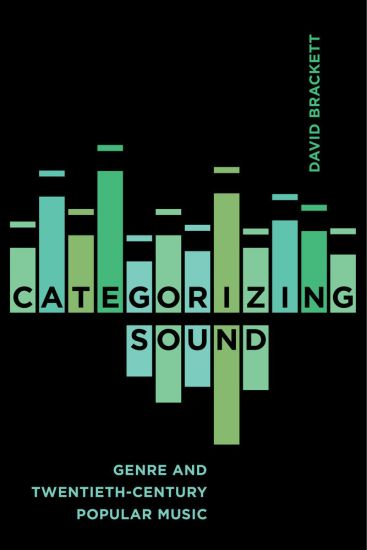
Categorizing Sound

Categorizing Sound

David Brackett

University of California Press
2016
sidottu
Categorizing Sound addresses the relationship between categories of music and categories of people, particularly how certain ways of organizing sounds becomes integral to how we perceive ourselves and how we feel connected to some people and disconnected from others. Presenting a series of case studies ranging from race music and old-time music of the 1920s through country and R&B of the 1980s, David Brackett explores the processes by which genres are produced. Using in-depth archival research and sophisticated theorizing about how musical categories are defined, Brackett has produced a markedly original work.
Categorizing Sound

Categorizing Sound

David Brackett

University of California Press
2016
pokkari
Categorizing Sound addresses the relationship between categories of music and categories of people, particularly how certain ways of organizing sounds becomes integral to how we perceive ourselves and how we feel connected to some people and disconnected from others. Presenting a series of case studies ranging from race music and old-time music of the 1920s through country and R&B of the 1980s, David Brackett explores the processes by which genres are produced. Using in-depth archival research and sophisticated theorizing about how musical categories are defined, Brackett has produced a markedly original work.
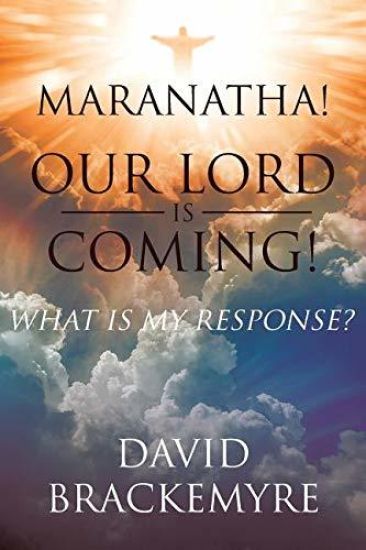
Maranatha! Our Lord Is Coming!

Maranatha! Our Lord Is Coming!

David Brackemyre

Christian Faith Publishing, Inc
2018
pokkari
The promise of Christ's return should have a controlling effect on the life of every Christian. A close New Testament study reveals the Messianic promise to be the foundation and focus of the first century church. Like them, we should always be prepared to give an answer for "the hope we have." It is a subject of every book except Philemon and 3 John. Maranatha Our Lord Is Coming moves from Matthew to Revelation, citing a multitude of verses (more than we realize), adding insight and commentary, and calling us to a life reflecting our sole dependence on God's faithfulness. The inspiration for this book is the faithful witness and perseverance of the persecuted church. They may undergo significant suffering, yet they know one day Christ will return with his rewards. We should exhibit that same faithfulness and perseverance, based on the same promise. After reading Maranatha Our Lord Is Coming, a believer will have an increased awareness and knowledge of Christ's promised return, understand more than before the foundation of our faith and the hope on which it is built, be convicted to express his or her faith based on this blessed truth. "Maranatha Our Lord Is Coming has a study guide for each chapter. The study will require introspection. It will ask us to examine our own life and come to a conclusion regarding the applicability of truth. Once we internalize the singular hope that is found only in God's faithfulness to one day send his son, we will rise above the trappings of this world and live according to the hope of the world to come. May God richly bless you in your pursuit of this marvelous promise.
The Last of the Market Hunters

The Last of the Market Hunters

Dale Hamm; David Bakke

Southern Illinois University Press
1996
nidottu
Duck hunting has changed greatly since the days of unlimited duck kills, as the limit of fifty ducks a day established in 1902 has fallen to the present three. A legitimate hunter now, Dale Hamm learned the art of market hunting— taking waterfowl out of season and selling them to restaurants— from his father during the l920s. During the l930s and l940s, he kept his family alive by market hunting. At the peak of his career, Hamm poached every private hunting club along the Illinois River from Havana to Beardstown.After market hunting died out, Hamm became a legendary and almost respected— albeit controversial— character on the Illinois backwaters. He was eventually invited to hunt on the same clubs from which he had once been chased at the point of a shotgun. He hunted with judges, sheriffs, and the head of undercover operations for the Illinois Department of Conservation, all of whom knew of his reputation. He passed on to these hunting partners a lifetime of outdoor knowledge gained from slogging through mud, falling through ice, hunting ducks at three o’ clock in the morning, dodging game wardens, and running the world’ s only floating tavern."I always said if anyone ever cut open one of us Hamms, all they’ d find was duck or fish," Hamm once said of his family. Now in his eighties, Hamm still carries a pellet from a shotgun in his chin to remind him of a shotgun blast that ricocheted off the water and into his face. Bakke notes that it is appropriate that a man who spent his life with a shotgun in his hands should carry a bit of buckshot wherever he goes.Everyone who ever met Dale Hamm has a story about him. His own story is that of a one-of-a-kind character who, in his later years, used his considerable outdoor savvy to conserve the natural resources he once savaged. "His time and kind are gone," Bakke notes, "and there will never be another like him."This book will be of interest to anyone who has ever been hunting— or who enjoys reading about colorful people and times that exist no more.
[Brackets]

[Brackets]

David Sloan

Createspace Independent Publishing Platform
2012
nidottu
Four men have done the improbable: predicted perfect March Madness brackets through to the Final Four. Each has chosen a different champion and receives a ticket to the final games to see who will win it all. But the tournament turns their lives upside down in ways they never could have predicted.Cole Kaman, a hapless receptionist in a dead-end job, fills out the bracket at random to impress a co-worker, only to attract the attention of a deranged serial arsonist. Perry Lynwood, a middle-aged gamer who spends his time as a warrior in a virtual city, becomes unhinged as events in the virtual world begin happening in reality. Neeson Faulkner, the ambitious founder of a green energy company, bets everything on the powerful software used to predict his bracket. And Tucker Barnes is a college student who just wants to watch a few games, but he can't seem to escape involvement in an international crisis on the other side of the world.These four men will collide against the backdrop of America's most exciting tournament in a story about genius, luck, ambition, and the unsettling truth that there is always a bigger game.Four men. Four perfect brackets. One tournament. Infinite possibilities.
Brakes 2000

Brakes 2000

David Barton

Professional Engineering Publishing
2000
sidottu
The latest advances in braking technology Brakes 2000: Automotive Braking Technology for the 21st Century is a collection of papers presented at the Yorkshire Center conference, representing the work of leading researchers in the field. Presented by the Institution of Mechanical Engineers' Automobile Division, this book provides an overview of the newest technology, recent findings, testing models, and more. Collectively focused on addressing new and perennial issues in the most challenging branch of automotive engineering, these papers provide insight to inform current projects and future directions.
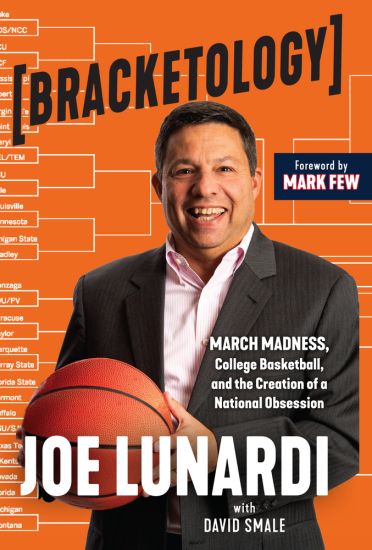
Bracketology

Bracketology

Joe Lunardi; David Smale; Mark Few

TRIUMPH BOOKS
2022
pokkari
Lunardi delves into the early days of Bracketology, details its growth, and dispels the myths of the process. The NCAA Tournament has become one of the most popular sports events in the country, consuming fans for weeks with the run to the Final Four and ultimately the crowning of the champion of college hoops. Each March, millions of Americans fill out their bracket in the hopes of correctly predicting the future.Yet, there is no true Madness without the oft-debated question about what teams should be seeded where—from the Power-5 Blue Blood with some early season stumbles on their resume to the mid-major that rampaged through their less competitive conference season—and the inventor of Bracketology himself, Joe Lunardi, now reveals the mystery and science behind the legend. While going in depth on his ever-evolving predictive formula, Lunardi compares great teams from different eras with intriguing results, talks to the biggest names in college basketball about their perception of Bracketology (both good and bad), and looks ahead to the future of the sport and how Bracketology will help shape the conversation. This fascinating book is a must-read for college hoops fans and anyone who has aspired to win their yearly office pool.
Bracketology

Bracketology

Joe Lunardi; David Smale; Mark Few

Triumph Books
2021
sidottu
Lunardi delves into the early days of Bracketology, details its growth, and dispels the myths of the process The NCAA Tournament has become one of the most popular sports events in the country, consuming fans for weeks with the run to the Final Four and ultimately the crowning of the champion of college hoops. Each March, millions of Americans fill out their bracket in the hopes of correctly predicting the future. Yet, there is no true Madness without the oft-debated question about what teams should be seeded where—from the Power-5 Blue Blood with some early season stumbles on their resume to the mid-major that rampaged through their less competitive conference season—and the inventor of Bracketology himself, Joe Lunardi, now reveals the mystery and science behind the legend. While going in depth on his ever-evolving predictive formula, Lunardi compares great teams from different eras with intriguing results, talks to the biggest names in college basketball about their perception of Bracketology (both good and bad), and looks ahead to the future of the sport and how Bracketology will help shape the conversation. This fascinating book is a must-read for college hoops fans and anyone who has aspired to win their yearly office pool.