
Kirjahaku
Etsi kirjoja tekijän nimen, kirjan nimen tai ISBN:n perusteella.
1000 tulosta hakusanalla David Bruce Collins
Angels in the American Theater
Stephen D. Berwind; Melanie Blood; Theresa M. Collins; David A. Crespy; Dan Friedman; Alexis Greene; Jeffrey Eric Jenkins; Bruce Kirle; Sheila McNerney Anderson
Southern Illinois University Press
2007
nidottu
Angels in the American Theater: Patrons, Patronage, and Philanthropy examines the significant roles that theater patrons have played in shaping and developing theater in the United States. Because box office income rarely covers the cost of production, other sources are vital. Angels - financial investors and backers - have a tremendous impact on what happens on stage, often determining with the power and influence of their money what is conceived, produced, and performed. But in spite of their influence, very little has been written about these philanthropists. Composed of sixteen essays and fifteen illustrations, ""Angels in the American Theater"" explores not only how donors became angels, but also their backgrounds, motivations, policies, limitations, support, and successes and failures. Subjects range from millionaires Otto Kahn and the Lewisohn sisters to foundation giants Ford, Rockefeller, Disney, and Clear Channel. The first book to focus on theater philanthropy, ""Angels in the American Theater"" employs both a historical and a chronological format and focuses on individual patrons, foundations, and corporations.

J. Collingwood Bruce's Handbook to the Roman Wall
David J. Breeze
Society of Antiquaries of Newcastle upon Tyne
2006
sidottu
David Bruce (1898-1977) was a prominent American diplomat, who served in France, Germany, and the UK. His work is examined here to provide an in-depth look at the practice of diplomacy and the role of the ambassador as diplomatic actor. This thorough survey aims to investigate the relevance of the resident embassy to modern diplomacy. To do so, it focuses on the ambassador's daily work as a diplomat, looking at his role in promoting friendly relations, his political reporting, policy advising, as well as the role of his staff and his relations with others in the Foreign Service. It also addresses major issues such as the debate over the 'death of the embassy,' showing that ambassadors remain vital actors in the relations between major powers. The work integrates theoretical material on diplomatic practice and the case study of a highly regarded diplomat. This unique, readable study will appeal to students in diplomacy, international relations, American politics, as well as to trainee and junior diplomats.
David Bruce (1898-1977) was a prominent American diplomat, who served in France, Germany, and the UK. His work is examined here to provide an in-depth look at the practice of diplomacy and the role of the ambassador as diplomatic actor.This thorough survey aims to investigate the relevance of the resident embassy to modern diplomacy. To do so, it focuses on the ambassador's daily work as a diplomat, looking at his role in promoting friendly relations, his political reporting, policy advising, as well as the role of his staff and his relations with others in the Foreign Service. It also addresses major issues such as the debate over the 'death of the embassy,' showing that ambassadors remain vital actors in the relations between major powers.The work integrates theoretical material on diplomatic practice and the case study of a highly regarded diplomat. This unique, readable study will appeal to students in diplomacy, international relations, American politics, as well as to trainee and junior diplomats.

Print edition. Satire and sex scenes. For adults only. A sample: In Westphalia, a gentle youth lived in the beautiful castle of Baron Thunderstormcumlightning. Anyone could look at the youth's face and see that he was both good-natured and weak-minded. This is why he was given the name Candide, although Virginia would have been a good choice if he had been born female. No one knew who his parents were, but that did not keep the servants from guessing, aka gossiping. Their guess, or gossip, was that Candide was the son of the Baron's sister and a nearby nobleman. The two knew each other well enough to sleep together, although they did not know each other well enough to speak to each other in public. After all, in some circles, sleeping together does not constitute an introduction.
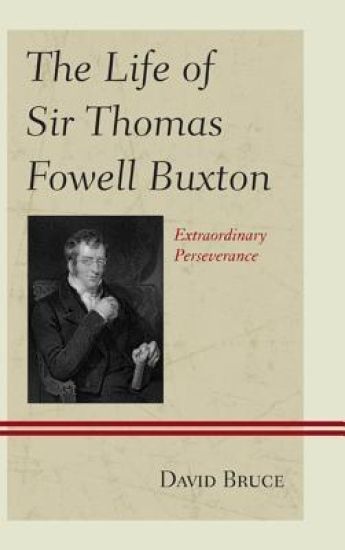
The social conscience of Sir Thomas Fowell Buxton (1786-1845) developed as he operated a brewery in Spitalfields, nineteenth-century London’s poorest parish. His interest and research on penal discipline brought him national prominence and led to a parliamentary career that lasted nearly two decades. Buxton’s association with noted activist William Wilberforce led to his own involvement in the anti-slavery movement, a cause he fiercely championed, resulting in Britain’s abolition of slavery in 1834. Buxton’s involvement in the disastrous 1841 Niger expedition effectively ended his public career and paved the way to British imperialism in Africa. A man of many interests, Buxton also supported Catholic emancipation and ending the Hindu suttee. Few nineteenth-century social reformers have had as much of an impact or have cast as long a shadow as Buxton. At the time of his death, many saw him as the epitome of Christian activism, yet today Buxton remains largely ignored and forgotten. David Bruce examines the life of one of Great Britain’s most prominent social activists. Using his personal papers, and the papers and books of his friends, associates, and contemporaries, The Life of Sir Thomas Fowell Buxton paints a portrait of a unique individual driven to improve his world.


Paperback edition. This book is one-half of my previous book "The Funniest People in Books and Music: 500 Anecdotes." It contains 250 anecdotes about music, including this one: British actor Stanley Holloway once mentioned to Jascha Heifetz that he was looking for a school for his son, and he named one school that accepted pupils very early in their life-at two and a half years old. "Two and a half," Mr. Heifetz said. "What's he going to do till then? Just loaf around?"


This is an easy-to-read retelling John Ford's comedy (it has a happy ending) THE QUEEN. Alphonso loves a woman not enough; Velasco loves a woman too much. Alphonso will not allow the Queen (his wife) to act like a woman, and Salassa will not allow Velasco to act like a man. According to Charles Lamb, "Ford was of the first order of poets. He sought for sublimity, not by parcels in metaphors or visible images, but directly where she has her full residence in the heart of man; in the actions and sufferings of the greatest minds." Do you know a language other than English? If you do, I give you permission to translate this book, copyright your translation, publish or self-publish it, and keep all the royalties for yourself. (Do give me credit, of course, for the original retelling.) I would like to see my retellings of classic literature used in schools. Teachers need not actually teach my retellings. Teachers are welcome to give students copies of my eBooks as background material. For example, if they are teaching Homer's Iliad and Odyssey, teachers are welcome to give students copies of my Virgil's Aeneid: A Retelling in Prose and tell students, "Here's another ancient epic you may want to read in your spare time."

This is an easy-to-read retelling of John Ford's "Love's Sacrifice." People who read this version first will find the original play much easier to read and understand. According to Charles Lamb, "Ford was of the first order of poets. He sought for sublimity, not by parcels in metaphors or visible images, but directly where she has her full residence in the heart of man; in the actions and sufferings of the greatest minds." Do you know a language other than English? If you do, I give you permission to translate this book, copyright your translation, publish or self-publish it, and keep all the royalties for yourself. (Do give me credit, of course, for the original retelling.) I would like to see my retellings of classic literature used in schools. Teachers need not actually teach my retellings. Teachers are welcome to give students copies of my eBooks as background material. For example, if they are teaching Homer's Iliad and Odyssey, teachers are welcome to give students copies of my Virgil's Aeneid: A Retelling in Prose and tell students, "Here's another ancient epic you may want to read in your spare time."


It was generally believed that once a German night fighter had got on the tail of a Lancaster bomber, the rear gunner had but five seconds to live... 'Finishing School' immerses the reader in the lives of the members of a WWII Lancaster bomber crew in the final stage of their training as they prepare themselves for one of the most dark and dangerous episodes of the war. It deals with the stark technical challenges they had to master - and the accompanying onslaught on their minds - as they prepared to struggle against the odds. It is an intimate, detailed and authentic portrayal of the relationship of a crew and the aircraft that they would take to war. It is March 1944, and while Bomber Command's campaign of attrition bombing against Germany is at its bloody height, Flight Lieutenant Hugh MacKay is allowed to return to operations after a long interval, having sustained serious injuries in a horrific crash the previous year. His first task; to take command of a sprog crew who have just lost their pilot and to guide these young men through their final stage of training at Lancaster Finishing School. His next task; to bring them through their first operation alive - or perish in the attempt. MacKay, for whom nothing but the operational life now exists, has an outlook as bleak as the war-torn skies over Germany, but the sudden arrival of a woman in his life challenges his simple assumptions. Will fate be the final arbiter as he leads his crew on their first main force operation - the RAF's 'Big Chop' night - the disastrous raid on Nuremberg? Length: 155 thousand words What the publishing industry thought... "...fascinating and a wonderful tribute to the aircrew of Bomber Command." "...this is stirring stuff: beautifully paced, evocative, even witty, with unusually appealing characters and some absolutely rip-snorting action sequences..." "...the author's obviously deep knowledge and understanding of the subject matter shines through, and in particular the scenes that take place on the planes are very well described and gripping..." "...the author really captures what it must have been like to have flown bombers during the war..." "...brilliant technical detail..." "...has got a great style..." A filmmaker's view... When reading a novel set in the recent past there are, as a documentary film-maker, two things that I demand of it; credibility as to its historical accuracy and the urge to turn the page. This particular book, Finishing School, set in a WWII Lancaster bomber training station and an operational squadron, satisfies on both counts. I'm of a generation that remembers the atmosphere of the time, and the author has not only captured the authentic spirit of the period but has also transported me back to the way we viewed our enemy across the Channel then; not with the Politically Correct hindsight of today, but with the grim determination of a nation to prevail against seemingly overwhelming odds. Not only did I engage with the rich cast of dramatis personae in the book but I also learned as much about the bureaucracy of a Lancaster bomber crew's training as I did about their dedication to performing as a team under their charismatic skipper. The technical research is both impeccable and convincing. Not for one moment did I doubt the accuracy of the incidents described so vividly by the author. I was also taken by the variety and diversity of characterisation of the many individuals we are introduced to. And did I turn the page? Of course I did Maurice Kanareck
A gripping tale of the air war - at a time when the deadliest skills were needed to survive. Length 127 thousand words June, 1943. Immense German and Russian armies face each other across the fortifications of the Kursk salient. Whoever wins the impending battle will win the war in the east; and the smallest factor could be the one that turns the tide. For the Prime Minister, that small factor could be a German Panzer general visiting France; if he can be eliminated then the Russians might stand a better chance of winning. But removing a high-ranking enemy officer in too obvious a manner could compromise ULTRA, the highly secret code-breaking operation that revealed the officer's location in the first place. Churchill has first to convince MI6 that the result will be worth the risk. With the outcome of a war hanging in the balance, what better plan than to give the mission to a handful of intruder pilots flying near obsolete aircraft?

January 1944. An untouchable German reconnaissance aircraft threatens to reveal the Allied preparations for D-Day; will the RAF stand any chance of dealing with it? Just months to go before D-Day and the Germans are routinely sending a reconnaissance aircraft at stratospheric height over southern England; this time the stripped-down Spitfires and Mosquitos stand no chance of intercepting it. With the preparations for the invasion of France - and the ultimate end of the war - now in jeopardy, ace night-fighter pilot Flight Lieutenant Alec Keats joins a small team that is struggling to get Britain's only hope into a state where it can bring the German machine to earth. Keats throws himself into the technical problems that need to be resolved if the team are to stand any chance of success; his only distraction being the enigmatic WAAF who seems to be unusually close to the unit's commanding officer...