

Kirjahaku
Etsi kirjoja tekijän nimen, kirjan nimen tai ISBN:n perusteella.
1000 tulosta hakusanalla David C N Swanson

U.S. exceptionalism, the idea that the United States of America is superior to other nations, is no more fact-based and no less harmful than racism, sexism, and other forms of bigotry.The purpose of this book is to persuade you of that statement.This book examines how the United States actually compares with other countries, how people think about the comparison, what damage that thinking does, and what changes we might want to consider making."I hope Curing Exceptionalism will be part of coursework in classrooms throughout the U.S." --Kathy Kelly, co-coordinator of Voices for Creative Nonviolence."A must-read for every U.S. citizen." --Robert Fantina, author of Desertion and the American Soldier 1776-2006.Table of Contents: Introduction 6 I. How the United States Compares with Other Countries 8 II. Exceptionalist Thinking 62 III. The Damage Exceptionalism Does 122 IV. Curing This Disease 164 Acknowledgements 190 About the Author 191 End Notes 192

The U.S. government has a habit of supporting brutal (and comically outrageous) dictators. This book offers 20 current examples, together with some background on historical patterns, some explanation for why this happens, and a proposal to put an end to it.As documented here, the U.S. government arms, trains, and funds all variety of oppressive governments, not just dictatorships. The choice to focus on dictatorships in this book was not made merely to shorten the list. Rather, that choice was made because the U.S. government so often claims to be opposing dictators through the promotion of democracy. Frequently, the atrocious conduct of a dictator is a central selling point for a new war or coup or program of sanctions.Yet neither Saddam Hussein's horrific (though fictional) removal of babies from incubators nor Manuel Noriega's cavorting in red underwear with prostitutes while snorting cocaine and praying to voodoo gods (as the New York Times solemnly informed us on December 26, 1989) rivals the moral horror or the glorious goofiness of the 20 tyrants described in this book.No one will be able to read this and believe that a primary purpose of U.S. foreign policy is to oppose dictatorships or to promote democracy. If it is important to you to try to believe that, you've probably already stopped reading.




RootsAction.org is one of the two organizations that launched the Impeach Donald Trump Now petition on Inauguration Day in January 2017, based on the first two of the following 25 grounds for impeachment. That petition has gathered 1.4 million signers.Since then, RootsAction has developed the other 23 articles of impeachment published here, and flooded Congress Members with hundreds of thousands of emails from their constituents urging that these or similar articles be introduced and voted on. We encourage readers to give this book to Congress Members and let them know that you want at least some of these articles of impeachment introduced, passed, and sent to the Senate for a trial.Following the articles of impeachment in this book is an outline of an impeachment strategy, followed by a list of frequently asked questions together with answers from RootsAction.

Patrick N. Lynch, 1817–1882
David C.R. Heisser; Stephen Jennings White Sr.
University of South Carolina Press
2015
sidottu
Patrick Neison Lynch, born in a small town in Ireland, became the third Roman Catholic bishop of the Diocese of Charleston, South Carolina. Lynch is remembered today mostly for his support of the Confederacy, his unofficial diplomatic mission to the Vatican on behalf of the Confederate cause, and for his ownership and management of slaves owned by the Catholic diocese. In the first biography of Lynch, David C. R. Heisser and Stephen J. White, Sr. investigate those controversial issues in Lynch's life, but they also illuminate his intellectual character and his labors as bishop of Charleston in the critical era of the state and nation's religious history. For, during the nineteenth century, Catholics both assimilated into South Carolina's predominantly Protestant society and preserved their own faith and practices.A native of Ireland, Lynch immigrated with his family to the town of Cheraw when he was a boy. At the age of twelve, he became a protégé of John England, the founding bishop of the diocese of Charleston. After studying at the seminary England founded in Charleston, Bishop England sent Lynch to prepare for the priesthood in Rome. The young man returned an accomplished scholar and became an integral part of Charleston's intellectual environment. He served as parish priest, editor of a national religious newspaper, instructor in a seminary, and active member of nearly every literary, scientific, philosophical society in Charleston.Just three years before the outbreak of the Civil War Lynch rose to the position of Bishop of Charleston. During the war he distinguished himself in service to his city, state, and the Confederate cause, culminating in his "not-so-secret" mission to Rome on behalf of Jefferson Davis's government. Upon Lynch's return, which was accomplished only after a pardon from U. S. President Andrew Johnson, he dedicated himself to rebuilding his battered diocese and retiring an enormous debt that had resulted from the conflagration of 1861, which destroyed the Cathedral of St. John and St. Finbar, and wartime destruction in Charleston, Columbia, and throughout the state.Lynch executed plans to assimilate newly freed slaves into the Catholic Church and to welcome Catholic immigrants from Europe and the northern states. Traveling throughout the eastern United States he gave lectures to religious and secular organizations, presided over dedications of new churches, and gave sermons at consecrations of bishops and installations of cardinals, all the while begging for contributions to rebuild his diocese. Upon his death, Lynch was celebrated throughout his city, state and nation for his generosity of spirit, intellectual attainments, and dedication to his holy church.

Pilgrims’ Castle (‘Atlit), David’s Tower (Jerusalem) and Qal‘at ar-Rabad (‘Ajlun)
C.N. Johns; Denys Pringle
Routledge
2019
sidottu
First published in 1997, this collection includes papers on Crusader-era architecture in Palestine with a focus on ‘Atlit, the castle of ‘Ajlun and on the Citadel of Jerusalem, both the papers and sites of which have previously been difficult to access. The volume is presented partly to repair the very real deficit in the literature on Crusader architecture and partly as a fitting memorial to the author, who died in 1992. ‘Atlit in particular held a special significance for C.N. Johns, being the site of his first major project as a field archaeologist. His Guide to ‘Atlit, a masterly summary of his findings, remains the most complete and comprehensive account of the castle and its suburb.The studies collected here pay tribute to their author’s enduring contribution to the medieval archaeology of the Near East. The first part of the book deals with the ‘Pilgrim’s Castle’, the great Templar fortress and town at ’Atlit. The significance of Johns’ excavations at this site has been relatively neglected, because it remains in a military area, inaccessible to visitors, and because almost the entire stock of his major publication was lost in 1947. This ‘Guide to ’Atlit’, a synthesis of historical, archaeological and architectural research on the monument, is reprinted here together with all the interim reports relating to the medieval period. Also included are Johns’ studies on the Citadel of Jerusalem, the ‘Tower of David’, and on the Islamic castle of ‘Ajlun. Together, they represent a fundamental contribution to the study of the period of the Crusades and to the military architecture of the Middle Ages. The notes by Denys Pringle bring the accounts up to date in the light of recent research.

Pilgrims’ Castle (‘Atlit), David’s Tower (Jerusalem) and Qal‘at ar-Rabad (‘Ajlun)
C.N. Johns; Denys Pringle
Routledge
2020
nidottu
First published in 1997, this collection includes papers on Crusader-era architecture in Palestine with a focus on ‘Atlit, the castle of ‘Ajlun and on the Citadel of Jerusalem, both the papers and sites of which have previously been difficult to access. The volume is presented partly to repair the very real deficit in the literature on Crusader architecture and partly as a fitting memorial to the author, who died in 1992. ‘Atlit in particular held a special significance for C.N. Johns, being the site of his first major project as a field archaeologist. His Guide to ‘Atlit, a masterly summary of his findings, remains the most complete and comprehensive account of the castle and its suburb.The studies collected here pay tribute to their author’s enduring contribution to the medieval archaeology of the Near East. The first part of the book deals with the ‘Pilgrim’s Castle’, the great Templar fortress and town at ’Atlit. The significance of Johns’ excavations at this site has been relatively neglected, because it remains in a military area, inaccessible to visitors, and because almost the entire stock of his major publication was lost in 1947. This ‘Guide to ’Atlit’, a synthesis of historical, archaeological and architectural research on the monument, is reprinted here together with all the interim reports relating to the medieval period. Also included are Johns’ studies on the Citadel of Jerusalem, the ‘Tower of David’, and on the Islamic castle of ‘Ajlun. Together, they represent a fundamental contribution to the study of the period of the Crusades and to the military architecture of the Middle Ages. The notes by Denys Pringle bring the accounts up to date in the light of recent research.


David C. Xu's Mystery Creatures of China is one of the most exciting additions to the cryptozoological literature in years. For the first time, cryptozoology researchers and enthusiasts will be able to access information about some of the most intriguing mystery animals on the planet. The author has collected sighting reports and historical data from across all of China to bring the English-speaking world new accounts of fascinating encounters with strange and curious beasts.Many of these mystery animals have never before been presented in Western cryptozoological books or articles. From lake monsters to man-apes, mystery cats to dinosaur-like beasts, the four-winged bird to the blood-sucking blanket-like xizi, there are a multitude of mysterious creatures to enjoy and analyze. The author has created a doorway into the hidden zoology of China in expectation that others will take up the cause and seriously explore these biological mysteries.With over 100 mystery animals listed in 98 sections (categorized into aquatic, humanoid, carnivorous, herbivorous, reptilian, and winged cryptids), this book will amaze, intrigue, and delight anyone interested in cryptozoology and Chinese folklore.From Dr. Karl P.N. Shuker's foreword "Having been wholly immersed in cryptozoology from both an investigative and a chronicling standpoint for over 30 years, whenever I read any new such book nowadays I expect to be (and generally am) already familiar with the majority of mystery beasts presented within it - but not this time To my surprise but total delight, page after page in this extremely comprehensive volume unfurled extraordinary cryptids that I had never previously encountered - confirming my long-held suspicion as outlined earlier here that China's crypto-chronicles held all manner of treasures formerly hidden from me by virtue of my inability to read any Sinian language."For additional cryptozoology books, visit CoachwhipBooks.com.

David C. Xu's Mystery Creatures of China is one of the most exciting additions to the cryptozoological literature in years. For the first time, cryptozoology researchers and enthusiasts will be able to access information about some of the most intriguing mystery animals on the planet. The author has collected sighting reports and historical data from across all of China to bring the English-speaking world new accounts of fascinating encounters with strange and curious beasts.Many of these mystery animals have never before been presented in Western cryptozoological books or articles. From lake monsters to man-apes, mystery cats to dinosaur-like beasts, the four-winged bird to the blood-sucking blanket-like xizi, there are a multitude of mysterious creatures to enjoy and analyze. The author has created a doorway into the hidden zoology of China in expectation that others will take up the cause and seriously explore these biological mysteries.With over 100 mystery animals listed in 98 sections (categorized into aquatic, humanoid, carnivorous, herbivorous, reptilian, and winged cryptids), this book will amaze, intrigue, and delight anyone interested in cryptozoology and Chinese folklore.

As business schools expand their entrepreneurship programs and organizations seek people with entrepreneurial skills, it has become clear that the skills and mindset of an entrepreneur are highly valued in all business contexts. This latest edition of Entrepreneurship Skills for New Ventures continues to focus on helping students develop entrepreneurial skills, whether they seek to become entrepreneurs or employees.Focusing on the entrepreneurial start-up process, the fourth edition of Entrepreneurship Skills for New Ventures takes the reader through the steps of selecting, planning, financing, and controlling the new venture. The authors cover multiple forms of new ventures, as well as ways to utilize entrepreneurial skills in other contexts, encouraging students to engage with the material and apply it to their lives in ways that make sense for them. Skill development features include: New exercise on analyzing the lean entrepreneurship option Entrepreneurial profiles of small-business owners Personal applications for students to apply questions to their new venture or a current business Global and domestic cases Elevator pitch assignments that put students in the venture capitalist position Application exercises and situations covering specific text concepts Business plan prompts to help students construct a business plan over the course of a semesterFeaturing pedagogical tools like review questions and learning outcomes, as well as online materials that expand upon skill development and offer instructor resources, the fourth edition of Entrepreneurship Skills for New Ventures is the perfect resource for instructors and students of entrepreneurship.
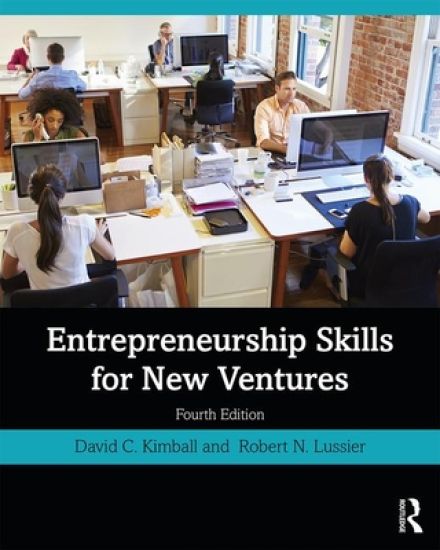
As business schools expand their entrepreneurship programs and organizations seek people with entrepreneurial skills, it has become clear that the skills and mindset of an entrepreneur are highly valued in all business contexts. This latest edition of Entrepreneurship Skills for New Ventures continues to focus on helping students develop entrepreneurial skills, whether they seek to become entrepreneurs or employees.Focusing on the entrepreneurial start-up process, the fourth edition of Entrepreneurship Skills for New Ventures takes the reader through the steps of selecting, planning, financing, and controlling the new venture. The authors cover multiple forms of new ventures, as well as ways to utilize entrepreneurial skills in other contexts, encouraging students to engage with the material and apply it to their lives in ways that make sense for them. Skill development features include: New exercise on analyzing the lean entrepreneurship option Entrepreneurial profiles of small-business owners Personal applications for students to apply questions to their new venture or a current business Global and domestic cases Elevator pitch assignments that put students in the venture capitalist position Application exercises and situations covering specific text concepts Business plan prompts to help students construct a business plan over the course of a semesterFeaturing pedagogical tools like review questions and learning outcomes, as well as online materials that expand upon skill development and offer instructor resources, the fourth edition of Entrepreneurship Skills for New Ventures is the perfect resource for instructors and students of entrepreneurship.

Ivory Tower and Industrial Innovation
David C. Mowery; Richard R. Nelson; Bhaven N. Sampat; Arvids A. Ziedonis
Stanford University Press
2004
sidottu
Since the early 1980s, universities in the United States have greatly expanded their patenting and licensing activities. The Congressional Joint Economic Committee, among other authorities, have argued that this surge contributed to the economic boom of the 1990s. And, many observers have attributed this trend to the Bayh-Dole Act of 1980. Using quantitative analysis and detailed case studies, this book tests that conventional wisdom and assesses the effects of the Act, examining the diverse channels through which commercialization has occurred over the 20th century and since the passage of the Act.

Ivory Tower and Industrial Innovation
David C. Mowery; Richard R. Nelson; Bhaven N. Sampat; Arvids A. Ziedonis
Stanford University Press
2015
pokkari
Since the early 1980s, universities in the United States have greatly expanded their patenting and licensing activities. The Congressional Joint Economic Committee, among other authorities, have argued that this surge contributed to the economic boom of the 1990s. And, many observers have attributed this trend to the Bayh-Dole Act of 1980. Using quantitative analysis and detailed case studies, this book tests that conventional wisdom and assesses the effects of the Act, examining the diverse channels through which commercialization has occurred over the 20th century and since the passage of the Act.

Applied Sport Management Skills, Third Edition With Web Study Guide, takes a unique and effective approach to teaching students how to become strong leaders and managers in the world of sport. Organized around the central management functions—planning, organizing, leading, and controlling—this third edition addresses the Common Professional Component topics outlined by the Commission on Sport Management Accreditation (COSMA). The text explains important concepts but then takes the student beyond theories, to applying those management principles and developing management skills. This practical how-to approach, accompanied by unmatched learning tools, helps students put concepts into action as sport managers—developing the skills of creative problem solving and strategic planning, and developing the ability to lead, organize, and delegate.Applied Sport Management Skills, Third Edition, has been heavily revised and touts a full-color format with 1,300 new references. Content updates keep pace with industry trends, including deeper discussions of legal liability, risk management and equipment management, servant leadership, sport culture, and social media. Particularly valuable are the special elements and practical applications that offer students real opportunities to develop their skills: Features such as Reviewing Their Game Plan and Sport Management Professionals @ Work (new to this edition) provide a cohesive thread to keep students focused on how sport managers use the concepts on the job.Applying the Concept and Time-Out sidebars offer opportunities for critical thinking by having the student think about how specific concepts relate to a sport situation or to the student’s actual experiences in sports, including part-time jobs, full-time jobs, internships, and volunteer work.Self-Assessment exercises offer insight into students’ strengths and weaknesses and how to address shortcomings. An enhanced web study guide is integrated with the text to facilitate a more interactive setting with which to complete many of the learning activities. Several of the exercises require students to visit a sport organization and answer questions to gain a better understanding of sport management. Skill-Builder Exercises present a variety of scenarios and provide step-by-step guidance on handling day-to-day situations such as setting priorities, conducting job interviews, handling conflict, and coaching employees to better performance.Sports and Social Media Exercises offer Internet-based activities that expose students to the role of social media in managing a sport organization. Students are required to use popular social media sites such as Facebook, Twitter, and LinkedIn and visit sport websites.Game Plan for Starting a Sport Business cases put students in the driver’s seat and ask them to perform managerial activities such as developing an organization structure and formulating ideas on how to lead their employees. The web study guide allows students to complete most of the learning activities online or download them and then submit them to the instructor. Instructors will also have access to a suite of ancillaries: an instructor guide, test package, and presentation package.Applied Sport Management Skills, Third Edition, is a critical resource that provides students with a thorough understanding of the management principles used in sport organizations while also helping students developing their practical skills. Students will appreciate the opportunity to begin building a solid foundation for a fulfilling career in sport management.
Applied Sport Management Skills
Robert N. Lussier; David C. Kimball
Human Kinetics Publishers
2023
pokkari
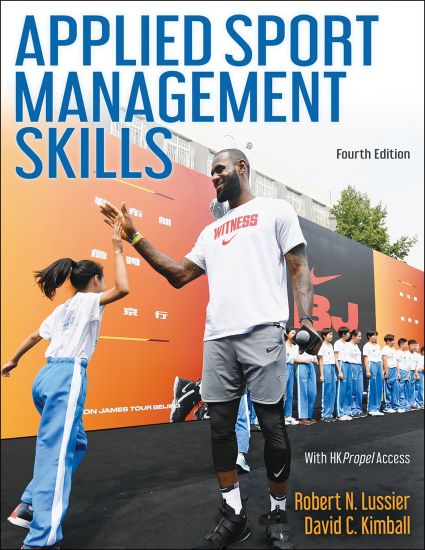
Applied Sport Management Skills, Fourth Edition With HKPropel Access, takes a practical approach for teaching students how to become strong leaders and managers in the world of sport. Organized around the central management functions of planning, organizing, leading, and controlling, and addressing the Commission on Sport Management Accreditation (COSMA) Common Professional Component topics and North American Society for Sport Management (NASSM) guidelines, the fourth edition has been extensively updated with hundreds of new references and sport examples.The text employs a three-pronged approach for teaching management theory, putting theories into practice, and developing students’ management skills. Timely discussions and case studies address the impacts of COVID-19; Black Lives Matter initiatives; name, image, and likeness rules; women in executive positions; corporate social responsibility; data analytics; and more.While other texts focus on learning about sport management, Applied Sport Management Skills enables students to apply the principles while developing the skills to become effective sport managers. Interactive online learning tools available through HKPropel complement activities found in each chapter:Flash-card activities help students learn key terms.Self-assessments, which ask students to identify their strengths and weaknesses and plan to improve shortcomings, are now assignable, trackable, and automatically scored.Applying the Concepts quizzes, which challenge students to identify management concepts illustrated in various situations, are now trackable and automatically scored.Time-Out features, in which students apply management concepts to their personal sport and work experiences, are now assignable instructor-scored assessments.Case studies are now supplemented by 10-question automatically scored quizzes and include three open-ended discussion questions.Additional assignments available in downloadable documents for students to complete and submit to the instructor further facilitate the application of the concepts presented in the text:Sport Management Professionals @ Work activities provide a cohesive thread to keep students focused on how sport managers use the concepts on the job.Skill-Builder Exercises present real-world scenarios designed to help future managers handle day-to-day situations such as setting priorities, conducting job interviews, handling conflict, and coaching employees.Sports and Social Media Exercises introduce students to the role of social media in managing sport organizations. Students review popular social media sites such as Facebook, Twitter, and LinkedIn and visit sport websites.Game Plan for Starting a Sport Business features ask students to perform managerial tasks such as developing an organization structure and brainstorming ideas for leading employees.With Applied Sport Management Skills, students will be primed for an exciting career in sport management by gaining a thorough understanding of management theories and developing the acumen to apply them.Note: A code for accessing HKPropel is included with this ebook.

Applied Sport Management Skills
Robert N. Lussier; David C. Kimball
Human Kinetics Publishers
2023
irtolehti
Applied Sport Management Skills, Fourth Edition With HKPropel Access, takes a practical approach for teaching students how to become strong leaders and managers in the world of sport. Organized around the central management functions of planning, organizing, leading, and controlling, and addressing the Commission on Sport Management Accreditation (COSMA) Common Professional Component topics and North American Society for Sport Management (NASSM) guidelines, the fourth edition has been extensively updated with hundreds of new references and sport examples.The text employs a three-pronged approach for teaching management theory, putting theories into practice, and developing students’ management skills. Timely discussions and case studies address the impacts of COVID-19; Black Lives Matter initiatives; name, image, and likeness rules; women in executive positions; corporate social responsibility; data analytics; and more.While other texts focus on learning about sport management, Applied Sport Management Skills enables students to apply the principles while developing the skills to become effective sport managers. Interactive online learning tools available through HKPropel complement activities found in each chapter:Flash-card activities help students learn key terms.Self-assessments, which ask students to identify their strengths and weaknesses and plan to improve shortcomings, are now assignable, trackable, and automatically scored.Applying the Concepts quizzes, which challenge students to identify management concepts illustrated in various situations, are now trackable and automatically scored.Time-Out features, in which students apply management concepts to their personal sport and work experiences, are now assignable instructor-scored assessments.Case studies are now supplemented by 10-question automatically scored quizzes and include three open-ended discussion questions.Additional assignments available in downloadable documents for students to complete and submit to the instructor further facilitate the application of the concepts presented in the text:Sport Management Professionals @ Work activities provide a cohesive thread to keep students focused on how sport managers use the concepts on the job.Skill-Builder Exercises present real-world scenarios designed to help future managers handle day-to-day situations such as setting priorities, conducting job interviews, handling conflict, and coaching employees.Sports and Social Media Exercises introduce students to the role of social media in managing sport organizations. Students review popular social media sites such as Facebook, Twitter, and LinkedIn and visit sport websites.Game Plan for Starting a Sport Business features ask students to perform managerial tasks such as developing an organization structure and brainstorming ideas for leading employees.With Applied Sport Management Skills, students will be primed for an exciting career in sport management by gaining a thorough understanding of management theories and developing the acumen to apply them.Note: A code for accessing HKPropel is included with this ebook.