

Kirjahaku
Etsi kirjoja tekijän nimen, kirjan nimen tai ISBN:n perusteella.
1000 tulosta hakusanalla David C Powers




Leroy Davis became sheriff in the small mining town of Bisbee, Arizona, to track down his sister's murderer. Thirty years later, Roy, haunted by Helen's death, is still digging for clues. The perplexing hit-and-run of a bicyclist opens a can of worms that cannot be closed without more bloodshed. Roy has help from Bill Hill, an ex-detective, who, along with his computer hacker grandson, Alex, researches worldwide homicides. They soon discover dark ties between the local case and scores of bizarre deaths. Tom, a wealthy loner, is recruited into a secretive organization. Child psychiatrist, Doctor Martin, relieves growing stress on a vacation to frigid Alaska. Olivia, a woman born nameless, fights her inner demons--can she be reformed? Maria finds herself trapped in the middle of all the mayhem.Shall the monster who butchered Helen Davis receive a just retribution? Will Roy find peace of mind and an end to his eternal loneliness?Can anyone protect the flock?



Machine Learning of Natural Language
David M.W. Powers; Christopher C.R. Turk
Springer-Verlag Berlin and Heidelberg GmbH Co. K
1989
nidottu
We met because we both share the same views of language. Language is a living organism, produced by neural mechanisms relating in large numbers as a society. Language exists between minds, as a way of communicating between them, not as an autonomous process. The logical 'rules' seem to us an epiphe nomena ·of the neural mechanism, rather than an essential component in language. This view of language has been advocated by an increasing number of workers, as the view that language is simply a collection of logical rules has had less and less success. People like Yorick Wilks have been able to show in paper after paper that almost any rule which can be devised can be shown to have exceptions. The meaning does not lie in the rules. David Powers is a teacher of computer science. Christopher Turk, like many workers who have come into the field of AI (Artificial Intelligence) was originally trained in literature. He moved into linguistics, and then into computational linguistics. In 1983 he took a sabbatical in Roger Shank's AI project in the Computer Science Department at Yale University. Like an earlier visitor to the project, John Searle from California, Christopher Turk was increasingly uneasy at the view of language which was used at Yale.

Exploration of Collateral Data Potentially Applicable to Great Lakes Hydrography and Fisheries
Charles F. Powers; David L. Jones; John C. (John Carr) 1912- Ayers
Hassell Street Press
2021
nidottu
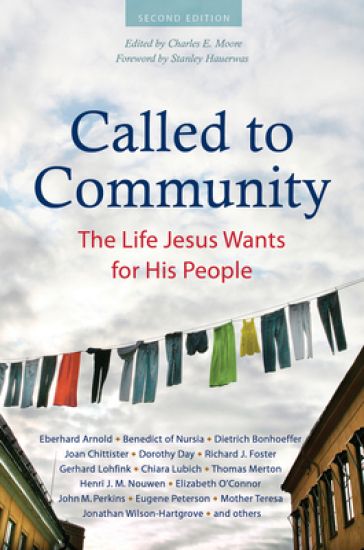
Called to Community
Eberhard Arnold; Dietrich Bonhoeffer; Joan Chittister; Dorothy Day; Fyodor Dostoyevsky; Richard J. Foster; Jonathan Wilson-Hartgrove; David Janzen; Søren Kierkegaard; C. S. Lewis; Chiara Lubich; Thomas Merton; Henri J. M. Nouwen; John M. Perkins; Eugene H. Peterson; Christine D. Pohl; Howard A. Snyder; Mother Teresa; Saint Benedict; Jeremiah Barker; Amy Carmichael; Hans Denck; Andreas Ehrenpreis; Thomas R Kelly; Penelope Lawson; Juan Mateos; Kathleen Norris; Thomas E Powers; Peter Riedemann; Christopher C Smith; Ulrich Stadler
PLOUGH PUBLISHING HOUSE
2024
pokkari
Fifty-two readings on living in intentional Christian community to spark group discussion.Gold Medal Winner, 2017 Illumination Book Awards, Christian LivingSilver Medal Winner, 2017 Benjamin Franklin Award in Religion, Independent Book Publishers AssociationWhy, in an age of connectivity, are our lives more isolated and fragmented than ever? And what can be done about it? The answer lies in the hands of God’s people. Increasingly, today’s Christians want to be the church, to follow Christ together in daily life. From every corner of society, they are daring to step away from the status quo and respond to Christ’s call to share their lives more fully with one another and with others. As they take the plunge, they are discovering the rich, meaningful life that Jesus has in mind for all people, and pointing the church back to its original calling: to be a gathered, united community that demonstrates the transforming love of God.Of course, such a life together with others isn’t easy. The selections in this volume are, by and large, written by practitioners—people who have pioneered life in intentional community and have discovered in the nitty-gritty of daily life what it takes to establish, nurture, and sustain a Christian community over the long haul.Whether you have just begun thinking about communal living, are already embarking on sharing life with others, or have been part of a community for many years, the pieces in this collection will encourage, challenge, and strengthen you. The book’s fifty-two chapters can be read one a week to ignite meaningful group discussion.Contributors include: John F. Alexander, Eberhard Arnold, J. Heinrich Arnold, Johann Christoph Arnold, Alden Bass, Benedict of Nursia, Christoph Friedrich Blumhardt, Leonardo Boff, Dietrich Bonhoeffer, Joan Chittister, Stephen B. Clark, Andy Crouch, Dorothy Day, Anthony de Mello, Elizabeth Dede, Catherine de Hueck Doherty, Fyodor Dostoyevsky, Jenny Duckworth, Friedrich Foerster, Richard J. Foster, Jodi Garbison, Arthur G. Gish, Helmut Gollwitzer, Adele J Gonzalez, Stanley Hauerwas, Joseph H. Hellerman, Roy Hession, David Janzen, Rufus Jones, Emmanuel Katongole, Arthur Katz, Søren Kierkegaard, C. Norman Kraus, C.S. Lewis, Gerhard Lohfink, Ed Loring, Chiara Lubich, George MacDonald, Thomas Merton, Hal Miller, José P. Miranda, Jürgen Moltmann, Charles E. Moore, Henri J. M. Nouwen, Elizabeth O’Connor, John M. Perkins, Eugene H.Peterson, Christine D. Pohl, Chris Rice, Basilea Schlink, Howard A. Snyder, Mother Teresa, Thomas à Kempis, Elton Trueblood, and Jonathan Wilson-Hartgrove.

Combined Heat and Power for District Heating
David C Andrews
INSTITUTE OF PHYSICS PUBLISHING
2025
sidottu

The Power of Money in Congressional Campaigns, 1880-2006
David C. W. Parker
University of Oklahoma Press
2008
sidottu
A new understanding of what really matters in our electionsPrevailing wisdom holds that the pivot of American political campaigns has shifted over the past century from the parties to the candidate. David C. W. Parker challenges this conventional notion, arguing that campaigns center on neither orientation but are, more simply, resource dependent.The Power of Money in Congressional Campaigns examines the historical development of party, interest-group, and candidate power in the American congressional election process. Parker takes a broad view of the electoral terrain, considering both primary and general elections, and discerns distinct patterns emerging during the twentieth century. He proposes a new theoretical model based on the need for candidates to accumulate enough financing and reputation to compete successfully, showing the importance of the rules governing this process.Analyzing case studies of elections over more than a century, Parker argues that campaign behavior boils down to the determination to gather the resources needed to win. He shows that changes in electoral rules over time have affected the strategies candidates and parties use to accumulate campaign resources. He also suggests how the Bipartisan Campaign Finance Reform Act of 2002 may influence the relationships among political actors and affect the quality of democratic discourse.Unlike many studies of the election process, this book provides a broad understanding of why candidates, parties, and interest groups pursue particular strategies. The Power of Money in Congressional Campaigns is a corrective analysis of how candidates campaign, and how Americans choose their leaders.
The Power of Money in Congressional Campaigns, 1880-2006 Volume 6
David C. W. Parker
UNIVERSITY OF OKLAHOMA PRESS
2025
nidottu
A new understanding of what really matters in our elections Prevailing wisdom holds that the pivot of American political campaigns has shifted over the past century from the parties to the candidate. David C. W. Parker challenges this conventional notion, arguing that campaigns center on neither orientation but are, more simply, resource dependent. The Power of Money in Congressional Campaigns examines the historical development of party, interest-group, and candidate power in the American congressional election process. Parker takes a broad view of the electoral terrain, considering both primary and general elections, and discerns distinct patterns emerging during the twentieth century. He proposes a new theoretical model based on the need for candidates to accumulate enough financing and reputation to compete successfully, showing the importance of the rules governing this process. Analyzing case studies of elections over more than a century, Parker argues that campaign behavior boils down to the determination to gather the resources needed to win. He shows that changes in electoral rules over time have affected the strategies candidates and parties use to accumulate campaign resources. He also suggests how the Bipartisan Campaign Finance Reform Act of 2002 may influence the relationships among political actors and affect the quality of democratic discourse. Unlike many studies of the election process, this book provides a broad understanding of why candidates, parties, and interest groups pursue particular strategies. The Power of Money in Congressional Campaigns is a corrective analysis of how candidates campaign, and how Americans choose their leaders.

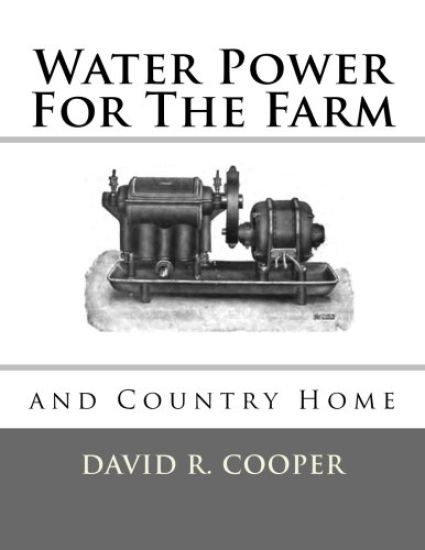
Water Power For The Farm and Country Home
David C. Cooper
Createspace Independent Publishing Platform
2017
nidottu
For centuries, thinkers grappled with a fundamental question: how can sovereign states coexist without destroying each other? Restraining Power recovers a forgotten tradition that offered an answer-the "law of nature and nations" built on reciprocity, justice, and good faith. David C. Hendrickson excavates this vital framework for restraining state violence and shows why it matters now more than ever. All states, Hendrickson argues, have an interest in observing these principles, but few states have violated them more than the United States. He shows that in crossing these principles, US foreign policy has entered a destabilizing shadow world in which force and fraud seem normal.
This is the first book in any language to attempt a comprehensive discussion of the relations between government, technology and science in Philip II’s Spain. In histories of early-modern European technology and science, Spain has consistently been overlooked; yet the assumption that Spain contributed little in these fields has hardly been tested against archival evidence. Dr Goodman redresses this misconception. Through extensive research of source material he offers a reconsideration of Philip’s relations with technology and the sciences, showing the crown’s considerable involvement in technological affairs, ranging through shipbuilding, military engineering, mining, and the organisation of medical provision. The king’s interest in astrology and alchemy are also re-assessed, as are reactions to the occult in official circles, including the Inquisition. This book will appeal beyond historians of science, with relevance to all historians interested in sixteenth-century Spanish civilisation and society.
Right Makes Might: Freedom and Power in the Information Age
David C. Gompert
Createspace Independent Publishing Platform
2012
nidottu