Kirjojen hintavertailu. Mukana 11 244 527 kirjaa ja 12 kauppaa.

Kirjahaku

Etsi kirjoja tekijän nimen, kirjan nimen tai ISBN:n perusteella.

1000 tulosta hakusanalla David Crone

David Cronenberg's a History of Violence

David Cronenberg's a History of Violence

Bart Beaty

University of Toronto Press
2008
pokkari
Arguably the most famous and critically acclaimed Canadian filmmaker, David Cronenberg is celebrated equally for his early genre films, like Scanners (1981) and The Fly (1986), and his dark artistic vision in films such as Dead Ringers (1988) and Crash (1996). The 2005 film A History of Violence was a mainstream success that marked Cronenberg's return to the commercial fold of Hollywood after years of independent art house filmmaking. His international reputation grew and the film was honoured with numerous awards and two Oscar nominations (for screenwriter Josh Olson and supporting actor William Hurt). David Cronenberg's A History of Violence - the lead title in the new Canadian Cinema series - presents readers with a lively study of some of the filmmaker's favourite themes: violence, concealment, transformation, sex, and guilt. Bart Beaty introduces us to Cronenberg's film, situating it in the context of its aesthetic influences, and argues for its uniquely English-Canadian qualities. The author contends that A History of Violence is a nuanced study of masquerade and disguise, a film that thwarts our expectations of film genre as much as it challenges our perception of national geography and cultural mythology. As a contribution to the Canadian Cinema series, the volume also presents readers with an overview of Cronenberg's career, the production history of the film, a discussion of its critical reception, and a filmography. David Cronenberg's A History of Violence is a book for fans, critics, and cinephiles alike.
David Cronenberg's a History of Violence

David Cronenberg's a History of Violence

Bart Beaty

University of Toronto Press
2008
sidottu
Arguably the most famous and critically acclaimed Canadian filmmaker, David Cronenberg is celebrated equally for his early genre films, like Scanners (1981) and The Fly (1986), and his dark artistic vision in films such as Dead Ringers (1988) and Crash (1996). The 2005 film A History of Violence was a mainstream success that marked Cronenberg's return to the commercial fold of Hollywood after years of independent art house filmmaking. His international reputation grew and the film was honoured with numerous awards and two Oscar nominations (for screenwriter Josh Olson and supporting actor William Hurt). David Cronenberg's A History of Violence - the lead title in the new Canadian Cinema series - presents readers with a lively study of some of the filmmaker's favourite themes: violence, concealment, transformation, sex, and guilt. Bart Beaty introduces us to Cronenberg's film, situating it in the context of its aesthetic influences, and argues for its uniquely English-Canadian qualities. The author contends that A History of Violence is a nuanced study of masquerade and disguise, a film that thwarts our expectations of film genre as much as it challenges our perception of national geography and cultural mythology. As a contribution to the Canadian Cinema series, the volume also presents readers with an overview of Cronenberg's career, the production history of the film, a discussion of its critical reception, and a filmography. David Cronenberg's A History of Violence is a book for fans, critics, and cinephiles alike.
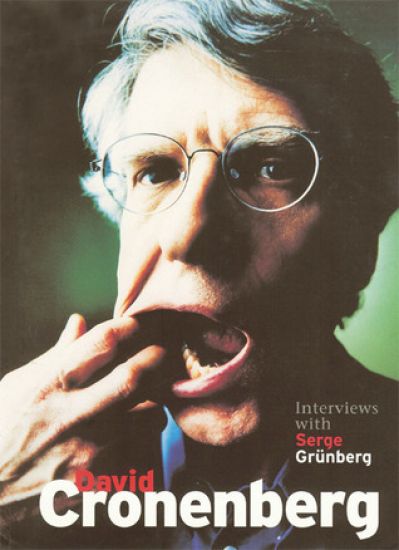
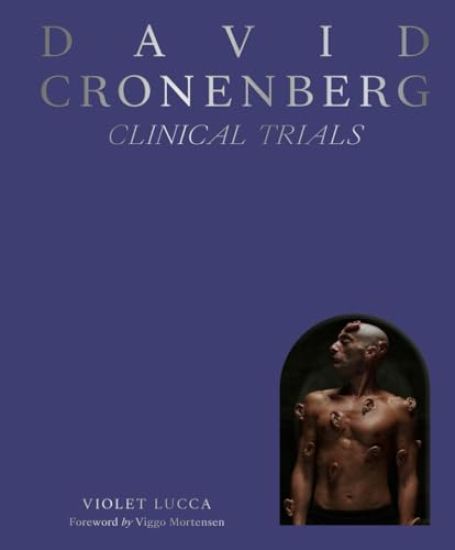
David Cronenberg: Clinical Trials
An illustrated monograph on the work of legendary writer/director David Cronenberg, master of body horror and cinematic provocateur behind films such as The Fly, Scanners, Naked Lunch, Eastern Promises, and Crimes of the Future David Cronenberg’s films have long enjoyed a cult following, pushing the boundaries of taste, blending high art with horror, and straddling the commercial and the cutting-edge. With this handsome book, the familiar and unfamiliar aspects of iconic films such as Videodrome, The Fly, Naked Lunch, and Crash is explored. Though dividing the book into two halves suggests a binary, the Jungian-inspired chapters within each emphasize that this work—and the world itself—is perpetually shifting. The reader progresses through these different stages (of Jungian individuation and therapy) and sees how the recurrent narrative, cultural, and visual themes loop back and intersect with one another. Rather than a straightforward narrative about a filmmaker, this book is a dreamlike exploration of all that is Cronenbergian. Featuring a foreword by Oscar-nominated actor Viggo Mortensen, it also includes interviews with composer Howard Shore, production designer Carol Spier, cinematographer Peter Suschitzky, and producer and playwright/screenwriter Jeremy Thomas.
David Cronenberg

David Cronenberg

University Press of Mississippi
2021
sidottu
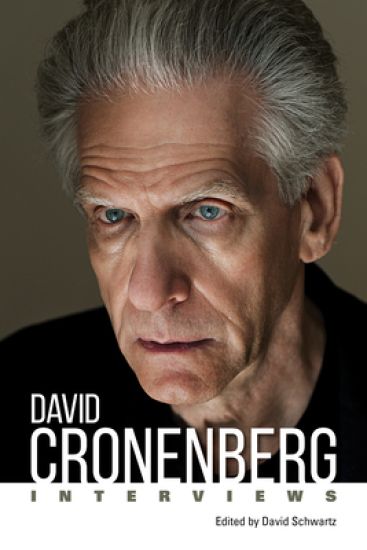
From his early horror movies, including Scanners, Videodrome, Rabid, and The Fly-with their exploding heads, mutating sex organs, rampaging parasites, and scientists turning into insects-to his inventive adaptations of books by William Burroughs (Naked Lunch), Don DeLillo (Cosmopolis), and Bruce Wagner (Maps to the Stars), Canadian director David Cronenberg (b. 1943) has consistently dramatized the struggle between the aspirations of the mind and the messy realities of the flesh. ""I think of human beings as a strange mixture of the physical and the non-physical, and both of these things have their say at every moment we're alive,"" says Cronenberg. ""My films are some kind of strange metaphysical passion play."" Moving deftly between genre and arthouse filmmaking and between original screenplays and literary adaptations, Cronenberg's work is thematically consistent and marked by a rigorous intelligence, a keen sense of humor, and a fearless engagement with the nature of human existence. He has been exploring the most primal themes since the beginning of his career and continues to probe them with growing maturity and depth.Cronenberg's work has drawn the interest of some of the most intelligent contemporary film critics, and the fifteen interviews in this volume feature remarkably in-depth and insightful conversations with such acclaimed writers as Amy Taubin, Gary Indiana, David Breskin, Dennis Lim, Richard Porton, Gavin Smith, and more. The pieces herein reveal Cronenberg to be one of the most articulate and deeply philosophical directors now working, and they comprise an essential companion to an endlessly provocative and thoughtful body of work.
David Cronenberg

David Cronenberg

University Press of Mississippi
2021
nidottu
From his early horror movies, including Scanners, Videodrome, Rabid, and The Fly-with their exploding heads, mutating sex organs, rampaging parasites, and scientists turning into insects-to his inventive adaptations of books by William Burroughs (Naked Lunch), Don DeLillo (Cosmopolis), and Bruce Wagner (Maps to the Stars), Canadian director David Cronenberg (b. 1943) has consistently dramatized the struggle between the aspirations of the mind and the messy realities of the flesh. ""I think of human beings as a strange mixture of the physical and the non-physical, and both of these things have their say at every moment we're alive,"" says Cronenberg. ""My films are some kind of strange metaphysical passion play."" Moving deftly between genre and arthouse filmmaking and between original screenplays and literary adaptations, Cronenberg's work is thematically consistent and marked by a rigorous intelligence, a keen sense of humor, and a fearless engagement with the nature of human existence. He has been exploring the most primal themes since the beginning of his career and continues to probe them with growing maturity and depth.Cronenberg's work has drawn the interest of some of the most intelligent contemporary film critics, and the fifteen interviews in this volume feature remarkably in-depth and insightful conversations with such acclaimed writers as Amy Taubin, Gary Indiana, David Breskin, Dennis Lim, Richard Porton, Gavin Smith, and more. The pieces herein reveal Cronenberg to be one of the most articulate and deeply philosophical directors now working, and they comprise an essential companion to an endlessly provocative and thoughtful body of work.
David Cronenberg: Every Movie, Every Star

David Cronenberg: Every Movie, Every Star

Patrick Chapman

Sonicbond Publishing
2020
nidottu
David Cronenberg’s films stand collectively as one of the great achievements in cinema. Fearless, imaginative and provocative, as well as intelligent and refreshingly disturbing, his work expresses a unique personal vision. More than simply ‘the baron of blood’ or the ‘king of venereal horror’, Cronenberg has long transcended these early attempts to label him. Through five decades of parasites, plastic realities, creative destruction and the rise of the new flesh – here is a filmmaker uniquely suited to dissect our mutating relationship with sex, death and technology. David Cronenberg On Screen presents a new survey of his extraordinary career, from early, experimental shorts and body-horror explorations, to commercial success with The Fly and Dead Ringers, and on to his celebrated and sometimes controversial literary adaptations. This volume also considers his excursions as an actor; key collaborators; television and advertising; and his new phase as a novelist. Cronenberg’s recurring themes are explored along the way: psychological transformation revealed in physical mutation, disease as an agent of change, violence, alternative sexualities, and the viral nature of desire. In our hyper-connected world of pandemic fear and mutable identities, the films of David Cronenberg are as relevant as ever
David Cronenberg

David Cronenberg

Mark Browning

Intellect Books
2007
nidottu
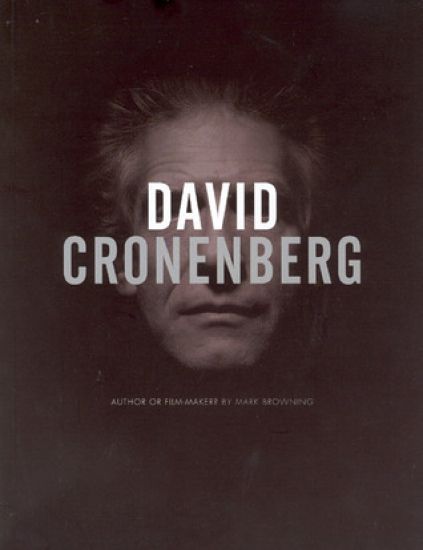
For more than thirty years, David Cronenberg has made independent films such as Scanners and A History of Violence which aim to disturb, surprise, and challenge audiences. He has also repeatedly drawn on literary fiction for inspiration, adapting themes from authors like William Burroughs, J. G. Ballard, and Patrick McGrath for the big screen; David Cronenberg: Author or Filmmaker? is the first book to explore how underground and mainstream fiction have influenced—and can help illuminate—his labyrinthine films. Film scholar Mark Browning examines Cronenberg’s literary aesthetic not only in relation to his films’ obvious source material, but by comparing his movies to the writings of Vladimir Nabokov, Angela Carter, and Bret Easton Ellis. This groundbreaking volume addresses Cronenberg’s narrative structures and his unique conception of auteurism, as well as his films’ shocking psychological frameworks, all in the broader context of film adaptation studies. David Cronenberg is an essential read for anyone interested in the symbiotic relationship between literature and filmmaking. “David Cronenberg is a work that attempts to illuminate and unravel the connection between the great Canadian auteur and his literary influences.”—Film Snob Weekly “David Cronenberg is an essential read for anyone interested in the symbiotic relationship between literature and filmmaking.”—Video Canada
David Cronenbergs "A History of Violence" - zwischen Großstadthölle und Kleinstadtidylle
Studienarbeit aus dem Jahr 2007 im Fachbereich Medien / Kommunikation - Film und Fernsehen, Note: 1,0, Universit t Regensburg (Institut f r Medien- Kultur- und Informationswissenschaften), 5 Quellen im Literaturverzeichnis, Sprache: Deutsch, Abstract: "A History of Violence" - Eine Geschichte zweier Welten David Cronenbergs Drama "A History of Violence," eine 2005 erschienene New Line Cinema Produktion, ist die Verfilmung des gleichnamigen Comic-Romans von John Wagner und Vince Locke. Die Hauptrollen in diesem Film spielen Viggo Mortensen ( Tom Stall ), Maria Bello ( Edie Stall ), Ed Harris ( Carl Fogarty ) und William Hurt ( Richie Cussack ). "A History of Violence" erhielt zwei Oscar Nominierungen in den Kategorien bester Nebendarsteller ( William Hurt ) und bestes adaptiertes Drehbuch. Wie es der Filmtitel besagt, handelt es sich zum einen um eine Geschichte. Genauer um die Lebensgeschichte Tom Stalls. Der zweite Aspekt, welcher aus dem Titel hervorgeht, ist die Gewalt. "Das B se ist nicht im Moloch der Gro stadt beheimatet, wie eine Dichotomie der Handlung zwischenzeitig scheinbar anbietet. Es ist per se in dieser amerikanischen Gesellschaft und deren Geschichte verankert und es befindet sich in Form dieser beiden M rder auf der Durchfahrt. Erst als sie Millbrook erreichen, wirkt die Kleinstadt wie der obligatorische Kontrast." In dieser Arbeit m chte ich die erw hnte Dichotomie genauer untersuchen und berpr fen, ob das eigentlich B se nicht doch im Moloch der Gro stadt beheimatet ist, bzw. dort geboren wird. Die Dichotomie besteht in der Trennung von Gro stadt(h lle) und Kleinstadt(idylle), sowie in Toms altem Leben als Krimineller und seiner neuen Existenz als Familienvater. Dazu analysiere ich die filmische Darstellung der Gro - und Kleinstadt und erstelle einen Vergleich zwischen den Br dern Richie Cussack und Tom Stall. Mit Hilfe stadtsoziologischer Literatur m chte ich die Frage nach der Mentalit tspr gung durch das Lebensumfeld kl ren. Au erdem untersuc
David Cronenberg

David Cronenberg

Bertz + Fischer
2011
nidottu
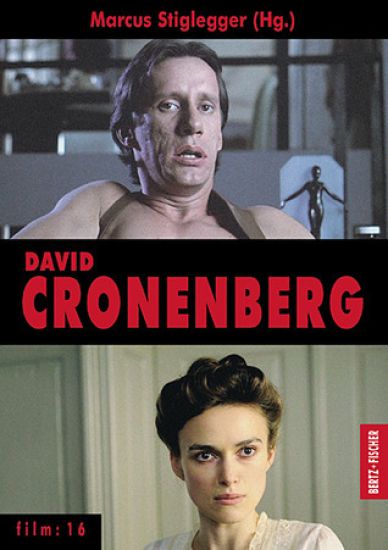
David Cronenberg ist ein Grenzgänger zwischen Horror- und Autorenfilm - und seit dem Science-Fiction-Thriller DIE FLIEGE und dem Zwillingsdrama DIE UNZERTRENNLICHEN der wohl prominenteste Filmregisseur Kanadas. Sein stilistisch vielseitiges Werk umfasst lupenreine Genrefilme ebenso wie avantgardistische Experimente und - vor allem in jüngster Zeit - packendes Spannungskino (A HISTORY OF VIOLENCE; TÖDLICHE VERSPRECHEN). Mit bizarrer Imaginationskraft und intellektueller Kühle verfolgt er dabei beharrlich immer wieder die gleichen Themen und Obsessionen: Körpertransformationen und Körperhorror, die Facetten des Monströsen und die Krise des Individuums in der Moderne. Dieses Buch würdigt Cronenberg als einen Konzeptkünstler, dessen Gesamtwerk sich wie ein Puzzlespiel zusammenfügt. Der sorgfältig und reich bebilderte Band enthält ein ausführliches Interview mit dem Regisseur, thematisch breit gefächerte Essays, die sich u.a. mit seinen Literaturverfilmungen, den apokalyptischen Visionen seiner Filme sowie seinen Schauspielerauftritten beschäftigen, und Texte zu sämtlichen Filmen. Hinzu kommen eine detaillierte Biblio- und Filmografie sowie Besprechungen der DVD-Editionen.
Zu "eXistenZ" von David Cronenberg - eine Filmanalyse
Studienarbeit aus dem Jahr 2000 im Fachbereich Filmwissenschaft, Note: 2,0, Friedrich-Alexander-Universitat Erlangen-Nurnberg (Institut fur Theater- und Medienwissenschaft), Veranstaltung: Kino und neue Wirklichkeit, Sprache: Deutsch, Abstract: In der vorliegenden Arbeit wird der Film "eXistenZ" von David Cronenberg analysiert. David Cronenberg wird am 15. Mai 1943 in Toronto/Kanada geboren. Sein Cyber-Thriller "eXistenZ" kommt 1999 in die Kinos. Im gleichen Jahr erhalt Cronenberg dafur den Silbernen Baren auf den Internationalen Filmfestspielen in Berlin. Diese Filmanalyse beschaftigt sich insbesondere mit der Darstellung der Wirklichkeit in "eXistenZ." Im Film erfindet die Computerspiel-Designerin Allegra Geller (gespielt von Jennifer Jason Leigh) ein neues Spiel, welches die Grenzen zwischen Fitkion und Realitat verwischt. Das neue Videospiel wird mittels einer Nabelschnur unmittelbar in das Ruckenmark eingestopselt. Statt die Spielzuge auf einem Bildschirm zu verfolgen, spielen sie sich - von der Realitat nicht mehr zu trennen - direkt im Hirn des Spielers ab. Gegner des Spiels veruben einen Anschlag auf Allegra, aber zusammen mit dem Leibwachter Ted Pikul (gespielt von Jude Law) kann sie fluchten. Die beiden beschliessen mittels eines Tests zu uberprufen, ob das Computerprogramm bei dem Anschlag beschadigt wurde. Dazu mussen sie gemeinsam in die Spielwelt eintreten und geraten dabei in ein verschlungenes Netz verschiedener Spiel- und Realitatsebenen. Bald wird es fur beide immer schwieriger zwischen Spiel und Realitat zu unterscheiden. Mit der Frage "Are we still in the game?," gestellt von einem Mitspieler, der befurchtet, ermordet zu werden, endet der Film auch fur den Zuschauer in Ungewissheit