

Kirjahaku
Etsi kirjoja tekijän nimen, kirjan nimen tai ISBN:n perusteella.
1000 tulosta hakusanalla David Dawson Humes



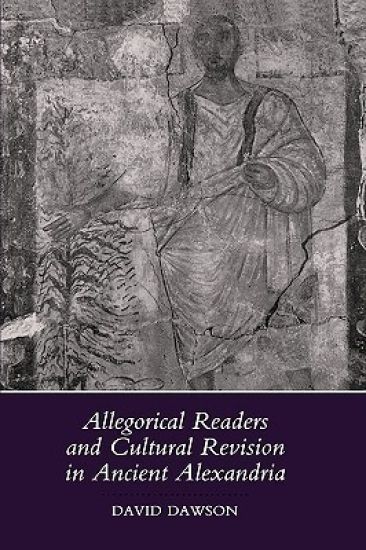
Allegorical Readers and Cultural Revision in Ancient Alexandria
David Dawson
University of California Press
1991
sidottu
Allegorical readings of literary or religious texts always begin as counterreadings, starting with denial or negation, challenging the literal sense: 'You have read the text this way, but I will read it differently.' David Dawson insists that ancient allegory is best understood not simply as a way of reading texts, but as a way of using non-literal readings to reinterpret culture and society. Here he describes how some ancient pagan, Jewish, and Christian interpreters used allegory to endorse, revise, and subvert competing Christian and pagan world views. This reassessment of allegorical reading emphasizes socio-cultural contexts rather than purely formal literary features, opening with an analysis of the pagan use of etymology and allegory in the Hellenistic world and pagan opposition to both techniques. The remainder of the book presents three Hellenistic religious writers who each typify distinctive models of allegorical interpretation: the Jewish exegete Philo, the Christian Gnostic Valentinus, and the Christian Platonist Clement. The study engages issues in the fields of classics, history of Christianity and Hellenistic Judaism, literary criticism and theory, and more broadly, critical theory and cultural criticism.
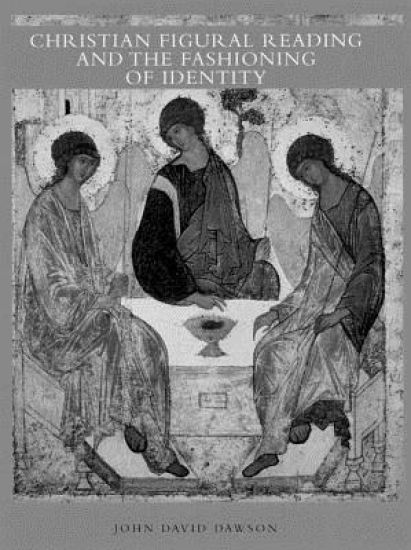
Christian Figural Reading and the Fashioning of Identity
David Dawson
University of California Press
2001
sidottu
This book makes an illuminating contribution to one of Christianity's central problems: the understanding and interpretation of scripture, and more specifically, the relationship between the Old Testament and the New. John David Dawson analyzes the practice and theory of 'figural' reading in the Christian tradition of Biblical interpretation by looking at writings of Jewish and Christian thinkers, both ancient and modern, who have reflected on that form of traditional Christian Biblical interpretation. Dawson argues Christian interpretation of Hebrew scripture originally was, and should be, aimed at not reducing the Jewish meaning or replacing it but rather at building on it or carrying on from it. Dawson closely examines the work of three prominent twentieth-century thinkers who have offered influential variants of figural reading: Biblical scholar Daniel Boyarin, philologist and literary historian Erich Auerbach, and Christian theologian Hans Frei. Contrasting the interpretive programs of these modern thinkers to that of Origen of Alexandria, Dawson proposes that Origen exemplifies a kind of Christian reading that can respect Christianity's link to Judaism while also respecting the independent religious identity of Jews. Through a fresh study of Origen's allegorical interpretation, this book challenges the common charge that Christian non-literal reading of scripture necessarily undermines the literal meaning of the text. This highly interdisciplinary work will advance debates about different methods of interpretation and about different types of textual meaning that are relevant for many disciplines, including ancient Christianity, Jewish and Christian thought, literary theory, religious studies, and classical studies.
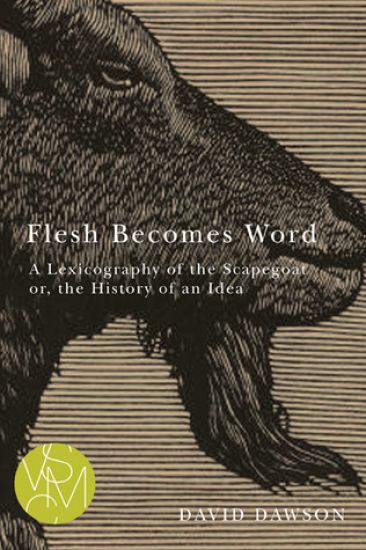
Though its coinage can be traced back to a sixteenth-century translation of Leviticus, the term "scapegoat" has enjoyed a long and varied history of both scholarly and everyday uses. While WilliamTyndale employed it to describe one of two goats chosen by lot to escape the Day of Atonement sacrifices with its life, the expression was soon far more widely used to name victims of false accusation and unwarranted punishment. As such, the scapegoat figures prominently in contemporary theories of violence, from its elevation by Frazer to a ritual category in his ethnological opus "The Golden Bough "to its pivotal roles in projects as seemingly at odds as Jacques Derrida's deconstruction of Western metaphysics and Rene Girard's theory of cultural origins. A copiously researched and groundbreaking investigation of the expression in such wide use today, "Flesh Becomes Word "follows the scapegoat from its origins in Mesopotamian ritual across centuries of typological reflection on the meaning of Jesus' death, to its first informal uses in the pornographic and plague literature of the 1600s, and finally into the modern era, where the word takes recognizable shape in the context of the New English Quaker persecution and proto-feminist diatribe at the close of the seventeenth century. The historical circumstances of its lexical formation prove rich in implications for current theories of the scapegoat and the making of the modern world alike.


MBA - Implementing Two Theses To Improve The MBA Curriculum
David Dawson
LAP Lambert Academic Publishing
2013
pokkari
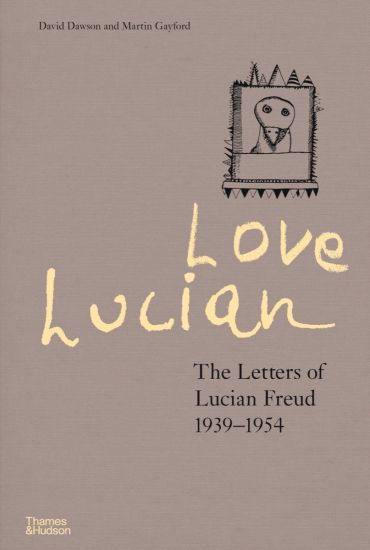
Love Lucian: The Letters of Lucian Freud 1939–1954 – A Times Best Art Book of 2022
David Dawson; Martin Gayford
THAMES HUDSON LTD
2022
sidottu
A Times Best Art Book of 2022Reproductions of the young Lucian Freud’s letters alongside insightful context and commentary reveal the foundations of the artist’s personality and creative practice. The young Lucian Freud was described by his friend Stephen Spender as ‘totally alive, like something not entirely human, a leprechaun, a changeling child, or, if there is a male opposite, a witch.’ All that magnetism and brilliance is displayed in the letters assembled here. Ranging from schoolboy messages to his parents, through letters and carefully-chosen, often embellished postcards to friends, lovers and confidants, to correspondence with patrons and associates. They are peppered with wit, affection and irreverence. Alongside rarely seen photographs and Freud’s extraordinary works, each chapter charts Freud’s evolving art alongside intimate accounts of his life. We trace Freud’s early friendships with Stephen Spender, John Craxton, his wild days at art school in East Anglia, and a stint as a merchant seaman. Among the highlights are Freud’s accounts of his first trip to Paris in 1946 and encounters with Picasso, Alexander Calder and Giacometti (who, he thought, looked like Harpo Marx). Equally revealing are letters to and from his first love, Lorna Wishart and second wife, Caroline Blackwood. Among his friends and confidantes were Sonia Orwell and Ann Fleming: remarkable, hitherto unknown letters to both of whom are included. To Ann Fleming he wrote a richly-comic, six-page description of a high society fancy dress ball which took place at Biarritz in 1953. He also went to stay with Ann and her husband Ian in their house in Jamaica, Goldeneye. From there, he sent a stream of letters, plus a telegram to his colleagues at the Slade School of Fine Art (where he was supposed to be teaching): “PLEASE SEND TEN SHEETS GREY GREEN INGRES PAPER”. The volume ends in early 1954 with his inclusion at the age of 31, as one of the artists representing Britain at the Venice Biennale - the high point of his early career. Co-authored by David Dawson and Martin Gayford, this is the first published collection of Freud’s correspondence, many brought to light for the first time. Reproduced in facsimile alongside reproductions of Freud’s artwork, the letters are linked by a narrative that weaves them into the story of his life and relationships through his formative first three decades. Collectively, they provide a powerful insight into his early life and art.
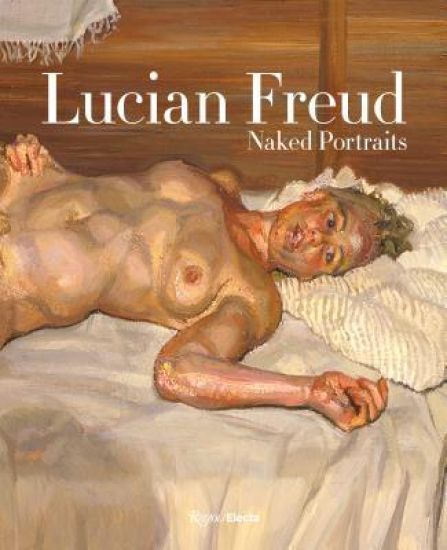
Lucian Freud: Monumental
David Dawson; Philippe De Montebello
Rizzoli International Publications
2019
sidottu
Intimate portraits from one of the most innovative figurative artists of the twentieth century and the master of painted flesh.Curated by the artist's longtime studio assistant and friend, David Dawson, this important volume features twenty major and rarely seen paintings by Lucian Freud (1922-2011). The book begins with works from 1990, when Freud began painting the performance artist Leigh Bowery: these large-scale portraits of Bowery ushered in a new sense of monumentality in the artist's oeuvre. Inspired by Bowery's impressive physique, Freud began working on a larger scale, which emphasized the physical presence of his subjects. Despite their grand scale, Freud's subjects are still depicted with a sense of intimacy, penetrating honesty, and psychological depth.The naked body is a subject that has special significance in Freud's oeuvre. Nakedness was a way for Freud to get a more truthful portrait. Freud's probing oils get fresh consideration in this monograph and Dawson provides insights and stories about Freud working on these portraits, giving an intriguing behind-the-scenes look at the life of a contemporary master of representational art.

The first serious study on the paintings of the female icon and one of the most celebrated British artists, Tracey Emin Dame Tracey Emin DBE is known for her frank, confessional style and for transforming her inner world into intimate works of art. She has become one of the most celebrated artists in the world, a household name, and part of the Art establishment. Her practice includes painting, drawing, film, photography, sewn appliqué, sculpture, and neon, but in recent years she has focused on painting. Inspired by artists Egon Schiele and Edvard Munch, her paintings are provocative, confrontational, and vulnerable. They are at once deeply personal and universal, and it’s for this reason her work is revered around the world, and she has become an international icon. The book features more than 300 images of Emin’s gestural and expressive figurative paintings, from the 1990s to today, as well as a conversation with close friend David Dawson and an essay by Australian writer Jennifer Higgie. Made in close collaboration with the artist, this special book is the first publication dedicated to Emin’s emotive paintings and showcases her soulful work like never before.
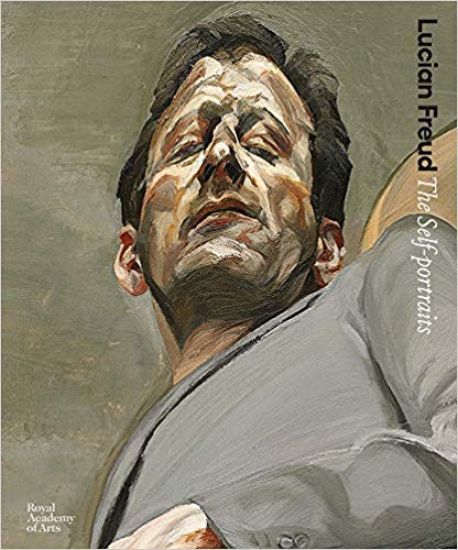
Lucian Freud
David Dawson; Joseph Leo Koerner; Jasper Sharp; Sebastian Smee
Royal Academy of Arts
2019
sidottu
In 1964 Lucian Freud set his students at the Norwich College of Art an assignment: to paint naked self-portraits and to make them 'revealing, telling, believable... really shameless'. It was advice that the artist was often to follow himself. Visceral, unflinching and often nude, Freud's self-portraits give us an insight into the development of his style as a painter. The works provide the viewer with a constant reminder of the artist's overwhelming presence, whether he is confronting the viewer directly or only present as a shadow or in a reflection. Essays by leading authorities - including those who knew him well - explore Freud's life and work, and analyse the importance of self-portraiture in his practice and the intensity that he maintained when studying his own.

When people seek psychological support, formulation is the theory-driven methodology used by many practitioners to guide identification of the processes, mechanisms, and patterns of behaviour that appear to be contributing to the presenting difficulties. However, the process of formulating – or applying psychological theory to practice – can often seem unclear. In this volume, we present multiple demonstrations of formulation in action – written by applied psychologists embedded in clinical training, research, and practice. The volume covers a range of contemporary approaches to formulation and therapy that have not been considered in extant works, and includes unique sections offering critical counter-perspectives and commentaries on each approach (and its application) by authors working from alternative theoretical positions.

Mechatronics and the Design of Intelligent Machines and Systems
David Allan Bradley; Derek Seward; David Dawson; Stuart Burge
Nelson Thornes Ltd
2000
nidottu
Mechatronics as a discipline has an ever growing impact on engineering and engineering education as a defining approach to the design, development, and operation of an increasingly wide range of engineering systems. The increasing scope and complexity of mechatronic systems means that their design and development now involve not only the technical aspects of its core disciplines, but also aspects of organization, training, and management. Mechatronics and the Design of Intelligent Machines and Systems reflects the significant areas of development in mechatronics and focuses on the higher-level approaches needed to support the design and implementation of mechatronic systems. Throughout the book, the authors emphasize the importance of systems integration. Each chapter deals with a particular aspect of the design and development process, from the specification of the system to software design and from the human-machine interface to the requirements for safe operation and effective manufacture. Notable among this text's many features is the use of a running case study-the autonomous and robotic excavator LUCIE-to illustrate points made in various chapters. This, combined with the authors' clear prose, systematic organization, and generous use of examples and illustrations provides students with a firm understanding of mechatronics as a discipline, some of the problems encountered in its various areas, and the developing techniques used to solve those problems.

Mechatronics and the Design of Intelligent Machines and Systems
David Allan Bradley; Derek Seward; David Dawson; Stuart Burge
CRC Press
2017
sidottu
Mechatronics as a discipline has an ever growing impact on engineering and engineering education as a defining approach to the design, development, and operation of an increasingly wide range of engineering systems. The increasing scope and complexity of mechatronic systems means that their design and development now involve not only the technical aspects of its core disciplines, but also aspects of organization, training, and management. Mechatronics and the Design of Intelligent Machines and Systems reflects the significant areas of development in mechatronics and focuses on the higher-level approaches needed to support the design and implementation of mechatronic systems. Throughout the book, the authors emphasize the importance of systems integration. Each chapter deals with a particular aspect of the design and development process, from the specification of the system to software design and from the human-machine interface to the requirements for safe operation and effective manufacture. Notable among this text's many features is the use of a running case study-the autonomous and robotic excavator LUCIE-to illustrate points made in various chapters. This, combined with the authors' clear prose, systematic organization, and generous use of examples and illustrations provides students with a firm understanding of mechatronics as a discipline, some of the problems encountered in its various areas, and the developing techniques used to solve those problems.

Un appel vers le large (Launch Out Into The Deep: The Story of Parkside Ranch): L'histoire de Parkside Ranch
Fred Warnholtz; David Dawson
Createspace Independent Publishing Platform
2017
nidottu
... il dit Simon: Avance en pleine eau, et jetez vos filets pour p cher. Simon lui r pondit: Ma tre, nous avons travaill toute la nuit sans rien prendre; mais, sur ta parole, je jetterai le filet. - Luc 5.4,5 Un appel vers le large raconte l'histoire de Fred et Jeanne Warnholtz qui, avec l'aide de Dieu et de leur famille, ont fond Parkside Ranch, un camp chr tien pour les jeunes Cherry River, au Qu bec. Depuis plus de 40 ans, des milliers de jeunes se rendent Parkside Ranch pour entendre le message de l' vangile et grandir dans leur marche avec Christ. Ce livre raconte l'histoire remarquable de ce minist re chr tien et des gens qui ont particip sa fondation. Il s'agit d'un t moignage puissant qui exhortera et encouragera d'autres disciples de J sus-Christ s'en remettre Dieu dans la poursuite de leur propre aventure. Parkside Ranch occupera toujours une place privil gi e dans mon coeur, car c'est l que j'ai rencontr le Seigneur et que ma vie chr tienne a d but ... R trospectivement, je comprends maintenant que le Seigneur avait pr par cette voie pour moi afin de me conduire l o je suis aujourd'hui (J 29.11). - Angela (Godin) Faries, Nassau, Bermudes Fred et Jeanne Warnholtz ont t une merveilleuse source de b n diction pour ma famille et moi. Les le ons bibliques que j'ai apprises et les amiti s que j'ai nou es au camp ont encore une incidence sur ma vie, aujourd'hui. - Patricia (Lambert) Rose, Ketchikan, Alaska Je serai toujours reconnaissant l' quipe de Parkside Ranch; Dieu m'a fait grandir par ce minist re et par l'exemple de leadership qu'on y trouvait. Je sais que je fais partie des nombreuses vies que les camps de Parkside ont transform es pour Christ. - Ross MacDonald, Oakville, Qu bec