The Wolff-Kishner Reduction and Related Reactions: Discovery and Development offers a detailed discussion of this reaction, its discoverers, and its development since its discovery. Derivative name reactions—including the Wharton and Shapiro reactions—are also discussed. The book is illustrated with examples from literature and corresponding references to the primary literature to aid further reading. It provides a comprehensive review of the century of chemistry that allows the reader to follow the development of this important synthetic reaction. In addition, it provides biographical details on the chemists who discovered and developed the reaction, thus adding a human dimension to the discussion.
Addition, Elimination and Substitution: Markovnikov, Hofmann, Zaitsev and Walden: Discovery and Development discusses foundational reactions in organic chemistry and their major protagonists, contributions to synthesis, and history. Hofmann, Zaitsev, and Markovnikov are introduced, along with their major discoveries and contributions to organic chemistry. The history of controversies around Markovnikov’s Rule are addressed. The book introduces Walden’s original demonstration of configuration inversion, then discusses bimolecular elimination reactions, regioselective addition reactions, regiospecific alkene synthesis, and the development of modern reactions with configuration inversion. With its unique perspective, focus, and comprehensive coverage, this book belongs on the shelf of every organic chemist.
Written by a master teacher, Advanced Organic Chemistry presents a clear, concise, and complete overview of the subject that is ideal for both advanced undergraduate and graduate courses. In contrast with many other books, this volume is a true textbook, not a reference book. FEATURES * Uses a unique method of categorizing organic reactions that is based on reactivity principles rather than mechanism or functional group, enabling students to see reactivity patterns in superficially widely disparate systems * Emphasizes fundamental physical organic concepts that reinforce themes, giving students the foundation to understand both mechanisms and synthesis * Covers asymmetric methodologies, a topic that is now ubiquitous in the current literature * Numerous in-chapter worked problems and end-of-chapter additional exercises allow students to apply concepts as they learn them * More than 2500 references to the primary literature in the body of the book(along with another 750 references in the problems) encourage students to become familiar with real scholarship as they master the concepts * Brief historical vignettes about relevant chemists reinforce a historical and humanizing approach to learning science
In the wake of Hurricane Katrina, many questioned whether the large number of political appointees in the Federal Emergency Management Agency contributed to the agency's poor handling of the catastrophe, ultimately costing hundreds of lives and causing immeasurable pain and suffering. The Politics of Presidential Appointments examines in depth how and why presidents use political appointees and how their choices impact government performance--for better or worse. One way presidents can influence the permanent bureaucracy is by filling key posts with people who are sympathetic to their policy goals. But if the president's appointees lack competence and an agency fails in its mission--as with Katrina--the president is accused of employing his friends and allies to the detriment of the public. Through case studies and cutting-edge analysis, David Lewis takes a fascinating look at presidential appointments dating back to the 1960s to learn which jobs went to appointees, which agencies were more likely to have appointees, how the use of appointees varied by administration, and how it affected agency performance. He argues that presidents politicize even when it hurts performance--and often with support from Congress--because they need agencies to be responsive to presidential direction. He shows how agency missions and personnel--and whether they line up with the president's vision--determine which agencies presidents target with appointees, and he sheds new light on the important role patronage plays in appointment decisions.
The administrative state is the nexus of American policy making in the postwar period. The vague and sometimes conflicting policy mandates of Congress, the president, and courts are translated into real public policy in the bureaucracy. As the role of the national government has expanded, the national legislature and executive have increasingly delegated authority to administrative agencies to make fundamental policy decisions. How this administrative state is designed, its coherence, its responsiveness, and its efficacy determine, in Robert Dahl's phrase, "who gets what, when, and how." This study of agency design, thus, has implications for the study of politics in many areas. The structure of bureaucracies can determine the degree to which political actors can change the direction of agency policy. Politicians frequently attempt to lock their policy preferences into place through insulating structures that are mandated by statute or executive decree. This insulation of public bureaucracies such as the National Transportation Safety Board, the Federal Election Commission, and the National Nuclear Security Administration, is essential to understanding both administrative policy outputs and executive-legislative politics in the United States. This book explains why, when, and how political actors create administrative agencies in such a way as to insulate them from political control, particularly presidential control.
The administrative state is the nexus of American policy making in the postwar period. The vague and sometimes conflicting policy mandates of Congress, the president, and courts are translated into real public policy in the bureaucracy. As the role of the national government has expanded, the national legislature and executive have increasingly delegated authority to administrative agencies to make fundamental policy decisions. How this administrative state is designed, its coherence, its responsiveness, and its efficacy determine, in Robert Dahl's phrase, "who gets what, when, and how." This study of agency design, thus, has implications for the study of politics in many areas. The structure of bureaucracies can determine the degree to which political actors can change the direction of agency policy. Politicians frequently attempt to lock their policy preferences into place through insulating structures that are mandated by statute or executive decree. This insulation of public bureaucracies such as the National Transportation Safety Board, the Federal Election Commission, and the National Nuclear Security Administration, is essential to understanding both administrative policy outputs and executive-legislative politics in the United States. This book explains why, when, and how political actors create administrative agencies in such a way as to insulate them from political control, particularly presidential control.
The organic chemists of Russia during the pre-revolutionary period included some of the most creative and talented chemists of the nineteenth and early twentieth centuries. Indeed, this is attested by the number of reactions and empirical rules bearing their names. This volume is of interest for both historians of chemistry and organic chemists wishing to discover more about the historical development of their discipline in Russia. From the founding of the Russian Academy of Sciences by Peter the Great in 1725 to the early years of the nineteenth century, Russian organic chemistry was largely in the hands of foreign scientists. However, the Russification of organic chemistry in Russia had begun before the middle of the nineteenth century, and reached its zenith during the last half of the same century, by which time vibrant schools of chemistry had arisen in the eastern city of Kazan', at Moscow and at St. Petersburg. By the end of the century, the Chairs of organic chemistry at universities throughout the Russian empire were occupied by Russian chemists, almost half of them trained at Kazan'. This volume discusses the contributions of these organic chemists which include: the structural theory of organic chemistry, empirical rules for addition and elimination, reactions involving carbon nucleophiles, such as the aldol reaction and alcohol synthesis using organozinc nucleophiles, the discovery of sulfoxides and sulfonium salts, and a range of important redox reactions.
Although airpower capabilities have improved dramatically in the past decade, the joint warfighting potential offered by these capabilities is not being fully realized. After describing several alternative options for improving the effectiveness of air and ground fires and maneuver, the authors propose a new joint warfighting concept and demonstrate its potential to increase effectiveness during major combat.
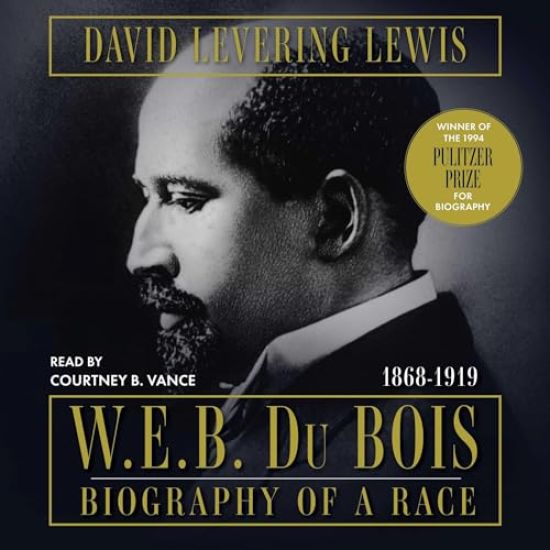
William Edward Burghardt Du Bois - the premier architect of the civil rights movement in America - was a towering and controversial personality, a fiercely proud individual blessed with the language of the poet and the impatience of the agitator. Now, David Levering Lewis has carved one volume out of his superlative two-volume biography of this monumental figure that set the standard for historical scholarship on this era. In his magisterial prose, Lewis chronicles Du Bois' long and storied career, detailing his monumental contributions the US character that echo still today.
First time on audio The timeless Pulitzer Prize winner, the first in an epic two-volume biography that set the standard for historical scholarship on this era, narrated by Emmy and Tony Award winner Courtney B. Vance.This monumental biography by David Levering Lewis--eight years in the research and writing--treats the early and middle phases of a long and intense career: a crucial fifty-year period that demonstrates how W.E.B. Du Bois changed forever the way Americans think about themselves. William Edward Burghardt Du Bois?the premier architect of the civil rights movement in America?was a towering and controversial personality, a fiercely proud individual blessed with the language of the poet and the impatience of the agitator. In the first of his superlative two-volume biography, renowned scholar David Levering Lewis chronicles the first five decades of Du Bois's long and storied life, detailing in magisterial prose the momentous contributions to our national character that still echo today.
W. E. B. Du Bois was a public intellectual, sociologist, and activist on behalf of the African American community. He profoundly shaped black political culture in the United States through his founding role in the NAACP, as well as internationally through the Pan-African movement. Du Bois's sociological and historical research on African-American communities and culture broke ground in many areas, including the history of the post-Civil War Reconstruction period. Du Bois was also a prolific author of novels, autobiographical accounts, innumerable editorials and journalistic pieces, and several works of history. Black Reconstruction in America tells and interprets the story of the twenty years of Reconstruction from the point of view of newly liberated African Americans. Though lambasted by critics at the time of its publication in 1935, Black Reconstruction has only grown in historical and literary importance. In the 1960s it joined the canon of the most influential revisionist historical works. Its greatest achievement is weaving a credible, lyrical historical narrative of the hostile and politically fraught years of 1860-1880 with a powerful critical analysis of the harmful effects of democracy, including Jim Crow laws and other injustices. With a series introduction by editor Henry Louis Gates, Jr., and an introduction by David Levering Lewis, this edition is essential for anyone interested in African American history.
The weather patterns and topography of America's Gulf Coast create favorable growing conditions for thousands of species of mushrooms, but the complete region has generally gone uncharted when it comes to mycology. Mushrooms of the Gulf Coast States at last delivers an in-depth, high-quality, user-friendly field guide, featuring more than 1,000 common and lesser-known species-some of which are being illustrated in color for the first time.Using easily identifiable characteristics and a color key, the authors enable anyone, whether amateur mushroom hunter or professional mycologist, to discern and learn about the numerous species of mushrooms encountered in Texas, Louisiana, Mississippi, Alabama, and Florida. Wild-food enthusiasts will appreciate the information on edibility or toxicity that accompanies each description, and they will also find the book’s detailed instructions for collecting, cleaning, testing, preserving, and cooking wild mushrooms to be of great interest. Providing encyclopedic knowledge in a handy format that fits in a backpack, Mushrooms of the Gulf Coast States is a must-have for any mushroom lover.
Eberhard Arnold; Dietrich Bonhoeffer; Joan Chittister; Dorothy Day; Fyodor Dostoyevsky; Richard J. Foster; Jonathan Wilson-Hartgrove; David Janzen; Søren Kierkegaard; C. S. Lewis; Chiara Lubich; Thomas Merton; Henri J. M. Nouwen; John M. Perkins; Eugene H. Peterson; Christine D. Pohl; Howard A. Snyder; Mother Teresa; Saint Benedict; Jeremiah Barker; Amy Carmichael; Hans Denck; Andreas Ehrenpreis; Thomas R Kelly; Penelope Lawson; Juan Mateos; Kathleen Norris; Thomas E Powers; Peter Riedemann; Christopher C Smith; Ulrich Stadler
Fifty-two readings on living in intentional Christian community to spark group discussion.Gold Medal Winner, 2017 Illumination Book Awards, Christian LivingSilver Medal Winner, 2017 Benjamin Franklin Award in Religion, Independent Book Publishers AssociationWhy, in an age of connectivity, are our lives more isolated and fragmented than ever? And what can be done about it? The answer lies in the hands of God’s people. Increasingly, today’s Christians want to be the church, to follow Christ together in daily life. From every corner of society, they are daring to step away from the status quo and respond to Christ’s call to share their lives more fully with one another and with others. As they take the plunge, they are discovering the rich, meaningful life that Jesus has in mind for all people, and pointing the church back to its original calling: to be a gathered, united community that demonstrates the transforming love of God.Of course, such a life together with others isn’t easy. The selections in this volume are, by and large, written by practitioners—people who have pioneered life in intentional community and have discovered in the nitty-gritty of daily life what it takes to establish, nurture, and sustain a Christian community over the long haul.Whether you have just begun thinking about communal living, are already embarking on sharing life with others, or have been part of a community for many years, the pieces in this collection will encourage, challenge, and strengthen you. The book’s fifty-two chapters can be read one a week to ignite meaningful group discussion.Contributors include: John F. Alexander, Eberhard Arnold, J. Heinrich Arnold, Johann Christoph Arnold, Alden Bass, Benedict of Nursia, Christoph Friedrich Blumhardt, Leonardo Boff, Dietrich Bonhoeffer, Joan Chittister, Stephen B. Clark, Andy Crouch, Dorothy Day, Anthony de Mello, Elizabeth Dede, Catherine de Hueck Doherty, Fyodor Dostoyevsky, Jenny Duckworth, Friedrich Foerster, Richard J. Foster, Jodi Garbison, Arthur G. Gish, Helmut Gollwitzer, Adele J Gonzalez, Stanley Hauerwas, Joseph H. Hellerman, Roy Hession, David Janzen, Rufus Jones, Emmanuel Katongole, Arthur Katz, Søren Kierkegaard, C. Norman Kraus, C.S. Lewis, Gerhard Lohfink, Ed Loring, Chiara Lubich, George MacDonald, Thomas Merton, Hal Miller, José P. Miranda, Jürgen Moltmann, Charles E. Moore, Henri J. M. Nouwen, Elizabeth O’Connor, John M. Perkins, Eugene H.Peterson, Christine D. Pohl, Chris Rice, Basilea Schlink, Howard A. Snyder, Mother Teresa, Thomas à Kempis, Elton Trueblood, and Jonathan Wilson-Hartgrove.
This is the seventh edition of a book long acclaimed by educators, students, and professional insurance people as an excellent source for definitions of insurance terms. The brief, succinct entries explain the meaning of words and phrases concerned with all fields of insurance-life, health, property, liability, marine, pension, surety, social, real estate, and municipal and federal regulating agencies. The more commonly used abbreviations, together with their meanings, are located at the beginning of each alphabetically ordered section. This revised edition has been expanded to include six hundred new terms in all fields, but principally in real estate insurance. It also contains a newly updated section of separate directories which gives the addresses of state insurance commissioners and organizations related to the insurance industry.
Women are still underrepresented as public-sector organizational leaders, despite comprising half of the United States public-sector workforce. To explore the factors driving gender imbalance, this Element employs a problem-driven approach to examine gender imbalance in local government management. We use multiple methods, inductive and deductive research, and different theoretical frames for exploring why so few women are city or county managers. Our interviews, resume analysis and secondary data analysis suggesting that women in local government management face a complex puzzle of gendered experiences, career paths and appointment circumstances that lend insights into gender imbalanced leadership in this domain.
Inspirado por Roald Dahl and theTwits, David Downie escribe unha arrepiante historia que narra as aventuras de David e mais o seu can, Jacko, e os seus encontros co grotesco se or Snigglese a s a mascota mortal, a serpe. O libro conta con preciosas ilustraci ns de Tea Seroya. Inspired by Roald Dahl and the Twits, David Downie writes an engaging account of the horrible stories his dad told him as a boy. The stories are beautifully illustrated by Tea Seroya. Suitable for ages 8 and up.