Kirjojen hintavertailu. Mukana 12 390 323 kirjaa ja 12 kauppaa.

Kirjahaku

Etsi kirjoja tekijän nimen, kirjan nimen tai ISBN:n perusteella.

1000 tulosta hakusanalla David Eilenstein; Harry Eilenstein

Ninja und Magie

Ninja und Magie

David Eilenstein; Harry Eilenstein

BoD - Books on Demand
2024
pokkari
Was haben Ninja und Magie gemeinsam? Au er nat rlich, da Meister Yoda beides perfekt beherrscht ... In diesem Buch vergleichen Harry Eilenstein und sein Sohn David 38 verschiedene Aspekte beider K nste - und in fast allen Bereichen stimmen Ninja und Magie in ihren Grunds tzen vollst ndig miteinander berein. Daher lassen sich die Erkenntnisse und F higkeiten aus dem einen Bereich leicht in den anderen Bereich bertragen. Harry Eilenstein hat 50 Jahre Erfahrung mit Magie, Astrologie, Meditation und verwandten Themen und hat mittlerweile 250 B cher zu diesen Themen geschrieben - David Eilenstein ist aus der RTL-Ninja-Show und in der Ninja-Szene gut bekannt und hat inzwischen in Darmstadt mit Freunden die Ninja-Halle "Ninja Skillz" er ffnet.

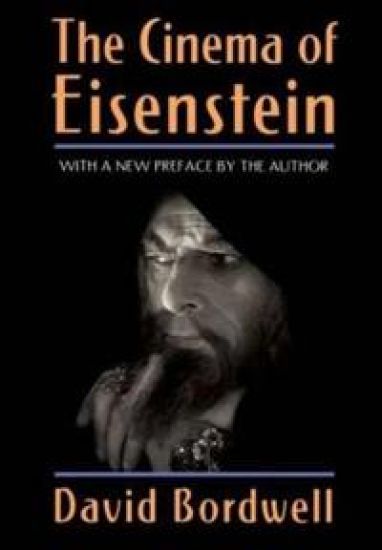
The Cinema of Eisenstein

The Cinema of Eisenstein

David Bordwell

Routledge
2005
nidottu
The Cinema of Eisenstein is David Bordwell's comprehensive analysis of the films of Sergei Eisenstein, arguably the key figure in the entire history of film. The director of such classics as Potemkin,Ivan the Terrible, October, Strike, and Alexander Nevsky, Eisenstein theorized montage, presented Soviet realism to the world, and mastered the concept of film epic. Comprehensive, authoritative, and illustrated throughout, this classic work deserves to be on the shelf of every serious student of cinema.
The Cinema of Eisenstein

The Cinema of Eisenstein

David Bordwell

Routledge
2016
sidottu
The Cinema of Eisenstein is David Bordwell's comprehensive analysis of the films of Sergei Eisenstein, arguably the key figure in the entire history of film. The director of such classics as Potemkin,Ivan the Terrible, October, Strike, and Alexander Nevsky, Eisenstein theorized montage, presented Soviet realism to the world, and mastered the concept of film epic. Comprehensive, authoritative, and illustrated throughout, this classic work deserves to be on the shelf of every serious student of cinema.
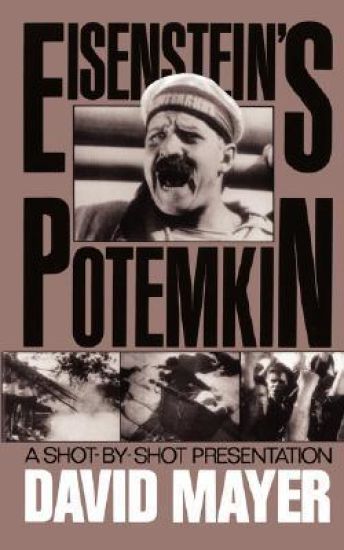
Sergei M. Eisenstein's Potemkin

Sergei M. Eisenstein's Potemkin

David Mayer

Da Capo Press Inc
1990
pokkari
Sergei M. Eisenstein's Potemkin, a vivid account of the mutiny of Russian sailors on a Czarist battleship in 1905, is universally acknowledged to be one of the greatest films of all time. Until now, however, Potemkin's astonishing vividness and artistry has never been translated satisfactorily into print. David Mayer's precise, shot-by-shot re-creation of Potemkin, the product of five years' work, is unquestionably definitive. For the student, it is a complete and faithful guide to the film. For the non-initiate, it can be read as a novel,a magnificent story of revolution and repression. With nearly three hundred illustrations, it can be used as a screenplay by film lovers. Mayer's concise introduction analyzes Eisenstein's innovative montage concepts and illustrates them with sequences of frames from the film. Now, with descriptions of each of the more than 1300 shot that make up the authoritative Museum of Modern Art version, even the smallest particulars of Eisenstein's directorial genius can be discovered and studied without losing Potemkin's narrative and visual flow.
Sideways Boy

Sideways Boy

David R. Eisenstein

Independently Published
2019
nidottu
Robert Epstein, a middle school teacher with twenty years of experience in a gang-ridden district, holds the line against the ever-increasing violence. When something happens that's out of his control, he barely survives the tragedy. His mind broken, he is diagnosed with PTSD.For seven years he flounders, living mainly in his fantasies and nightmares of the past. He often thinks about suicide, but he can't go through with it, branding himself a coward.Unexpectedly he falls in love with a kitten. The scrawny little boy with a twisted face brings some small joy back into his life. When the cat has a stroke, Bob finds new purpose in taking care of the poor thing. The cat has a remarkable recovery, prompting Bob to find the courage to face the world again.He finds the real world as surreal as his fantasies. Over the course of one week, Bob hooks up with a group of neglected war veterans for the adventure of his life. Will this journey bring Bob redemption or death?
The Ideologies of Taxation

The Ideologies of Taxation

Louis Eisenstein; David A. Weisbach

Harvard University Press
2010
nidottu
Originally published in 1961, The Ideologies of Taxation is a classic of taxation—a long-unavailable volume that remains uniquely applicable today. Louis Eisenstein starts from the idea that the tax system in a democracy is shaped by competing factions, each seeking to minimize its burden. Because few people are convinced by appeals to self-interest, factions must give reasons, which are skillfully elaborated into systems of belief or ideologies. Eisenstein’s aim is to examine (and debunk) three major ideologies used to justify various reforms of the tax system. The ideology of ability holds that taxes should be apportioned based on ability to pay and that this is properly measured by income or wealth. The ideology of deterrents is concerned with high taxes on private enterprise—low and flat taxes are desired lest the wealthy reduce their work efforts and savings. The ideology of equity is focused on equal treatment of similarly situated individuals. Eisenstein shows, with sharp wit and an instinct for the jugular, how each of these ideologies is plagued with contradictions, incompleteness, and, in some cases, self-serving claims.
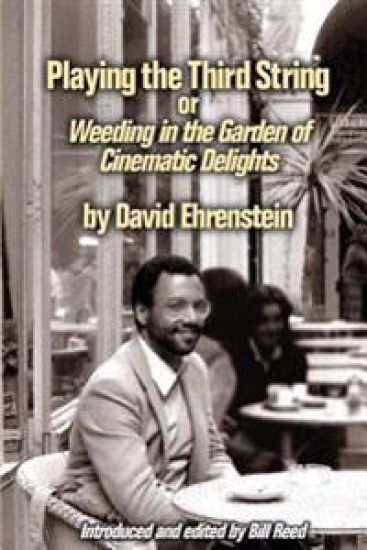
Playing the Third String: Weeding in the Garden of Cinematic Delights

Playing the Third String: Weeding in the Garden of Cinematic Delights

David Ehrenstein

Createspace Independent Publishing Platform
2017
nidottu
David Ehrenstein's writing career began in 1965 with an Andy Warhol interview, published in "Film Comment" in 1966. He soon began contributing to other publications such as "Film Culture," "December" magazine and the "Village Voice." In 1976 he moved to Los Angeles and began work as a film critic and entertainment journalist for the Los Angeles Herald-Examiner. During this period he also contributed to "Film Comment" and "Film Quarterly." The Herald was one of the few newspapers in the U.S. with THREE movie critics. (Thus this book's "Third String" title.) His decade-long association with that paper resulted in many hundreds of film reviews. Many tended to be of the offbeat, "B," sleeper and Foreign variety. In addition, he wrote many interviews and profiles for the paper. Among those included in "Third String" are Christine Keeler, Richard Pryor, Ert , and John Cleese. He has also published a number of books on film including "Open Secret: Gay Hollywood 1928-2000," and critical studies of such as Martin Scorsese and Roman Polanski.
How Einstein Created Relativity out of Physics and Astronomy

How Einstein Created Relativity out of Physics and Astronomy

David Topper

Springer-Verlag New York Inc.
2012
sidottu
This book tracks the history of the theory of relativity through Einstein’s life, with in-depth studies of its background as built upon by ideas from earlier scientists. The focus points of Einstein’s theory of relativity include its development throughout his life; the origins of his ideas and his indebtedness to the earlier works of Galileo, Newton, Faraday, Mach and others; the application of the theory to the birth of modern cosmology; and his quest for a unified field theory. Treading a fine line between the popular and technical (but not shying away from the occasional equation), this book explains the entire range of relativity and weaves an up-to-date biography of Einstein throughout. The result is an explanation of the world of relativity, based on an extensive journey into earlier physics and a simultaneous voyage into the mind of Einstein, written for the curious and intelligent reader.
How Einstein Created Relativity out of Physics and Astronomy

How Einstein Created Relativity out of Physics and Astronomy

David Topper

Springer-Verlag New York Inc.
2014
nidottu
This book tracks the history of the theory of relativity through Einstein’s life, with in-depth studies of its background as built upon by ideas from earlier scientists. The focus points of Einstein’s theory of relativity include its development throughout his life; the origins of his ideas and his indebtedness to the earlier works of Galileo, Newton, Faraday, Mach and others; the application of the theory to the birth of modern cosmology; and his quest for a unified field theory. Treading a fine line between the popular and technical (but not shying away from the occasional equation), this book explains the entire range of relativity and weaves an up-to-date biography of Einstein throughout. The result is an explanation of the world of relativity, based on an extensive journey into earlier physics and a simultaneous voyage into the mind of Einstein, written for the curious and intelligent reader.