Kirjojen hintavertailu. Mukana 11 238 394 kirjaa ja 12 kauppaa.

Kirjahaku

Etsi kirjoja tekijän nimen, kirjan nimen tai ISBN:n perusteella.

1000 tulosta hakusanalla David Emory Holman

The Holmans In America

The Holmans In America

David Emory Holman

Alpha Edition
2021
pokkari
The Holmans In America: Concerning The Descendants Of Solaman Holman Who Settled In West Newbury, Massachusetts, In 1692-3 One Of Whom Is William Howard Taft, The President Of The United States, Including A Page Of The Other Lines Of Holmans In America, With Notes And Anecdotes Of Those Of The Name In Other Countries (Volume - I) has been considered by academicians and scholars of great significance and value to literature. This forms a part of the knowledge base for future generations. So that the book is never forgotten we have represented this book in a print format as the same form as it was originally first published. Hence any marks or annotations seen are left intentionally to preserve its true nature.
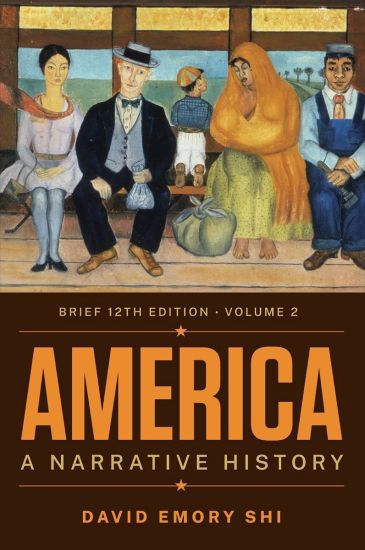
America

America

David Emory Shi

W W Norton Co Inc
2021
pokkari
America: A Narrative History puts narrative front and centre with David Shi's rich storytelling style, colourful biographical sketches and vivid first-person quotations. The new editions further reflect the state of our history and society by continuing to incorporate diverse voices into the narrative with new coverage of the Latino/a experience as well as enhanced coverage of gender, African American, Native American, immigration and LGBTQ history. With dynamic digital tools, including the InQuizitive adaptive learning tool, and new digital activities focused on primary and secondary sources, America: A Narrative History gives students regular opportunities to engage with the story and build critical history skills.
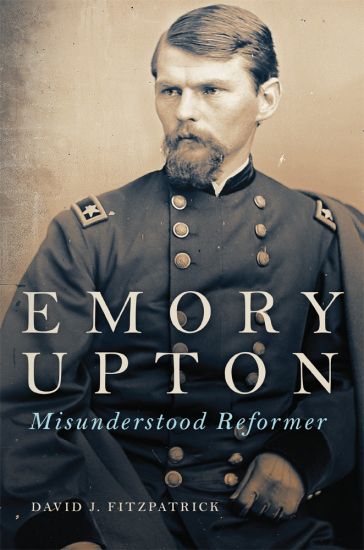
Emory Upton

Emory Upton

David J. Fitzpatrick

University of Oklahoma Press
2017
sidottu
Emory Upton (1839-1881) is widely recognized as one of America's most influential military thinkers. His works - The Armies of Asia and Europe and The Military Policy of the United States - fueled the army's intellectual ferment in the late nineteenth century and guided Secretary of War Elihu Root's reforms in the early 1900s. Yet as David J. Fitzpatrick contends, Upton is also widely misunderstood as an antidemocratic militaristic zealot whose ideas were ""too Prussian"" for America. In this first full biography in nearly half a century, Fitzpatrick, the leading authority on Upton, radically revises our view of this important figure in American military thought. A devout Methodist farm boy from upstate New York, Upton attended the United States Military Academy at West Point and served in the Civil War. His use of a mass infantry attack to break the Confederate lines at Spotsylvania Courthouse in 1864 identified him as a rising figure in the U.S. Army. Upton's subsequent work on military organizations in Asia and Europe, commissioned by Commanding General William T. Sherman, influenced the army's turn toward a European, largely German ideal of soldiering as a profession. Yet it was this same text, along with Upton's Military Policy of the United States, that also propelled the misinterpretations of Upton - first by some contemporaries, and more recently by noted historians Stephen Ambrose and Russell Weigley. By showing Upton's dedication to the ideal of the citizen-soldier and placing him within the context of contemporary military, political, and intellectual discourse, Fitzpatrick shows how Upton's ideas clearly grew out of an American military-political tradition.Emory Upton: Misunderstood Reformer clarifies Upton's influence on the army by offering a new and necessary understanding of the military's intellectual direction at a critical juncture in American history.
Emory Upton Volume 60

Emory Upton Volume 60

David J. Fitzpatrick

UNIVERSITY OF OKLAHOMA PRESS
2025
nidottu
Emory Upton (1839–1881) is widely recognized as one of America’s most influential military thinkers. His works—The Armies of Asia and Europe and The Military Policy of the United States—fueled the army’s intellectual ferment in the late nineteenth century and guided Secretary of War Elihu Root’s reforms in the early 1900s. Yet as David J. Fitzpatrick contends, Upton is also widely misunderstood as an antidemocratic militaristic zealot whose ideas were “too Prussian” for America. In this first full biography in nearly half a century, Fitzpatrick, the leading authority on Upton, radically revises our view of this important figure in American military thought. A devout Methodist farm boy from upstate New York, Upton attended the United States Military Academy at West Point and served in the Civil War. His use of a mass infantry attack to break the Confederate lines at Spotsylvania Courthouse in 1864 identified him as a rising figure in the U.S. Army. Upton’s subsequent work on military organizations in Asia and Europe, commissioned by Commanding General William T. Sherman, influenced the army’s turn toward a European, largely German ideal of soldiering as a profession. Yet it was this same text, along with Upton’s Military Policy of the United States, that also propelled the misinterpretations of Upton—first by some contemporaries, and more recently by noted historians Stephen Ambrose and Russell Weigley. By showing Upton’s dedication to the ideal of the citizen-soldier and placing him within the context of contemporary military, political, and intellectual discourse, Fitzpatrick shows how Upton’s ideas clearly grew out of an American military-political tradition. Emory Upton: Misunderstood Reformer clarifies Upton’s influence on the army by offering a new and necessary understanding of the military’s intellectual direction at a critical juncture in American history.
The Blue Monk

The Blue Monk

David Emery Bricker

Essential Absurdities Press
2014
sidottu
In 1983, when I was 18-years old, I encountered a com-mu-nity of eccen-tric sailors who lived in a secret anchor-age on the far side of the spoil islands a quarter-mile from Miami City Hall. What I found there inspired me and chal-lenged me to expand my per-spec-tives. Though the Dinner Key Anchorage was often dis-missed as a com-mu-nity of "dere-licts, bums, winos and thieves," I found instead a group of artic-u-late, capa-ble, inno-v-a-tive, edu-cated, and highly skilled peo-ple who took me in and lit-er-ally 'taught me the ropes.' Many of them trav-eled the world, depend-ing on lit-tle but good for-tune and deter-mi-na-tion. At 23, while working on a jazz gui-tar degree, I bought an old 26-foot sail-boat and named her The Blue Monk after the tune by pianist, Thelonious Monk. Six months after grad-u-at-ing, I took off with $30 in my pocket for a series of adven-tures that took me through the Bahamas and even-tu-ally across the Atlantic to Gibraltar. On the sur-face, The Blue Monk is a mem-oir that recounts how I came to love sail-ing, joined a unique com-mu-nity of mis-un-der-stood peo-ple, and sailed away to enjoy a life of adven-ture. The book also pro-vides an account of a spe-cial slice of Miami his-tory that would oth-er-wise remain unrecorded. But The Blue Monk is not really about me; who wants to read a book by an author who can write about him-self for hun-dreds of pages? The Blue Monk is about some-thing much larger; I am but the nar-ra-tor. My expe-ri-ences sail-ing alone on a small boat were beau-ti-ful and some-times ter-ri-fy-ing. Often, they were an odd com-bi-na-tion of both. The Blue Monk tells of an encounter with a remark-able world that lies just beyond the hori-zon and deep within each of us. The Blue Monk is rich life experience translated into prose, a vehicle that transports the reader there and then.