Kirjojen hintavertailu. Mukana 11 232 919 kirjaa ja 12 kauppaa.

Kirjahaku

Etsi kirjoja tekijän nimen, kirjan nimen tai ISBN:n perusteella.

1000 tulosta hakusanalla David Foster Wallace

The David Foster Wallace Reader

The David Foster Wallace Reader

David Foster Wallace

Penguin Books Ltd
2018
pokkari
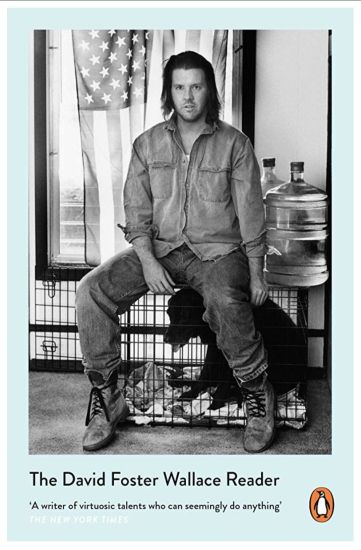
'One of the most dazzling luminaries of contemporary American fiction' Sunday Times 'The most commanding and exciting and inventive rhetorical virtuosity of any writer alive... [He] nailed it like nobody else ever had' Jonathan Franzen'[He was] first among us. The most talented, most daring, most energetic and original, the funniest... This man got inside the world's mind and changed it for the better' George Saunders'Radical, impassioned, heart-and brain-stretching... His talent was so obviously great it confused people' Zadie SmithDiscover one of the most celebrated writers of our age - the visionary author of Infinite Jest andA Supposedly Fun Thing I Will Never Do AgainFrom genre-defining reportage to genre-breaking fiction, David Foster Wallace captured the human experience as no-one else has - in all its multiplicity, sorrow and tenderness, wit and irony and deep, dazzling truth.Penguin presents the very best of his collected fiction and nonfiction, including extracts from his most famous novels, short stories and iconic essays such as 'Consider the Lobster'. Alongside these classic pieces is exclusive, previously unpublished work, and critical contributions from twelve prominent authors and thinkers, all commissioned specifically for this collection.
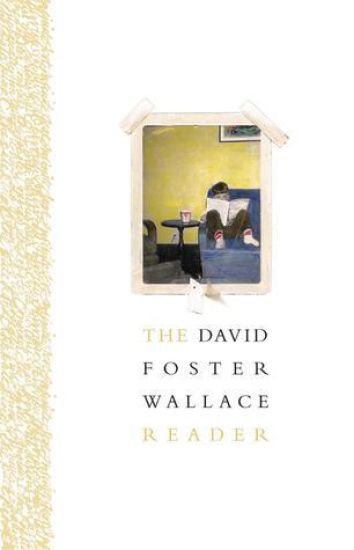
The David Foster Wallace Reader

The David Foster Wallace Reader

David Foster Wallace

Back Bay Books
2015
nidottu
Where do you begin with a writer as original and brilliant as David Foster Wallace? Here -- with a carefully considered selection of his extraordinary body of work, chosen by a range of great writers, critics, and those who worked with him most closely. This volume presents his most dazzling, funniest, and most heartbreaking work -- essays like his famous cruise-ship piece, "A Supposedly Fun Thing I'll Never Do Again," excerpts from his novels The Broom of the System, Infinite Jest, and The Pale King, and legendary stories like "The Depressed Person." Wallace's explorations of morality, self-consciousness, addiction, sports, love, and the many other subjects that occupied him are represented here in both fiction and nonfiction. Collected for the first time are Wallace's first published story, "The View from Planet Trillaphon as Seen In Relation to the Bad Thing" and a selection of his work as a writing instructor, including reading lists, grammar guides, and general guidelines for his students. A dozen writers and critics, including Hari Kunzru, Anne Fadiman, and Nam Le, add afterwords to favorite pieces, expanding our appreciation of the unique pleasures of Wallace's writing. The result is an astonishing volume that shows the breadth and range of "one of America's most daring and talented writers" (Los Angeles Times Book Review) whose work was full of humor, insight, and beauty.
String Theory: David Foster Wallace On Tennis

String Theory: David Foster Wallace On Tennis

David Foster Wallace

The Library of America
2016
sidottu
An instant classic of American sportswriting--the tennis essays of David Foster Wallace, "the best mind of his generation" (A. O. Scott) and "the best tennis-writer of all time" (New York Times) Gathered for the first time in a deluxe collector's edition, here are David Foster Wallace's legendary writings on tennis, five tour-de-force pieces written with a competitor's insight and a fan's obsessive enthusiasm. Wallace brings his dazzling literary magic to the game he loved as he celebrates the other-worldly genius of Roger Federer; offers a wickedly witty disection of Tracy Austin's memoir; considers the artistry of Michael Joyce, a supremely disciplined athlete on the threshold of fame; resists the crush of commerce at the U.S. Open; and recalls his own career as a "near-great" junior player. Whiting Award-winning writer John Jeremiah Sullivan provides an introduction.
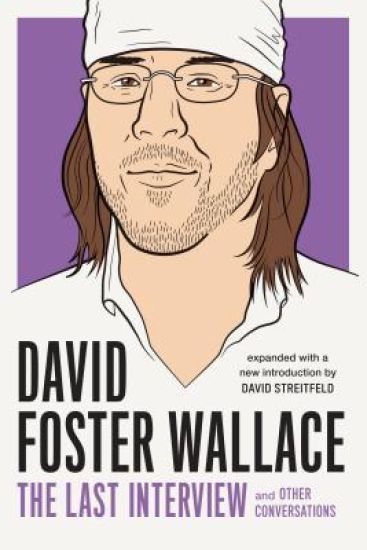
David Foster Wallace: The Last Interview

David Foster Wallace: The Last Interview

David Foster Wallace

Melville House Publishing
2018
nidottu
An expanded edition featuring new interviews and an introduction by the editor, a New York Times journalist and friend of the author A unique selection of the best interviews given by David Foster Wallace, including the last he gave before his suicide in 2008. Complete with an introduction by Foster Wallace's friend and NY Times journalist, David Streitfeld. And including a new, never-before-published interview between Streitfeld and Wallace.
David Foster Wallace

David Foster Wallace

Sussex Academic Press
2017
sidottu
Why is David Foster Wallace so widely read? Why does his fiction and non-fiction continue to raise enthusiasm among an ever-growing variety of readers of all ages and backgrounds not only in the English-speaking countries but all over the world, while describing all the malcontents, dead ends and solipsistic tendencies of contemporary civilisation? Presences of the Other counteracts the vision of Wallace's postmodern oeuvre as selfishly self-absorbed, narcissistic or confining and attempts to answer the question of its appeal by addressing it as an open work, following Umberto Eco's definition of great texts. Epitomised in the missing questions of Brief Interviews; in the endnotes of Infinite Jest that entice readers into fertile wanderings; or in The Pale King demands for active editing and creative involvement, DFW's paradoxically difficult and impenetrable work opens up and allows for limitless interventions and participations. By becoming a playground for interpretation, his work reveals itself as an exercise in care. Indeterminate and inconclusive, constructed on Derridean difference, DFWs output testifies to the presence of a liberating symbolic Other; by resisting closure, it promotes both a fundamental reworking of the literary tradition and a compassionate vision of the human condition. Prominent scholars explore varieties of otherness in Wallace's open work by engaging with the dialogue his writing establishes with non-literary discourses such as cinema (French Nouvelle Vague), music (rap, in Signifying Rappers), religion (Buddhism) and philosophy (Wittgenstein and Ranciere). Critical approaches to the authors protean identity, taste for masquerade and performance, and capacity for metamorphosis and transformation, foreground traces of an otherness that sets out a salutary spiritual potential for the 21st century.
David Foster Wallace

David Foster Wallace

Sussex Academic Press
2017
nidottu
Why is David Foster Wallace so widely read? Why does his fiction and non-fiction continue to raise enthusiasm among an ever-growing variety of readers of all ages and backgrounds not only in the English-speaking countries but all over the world, while describing all the malcontents, dead ends and solipsistic tendencies of contemporary civilisation? Presences of the Other counteracts the vision of Wallace's postmodern oeuvre as selfishly self-absorbed, narcissistic or confining and attempts to answer the question of its appeal by addressing it as an open work, following Umberto Eco's definition of great texts. Epitomised in the missing questions of Brief Interviews; in the endnotes of Infinite Jest that entice readers into fertile wanderings; or in The Pale King demands for active editing and creative involvement, DFW's paradoxically difficult and impenetrable work opens up and allows for limitless interventions and participations. By becoming a playground for interpretation, his work reveals itself as an exercise in care. Indeterminate and inconclusive, constructed on Derridean difference, DFWs output testifies to the presence of a liberating symbolic Other; by resisting closure, it promotes both a fundamental reworking of the literary tradition and a compassionate vision of the human condition. Prominent scholars explore varieties of otherness in Wallace's open work by engaging with the dialogue his writing establishes with non-literary discourses such as cinema (French Nouvelle Vague), music (rap, in Signifying Rappers), religion (Buddhism) and philosophy (Wittgenstein and Ranciere). Critical approaches to the authors protean identity, taste for masquerade and performance, and capacity for metamorphosis and transformation, foreground traces of an otherness that sets out a salutary spiritual potential for the 21st century.
David Foster Wallace

David Foster Wallace

D.T. Max

Siltala
2020
nidottu
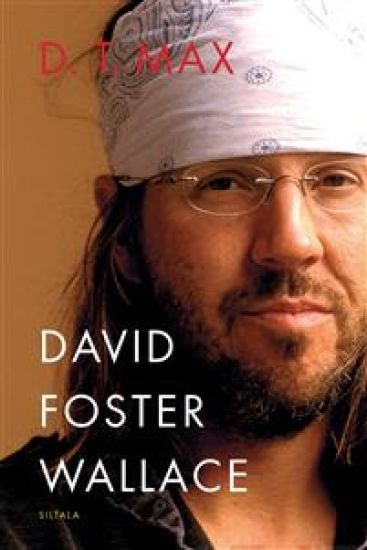
David Foster Wallace (1962-2008) kuuluu nykykirjallisuuden legendoihin. Pääteoksensa, yli tuhatsivuisen Infinite Jestin (1996) lisäksi Wallace tunnetaan kokeellisista novelleistaan ja esseistään, joiden tarkkojen havaintojen vyöry laajeni toisinaan pienoisromaanin mittoihin. Koko ikänsä masennuksen ja riippuvuuksien kanssa taistellut Wallace teki 46-vuotiaana itsemurhan ja jätti jälkeensä keskeneräisen mestariteoksen The Pale King, joka julkaistiin vuonna 2011.D. T. Max kertoo elämäkerrassaan Wallacen ristiriitaisen tarinan. Laajoihin aineistoihin perustuva teos ei rakenna sankaritarinaa vaan moniulotteisen kuvan ihmisestä ja taiteilijasta, joka etsi vilpittömän ilmaisun mahdollisuuksia läpeensä vieraantuneessa kulutus- ja mediayhteiskunnassa. Max hyödyntää teoksessa valtavaa määrää haastatteluja, kirjeitä sekä päiväkirjatekstejä ja lähilukee Wallacen poikkeuksellisen monikerroksisia teoksia. Lopputuloksena on herkullinen, kirjallisesti painokas kokonaisuus, joka on pakollista luettavaa kaikille Wallacesta kiinnostuneille.
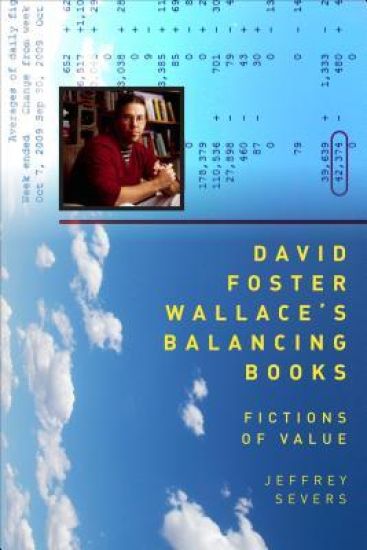
David Foster Wallace's Balancing Books

David Foster Wallace's Balancing Books

Jeffrey Severs

Columbia University Press
2017
sidottu
What do we value? Why do we value it? And in a neoliberal age, can morality ever displace money as the primary means of defining value? These are the questions that drove David Foster Wallace, a writer widely credited with changing the face of contemporary fiction and moving it beyond an emotionless postmodern irony. Jeffrey Severs argues in David Foster Wallace's Balancing Books that Wallace was also deeply engaged with the social, political, and economic issues of the twentieth and twenty-first centuries. A rebellious economic thinker, Wallace satirized the deforming effects of money, questioned the logic of the monetary system, and saw the world through the lens of value's many hidden and untapped meanings. In original readings of all of Wallace's fiction, from The Broom of the System and Infinite Jest to his story collections and The Pale King, Severs reveals Wallace to be a thoroughly political writer whose works provide an often surreal history of financial crises and economic policies. As Severs demonstrates, the concept of value occupied the intersection of Wallace's major interests: economics, work, metaphysics, mathematics, and morality. Severs ranges from the Great Depression and the New Deal to the realms of finance, insurance, and taxation to detail Wallace's quest for balance and grace in a world of excess and entropy. Wallace showed characters struggling to place two feet on the ground and restlessly sought to "balance the books" of a chaotic culture. Explaining why Wallace's work has galvanized a new phase in contemporary global literature, Severs draws connections to key Wallace forerunners Don DeLillo, Thomas Pynchon, and William Gaddis, as well as his successors-including Dave Eggers, Teddy Wayne, Jonathan Lethem, and Zadie Smith-interpreting Wallace's legacy in terms of finance, the gift, and office life.
David Foster Wallace and the Body
David Foster Wallace and the Body is the first full-length study to focus on Wallace’s career-long fascination with the human body and the textual representation of the body. The book provides engaging, accessible close readings that highlight the importance of the overlooked, and yet central theme of all of this major American author’s works: having a body. Wallace repeatedly made clear that good fiction is about what it means to be a ‘human being’. A large part of what that means is having a body, and being conscious of the conflicts that arise, morally and physically, as a result; a fact with which, as Wallace forcefully and convincingly argues, we all desire ‘to be reconciled’. Given the ubiquity of the themes of embodiment in Wallace’s work, this study is an important addition to an expanding field. The book also opens up the themes addressed to interrogate aspects of contemporary literature, culture, and society more generally, placing Wallace’s works in the history of literary and philosophical engagements with the brute fact of embodiment.
David Foster Wallace and the Body

David Foster Wallace and the Body

Peter Sloane

Taylor Francis Ltd
2021
nidottu
David Foster Wallace and the Body is the first full-length study to focus on Wallace’s career-long fascination with the human body and the textual representation of the body. The book provides engaging, accessible close readings that highlight the importance of the overlooked, and yet central theme of all of this major American author’s works: having a body. Wallace repeatedly made clear that good fiction is about what it means to be a ‘human being’. A large part of what that means is having a body, and being conscious of the conflicts that arise, morally and physically, as a result; a fact with which, as Wallace forcefully and convincingly argues, we all desire ‘to be reconciled’. Given the ubiquity of the themes of embodiment in Wallace’s work, this study is an important addition to an expanding field. The book also opens up the themes addressed to interrogate aspects of contemporary literature, culture, and society more generally, placing Wallace’s works in the history of literary and philosophical engagements with the brute fact of embodiment.
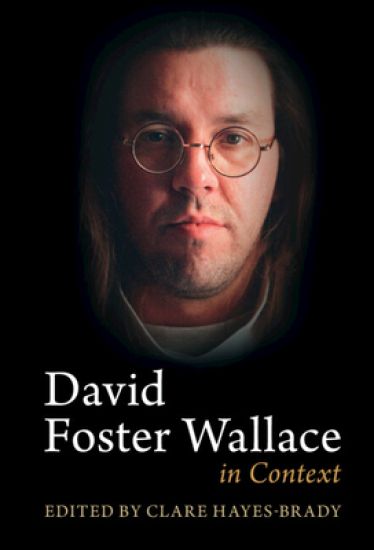
David Foster Wallace in Context

David Foster Wallace in Context

Cambridge University Press
2022
sidottu
David Foster Wallace is regarded as one of the most important American writers of the twentieth and twenty-first centuries. This book introduces readers to the literary, philosophical and political contexts of Wallace's work. An accessible and useable resource, this volume conceptualizes his work within long-standing critical traditions and with a new awareness of his importance for American literary studies. It shows the range of issues and contexts that inform the work and reading of David Foster Wallace, connecting his writing to diverse ideas, periods and themes. Essays cover topics on gender, sex, violence, race, philosophy, poetry and geography, among many others, guiding new and long-standing readers in understanding the work and influence of this important writer.
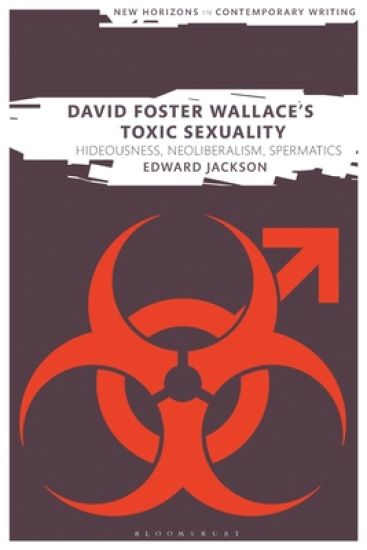
David Foster Wallace's Toxic Sexuality

David Foster Wallace's Toxic Sexuality

Edward Jackson

Bloomsbury Academic
2020
sidottu
David Foster Wallace’s Toxic Sexuality: Hideousness, Neoliberalism, Spermatics is the first full-length study of perhaps the most controversial aspect of Wallace’s work – male sexuality. Departing from biographical accounts of Wallace’s troubled relationship to sex, the book offers new and engaging close readings of this vexed topic in both his fiction and non-fiction. Wallace consistently returns to images of sexual toxicity across his career to argue that, when it comes to sex, men are immutably hideous. He makes this argument by drawing on a variety of neoliberal logics and spermatic metaphors, which in their appeal to apparently neutral economic processes and natural bodily facts, forestall the possibility that men can change. The book therefore provides a revisionist account of Wallace’s attitudes towards capitalism, as well as a critical dissection of his approach to masculinity and sexuality. In doing so, David Foster Wallace’s Toxic Sexuality shows how Wallace can be considered a neoliberal writer, whose commitment to furthering male sexual toxicity is a disturbing but undeniable part of his literary project.
David Foster Wallace's Toxic Sexuality

David Foster Wallace's Toxic Sexuality

Edward Jackson

Bloomsbury Academic
2022
nidottu
David Foster Wallace’s Toxic Sexuality: Hideousness, Neoliberalism, Spermatics is the first full-length study of perhaps the most controversial aspect of Wallace’s work – male sexuality. Departing from biographical accounts of Wallace’s troubled relationship to sex, the book offers new and engaging close readings of this vexed topic in both his fiction and non-fiction. Wallace consistently returns to images of sexual toxicity across his career to argue that, when it comes to sex, men are immutably hideous. He makes this argument by drawing on a variety of neoliberal logics and spermatic metaphors, which in their appeal to apparently neutral economic processes and natural bodily facts, forestall the possibility that men can change. The book therefore provides a revisionist account of Wallace’s attitudes towards capitalism, as well as a critical dissection of his approach to masculinity and sexuality. In doing so, David Foster Wallace’s Toxic Sexuality shows how Wallace can be considered a neoliberal writer, whose commitment to furthering male sexual toxicity is a disturbing but undeniable part of his literary project.
David Foster Wallace and the Question of Scepticism
David Foster Wallace and the Question of Scepticism examines the role of scepticism and doubt in Wallace's work, showing that they are of fundamental importance to his writing in its form and its themes. Wallace's work articulates a deep ambivalence about the value of scepticism, on the one hand presenting practical and moral arguments for the value of conviction and belief, while on the other hand being committed to a sceptical project of opposing certainty and dogma. On a formal level, Wallace's writing both solicits the reader's trust and provokes the reader's scepticism. This dynamic is responsible for the polarised responses of absolute trust and dissenting scepticism that characterise the work's reception. By putting these responses into dialogue with the work's internal treatment of the question of scepticism, this book illuminates the core philosophical investments that drive the work, and the dynamics that have so far governed its reception.
David Foster Wallace's Infinite Jest

David Foster Wallace's Infinite Jest

Stephen J. Burn

Continuum Publishing Corporation
2012
nidottu
Infinite Jest has been hailed as one the great modern American novels and its author, David Foster Wallace, who committed suicide in 2008, as one of the most influential and innovative authors of the past 20 years. Don DeLillo called Infinite Jest a "three-stage rocket to the future," a work "equal to the huge, babbling spin-out sweep of contemporary life," while Time Magazine included Infinite Jest on its list of 100 Greatest Novels published between 1923-2006. David Foster Wallace's Infinite Jest: A Reader's Guide was the first book to be published on the novel and is a key reference for those who wish to explore further. Infinite Jest has become an exemplar for difficulty in contemporary Fiction--its 1,079 pages full of verbal invention, oblique narration, and a scattered, nonlinear, chronology. In this comprehensively revised second edition, Burn maps Wallace's influence on contemporary American fiction, outlines Wallace's poetics, and provides a full-length study of the novel, drawing out the most important themes and ideas, before surveying Wallace's post-Infinite Jest output, including The Pale King.
David Foster Wallace: Fiction and Form

David Foster Wallace: Fiction and Form

David Hering

Bloomsbury Academic USA
2017
nidottu
In David Foster Wallace: Fiction and Form, David Hering analyses the structures of David Foster Wallace's fiction, from his debut The Broom of the System to his final unfinished novel The Pale King. Incorporating extensive analysis of Wallace's drafts, notes and letters, and taking account of the rapidly expanding field of Wallace scholarship, this book argues that the form of Wallace’s fiction is always inextricably bound up within an ongoing conflict between the monologic and the dialogic, one strongly connected with Wallace’s sense of his own authorial presence and identity in the work. Hering suggests that this conflict occurs at the level of both subject and composition, analysing the importance of a number of provocative structural and critical contexts – ghostliness, institutionality, reflection – to the fiction while describing how this argument is also visible within the development of Wallace’s manuscripts, comparing early drafts with published material to offer a career-long framework of the construction of Wallace’s fiction. The final chapter offers an unprecedentedly detailed analysis of the troubled, decade-long construction of the work that became The Pale King.
David Foster Wallace and Religion

David Foster Wallace and Religion

Bloomsbury Academic USA
2019
sidottu
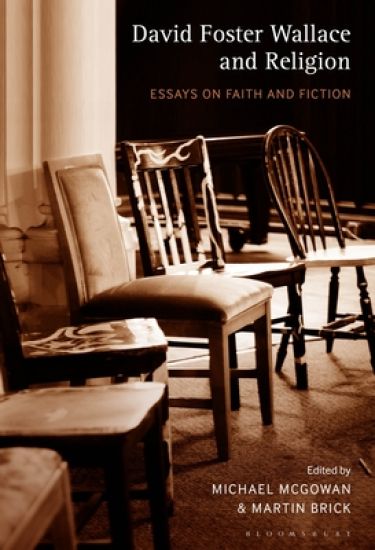
In the years since his suicide, scholars have explored David Foster Wallace’s writing in transdisciplinary ways. This is the first book of its kind to discuss how Wallace understood and wrote about religion. At present, the scholarly community is sharply divided on how best to read Wallace on religious questions. Some interpret him to be a Nietzschean nihilist, while others see in him a profoundly spiritual, even mystical thinker. Some read Wallace as a Buddhist thinker, and others as a Christian existentialist. Involved at every level of this discussion are Wallace’s experiences in Twelve Step recovery programs, according to which only a higher power can help one remove unwanted defects of character. The multifarious essays in this volume by literature, religion, and philosophy scholars in the Wallace community delve into Wallace’s life and writings to advance the conversation about Wallace and religion. While they may disagree with one another in substantial ways, the contributors argue that Wallace was not only deliberate in his writings on religious themes, but also displayed an impressive level of theological nuance.
David Foster Wallace and Religion

David Foster Wallace and Religion

Bloomsbury Academic USA
2021
nidottu
In the years since his suicide, scholars have explored David Foster Wallace’s writing in transdisciplinary ways. This is the first book of its kind to discuss how Wallace understood and wrote about religion. At present, the scholarly community is sharply divided on how best to read Wallace on religious questions. Some interpret him to be a Nietzschean nihilist, while others see in him a profoundly spiritual, even mystical thinker. Some read Wallace as a Buddhist thinker, and others as a Christian existentialist. Involved at every level of this discussion are Wallace’s experiences in Twelve Step recovery programs, according to which only a higher power can help one remove unwanted defects of character. The multifarious essays in this volume by literature, religion, and philosophy scholars in the Wallace community delve into Wallace’s life and writings to advance the conversation about Wallace and religion. While they may disagree with one another in substantial ways, the contributors argue that Wallace was not only deliberate in his writings on religious themes, but also displayed an impressive level of theological nuance.
David Foster Wallace: Fiction and Form

David Foster Wallace: Fiction and Form

David Hering

Bloomsbury Academic USA
2016
sidottu
In David Foster Wallace: Fiction and Form, David Hering analyses the structures of David Foster Wallace's fiction, from his debut The Broom of the System to his final unfinished novel The Pale King. Incorporating extensive analysis of Wallace's drafts, notes and letters, and taking account of the rapidly expanding field of Wallace scholarship, this book argues that the form of Wallace’s fiction is always inextricably bound up within an ongoing conflict between the monologic and the dialogic, one strongly connected with Wallace’s sense of his own authorial presence and identity in the work. Hering suggests that this conflict occurs at the level of both subject and composition, analysing the importance of a number of provocative structural and critical contexts – ghostliness, institutionality, reflection – to the fiction while describing how this argument is also visible within the development of Wallace’s manuscripts, comparing early drafts with published material to offer a career-long framework of the construction of Wallace’s fiction. The final chapter offers an unprecedentedly detailed analysis of the troubled, decade-long construction of the work that became The Pale King.
David Foster Wallace and "The Long Thing"
Of the twelve books David Foster Wallace published both during his lifetime and posthumously, only three were novels. Nevertheless, Wallace always thought of himself primarily as a novelist. From his college years at Amherst, when he wrote his first novel as part of a creative honors thesis, to his final days, Wallace was buried in a novel project, which he often referred to as "the Long Thing." Meanwhile, the short stories and journalistic assignments he worked on during those years he characterized as "playing hooky from a certain Larger Thing." Wallace was also a specific kind of novelist, devoted to producing a specific kind of novel, namely the omnivorous, culture-consuming "encyclopedic" novel, as described in 1976 by Edward Mendelson in a ground-breaking essay on Thomas Pynchon's Gravity's Rainbow. David Foster Wallace and "The Long Thing" is a state-of-the art guide through Wallace's three major works, including the generation-defining Infinite Jest. These essays provide fresh new readings of each of Wallace's novels as well as thematic essays that trace out patterns and connections across the three works. Most importantly, the collection includes six chapters on Wallace's unfinished novel, The Pale King, which will prove to be foundational for future scholars of this important text.