Kirjojen hintavertailu. Mukana 11 244 527 kirjaa ja 12 kauppaa.

Kirjahaku

Etsi kirjoja tekijän nimen, kirjan nimen tai ISBN:n perusteella.

1000 tulosta hakusanalla David G. Carmichael

Infrastructure Investment

Infrastructure Investment

David G. Carmichael

CRC Press
2019
nidottu
Established Deterministic Investment Appraisal versus Uncertainty in InvestmentWhen it comes to investing in an infrastructure project, the conventional approach is to evaluate risk through a deterministic approach. Infrastructure Investment: An Engineering Perspective, however, takes on uncertainty in investment. Of interest to engineering consultants, government departments, financial institutions, or anyone involved in investment in infrastructure, this text provides the necessary tools for the analysis and appraisal of investment in infrastructure and other assets with uncertain futures. It factors in the finance and engineering of assets such as roads, buildings, bridges, dams, pipelines, railways, ports, seawalls, wastewater treatment facilities, and addresses future demand, operating costs, maintenance costs, and other lifetime and investment parameters in both financial and non-financial terms. It considers the impact of climate change and the possible use of adaptive and flexible solutions capable of responding to changed futures, as well as how such uncertainty affects the future performance of these investments. The book also incorporates illustrated case studies and Markov chains to model an investment.A pivotal work containing 11 chapters, this text provides: An original contribution to feasibility analysis under uncertaintyA systematic and ordered treatment of capital investment in infrastructureA structured flow, from a systematic treatment of conventional deterministic approaches through to a complete treatment incorporating uncertainty Infrastructure Investment: An Engineering Perspective details investment analysis in the presence of uncertainty, and is beneficial to students, academics, and practitioners dealing with decision
Project Planning, and Control

Project Planning, and Control

David G. Carmichael

Routledge
2019
nidottu
Project management is widely used in the construction industry and is central to planning and controlling time, costs and resources. This book enables readers to perform more effectively, to understand project planning and control procedures and to gain an insight into the associated skills. Numerous case examples from diverse industries and exercises support and illustrate important concepts. The result is a new perspective for project managers: planning can be shown to be a systems synthesis or an inverse problem, which provides a way to reach a satisfactory solution, avoiding the time-consuming or impractical search for the optimal solution.
Project Planning, and Control

Project Planning, and Control

David G. Carmichael

Routledge
2005
sidottu
Project management is widely used in the construction industry and is central to planning and controlling time, costs and resources. This book enables readers to perform more effectively, to understand project planning and control procedures and to gain an insight into the associated skills. Numerous case examples from diverse industries and exercises support and illustrate important concepts. The result is a new perspective for project managers: planning can be shown to be a systems synthesis or an inverse problem, which provides a way to reach a satisfactory solution, avoiding the time-consuming or impractical search for the optimal solution.
Risk and Systems

Risk and Systems

David G. Carmichael

TAYLOR FRANCIS LTD
2022
nidottu
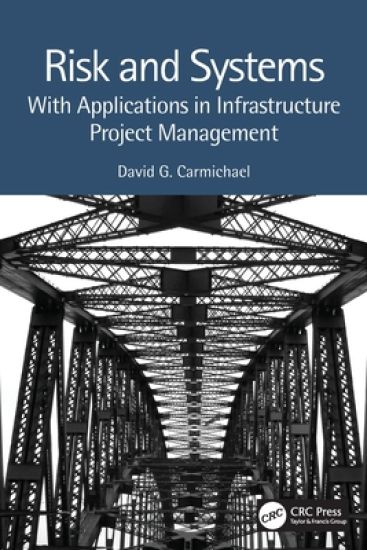
Risk is related to the magnitude and uncertainty of an output (consequence or outcome); outputs take on different identities in different disciplines and situations. Risk is peculiar to each stakeholder and the measurement scale for risk depends on the stakeholder’s value system. Risk management provides a way of addressing the issues associated with the magnitude and uncertainty of outputs. This book provides a distinctively rational treatment of risk and risk management, based on a systems approach. The book’s treatment applies to all disciplines and sets out the principles of risk and risk management as well as looking at a range of applications and more specialist tools and approaches. The book: Develops a risk framework through a systems approach Offers a challenging and fresh approach for infrastructure engineering, construction and project management in generalThe book will suit students and practitioners alike.
Risk and Systems

Risk and Systems

David G. Carmichael

TAYLOR FRANCIS LTD
2022
sidottu
Risk is related to the magnitude and uncertainty of an output (consequence or outcome); outputs take on different identities in different disciplines and situations. Risk is peculiar to each stakeholder and the measurement scale for risk depends on the stakeholder’s value system. Risk management provides a way of addressing the issues associated with the magnitude and uncertainty of outputs. This book provides a distinctively rational treatment of risk and risk management, based on a systems approach. The book’s treatment applies to all disciplines and sets out the principles of risk and risk management as well as looking at a range of applications and more specialist tools and approaches. The book: Develops a risk framework through a systems approach Offers a challenging and fresh approach for infrastructure engineering, construction and project management in generalThe book will suit students and practitioners alike.
Problem Solving for Engineers

Problem Solving for Engineers

David G. Carmichael

CRC Press
2017
sidottu
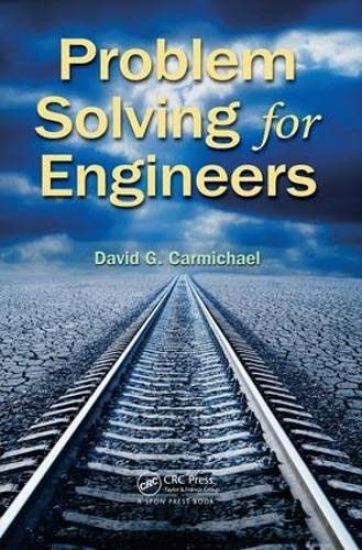
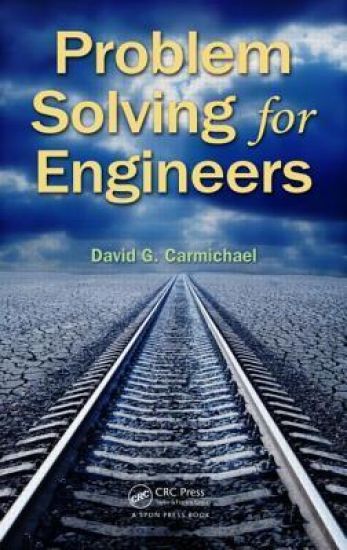
Whatever their discipline, engineers are routinely called upon to develop solutions to all kinds of problems. To do so effectively, they need a systematic and disciplined approach that considers a range of alternatives, taking into account all relevant factors, before selecting the best solution. In Problem Solving for Engineers, David Carmichael demonstrates just such an approach involving problem definition, generation of alternative solutions, and, ultimately, the analysis and selection of a preferred solution. David Carmichael introduces the fundamental concepts needed to think systematically and undertake methodical problem solving. He argues that the most rational way to develop a framework for problem solving is by using a systems studies viewpoint. He then outlines systems methodology, modeling, and the various configurations for analysis, synthesis, and investigation. Building on this, the book details a systematic process for problem solving and demonstrates how problem solving and decision making lie within a systems synthesis configuration. Carefully designed as a self-learning resource, the book contains exercises throughout that reinforce the material and encourage readers to think and apply the concepts. It covers decision making in the presence of uncertainty and multiple criteria, including that involving sustainability with its blend of economic, social, and environmental considerations. It also characterizes and tackles the specific problem solving of management, planning, and design. The book provides, for the first time, a rational framework for problem solving with an engineering orientation.
Problem Solving for Engineers

Problem Solving for Engineers

David G. Carmichael

CRC Press Inc
2013
nidottu
Whatever their discipline, engineers are routinely called upon to develop solutions to all kinds of problems. To do so effectively, they need a systematic and disciplined approach that considers a range of alternatives, taking into account all relevant factors, before selecting the best solution. In Problem Solving for Engineers, David Carmichael demonstrates just such an approach involving problem definition, generation of alternative solutions, and, ultimately, the analysis and selection of a preferred solution. David Carmichael introduces the fundamental concepts needed to think systematically and undertake methodical problem solving. He argues that the most rational way to develop a framework for problem solving is by using a systems studies viewpoint. He then outlines systems methodology, modeling, and the various configurations for analysis, synthesis, and investigation. Building on this, the book details a systematic process for problem solving and demonstrates how problem solving and decision making lie within a systems synthesis configuration. Carefully designed as a self-learning resource, the book contains exercises throughout that reinforce the material and encourage readers to think and apply the concepts. It covers decision making in the presence of uncertainty and multiple criteria, including that involving sustainability with its blend of economic, social, and environmental considerations. It also characterizes and tackles the specific problem solving of management, planning, and design. The book provides, for the first time, a rational framework for problem solving with an engineering orientation.
Infrastructure Investment

Infrastructure Investment

David G. Carmichael

CRC Press Inc
2014
sidottu
Established Deterministic Investment Appraisal versus Uncertainty in InvestmentWhen it comes to investing in an infrastructure project, the conventional approach is to evaluate risk through a deterministic approach. Infrastructure Investment: An Engineering Perspective, however, takes on uncertainty in investment. Of interest to engineering consultants, government departments, financial institutions, or anyone involved in investment in infrastructure, this text provides the necessary tools for the analysis and appraisal of investment in infrastructure and other assets with uncertain futures. It factors in the finance and engineering of assets such as roads, buildings, bridges, dams, pipelines, railways, ports, seawalls, wastewater treatment facilities, and addresses future demand, operating costs, maintenance costs, and other lifetime and investment parameters in both financial and non-financial terms. It considers the impact of climate change and the possible use of adaptive and flexible solutions capable of responding to changed futures, as well as how such uncertainty affects the future performance of these investments. The book also incorporates illustrated case studies and Markov chains to model an investment.A pivotal work containing 11 chapters, this text provides: An original contribution to feasibility analysis under uncertaintyA systematic and ordered treatment of capital investment in infrastructureA structured flow, from a systematic treatment of conventional deterministic approaches through to a complete treatment incorporating uncertainty Infrastructure Investment: An Engineering Perspective details investment analysis in the presence of uncertainty, and is beneficial to students, academics, and practitioners dealing with decision
Contracts and International Project Management

Contracts and International Project Management

David G. Carmichael

A A Balkema Publishers
2000
sidottu
Project Management has, as one of its essential ingredients, development, use, administration and management of contract. On any significant project here will be many players and stakeholders contractually linked. It is essential therefore that all project personnel be aware of contract matters. The difficulty with this for project personnel in the past, however, has been in finding a systematic and comprehensive coverage of contractual matters in the literature, written at an understandable lever. This book goes toward filling this void. This book focuses on the important issues of whether to contract out (outsource) work or do it in-house, on the numerous contractual payment options including bonuses and penalties, and on the delivery method or contractual relationships between project participants. This is provided in an international context, where project management takes on an added dimension related to differing practices and customs between countries. Numerous case studies and exercises are given to promote the understanding of the contractual and project management issues covered.
Future-proofing—Valuing Adaptability, Flexibility, Convertibility and Options
This book presents a unifying approach to the valuation of incorporated flexibility. Flexibility, in general terms, recognizes future uncertainty and refers to being proactive now so as to secure the future possibility of being able to adapt, convert, or generally introduce a change, if it is worthwhile to do so at the time. That is, deliberate provision is made now in order to have the ability (but not the obligation) to adapt, convert, or change in the future; this change is discretionary, and depends on future circumstances. The applications demonstrated here cover engineering, building, housing, finance, economics, contracts, general management, and project management. The examples are as follows: designing/building features in infrastructure (including buildings and houses) such that the infrastructure can be adapted in response to future changes in climate, demographics, or usage; incorporating features in contracts such that the terms and conditions can be changed in response to changing situations; purchasing rights now such that options exist to buy or sell an asset in the future; structuring a financial investment agreement so that its terms and conditions can be changed in the future; structuring project payments to provide future guarantees of revenue if needed; and designing an operation such that it can be expanded, contracted, abandoned, switched, changed, delayed, or deferred in the future. The level of required mathematics is kept at a very modest level: an undergraduate knowledge of algebra and probability is all that is required. Numerical examples, accompanied by readily understandable diagrams, illustrate the methods outlined. The formulations are kept straightforward and accessible for practitioners and academics alike.
Future-proofing—Valuing Adaptability, Flexibility, Convertibility and Options
This book presents a unifying approach to the valuation of incorporated flexibility. Flexibility, in general terms, recognizes future uncertainty and refers to being proactive now so as to secure the future possibility of being able to adapt, convert, or generally introduce a change, if it is worthwhile to do so at the time. That is, deliberate provision is made now in order to have the ability (but not the obligation) to adapt, convert, or change in the future; this change is discretionary, and depends on future circumstances. The applications demonstrated here cover engineering, building, housing, finance, economics, contracts, general management, and project management. The examples are as follows: designing/building features in infrastructure (including buildings and houses) such that the infrastructure can be adapted in response to future changes in climate, demographics, or usage; incorporating features in contracts such that the terms and conditions can be changed in response to changing situations; purchasing rights now such that options exist to buy or sell an asset in the future; structuring a financial investment agreement so that its terms and conditions can be changed in the future; structuring project payments to provide future guarantees of revenue if needed; and designing an operation such that it can be expanded, contracted, abandoned, switched, changed, delayed, or deferred in the future. The level of required mathematics is kept at a very modest level: an undergraduate knowledge of algebra and probability is all that is required. Numerical examples, accompanied by readily understandable diagrams, illustrate the methods outlined. The formulations are kept straightforward and accessible for practitioners and academics alike.
David G Grade 3

David G Grade 3

David Robert Loblaw

Cameron House Media
2018
pokkari
Sask Book Awards nomineeFringe Theatre Festival hit showFraught with anxiety, little David is troubled why Nuns wear wedding rings, why a confessed killer gets to go to Heaven, why Protestants are buried on the other side of the fence, why there are many half-souls in Limbo because of his spilled sperm. A funny and sad memoir filled with a true cast of characters."... a poignant, vulnerable, and laugh-out-loud funny tale, recounting his upbringing in a staunchly Catholic family living on the Canadian prairies.""A memoir is only as interesting as its characters, and Loblaw's family has - well, character Yvette, a kleptomaniac whose tongue is a 'hilarious moral machete, ' has young David read the most scintillating bits of the Bible aloud to her laughing friends. You're a funny man, David Robert Loblaw.""This is a painfully funny love story that honours a brave mother who made hard choices for all the right reasons. Very enjoyable.""Some of these stories will make you laugh, it is true, but some will make you cry or rage. Some will make you argue with the writer. Most will make you think and remember.""Took me awhile to get through, as at times I had to stop. Stop and cry. Stop and laugh. Your writing reminds me of David Sedaris. An amazing combination of human truth with gritty humour."
Paintings by David G. Blythe, 1815-1865, Drawings by Joseph Boggs Beale, 1841-1926
This work has been selected by scholars as being culturally important and is part of the knowledge base of civilization as we know it.This work is in the public domain in the United States of America, and possibly other nations. Within the United States, you may freely copy and distribute this work, as no entity (individual or corporate) has a copyright on the body of the work.Scholars believe, and we concur, that this work is important enough to be preserved, reproduced, and made generally available to the public. To ensure a quality reading experience, this work has been proofread and republished using a format that seamlessly blends the original graphical elements with text in an easy-to-read typeface.We appreciate your support of the preservation process, and thank you for being an important part of keeping this knowledge alive and relevant.
Paintings by David G. Blythe, 1815-1865, Drawings by Joseph Boggs Beale, 1841-1926
This work has been selected by scholars as being culturally important and is part of the knowledge base of civilization as we know it.This work is in the public domain in the United States of America, and possibly other nations. Within the United States, you may freely copy and distribute this work, as no entity (individual or corporate) has a copyright on the body of the work.Scholars believe, and we concur, that this work is important enough to be preserved, reproduced, and made generally available to the public. To ensure a quality reading experience, this work has been proofread and republished using a format that seamlessly blends the original graphical elements with text in an easy-to-read typeface.We appreciate your support of the preservation process, and thank you for being an important part of keeping this knowledge alive and relevant.
Essays on Medieval Music in Honor of David G. Hughes
This collection of nineteen essays presents a broad spectrum of current research that will interest students of medieval music, history, or culture. Topics include a comparison of early chant transmission in Rome and Jerusalem; the relationship between the earliest chant notation and prosodic accents; conceptualizing rhythm in medieval music and poetry; the persistence of Guidonian organum in the later Middle Ages; a connection between Dante and St. Cecilia; and the development of the trecento madrigal. The essays, written by distinguished scholars, stem from a conference in honor of David G. Hughes, professor of medieval music at Harvard University and noted specialist of chant.