Kirjahaku
Etsi kirjoja tekijän nimen, kirjan nimen tai ISBN:n perusteella.
1000 tulosta hakusanalla David Gates

"Beautifully written.... Gates has a] pitch-perfect ear for contemporary speech...and... a] keen, journalistic eye."--Michiko Kakutani, The New York Times In this comic, fiercely compassionate novel, David Gates, whose first novel Jernigan was a finalist for the Pulitzer Prize, sends his protagonist on a visceral journey to the dark side of suburban masculinity, explores the claims youth makes on middle age, and the tenacious --at times perverse--power of love to assert itself. When Doug Willis has a mid-life crisis, he doesn't join a gym or have an affair. Instead he gets himself arrested while camping with his wife and kids, takes a two month leave of absence from his PR job, and retreats to his farmhouse in rural Preston Falls--where he plugs in his guitar and tries to shut out his life. While his wife, Jean, struggles to pay the bills and raise their sullen, skeptical kids, Willis's plans for hiatus crumble into Dewars-and-cocaine fueled disarray. A shattered window, an unguarded gun, and a shady small town attorney force a crisis--and Willis can't go home again. With its biting humor and harsh realism, Preston Falls confirms David Gates as a talent in the tradition of Russell Banks and Richard Ford: a master of dark truths and private longings.

The author of the highly acclaimed novels Jernigan (Pulitzer Prize Finalist) and Preston Falls (National Book Critics Cirlce Award Finalist) offers up a mordantly funny collection of short stories about the faulty bargains we make with ourselves to continure the high-wire act of living meaningful lives in late twentieth-century America. Populated by highly educated men and women in combat with one another, with substance abuse, and above all with their own relentless self-awareness, the stories in The Wonders of the Invisible World take place in and around New York City, and put urbanism into uneasy conflict with a fleeting dream of rural happiness. Written with style and ferocious black humor, they confirm David Gates as one of the best-and funniest-writers of our time.

From the acclaimed author of the Pulitzer Prize finalist Jernigan--and one of America's most talented, witty, and emotionally intelligent writers--come eleven "gripping, sophisticated, gasp-inducing stories" (The New Yorker) and a novella populated by characters who carry the full weight of the human condition. A Hand Reached Down to Guide Me is populated by characters, young, old or somewhere in between, who are broadly knowledgeable and often creative and variously accomplished, whether as doctors, composers, academics or journalists. Terrifyingly self-aware, they are parents in assisted-living facilities, too many or too few people in their families and marriages, the ties that bind a sometimes messy knot, age an implacable foe, impulses pulling them away from comfort into distraction or catastrophe. In settings that range across the metropolitan and suburban Northeast, we follow their lives, alternately hilarious and tragic, as they refuse to go gently--even when they're going nowhere fast. Relentlessly inventive, these eleven stories and novella prove yet again that David Gates is one of our most talented, witty and emotionally intelligent writers.


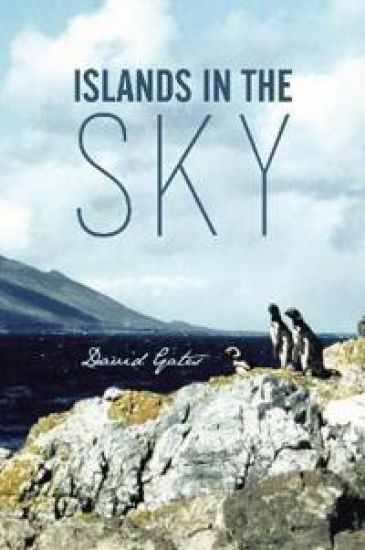
The Falklands, at the time of this story, were a little-known group of islands miles away from anywhere that most people hadn't even heard of. Back in the late 1960s and early 1970s, they were a sleepy spot on the map where nothing much happened. They didn't bother anyone and no one bothered them. For two hundred years, nothing much changed in that respect and the modern world had only just begun to impinge on the islanders' way of life. There was no TV, and of course, no Internet. Telephone communications to home, as the UK was called, were limited to a few minutes per day when a particular satellite passed by and then only from a special room in Port Stanley, its capital. The author was pitched into a way of life that was completely unlike anything most Brits ever experience and this book describes his struggle to adapt to a new way of life while learning how to teach in extraordinary circumstances.


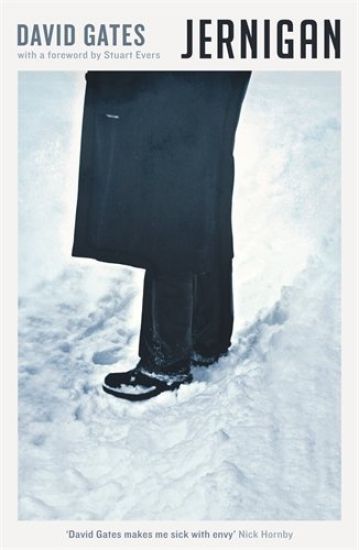
Peter Jernigan's life is slipping out of control. His wife's gone, he's lost his job and he's a stranger to his teenage son. Worse, his only relief from all this reality - alcohol - is less effective by the day. And when the medicine doesn't work, you up the dose. And when that doesn't work, what then? (Apart from upping the dose again anyway, because who knows?) Jernigan's answer is to slowly turn his caustic wit on everyone around him - his wife Judith, his teenage son Danny, his vulnerable new girlfriend Martha and, eventually, himself - until the laughs have turned to mute horror. But while he's busy burning every bridge back to the people who love him, Jernigan's perverse charisma keeps us all in thrall to the bitter end. Shot through with gin and irony, Jernigan is a funny, scary, mesmerising portrait of a man walking off the edge with his eyes wide open - wisecracking all the way.


Unlike land and maritime military warfare, which has evolved over thousands of years, the history of war in the air is as short as it has been spectacular: only 100 years have passed since the first flight in a powered aircraft. Despite its brief history, however, military air power is not an insignificant part of the modern military machine: on the contrary, it has played a strikingly prominent role in recent conflicts and humanitarian relief operations, and is likely to take the leading position in many future ones. In the decades since World War II the skies, and increasingly space, have acquired ever more importance as the ultimate ‘high ground’.In Sky Wars, David Gates examines the history of military aerospace power, discussing technical developments between both World Wars and the use of air power in specific wars in the latter part of the twentieth century, including the recent conflict with Iraq. At the same time he analyses the military and civil applications of airpower in the contemporary world, some of which have led to scientific and technical advances of great benefit to humanity. As well as looking at the ways in which developments in air power, military prowess and space exploration have had a major impact on our daily lives, he highlights more contentious issues, for example the so-called ‘CNN factor’, whereby the increasing capacity for journalistic intrusion into ongoing military operations compels armed forces to be much more sensitive to public opinion.

This excellent collection of Donald Barthelme's literary output during the 1960s and 1970s covers the period when the writer came to prominence--producing the stories, satires, parodies, and other formal experiments that altered fiction as we know it--and wrote many of the most beautiful sentences in the English language. Due to the unfortunate discontinuance of many of Barthelme's titles, 60 Stories now stands as one of the broadest overviews of his work, containing selections from eight previously published books, as well as a number of other short works that had been otherwise uncollected.

This book explores the mingling of two rather different perspectives, those of the naval and aeronautical schools of thought, and the impact that they had upon one another in natural, professional and geopolitical settings. To explain the manner in which air power was incorporated into warfare between 1914 and 1945 it studies the deeds of practitioners, the limitations of technology, the realities of combat and the varying institutional dynamics and strategic priorities of the major maritime powers. It is underpinned by an appreciation of the geostrategic setting of the key maritime states, while addressing the challenges of operating in this multifaceted environment and the major technological developments which enabled air power to play an ever greater role in the maritime sphere. The potential for air power to influence warfare in the maritime environment was fully realised during the Second World War and its impact is demonstrated through an analysis of a wide range of the fleet operations and how it was utilised in the defence of trade and sea lanes. As such this book will be of interest to both naval and air power historians and those wanting a fuller perspective on maritime strategy in this period.

Air Power in the Maritime Environment
David Gates; Ben Jones
Ashgate Publishing Limited
2016
sidottu
This book explores the mingling of two rather different perspectives, those of the naval and aeronautical schools of thought, and the impact that they had upon one another in natural, professional and geopolitical settings. To explain the manner in which air power was incorporated into warfare between 1914 and 1945 it studies the deeds of practitioners, the limitations of technology, the realities of combat and the varying institutional dynamics and strategic priorities of the major maritime powers. It is underpinned by an appreciation of the geostrategic setting of the key maritime states, while addressing the challenges of operating in this multifaceted environment and the major technological developments which enabled air power to play an ever greater role in the maritime sphere. The potential for air power to influence warfare in the maritime environment was fully realised during the Second World War and its impact is demonstrated through an analysis of a wide range of the fleet operations and how it was utilised in the defence of trade and sea lanes. As such this book will be of interest to both naval and air power historians and those wanting a fuller perspective on maritime strategy in this period.

The Haunting of Strathmoor Heights
David Gatesbury
Strategic Book Publishing Rights Agency, LLC
2013
pokkari