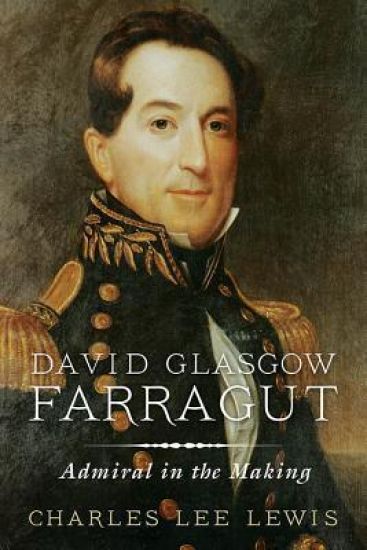
The first volume of Lewis' biography covers David Glasgow Farragut's long career in the navy before the Civil War. He was about sixty years old when that war began, and had accordingly lived through that long transitional period from sail to steam. As a lad he had served with Porter in the Essex on her glorious cruise which ended in bloody defeat at Valparaiso; he had repeatedly cruised in the Mediterranean; he hunted pirates in the Caribbean and had almost died of yellow fever; he had become familiar with the coast of Mexico and was present when the French bombarded the Castle of San Juan de Ulloa at Vera Cruz; he had often cruised into Buenos Aires, Montevideo, and Rio de Janeiro when revolution and anarchy threatened those cities; he had been on a man-of-war at Charleston when nullification threatened the union; he had participated in the Mexican War; he had established the Mare Island Navy Yard; and he commanded the steam sloop of war Brooklyn. Meanwhile he had slowly risen up the ladder of promotion from midshipman to captain, then the highest rank in the United States Navy.
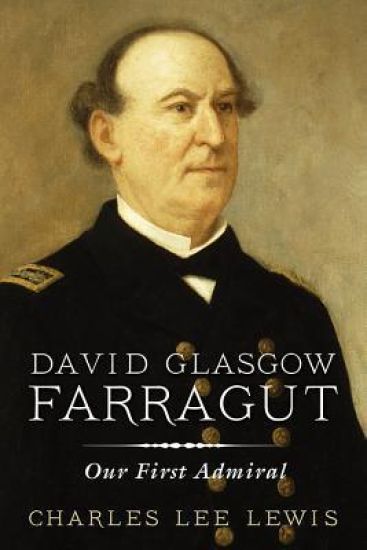
The second volume of this authoritative biography of America’s first admiral examines the last ten years of David Glasgow Farragut’s life, which included the ever-fascinating period of the Civil War. Farragut was as carefully methodical in preparation for battle as he was fearlessly swift in the execution of his plans. In Our First Admiral, the reader will learn of gross inefficiency and waste in the conduct of war, in the North as well as the South; of jealous ambition and malicious criticism; of lukewarm support of the government, lack of cooperation between the Army and Navy, and the inroads upon morale made by war weariness and disease, all of which tried Farragut’s courage as much as the enemy in battle. Farragut was a practical resourceful leader with vision and intuition (a rare combination), a courageous hard-hitting fighter who hated war, and a deeply religious man with an exuberant spirit and love of fellowship who was also exceedingly loyal to the Navy and his country. Though he was small in physical stature, Farragut was tall indeed in the fundamental characteristics of true manhood.
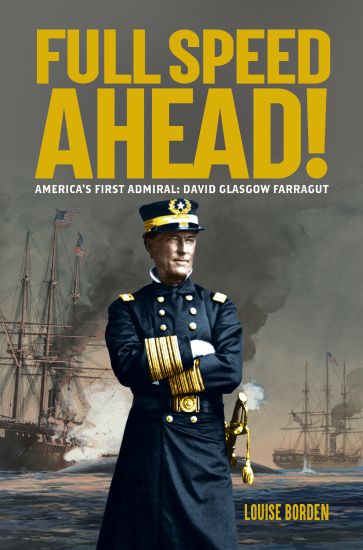
Discover the man behind everyone's favorite call to action, "Full speed ahead " in this inspiring and engaging biography about the first Admiral of the United States Navy, David Glasgow Farragut. At the age of nine, David Glasgow Farragut was appointed a midshipman in the US Navy by President James Madison. It was the start of a celebrated career. Farragut sailed aboard ships along the Delaware River, in the Caribbean, and across the Atlantic Ocean, even rounding the tip of South America, all while rising through the naval ranks from midshipman to admiral. When the Civil War began, Captain Farragut dedicated his life to protecting the United States as it was being torn in two. When President Lincoln asked him to capture New Orleans, the city Farragut once called home, and later to take Mobile Bay, the officer had only one order for his fleet: Full speed ahead Noted nonfiction writer Louise Borden's in-depth research uncovers a man dedicated to his country -- a man who earned the title of America's first admiral.
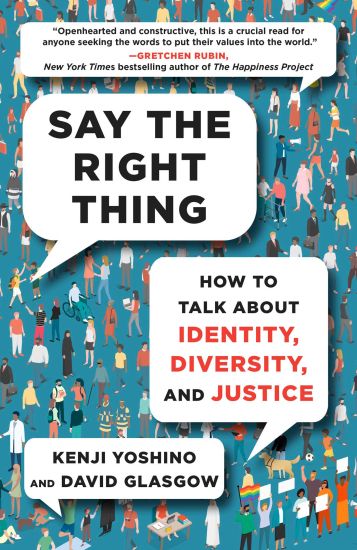
A Living Now Book Awards Gold Medalist, Social Activism/Charity A practical, shame-free guide for navigating conversations across our differences at a time of rapid social change. In the current period of social and political unrest, conversations about identity are becoming more frequent and more difficult. On subjects like critical race theory, gender equity in the workplace, and LGBTQ-inclusive classrooms, many of us are understandably fearful of saying the wrong thing. That fear can sometimes prevent us from speaking up at all, depriving people from marginalized groups of support and stalling progress toward a more just and inclusive society. Kenji Yoshino and David Glasgow, founders of the Meltzer Center for Diversity, Inclusion, and Belonging at NYU School of Law, are here to show potential allies that these conversations don't have to be so overwhelming. Through stories drawn from contexts as varied as social media posts, dinner party conversations, and workplace disputes, they offer seven user-friendly principles that teach skills such as how to avoid common conversational pitfalls, engage in respectful disagreement, offer authentic apologies, and better support people in our lives who experience bias. Research-backed, accessible, and uplifting, Say the Right Thing charts a pathway out of cancel culture toward more meaningful and empathetic dialogue on issues of identity. It also gives us the practical tools to do good in our spheres of influence. Whether managing diverse teams at work, navigating issues of inclusion at college, or challenging biased comments at a family barbecue, Yoshino and Glasgow help us move from unconsciously hurting people to consciously helping them.