Kirjojen hintavertailu. Mukana 11 244 527 kirjaa ja 12 kauppaa.

Kirjahaku

Etsi kirjoja tekijän nimen, kirjan nimen tai ISBN:n perusteella.

1000 tulosta hakusanalla David H. Benzing

Vascular Epiphytes

Vascular Epiphytes

David H. Benzing

Cambridge University Press
2008
pokkari
Epiphytes (plants which grow on other plants, not parasitically but for support), comprise more than one-third of the total vascular flora in some tropical forests. Growing within tropical forest canopies, epiphytes are subject to severe environmental constraints, and their diverse adaptations make them a rich resource for studies of water balance, nutrition, reproduction and evolution. This book synthesizes the body of information from research on epiphytes and their relations with other tropical biota, and provides a comprehensive overview of basic functions, life history, evolution, and the place of epiphytes in complex tropical communities. Tropical ecologists and zoologists as well as plant scientists will find this volume a useful guide to research on the twenty-five thousand species of epiphytes which root in the crowns of tropical trees.
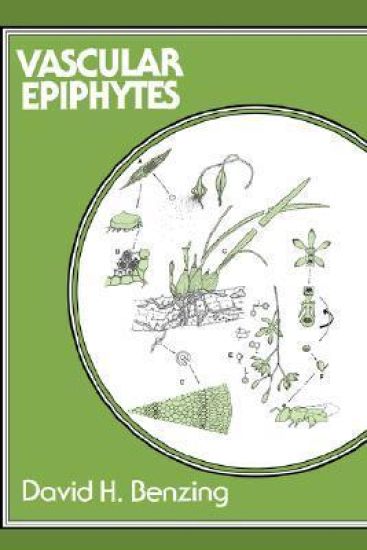
Vascular Epiphytes

Vascular Epiphytes

David H. Benzing

Cambridge University Press
1990
sidottu
Epyphytes (plants wchih grow on other plants, not parasitically, but for support) comprise more than one-third of the total vascular flora in some tropical forests. This book synthesizes the growing body of information from research on epiphytes and their relations with other tropical biota.
Bromeliaceae

Bromeliaceae

David H. Benzing

Cambridge University Press
2000
sidottu
This book presents a synthesis of the extensive information available on the biology of Bromeliacea, a largely neotropical family of about 2700 described species. Reproductive and vegetative structure and related physiology, ecology and evolution are emphasized, rather than floristics and taxonomy. Guiding questions include: why is this family inordinately successful in arboreal (epiphytic) and other typically stressful habitats and also so important to extensive fauna beyond pollinators and frugivores in the forest canopy? Extraordinary and sometimes novel mechanisms that mediate water balance, tolerance for high and low exposures, and mutualisms with ants have received much study and allow interesting comparisons among plant taxa and help explain why members of this taxon exhibit more adaptive and ecological variety than most other families of flowering plants. This volume concentrates on function and underlying mechanisms, thus will round out a literature that otherwise mostly ignores basic biology in favour of taxonomy and horticulture.
Air Plants

Air Plants

David H. Benzing

Comstock Publishing Associates
2012
sidottu
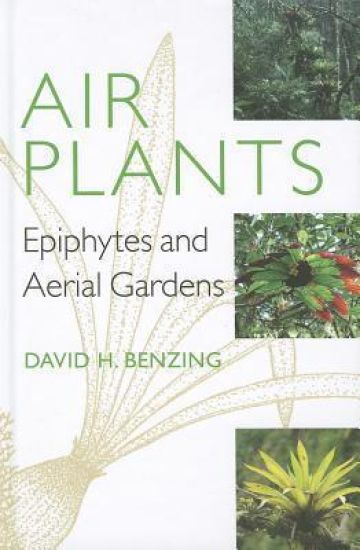
Often growing far above the ground, "air plants" (or epiphytes) defy many of our common perceptions about plants. The majority use their roots only for attachment in the crowns of larger, usually woody plants—or to objects such as rocks and buildings—and derive moisture and nutrients from the atmosphere and by collecting falling debris. Only the mistletoes are true parasites. Epiphytes are not anomalies and there are approximately 28,000 species—about 10 percent of the higher or vascular plants—that grow this way. Many popular houseplants, including numerous aroids, bromeliads, ferns, and orchids, rank among the most familiar examples. In Air Plants, David H. Benzing takes a reader on a tour of the many taxonomic groups to which the epiphytes belong and explains in nontechnical language the anatomical and physiological adaptations that allow these plants to conserve water, thrive without the benefit of soil, and engage in unusual relationships with animals such as frogs and ants. Benzing's comprehensive account covers topics including ecology, evolution, photosynthesis and water relations, mineral nutrition, reproduction, and the nature of the forest canopy as habitat for the free-living and parasitic epiphytes. It also pays special attention to important phenomena such as adaptive trade-offs and leaf economics. Drawing on the author's deep experience with epiphytes and the latest scientific research, this book is accessible to readers unfamiliar with technical botany; it features a lavish illustration program, references, a glossary, and tables.
Native Bromeliads of Florida

Native Bromeliads of Florida

Harry E Luther; David H Benzing

Pineapple Press Inc.,U.S.
2009
sidottu
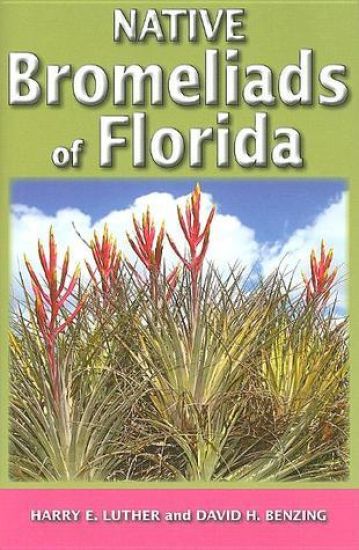
Do bromeliads ever harm their hosts? Are they parasites? Can any of them really live on air? How many kinds live in Florida? Are the pretty ones easy to grow in my garden? This is the first book on Florida s bromeliads and will appeal to both scientists and general readers interested in the state and its unique flora.Sixteen of the world s 3400 kinds of bromeliads are found in Florida, along with two natural hybrids. These so-called air plants thrive on trees and shrubs as epiphytes, which means they have no roots in soil. They are not parasites, as they use their woody hosts only for mechanical support. Spanish moss and ball moss are found in great numbersthroughout the state (and farther north). Most of the rest prefer the warmer climate of the peninsula, many in the cypress swamp forests of south Florida, where they occur so abundantly. This long-awaited book introduces them all, with means of identification, characteristics, distribution maps, and color photographs."
Native Bromeliads of Florida

Native Bromeliads of Florida

Harry E Luther; David H Benzing

Pineapple Press Inc.,U.S.
2016
pokkari
Do bromeliads ever harm their hosts? Are they parasites? Can any of them really live on air? How many kinds live in Florida? Are the pretty ones easy to grow in my garden? This is the first book on Florida's bromeliads and will appeal to both scientists and general readers interested in the state and its unique flora.Sixteen of the world's 3400 kinds of bromeliads are found in Florida, along with two natural hybrids. These so-called "air plants" thrive on trees and shrubs as epiphytes, which means they have no roots in soil. They are not parasites, as they use their woody hosts only for mechanical support. Spanish moss and ball moss are found in great numbers throughout the state (and farther north). Most of the rest prefer the warmer climate of the peninsula, many in the cypress swamp forests of south Florida, where they occur so abundantly. This long-awaited book introduces them all, with means of identification, characteristics, distribution maps, and color photographs.
Complete Jewish Bible: An English Version by David H. Stern - Giant Print
Now, the most widely used Messianic Jewish Bible around the world, has updated text with introductions added to each book, written from a biblically Jewish perspective. The CJB is a unified Jewish book, a version for Jews and non-Jews alike; to connect Jews with the Jewishness of the Messiah, and non-Jews with their Jewish roots. Names and terms are returned to their original Hebrew and presented in easy-to-understand transliterations, enabling the reader to say them the way Yeshua (Jesus
Complete Jewish Bible: An English Version by David H. Stern - Updated
Now, the most widely used Messianic Jewish Bible around the world, has updated text with introductions added to each book, written from a biblically Jewish perspective. The CJB is a unified Jewish book, a version for Jews and non-Jews alike; to connect Jews with the Jewishness of the Messiah, and non-Jews with their Jewish roots. Names and terms are returned to their original Hebrew and presented in easy-to-understand transliterations, enabling the reader to say them the way Yeshua (Jesus
Jewish New Testament: By David H. Stern, Updated

Jewish New Testament: By David H. Stern, Updated

David H. Stern

Messianic Jewish Publishers
2023
sidottu
Why is this New Testament different from all other New Testaments? Because the Jewish New Testament expresses its original and essential Jewishness. The New Testament is a Jewish book--by Jews, mostly about Jews, and for Jews as well as Gentiles. Its central figure, the Messiah Yeshua (Jesus), was and is a Jew.Vicarious atonement, salvation, immersion (baptism), the new covenant and the very concept of a Messiah are all Jewish. In sum, the New Testament is built upon and completes the Hebrew Scriptures. The Jewish New Testament brings out Jewishness in three ways: - Cosmetically--by using neutral terms and Hebrew names: "execution-stake," not "cross"; "Ya'akov," not "James." - Culturally and Religiously--by highlighting Jewish features: "Chanukkah," not "the feast of dedication"; "tzitzit," not "fringe." - Theologically--by correcting mistranslations resulting from anti-Jewish theological bias; for example, at Romans 10:4 the Messiah is "the goal at which the Torah aims," not "the end of the law." Freshly rendered from the original Greek into enjoyable modern English by a Messianic Jew (a Jew who honors Yeshua as the Messiah of Israel), the "Jewish New Testament" challenges Jews to understand that Yeshua is a friend to every Jewish heart and the New Testament a Jewish book filled with truths to be accepted and acted upon. At the same time, while reaffirming the equality of Gentiles and Jews in the Messianic Community, it challenges Christians to acknowledge the Jewishness of their faith and their oneness with the Jewish people.
Jewish New Testament Commentary: A Companion Volume to the Jewish New Testament by David H. Stern
This updated companion volume to the Jewish New Testament enhances Bible study. Passages and expressions are explained in their original cultural context, the way 1st century Jewish writers meant for them to be understood Over fifteen years of research and study went into the JNTC to make the New Testament more meaningful
Jewish New Testament Commentary: A Companion Volume to the Jewish New Testament by David H. Stern
This updated companion volume to the Jewish New Testament enhances Bible study. Passages and expressions are explained in their original cultural context, the way 1st century Jewish writers meant for them to be understood Over fifteen years of research and study went into the JNTC to make the New Testament more meaningful
The Conspiracy of Gianluigi Fieschi, Or, Genoa in the Sixteenth Century. Translated by David H. Wheeler. with a Portrait

The Conspiracy of Gianluigi Fieschi, Or, Genoa in the Sixteenth Century. Translated by David H. Wheeler. with a Portrait

Emanuele Celesia; David Hilton Wheeler

British Library, Historical Print Editions
2011
pokkari
Title: The Conspiracy of Gianluigi Fieschi, or, Genoa in the sixteenth century. Translated ... by David H. Wheeler. With a portrait.]Publisher: British Library, Historical Print EditionsThe British Library is the national library of the United Kingdom. It is one of the world's largest research libraries holding over 150 million items in all known languages and formats: books, journals, newspapers, sound recordings, patents, maps, stamps, prints and much more. Its collections include around 14 million books, along with substantial additional collections of manuscripts and historical items dating back as far as 300 BC.The HISTORY OF EUROPE collection includes books from the British Library digitised by Microsoft. This collection includes works chronicling the development of Western civilisation to the modern age. Highlights include the development of language, political and educational systems, philosophy, science, and the arts. The selection documents periods of civil war, migration, shifts in power, Muslim expansion into Central Europe, complex feudal loyalties, the aristocracy of new nations, and European expansion into the New World. ++++The below data was compiled from various identification fields in the bibliographic record of this title. This data is provided as an additional tool in helping to insure edition identification: ++++ British Library Celesia, Emanuele; Wheeler, David Hilton; 1866. xxxii, 343 p.; 8 . 9150.d.23.
David Levy's Guide to Eclipses, Transits, and Occultations

David Levy's Guide to Eclipses, Transits, and Occultations

David H. Levy

Cambridge University Press
2010
pokkari
In this simple guide, David Levy inspires readers to experience the wonder of eclipses and other transient astronomical events for themselves. Covering both solar and lunar eclipses, he gives step-by-step instructions on how to observe and photograph eclipses. As well as explaining the science behind eclipses, the book also gives their historical background, discussing how they were observed in the past and what we have learned from them. This personal account contains examples from the 77 eclipses the author has witnessed himself. The guide also includes chapters on occultations of stars and planets by the Moon and of asteroids by stars, and the transits of Mercury and Venus. Tables of future eclipses make this invaluable for anyone, from beginners to practised observers, wanting to learn more about these fascinating events.
David Levy's Guide to the Night Sky

David Levy's Guide to the Night Sky

David H. Levy

Cambridge University Press
2001
pokkari
The perfect introduction for the novice astronomer, this book stirs the imagination and puts observation in a framework of social activity and personal adventure. Written by an award-winning astronomer, it is a technical guide to the sky, full of helpful practical hints. The author's lively style engages, entertains, and informs. Newcomers will learn how to enjoy the Moon, planets, comets, meteors, and distant galaxies observable through a small telescope. Levy describes the features of the Moon from night to night; how to observe constellations; how best to view the stars, nebulae, and galaxies; how to follow the planets on their annual trek among the constellations; how to map the sky; how to find a new comet; how to buy or even make a telescope; what to see in a month of lunar observations or a year of stellar observation; and much more.