

Kirjahaku
Etsi kirjoja tekijän nimen, kirjan nimen tai ISBN:n perusteella.
1000 tulosta hakusanalla David J. (EDT) Simmons






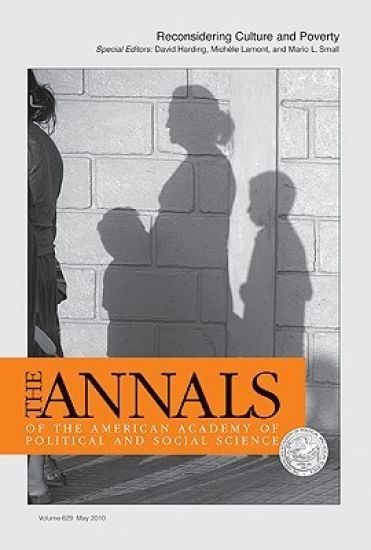
Reconsidering Culture and Poverty
David J. (EDT) Harding; Michele (EDT) Lamont; Mario Luis (EDT) Small
SAGE Publications Inc
2010
pokkari
Culture has returned to the poverty research agenda. Over the past decade, sociologists, demographers, and even economists have begun asking questions about the role of cul-ture in many aspects of poverty, at times even explaining the behavior of low-income populations in reference to cultural factors. Unlike their predecessors, contemporary researchers rarely claim that culture will sustain itself for multiple generations regardless of structural changes, and they almost never use the term "pathology," which implied in an earlier era that people would cease to be poor if they changed their culture. The new generation of scholars conceives of culture in substantially different ways. In this latest issue of the ANNALS, readers are treated to thought-provoking articles that attempt to bridge the gap between poverty and culture scholarship, highlighting new trends in poverty research. The authors identi-fy the scholarly and policy-related basis for why poverty researchers should be deeply concerned with culture, noting the importance of understanding better how people cope with poverty and how they escape it. They then tackle the perplexing question-what is "culture"?-and propose that sociologists and anthropologists studying culture have developed at least seven different analytical tools for cap-turing meaning that could help answer a number of questions central to the study of poverty, including those centered on marriage, educa-tion, neighborhoods, and community participation, among others.While not denying the importance of macro-structural conditions-such as the concentration of wealth and income, the spatial segregation across classes and racial groups, or the persistent international migration of labor and capital-they argue that human action is both constrained and enabled by the meaning people give to their actions and that these dynamics should become central to our understanding of the production and reproduction of poverty and social inequality. By considering poverty in the United States and abroad, examining both the elite, policy-making level and the daily lives of low-income people themselves, the articles convey a composite and multileveled picture of the ways in which meaning-making factors into the production and reproduction of poverty. The volume aims to demonstrate the importance of cultural concepts for poverty research, serve as a model and a resource for poverty scholars who wish to incorporate cultural concepts into their research, assist in the training of future scholars working at the nexus of poverty and culture, and identify crucial areas for future methodological, theoretical, and empirical development.The volume also serves to debunk existing myths about the cultural orientations of the poor for those formulating policy; as the editors point out, "ignoring culture can lead to bad policy." This volume is vital reading, not only for sociologists but also for researchers across the social sciences as a whole.
The World's Best Orations from the Earliest Period to the Present Time
David J. (EDT) Brewer
Kessinger Pub
2005
pokkari

The World's Best Orations
David J. (EDT) Brewer; Edward A. (EDT) Allen; William (EDT) Schuyler
Kessinger Pub
2007
pokkari

Handbook on the Ethics of Artificial Intelligence
David J. (EDT) Gunkel
Edward Elgar Pub
2024
sidottu
Pillars of Leadership
David J. Vaughan; George (EDT) Grant
Cumberland House Publishing,US
2000
pokkari

Preaching As Pastoral Caring
Roger (EDT) Alling; David J. (EDT) Schlafer
Morehouse Publishing
2005
pokkari
Preaching as Pastoral Caring is the thirteenth in a series of books devoted to presenting examples of preaching excellence from parishes throughout the Episcopal Church. This volume addresses the difficult and essential area of pastoral preaching as a kind of spiritual leadership in which compassionate healing and courageous confrontation are experienced not as polar opposites, but as inseparable.
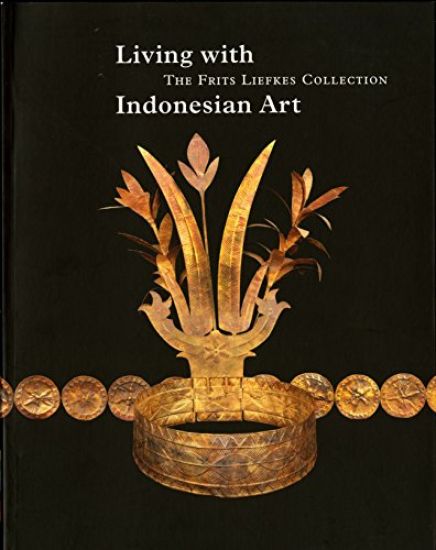
Living With Indonesian Art
Francine (EDT) Brinkgreve; David J. (EDT) Stuart-Fox; Matthew Isaac (CON) Cohen
KIT Publishers
2013
pokkari
This book is published in conjunction with the exhibition Een huis vol Indonesie: Het mooiste uit de collectie Liefkes, held at RijksmuseumVolkenkunde / National Museum of Ethnology, Leiden, 7 May-21 July 2013. It is best to tell the history of a museum through the important events that have touched it. Defining moments, that often only afterwards are recognised as such. That the gift of Frits Liefkes collection of Indonesian art and the bequest that accompanied it deserves a place in the history of Rijksmuseum Volkenkunde was immediately evident to us at the time. On account of the quality, size, and breadth of the collection, of course. And because Frits Liefkes stipulated, in relation to the gift, that pieces of lesser quality could be sold and the proceeds used to strengthen our Indonesia collection. There came, over and above that, a substantial bequest, in part the result of the sale of His house. An unbelievable gift, that will live on in Rijksmuseum Volkenkunde through the acquisitions that it makes possible.

Treasure Trove Or He Would Be A Gentleman
Samuel Lover; David J. (EDT) O'Donoghue
Kessinger Pub
2007
pokkari

Letters of David Ricardo to Hutches Trower and Others, 1811-1823
David Ricardo; James (EDT) Bonar; J. H. (EDT) Hollander
Kessinger Pub
2008
pokkari

Mathematics and Materials
Mark J. (EDT) Bowick; David (EDT) Kinderlehrer; Govind (EDT) Menon
Amer Mathematical Society
2017
sidottu

The Contest Problem
J. Douglas (EDT) Faires; David (EDT) Wells
Mathematical Association of America
2008
pokkari
For over fifty years, the Mathematical Association of America (MAA) has been engaged in the construction and administration of challenging contests for students in American and Canadian high schools at every level of ability. In the year 2000 the MAA initiated the American Mathematics Competitions 10 (AMC 10), aimed at students in the first two years of high school. The Contest Problem Book VIII is the first collection of problems assembled from that competition covering the years 2001-2007. 350 problems and solutions are contained in this volume. A Problem Index at the back of the book classifies the problems into the following major subject areas: Algebra and Arithmetic, Sequences and Series, Triangle Geometry, Circle Geometry, Quadrilateral Geometry, Polygon Geometry, Counting Coordinate Geometry, Solid Geometry, Discrete Probability, Statistics, Number Theory, and Logic. These are then broken down into subcategories and problems are cross-referenced whenever they represent several subject areas.
The Future of Business Schools
Rico J. (EDT) Baldegger; Ayman (EDT) El Tarabishy; David B. (EDT) Audretsch
Edward Elgar Pub
2024
pokkari