Kirjojen hintavertailu. Mukana 11 244 527 kirjaa ja 12 kauppaa.

Kirjahaku

Etsi kirjoja tekijän nimen, kirjan nimen tai ISBN:n perusteella.

1000 tulosta hakusanalla David J. Breeze

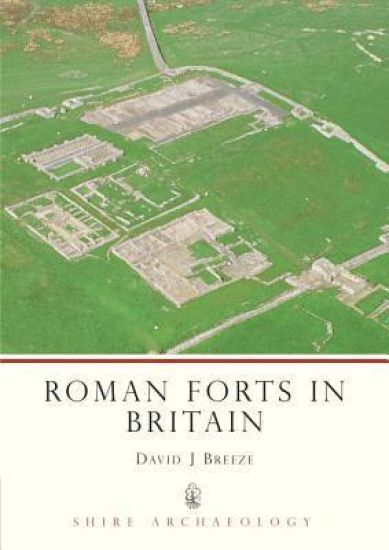
Roman Forts in Britain

Roman Forts in Britain

David J. Breeze

Shire Publications
2002
nidottu
This book examines Roman forts in Britain from the first to the fourth century. It describes the layout of a fort and how forts developed from the marching camps thrown up each night by the army on campaign to the strongholds of the Saxon Shore. Forts, fortresses, watch-towers and signal stations are in turn examined, and the defences of the fort and its annex analysed. Other chapters deal with how the Roman soldiers built the fort and the life of the men stationed there. A gazetteer of forts worth visiting is included and there is also a select bibliography.
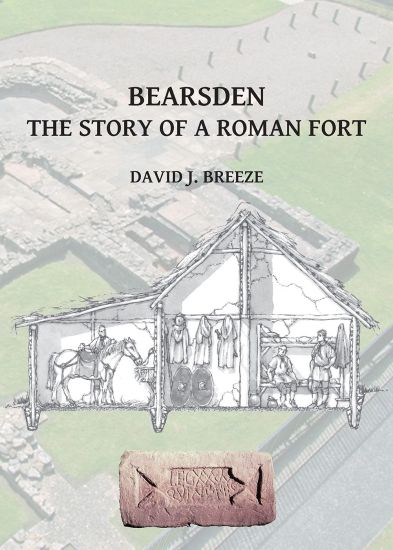
Bearsden: The Story of a Roman Fort

Bearsden: The Story of a Roman Fort

David J. Breeze

Archaeopress Archaeology
2016
pokkari
The Roman fort at Bearsden and its annexe, together with areas beyond its defences, were extensively excavated from 1973 to 1982. The report on these excavations was published in 2016. This ‘popular’ account of the discoveries looks at the material recovered from the site in a different way, examining the process of archaeological excavation, the life of the soldiers at the fort based on the results of the excavation as well as material from elsewhere in the Roman Empire, the presentation and interpretation of the bath-house and latrine, and a discussion of possible future work arising out of the excavation. The excavation report was well illustrated with reconstruction drawings and the process of creating these is also discussed.
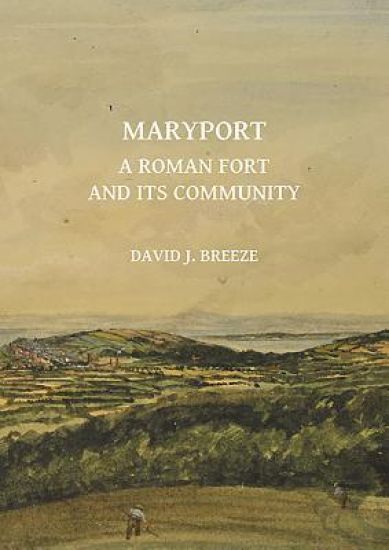
Maryport: A Roman Fort and Its Community

Maryport: A Roman Fort and Its Community

David J. Breeze

Archaeopress
2018
nidottu
The collection of Roman inscribed stones and sculpture, together with other Roman objects found at Maryport in Cumbria, is the oldest archaeological collection in Britain still in private hands. Today, it is housed in the Senhouse Roman Museum on Sea Brows to the north of the modern town of Maryport. Beside the museum the earthworks of the Roman fort may still be seen, and beyond it, though not visible, lies a large civil settlement revealed through geophysical survey and the scene of two recent excavations. 'Maryport: A Roman Fort and its community' places the collection in context and describes the history of research at the site. Maryport, although at the north-western edge of the Roman Empire, provides material of international importance for our understanding of the Roman state.
Hadrian’s Wall: A study in archaeological exploration and interpretation
The lectures on which this publication is based were delivered as the Rhind Lectures to the Society of Antiquaries of Scotland in May 2019. The annual Rhind Lectures commemorate Alexander Henry Rhind (1833-1863), a Fellow of the Society renowned for his excavations (finds from which are now in the National Museum of Scotland) and publications. The 2019 lectures were generously sponsored by AOC Archaeology Group. The first two lectures – chapters in this book – provide the historiographical background to our present understanding of Hadrian’s Wall. They start with John Collingwood Bruce, the leading authority on the Wall, from 1848 until his death in 1892, who gave the Rhind lectures in 1883 and whose influence continues to this day. Research on the Wall in the field and in the study from 1892 to the present day are covered in the second lecture. The third and fourth lectures consider the purpose(s) and operation of Hadrian’s Wall from the first plan drawn up soon after Hadrian became emperor in 117 through to the final days of its existence as a frontier shortly after 400. Five distinct ‘plans’ for the Wall are promulgated. The fifth lecture examines the impact of the frontier on the people living in its shadow and beyond. The last lecture reviews the processes which have brought us to an understanding of Hadrian’s Wall and considers the value of research strategies, with some suggestions for the way forward. The chapters in this book reflect closely the lectures themselves with the main change being the addition of references.
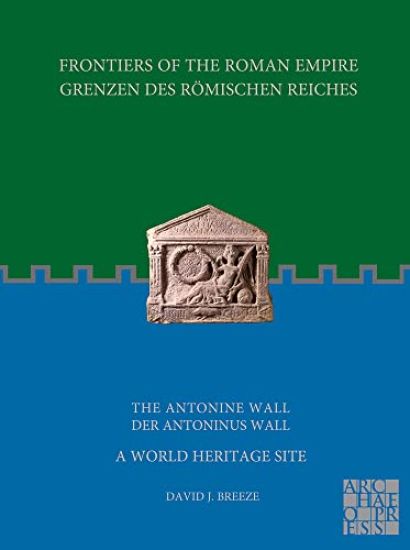
Frontiers of the Roman Empire: The Antonine Wall – A World Heritage Site
The Antonine Wall lay at the very extremity of the Roman world. For a generation, in the middle of the second century AD, it was the north-west frontier of the Roman empire. Furthermore, it was one of only three “artificial” frontiers along the European boundaries of the empire: the other two are Hadrian’s Wall and the German Limes. Although the Antonine Wall fits into the general pattern of Roman frontiers, in many ways it was the most developed frontier in Europe, with certain distinct characteristics. Perhaps of greatest significance is the survival of the collection of Roman military sculpture, the Distance Slabs. These record the lengths constructed by each legion and their relationship to the labour camps allow further conclusions to be made about the work of constructing the Antonine Wall.
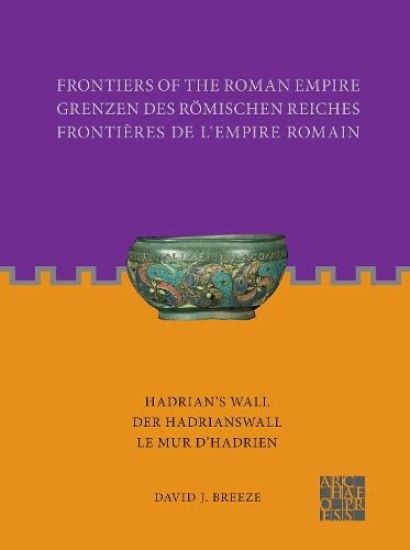
Frontiers of the Roman Empire: Hadrian's Wall
The frontiers of the Roman Empire together form the largest monument of one of the world’s greatest ancient states. They stretch for some 7,500 km through 20 countries which encircle the Mediterranean Sea. The remains of these frontiers have been studied by visitors and later by archaeologists for several centuries. Many of the inscriptions and sculptures, weapons, pottery and artefacts created and used by the soldiers and civilians who lived on the frontier can be seen in museums. Equally evocative of the lost might of Rome are the physical remains of the frontiers themselves. The aim of this series of books is not only to inform the interested visitor about the history of the frontiers but to act as a guidebook as well. Emperor Hadrian ordered the construction of the great Wall which still bears his name ‘to separate the barbarians from the Romans’ (Historia Augusta, Life of Hadrian, 11). The complex of military installations, 117 km long, but with an extension without the linear barrier for about 40 km down the west coast, contained 74 km of stone wall, 43 km of turf rampart, 200 towers, 100 fortlets, 20 forts, took years to construct and was probably still being modified when Hadrian died in July 138. This highly illustrated book offers an accessible summary of Hadrian’s Wall, and an overview of the wider context of the Roman frontiers.
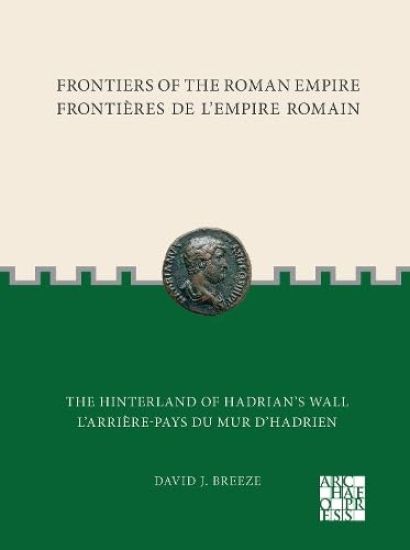
Frontiers of the Roman Empire: The Hinterland of Hadrian?s Wall
The frontiers of the Roman Empire together form the largest monument of one of the world’s greatest ancient states. They stretch for some 7,500 km through 20 countries which encircle the Mediterranean Sea. The remains of these frontiers have been studied by visitors and later by archaeologists for several centuries. Many of the inscriptions and sculptures, weapons, pottery and artefacts created and used by the soldiers and civilians who lived on the frontier can be seen in museums. Equally evocative of the lost might of Rome are the physical remains of the frontiers themselves. The aim of this series of books is not only to inform the interested visitor about the history of the frontiers but to act as a guidebook as well. In this important and beautifully illustrated book, David Breeze elucidates the context of the most famous frontier, Hadrian’s Wall. The zone to north and south of the Wall was a heavily militarised landscape of roads, bridges, forts, fortlets and towers, but also the towns, settlements and supply infrastructure on which the army depended. As the invaluable gazetteer shows, the area is now rich in superb sites and museums, allowing modern people countless rich insights into the world of the soldiers and civilians of the period.
Edge of Empire, Rome's Scottish Frontier

Edge of Empire, Rome's Scottish Frontier

David J. Breeze

Birlinn Ltd
2023
nidottu
Two thousand years ago, southern Scotland was part of a great empire, the Roman Empire. About AD 140, a Roman army marched north from what is now Northumbria and, 20 years after and over 100 miles further north than Hadrian’s Wall, built a new frontier across the Forth-Clyde isthmus. With reference to contemporary coins and literary sources together with the archaeological remains, inscriptions and sculpture from the Antonine Wall itself, David Breeze explains the historical context for, and the creation of, the fortifications. Stunning photography by David Henrie of Historic Scotland illustrates all aspects of this most northerly Roman frontier. These photographs help us to appreciate the Antonine Wall in its landscape and allow us a visual explanation for its construction almost 2000 years ago.
Roman Frontiers in Britain

Roman Frontiers in Britain

David J. Breeze

Bristol Classical Press
2007
nidottu
Designed for students and teachers of Ancient History or Classical Civilisation at school and in early university years, this series provides a valuable collection of guides to the history, art, literature, values and social institutions of the ancient world."Hadrian's Wall and the Antonine Wall" defined the edge of the Roman Empire in Britain. Today, the spectacular remains of these great frontier works stand as mute testimony to one of the greatest empires the world has ever seen. This new accessible account, illustrated with numerous photographs, maps and plans, places the frontiers into their context both in Britain and Europe, examining the development of frontier installations over four centuries.
Hadrian's Wall

Hadrian's Wall

David J. Breeze

John Donald Short Run Press
2016
sidottu
Brothers Henry, Charles and Thomas Richardson painted nearly 80 views of Hadrian's Wall between 1838 and the 1880s. Most were created by Henry Burdon Richardson, who accompanied author John Collingwood Bruce on his tour of Hadrian's Wall in 1848. Only 17 were reproduced as engravings in Bruce's books; very few have ever been published as paintings. They form a valuable record of the Roman frontier as it was during an important stage in its history, before the advent of the modern world. New theories and interpretations were coming to light, as described in Bruce's first book The Roman Wall, published in 1851. John Clayton, town clerk of Newcastle upon Tyne, had begun buying land along the Wall, aiming to preserve the remains, creating in effect an archaeological park. The production of the Richardson paintings, Bruce's contribution to Wall studies and the achievement of John Clayton in conserving the Wall, are all explored, providing a fascinating background story. Over 70 of the Richardsons' paintings are published in the book, most with Bruce's original description and a commentary by the author.
The Roman Army

The Roman Army

David J. Breeze

Bloomsbury Academic
2016
nidottu
This authoritative short volume introduces readers to the Roman army, its structure, tactics, duties and development. One of the most successful fighting forces that the world has seen, the Roman army was inherited by the emperor Augustus who re-organized it and established its legions in military bases, many of which survived to the end of the empire. He and subsequent emperors used it as a formidable tool for expansion. Soon, however, the army became fossilized on its frontiers and changed from a mobile fighting force to a primarily defensive body. Written by a leading authority on the Roman army and the frontiers it defended and expanded, this is an invaluable book for students at school and university level, as well as a handy guide for general readers with an interest in military history, the rise and development and fall of the Roman legions, and the ancient world.
Frontiers of the Roman Empire: The Roman Frontier in Egypt

Frontiers of the Roman Empire: The Roman Frontier in Egypt

David J. Breeze; Michel Reddé

Archaeopress
2021
nidottu
The frontiers of the Roman empire together form the largest monument of one of the world’s greatest states. They stretch for some 7,500km through 20 countries which encircle the Mediterranean Sea. The remains of these frontiers have been studied by visitors and later by archaeologists for several centuries. Many of the inscriptions and sculpture, weapons, pottery and artefacts created and used by the soldiers and civilians who lived on the frontier can be seen in museums. Equally evocative of the lost might of Rome are the physical remains of the frontiers themselves. The aim of this series of books is not only to inform the interested visitor about the history of the frontiers but to act as a guidebook as well. The Roman military remains of Egypt are remarkable in their variety and in their state of preservation. They deserve to be better known. They include forts, quarries under the authority of the army and whose materials were used in the monumental buildings of Rome, as well as the roads which crossed the desert landscape and brought the Mediterranean into con¬tact with the Indian Ocean. It is hoped that each reader of this book will enjoy learning more about the remarkable Roman inheritance of Egypt. The full text is presented side-by-side dual-language in English and French.
Frontiers of the Roman Empire: The Roman Frontiers of Dacia

Frontiers of the Roman Empire: The Roman Frontiers of Dacia

David J. Breeze; Felix Marcu; George Cupcea

Archaeopress
2022
nidottu
The frontiers of the Roman empire together form the largest monument of one of the world’s greatest states. They stretch for some 7,500km through 20 countries which encircle the Mediterranean Sea. The remains of these frontiers have been studied by visitors and later by archaeologists for several centuries. Many of the inscriptions and sculpture, weapons, pottery and artefacts created and used by the soldiers and civilians who lived on the frontier can be seen in museums. Equally evocative of the lost might of Rome are the physical remains of the frontiers themselves. The aim of this series of books is not only to inform the interested visitor about the history of the frontiers but to act as a guidebook as well. The province of Dacia had a relatively short life being abandoned due to economic and strategic reasons in the 260s. It was heavily militarized and therefore the role of the army was crucial in Its development and life. The Roman frontier In Dacia combined several elements, each relating to the landscape: there were riverain and mountain borders, some supplemented by linear barriers, and all connected by roads. Everywhere, the complex system of the border consisted primarily of a network of watchtowers, smaller or larger forts and artificial earthen ramparts or stone walls.
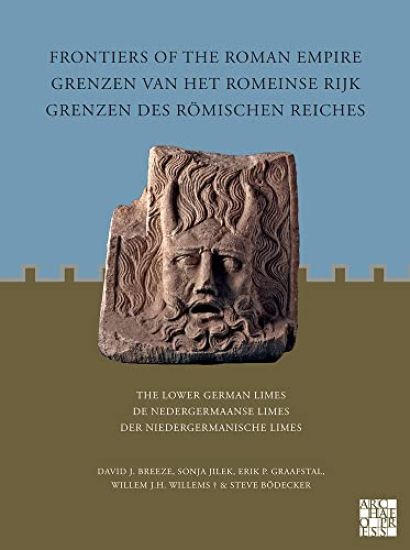
Frontiers of the Roman Empire: The Lower German Limes

Frontiers of the Roman Empire: The Lower German Limes

David J. Breeze; Sonja Jilek; Erik P. Graafstal; Willem J.H. Willems; Steve Bödecker

Archaeopress
2022
nidottu
The frontiers of the Roman empire together form the largest surviving monument of one of the world’s greatest states. They stretch for some 7,500 km through 20 countries which encircle the Mediterranean Sea. The remains of these frontiers have been studied by visitors and later by archaeologists for several centuries. Many of the inscriptions and sculpture, weapons, pottery and artefacts created and used by the soldiers and civilians who lived on the frontier can be seen in museums. Equally evocative of the lost might of Rome are the physical remains of the frontiers themselves. The aim of this series of booklets is not only to inform the interested visitor about the history of the frontiers but to act as a guidebook as well. The frontier in Lower Germany was one of the earliest to be created; surviving into the early 5th century, it illustrates the whole range of Roman military installations. In the Rhine delta, the watery nature of the landscape has ensured incredible survivals in the form of organic remains including ships. Upstream are great military bases created for the army poised to invade Germany, supported by forts and fortlets, all modified over time.
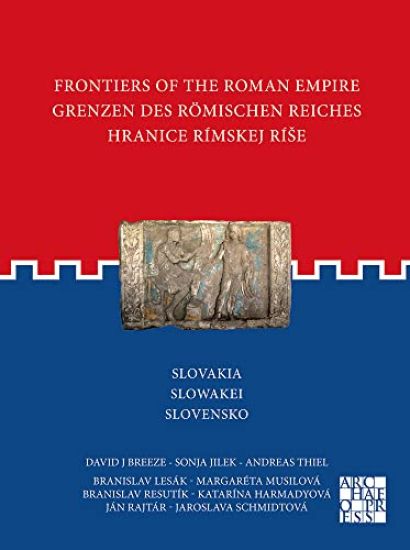
Frontiers of the Roman Empire: Slovakia

Frontiers of the Roman Empire: Slovakia

David J. Breeze; Sonja Jilek; Branislav Lesák; Margaréta Musilová; Branislav Resutík; Katarína Harmadyová; Ján Rajtár; Jaroslava Schmidtová

Archaeopress
2022
nidottu
The frontiers of the Roman empire together form the largest monument of one of the world’s greatest states. They stretch for some 7,500km through 20 countries which encircle the Mediterranean Sea. The remains of these frontiers have been studied by visitors and later by archaeologists for several centuries. Many of the inscriptions and sculpture, weapons, pottery and artefacts created and used by the soldiers and civilians who lived on the frontier can be seen in museums. Equally evocative of the lost might of Rome are the physical remains of the frontiers themselves. The aim of this series of books is not only to inform the interested visitor about the history of the frontiers but to act as a guidebook as well. Slovakia was situated at the edge of the classical world but still was a close neighbour of the Roman Empire. The Roman influence left distinct traces not only at the territories along the frontier but also in its broader fore field.
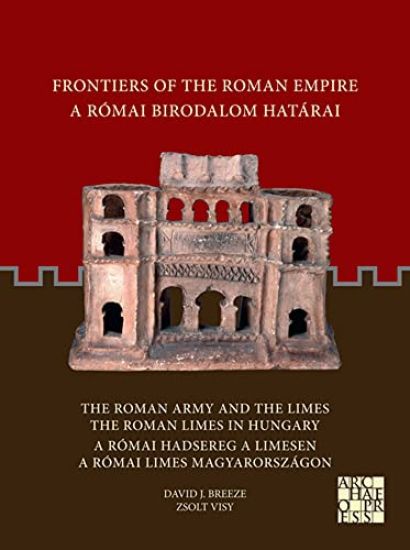
Frontiers of the Roman Empire: The Roman Army and the Limes / The Roman Limes in Hungary
The frontiers of the Roman empire together form the largest surviving monument of one of the world’s greatest states. They stretch for some 7,500 km through 20 countries which encircle the Mediterranean Sea. The remains of these frontiers have been studied by visitors and later by archaeologists for several centuries. Many of the inscriptions and sculpture, weapons, pottery and artefacts created and used by the soldiers and civilians who lived on the frontier can be seen in museums. Equally evocative of the lost might of Rome are the physical remains of the frontiers themselves. The aim of this series of booklets is not only to inform the interested visitor about the history of the frontiers but to act as a guidebook as well. The Roman Empire reached its near full extent during the reign of Emperor Augustus. At that time Europe, Africa, the Middle East and the entire Mediterranean were part of it. The Hungarian part of the Empire had a river frontier that was more precisely called ripa. Pannonia province existed from the occupation during the reign of Emperor Augustus to the 20s and 30s of the 5th century A.D. Its border stretched alongside the Danube and was always one of the most important European frontiers in Roman times, as it is justified by keeping a very strong defence force there, consisting of 4 legions and an average of 30 auxiliary units. Some 420 km long section of the entire Pannonian limes from Klosterneuburg (Austria) to Belgrade (Serbia) belongs to the territory of present-day Hungary.
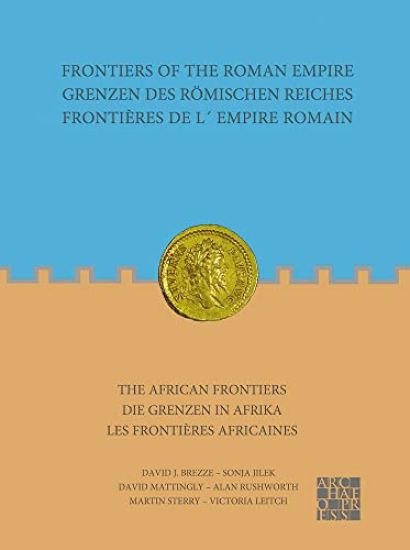
Frontiers of the Roman Empire: The African Frontiers

Frontiers of the Roman Empire: The African Frontiers

David J. Breeze; Sonja Jilek; David Mattingly; Alan Rushworth; Martin Sterry; Victoria Leitch

Archaeopress
2013
nidottu
The frontiers of the Roman empire together form the largest monument of one of the world’s greatest states. They stretch for some 7,500km through 20 countries which encircle the Mediterranean Sea. The remains of these frontiers have been studied by visitors and later by archaeologists for several centuries. Many of the inscriptions and sculpture, weapons, pottery and artefacts created and used by the soldiers and civilians who lived on the frontier can be seen in museums. Equally evocative of the lost might of Rome are the physical remains of the frontiers themselves. The aim of this series of books is not only to inform the interested visitor about the history of the frontiers but to act as a guidebook as well. The Roman military remains in North Africa are remarkable in their variety and in their state of preservation: they deserve to be better known. They include towers and forts, stretches of defensive lines of stone and earth with ditches broken by gates, and roads, sitting in the most amazing scenery. It is hoped that each reader of this book will enjoy learning more about North Africa’s remarkable Roman inheritance.
Frontiers of the Roman Empire: The Upper Germanic Limes

Frontiers of the Roman Empire: The Upper Germanic Limes

David J. Breeze; Andreas Thiel; Sarah Roth; Thomas Becker

Archaeopress
2022
nidottu
Towards the end of Caesar’s Gallic War, Rome had reached the Rhine. Since the campaigns under Emperor Augustus (15 B.C.), larger troop contingents were stationed along the river, with focal points around Mogontiacum/Mainz and in northern Switzerland. After the Battle of the Teutoburg Forest (9 AD), when the attempt to occupy all of Germania had failed, the Lower Rhine remained the frontier of the empire’s territory until Late Antiquity. East of the Middle and Upper Rhine, however, the Roman sphere of power was pushed forward several times over a period of almost 200 years, and from 90 AD at the latest, the construction of artificial borders was initiated. When the Roman expansion came to an end around 160 AD, the province was secured in its furthest extension by the “Frontal” or “Outer Upper-Germanic Limes”, which existed until the middle of the 3rd century. This book illustrates the historical and archaeological significance of the Upper Germanic Limes and provides an up-to-date overview of its manifold features in the field.
Frontiers of the Roman Empire: Roman Limes in Serbia

Frontiers of the Roman Empire: Roman Limes in Serbia

David J. Breeze; Sonja Jilek; Miomir Korac; Snežana Golubovic; Nemanja Mrdic; Gordana Jeremic; Stefan Pop-Lazic

Archaeopress
2022
nidottu
The frontiers of the Roman empire together form the largest monument of one of the world’s greatest states. They stretch for some 7,500km through 20 countries which encircle the Mediterranean Sea. The remains of these frontiers have been studied by visitors and later by archaeologists for several centuries. Many of the inscriptions and sculpture, weapons, pottery and artefacts created and used by the soldiers and civilians who lived on the frontier can be seen in museums. Equally evocative of the lost might of Rome are the physical remains of the frontiers themselves. The aim of this series of books is not only to inform the interested visitor about the history of the frontiers but to act as a guidebook as well. The aim of this publication is not only to inform about historical and archaeological facts on the Limes in Serbia but also to act as a guidebook as well through the Danubian Limes.