This student solutions manual accompanies the text, Boundary Value Problems and Partial Differential Equations, 5e. The SSM is available in print via PDF or electronically, and provides the student with the detailed solutions of the odd-numbered problems contained throughout the book.
Boundary Value Problems, Sixth Edition, is the leading text on boundary value problems and Fourier series for professionals and students in engineering, science, and mathematics who work with partial differential equations. In this updated edition, author David Powers provides a thorough overview of solving boundary value problems involving partial differential equations by the methods of separation of variables. Additional techniques used include Laplace transform and numerical methods.The book contains nearly 900 exercises ranging in difficulty from basic drills to advanced problem-solving exercises.Professors and students agree that Powers is a master at creating examples and exercises that skillfully illustrate the techniques used to solve science and engineering problems.
For over fifty years, Boundary Value Problems and Partial Differential Equations, Seventh Edition has provided advanced students an accessible and practical introduction to deriving, solving, and interpreting explicit solutions involving partial differential equations with boundary and initial conditions. Fully revised and now in its Seventh Edition, this valued text aims to be comprehensive without affecting the accessibility and convenience of the original. The resource’s main tool is Fourier analysis, but the work covers other techniques, including Laplace transform, Fourier transform, numerical methods, characteristics, and separation of variables, as well, to provide well-rounded coverage. Mathematical modeling techniques are illustrated in derivations, which are widely used in engineering and science. In particular, this includes the modeling of heat distribution, a vibrating string or beam under various boundary conditions and constraints. New to this edition, the text also now uniquely discusses the beam equation. Throughout the text, examples and exercises have been included, pulled from the literature based on popular problems from engineering and science. These include some "outside-the-box" exercises at the end of each chapter, which provide challenging and thought-provoking practice that can also be used to promote classroom discussion. Chapters also include Projects, problems that synthesize or dig more deeply into the material that are slightly more involved than standard book exercises, and which are intended to support team solutions. Additional materials, exercises, animations, and more are also accessible to students via links and in-text QR codes to support practice and subject mastery.
Battlefield Earth by L. Ron Hubbard was first published in 1982 by L. Ron Hubbard and has become one of the seminal works of science fiction. The books focuses on Earth in the year 3000. The Earth is ruled by an alien race and humans are an endangered species, really nothing more than animals. Although the novel has been used as an educational resource by many, there has never been an approved and fully explained guide for that until now. Under contract with Galaxy Press, the publisher of Hubbard's works, Dr. David Powers created this white paper to aid in the use of Battlefield Earth as an educational resource in the classroom. This book covers many things, including the history of science fiction, L. Ron Hubbard, and the book itself. There are many examples that can be used for the classroom. Academic subjects covered include STEM, language arts, science, government, and more. If you enjoy the novel or ever considered it for education this will greatly expand your capabilities. For bulk orders for the classroom, both electronic and print editions are available. Dr. David Powers is an adventurer, philosopher, and pioneer and lives a life of constant experimentation. His life's compass is "to seek out adventure in everything he does by being intentional, determined, and unstoppable and by energizing and outfitting others to embark on their own adventures". He fulfills his purpose through speaking and books and is a best-selling author in psychology and education. He is a decorated veteran of the Marine Corps and a founding member of the U.S. Department of Homeland Security. He is married and the proud father of four feral boys and one princess that he and his wife homeschool. His mission in life is to find the magical best mug of coffee in the world. Be sure to check him out at CallSignRedbeard.com.
Despite the United States’ ban on slave importation in 1808, profitable interstate slave trading continued. The nineteenth century’s great cotton boom required vast human labor to bring new lands under cultivation, and many thousands of slaves were torn from their families and sold across state lines in distant markets. Shocked by the cruelty and extent of this practice, abolitionists called upon the federal government to exercise its constitutional authority over interstate commerce and outlaw the interstate selling of slaves. This groundbreaking book is the first to tell the complex story of the decades-long debate and legal battle over federal regulation of the slave trade.David Lightner explores a wide range of constitutional, social, and political issues that absorbed antebellum America. He revises accepted interpretations of various historical figures, including James Madison, Harriet Beecher Stowe, and Abraham Lincoln, and he argues convincingly that southern anxiety over the threat to the interstate slave trade was a key precipitant to the secession of the South and the Civil War.
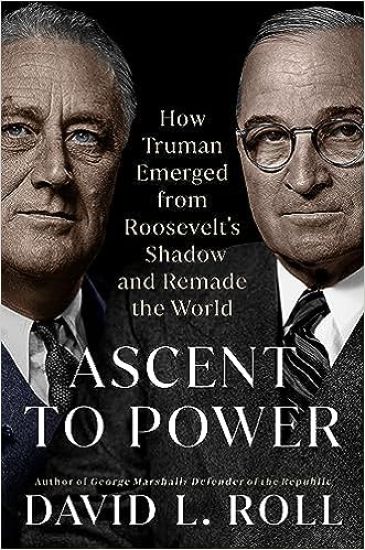
From Franklin Roosevelt's final days through Harry Truman's extraordinary transformation, this is the enthralling story behind the most consequential presidential transition in US history. When Roosevelt, in failing health, decided to run for a fourth term, he gave in to the big city Democratic bosses and reluctantly picked Senator Truman as his vice president, a man he barely knew. Upon FDR's death in April 1945, Truman, after only 82 days as VP, was thrust into the presidency. Utterly unprepared, he faced the collapse of Germany, a Europe in ruins, the organization of the UN, a summit with Stalin and Churchill, and the question of whether atomic bombs would be ready for use against Japan. Meanwhile, the Soviet Union was growing increasingly hostile towards US power. Truman inherited FDR's hope that peace could be maintained through cooperation with the Soviets, but he would soon learn that imitating his predecessor would lead only to missteps and controversy. Spanning the years of transition, 1944 to 1948, Ascent to Power illuminates Truman's struggles to emerge as president in his own right. Yet, from a relatively unknown Missouri senator to the most powerful man on Earth, Truman's legacy transcends. With his come-from-behind campaign in the fall of 1948, his courageous civil rights advocacy, and his role in liberating millions from militarist governments and brutal occupations, Truman's decisions during these pivotal years changed the course of the world in ways so significant we live with them today.
"Some of the best leaders in our history were not born that way...they just needed someone to believe in them."All teens feel the stress of life's changes, but to say that Dane's world is changing around him could be seen as an easy understatement. The 18-year old high school Senior was always just an average kid: Average looks, average grades, just OK at sports and grew up a big fan of superheroes, like most kids. He always admired their ability to overcome in the face of danger and "save the day", but, with graduation approaching, Dane is about to face adversity of his own on a much larger scale than any of the heroes he watched in the movies - and, no, that doesn't mean Community College With the sudden volcanic eruption of Mount Rainier and the exposure of the Earth's radioactive core everyone in the world becomes enhanced with superpowers...everyone, that is, except for Dane. With a powerful enemy looming on the mountain above can Dane find it within himself to overcome his normalcy and rise a hero?
"Cohen and Bradford give both leaders and followers the tangible tools they need to create high performance. Their transformational leadership system is both sophisticated enough to capture the realities of life in today's organizations and simple enough to be immediately useful to managers in any part of the world. This book will be read, re-read, and sent to bosses everywhere."Rosabeth Moss Kanter, author of Rosabeth Moss Kanter on the Frontiers of Management "In Power Up, Bradford and Cohen not only convincingly argue the benefits of leading by building a shared responsibility team, they also describe in detail how to do it. Loaded with many powerful examples and detailed cases that bring their concepts to life, this book will inspire any leader."Jerry Porras, coauthor of Built to Last and Lane Professor of Organizational Behavior and Change, Stanford Business School "Traditional assumptions about the roles of managers and subordinates are barriers to long-range success . . . Bradford and Cohen provide practical insights into how to transform the leadership systems of modern business organizations, and these insights should be shared among employees and managers at all levels."Yotaro Kobayashi Chairman and CEO, Fuji-Xerox "Post-heroic leadership and shared responsibility teams have made a big difference in how we operate at Autodesk. Power Up is critical reading for every manager in high-tech." Carol Bartz President and CEO, Autodesk "Power Up's message is clear: in today's business arena, global players must rely on shared leadership, not a single voice. Post-heroic leaders place responsibility where the knowledge is: at every level. Siemens is committed to this new way of working."Dr. Heinrich von Pierer President and CEO, Siemens Countless articles and books have called for an end to "heroic," command-and-control management. In principle, at least, business has heeded that call. Acknowledging the need for employee leadership and shared responsibility, companies worldwide have invested heavily in every variety of employee-empowerment program. Yet, such reform efforts seldom have any lasting effect, and managers and subordinates quickly slip back into old follow-the-leader patterns of thinking and behaving. Does this mean that the skeptics were right all along? Are participative management, self-directed work teams, and other popular empowerment programs just part of a futile effort to change "human nature"? Not at all, say David L. Bradford and Allan R. Cohen in this practical follow-up to their international bestsellers Managing for Excellence and Influence Without Authority. They show conclusively that to believe this grossly underestimates human capabilities and sacrifices any chance for success in today's fiercely competitive global marketplace. Drawing upon close observation of successful leaders and followers, Bradford and Cohen reconceptualize shared leadership to show how it requires tough and decisive behavior from managers and those who report to them. The authors provide a blueprint for making it work personally and in your organization, whatever your position or formal power. Exercising their critically acclaimed talent for translating complex concepts into actionable advice and guidance, they show how to create a dynamic, supercharged organizational culture of shared responsibility. Using many real-life examples and vignettes, the authors reveal the mind-traps that keep organizations locked into outmoded concepts of leadership. A pathbreaking contribution to the new leadership from two pioneers in the field, Power Up arms managers with the concepts and tools to release the potential of employees for greater heights of productivity and performance.
The Word of God is living and powerful, and we see that power demonstrated in the book of Acts. That power is available to believers today through faith in God and faithfulness to Him. This book will help you both understand and harness the power of the Holy Spirit in your own life and ministry. The wisdom and practical application contained here will guide you into a new level of fellowship with the Holy Spirit, who will in turn guide you into all truth.David Lancaster Jones was a friend of God and a man of strong character who knew the Holy Spirit intimately. In this book, you will read the words of a man who walked with God and helped many others to do the same. His story and transparency will encourage you in your own walk with God.Through the pages of this book, you will also be introduced to apostles and other key people in the early church in a deeper way than you've ever seen them before and be equipped to overcome your own trials. This is an in-depth commentary and is not meant to be read like a traditional book; it is meant to be studied. Read the Word; study the commentary; meditate on its truth; apply that truth to your personal situations, and your life will never be the same
The term "soft power" describes a country's ability to get what it wants by attracting rather than coercing others - by engaging hearts and minds through cultural and political values and foreign policies that other countries see as legitimate and conducive to their own interests.This book analyzes the soft power assets of the United States and Japan, and how they contributed to one of the most successful, if unlikely, bilateral relationships of the twentieth century. Sponsored by the U.S. Social Science Research Council and the Japan Foundation's Center for Global Partnership, the book brings together anthropologists, political scientists, historians, economists, diplomats, and others to explore the multiple axes of soft power that operate in the U.S.-Japanese relationship, and between the United States and Japan and other regions of the world.The contributors move beyond an "either-or" concept of hard versus soft power to a more dynamic interpretation, and demonstrate the important role of non-state actors in wielding soft power. They show how public diplomacy on both sides of the Pacific - bolstered by less formal influences such as popular cultural icons, product brands, martial arts, baseball, and educational exchanges - has led to a vibrant U.S.-Japanese relationship since World War II despite formidable challenges. Emphasizing the essentially interactive nature of persuasion, the book highlights an approach to soft power that has many implications for the world today.
The term "soft power" describes a country's ability to get what it wants by attracting rather than coercing others - by engaging hearts and minds through cultural and political values and foreign policies that other countries see as legitimate and conducive to their own interests.This book analyzes the soft power assets of the United States and Japan, and how they contributed to one of the most successful, if unlikely, bilateral relationships of the twentieth century. Sponsored by the U.S. Social Science Research Council and the Japan Foundation's Center for Global Partnership, the book brings together anthropologists, political scientists, historians, economists, diplomats, and others to explore the multiple axes of soft power that operate in the U.S.-Japanese relationship, and between the United States and Japan and other regions of the world.The contributors move beyond an "either-or" concept of hard versus soft power to a more dynamic interpretation, and demonstrate the important role of non-state actors in wielding soft power. They show how public diplomacy on both sides of the Pacific - bolstered by less formal influences such as popular cultural icons, product brands, martial arts, baseball, and educational exchanges - has led to a vibrant U.S.-Japanese relationship since World War II despite formidable challenges. Emphasizing the essentially interactive nature of persuasion, the book highlights an approach to soft power that has many implications for the world today.
Control system power and grounding is possibly the single most important element to ensure a control system doesn't experience unidentified "gremlins" throughout its life. The topic is appropriate to every control system domain, including programmable logic controllers, process control systems, robotics, vision systems, etc. Power and grounding is recognized by a major industry standards organization, ISA, in ongoing standards efforts. Control Engineering and several power and grounding experts have developed this control system power and grounding resource. When used in conjunction with control system manufacturer installation documentation, users can expect robust, reliable control system installation; one that remains free of "phantom" problems caused by power and grounding glitches.
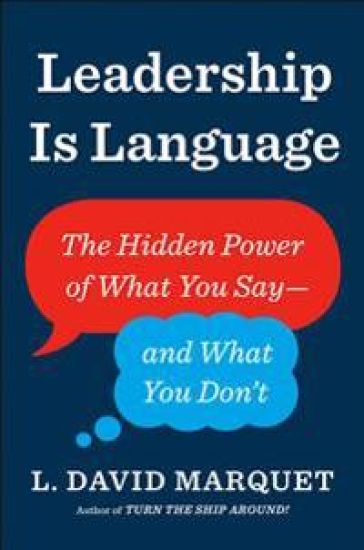
Wall Street Journal Bestseller From the acclaimed author of Turn the Ship Around , former US Navy Captain David Marquet, comes a radical new playbook for empowering your team to make better decisions and take greater ownership. As a leader in today's networked, information-dense business climate, you don't have full visibility into your organization or the ground reality of your operating environment. In order to harness the eyes, ears, and minds of your people, you need to foster a climate of collaborative experimentation that encourages people to speak up when they notice problems and work together to identify and test solutions. In Leadership is Language, you'll learn how choosing your words can dramatically improve decision-making and execution on your team. Marquet outlines six plays for all leaders, anchored in how you use language: - Control the clock, don't obey the clock: Pre-plan decision points and give your people the tools they need to hit pause on a plan of action if they notice something wrong. - Collaborate, don't coerce: As the leader, you should be the last one to offer your opinion. Rather than locking your team into binary responses ("Is this a good plan?"), allow them to answer on a scale ("How confident are you about this plan?") - Commit, don't comply: Rather than expect your team to comply with specific directions, explain your overall goals, and get their commitment to achieving it one piece at a time. - Complete, not continue: If every day feels like a repetition of the last, you're doing something wrong. Articulate concrete plans with a start and end date to align your team. - Improve, don't prove: Ask your people to improve on plans and processes, rather than prove that they can meet fixed goals or deadlines. You'll face fewer cut corners and better long-term results. - Connect, don't conform: Flatten hierarchies in your organization and connect with your people to encourage them to contribute to decision-making. In his last book, Turn the Ship Around , Marquet told the incredible story of abandoning command-and-control leadership on his submarine and empowering his crew to turn the worst performing submarine to the best performer in the fleet. Now, with Leadership is Language he gives businesspeople the tools they need to achieve such transformational leadership in their organizations.
"Ay n and Pla illuminate the strategies and courage with which Latinos have insisted on justice, resisted marginalization, and persisted in shaping our nation's future." -- G. Cristina Mora, Chancellor's Professor of Sociology, Co-Director, UC Berkeley Institute of Governmental Studies At a defining moment for American democracy, Forging Latino Power traces the fight for Latino political empowerment, from the earliest efforts to improve working and living conditions in California to the streets of LA today. Through the stories of leaders and legends like Dolores Huerta, Alex Padilla, Antonia Hern ndez, Jorge Ramos, Eva Longoria, Pete Aguilar, Xavier Becerra, Monica Lozano, Henry Cisneros, Eric Garcetti, and more, this book reveals how Latina/o trailblazers overcame their community's historic exclusion to reach some of the highest positions of power. Each hard-won victory for representation triggered backlash, but they forged ahead. Their ability to defy repression, defend the most vulnerable, and drive policy change models how constructive resistance can result in greater inclusion and progress.