Kirjojen hintavertailu. Mukana 11 213 693 kirjaa ja 12 kauppaa.

Kirjahaku

Etsi kirjoja tekijän nimen, kirjan nimen tai ISBN:n perusteella.

1000 tulosta hakusanalla David M. Gold

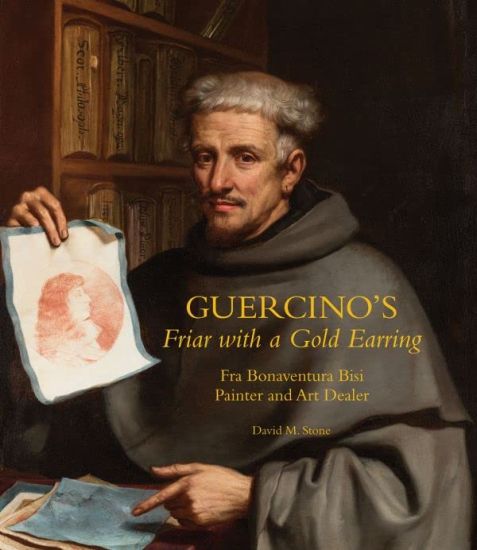
Guercino's Friar with a Gold Earring

Guercino's Friar with a Gold Earring

David M. Stone

Scala Arts Heritage Publishers Ltd
2023
nidottu
Who is the intriguing man wearing a religious habit and a gold hoop earring in this portrait by Italian Baroque master Il Guercino? And why does he point to a stack of drawings? This fascinating book investigates The Ringling’s portrait of Fra Bonaventura Bisi, a Franciscan Minor Conventual friar whose work as an art dealer, printmaker, and celebrated painter of miniatures made him a major figure in the artistic culture of 17th-century Bologna. Beautifully illustrated, this volume offers new scholarship on both Guercino’s portrait and Fra Bisi’s life, including his extraordinary miniatures, his dogged pursuit of artworks for high-ranking collectors, his passionate efforts to promote the appreciation and collecting of drawings, and - not least - his incongruous gold hoop earring. Published to accompany an important exhibition of the same name at The Ringling (14 October 2023-07 January 2024), this book, based on years of research, provides a captivating glimpse into art making and art collecting in Baroque Italy.
The Muse of Gold

The Muse of Gold

David M Glixon

Authorhouse
2006
nidottu
In the development of artistic genius the part played by "inspiration" is enigmatic. To be sure, Terpsichore, Calliope, and their seven sisters remain potent muses indeed; however, no artist--no sculptor, painter, writer, composer, or choreographer--will deny the crucial importance of the impetus that can be provided by the tenth muse, the Muse of Gold. From "the glory that was Greece and the grandeur that was Rome" to the cathedrals of France and the skyscrapers of Kuala Lumpur, architects have shaped the structures and were paid for their creative labors. That has been the obvious and essential financial arrangement in every branch of the arts. In earlier times the creators were usually anonymous; later they acquired personal recognition and fame. Either way, they were generally comissioned by the ruler, the state, the church, or wealthy private citizens: Pericles, Maecenas, Louis XIV, the Medici, the popes, and individuals like the Earl of Southampton and Peggy Guggenheim. Of course the artist in any field in gratified by the appreciation of his work by an intelligent and perceptive audience. But when appreciation is augmented by actual patronage, the artist''s pleasure becomes considerably keener. For as the 18th-century English novelist Tobias Smollett observed, "empty praise will not supply the cravings of nature, and merit alone will not bring success." Today patronage is corporate rather than personal, generally taking the form of grants and fellowships. And certainly the broadened financial recognition of merit has helped foster the talents of many more individuals than could be aided by the individual sponsors of yesteryear. Yet there seems to be no proportionate increase in the number of artists of the caliber of Shakespeare, Mozart, Michelangelo, or Balanchine. It often takes personal contact to ignite the flame of genius--or to keep it glowing. Though both the artist and his patron lead their own private and separate lives, each of them can be
Still the Golden Door

Still the Golden Door

David M. Reimers

Columbia University Press
1992
pokkari
This work updates an established American textbook on immigration and ethnic history, demonstrating the post-war shift from European to Third World immigrants. Extensive revisions include a discussion of undocumented immigration and the Simpson-Rodino Bill. All the important events of the last five years, especially the 1990 Immigration Act, are presented. The author examines the changes in refugee status and highlights the new wave of East European and Soviet immigrants to the USA.
The Wider Goldsmiths' Trade in Elizabethan and Stuart London

The Wider Goldsmiths' Trade in Elizabethan and Stuart London

David M. Mitchell

Paul Holberton Publishing Ltd
2024
sidottu
This book fills a gap in seventeenth-century studies of the Goldsmiths' Company.The Wider Goldsmiths' Trade in Elizabethan and Stuart London is the first book to study all aspects of the goldsmiths' trade. It challenges the assumption that the manufacture of silver plate and gold jewelry was only overseen by the Goldsmiths' Company during the seventeenth century. It also considers allied trades such as refining, wiredrawing, and the making of small swords and watches, as well as the development of the modern banking system. On Elizabeth I's accession, England's main exports were wool, unfinished woolen cloth, and some minerals, and its imports consisted of a great range of goods including luxuries such as silks, fine linens, and even scissors. By the end of the seventeenth century, the situation was transformed due to a burgeoning maritime trade with many parts of the world with imports of raw materials. This book considers the wider goldsmiths' trade against these dynamic changes: the organization and control of the goldsmith branches, and the design, manufacture, and sale of its wares. The chapters cover a range of topics—from history and context to the various branches of the trade to the development of the modern banking system.
Certified Gold

Certified Gold

David M Demar

Blackwarren Books
2023
pokkari
Welcome to Allora University, the Argent City's premier institute of higher learning You'll find all kinds of mythic creatures here - including Allora University's newest freshman, Ricky Konacsz, next in line to be named king of the Dragons. Not that he ever wanted the job. He'd rather just listen to his vintage Joy Division LPs in peace.Ricky's been having an eventful semester. His roommate is a Satyr, and his polycule vacillate between constantly propositioning Ricky and eating all his snacks. The Sidhe noble in Ricky's accounting class has been tormenting him nonstop, threatening to turn him into a set of matched luggage. And the human girl at the library front desk has been hunting him on another playing field altogether All he wants to do is listen to music and be left alone - and maybe get a job working behind the scenes at the college radio station.Ricky had hoped he could just have a normal life, but Fate had other plans. One night, he ends up behind the Allora University Radio's microphone instead of the sound board. What began as a one-time event becomes a viral sensation. Things get even worse when he accidentally insults the father of a Sidhe noble on the air - the same noble who's been making his life miserable all semester. Now, all eyes are on him, and not in a good way. What's a young Dragon King to do?
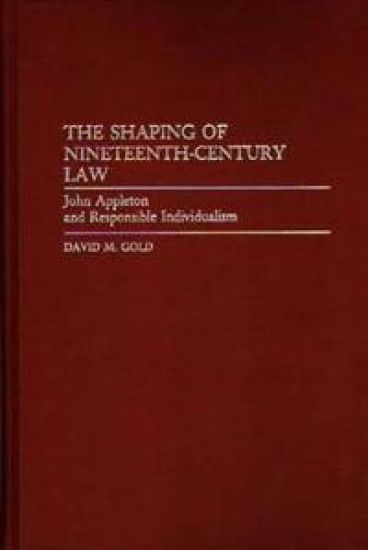
The Shaping of Nineteenth-Century Law

The Shaping of Nineteenth-Century Law

David M. Gold

Praeger Publishers Inc
1990
sidottu
John Appleton was a prominent American lawyer who practiced in and around Bangor, Maine, beginning in the early 1820s and earned a national reputation as Chief Justice of Maine's supreme court. Through a study of Appleton's life and thought, Gold shows how the commitment to individual liberty and personal responsibility helped shape nineteenth-century American law. By tracing Appleton's life and law practice, the book addresses an aspect of early American culture that has received little attention--the nature of American individualism as embodied in the law. The book contributes to American legal historiography in other ways. It is one of just a handful of serious studies of state judges. It adds to the current revisionist interpretation of laissez-faire constitutionalism. Finally, it sheds light on some little studied areas of legal history, in particular the history of the law of evidence.Recently some historians have recognized that law in the nineteenth century incorporated broadly held social values or world-views, and a few have written on the relationship between law and individualism. Gold contends these scholars have associated American individualism with self-reliance in the nineteenth century and nonconformity in the twentieth. Gold shows there is another side to individualism with self-reliance in the nineteenth century and nonconformity in the twentieth. Americans lived in society, therefore, their relations with one another had to be ordered. While they believed in freedom of action, they also believed that individuals had to be responsible for the effects of their actions on others. The book is ideal reading for all students of American legal history in particular and American history in general.
An Exemplary Whig

An Exemplary Whig

David M. Gold

Lexington Books
2012
sidottu
Historians have paid surprisingly little attention to state-level political leaders and judges. Edward Kent (1802–77) was both. He served three terms as a state legislator, two as mayor of Bangor, two as governor, and two as a judge of the state supreme court. He represented Maine in the negotiations that resolved the long-running northeastern border dispute between the United States and Great Britain and served for four years as the American consul in Rio de Janeiro. The foremost Whig in Maine state politics and later a Republican judge, Kent articulated classic Whig political views and carried them forward into his Whig-Republican jurisprudence. In examining Kent's career as Maine's quintessential Whig, An Exemplary Whig reveals his characteristically conservative Whig outlook, including an aversion toward disorder and a deep respect for law, for existing institutions, and for the wisdom of experience. Kent brought his conservative disposition into the Republican Party. He had no use for radical abolitionism, preferring moderation and compromise to measures that endangered social order or the integrity of the Union. Kent saw the "slave power," not abolitionism, as the disrupter of the Union, and he urged the “fusion” of all antislavery elements into a new Republican party. In 1859, Maine's Republican governor appointed Kent to the state supreme court. During his fourteen-year tenure, Kent adopted a Whiggish jurisprudence, pragmatic and commonsensical, and displayed a reverence for the common law and a distrust of “theoretic speculation.” After his retirement, he chaired a constitutional revision commission, admonishing his fellow commissioners to bear in mind the “practical wisdom” that kept dangerous innovation in check. As a politician during the Jacksonian era, Kent exemplified Whig leadership at the local and state levels. In his jurisprudence, he carried the Whig persuasion into the Republican ascendancy and the beginnings of the Gilded Age.
Democracy in Session

Democracy in Session

David M. Gold

Ohio University Press
2009
sidottu
For more than 200 years no institution has been more important to the development of the American democratic polity than the state legislature, yet no political institution has been so neglected by historians. Although more lawmaking takes place in the state capitals than in Washington D.C., scholars have lavished their attention on Congress, producing only a handful of histories of state legislatures. Most of those histories have focused on discrete legislative acts rather than on legislative process, and all have slighted key aspects of the legislative environment: the parliamentary rules of play, the employees who make the game possible, the physical setting—the arena—in which the people's representatives engage in conflict and compromise to create public policy. This book relates in fascinating detail the history of the Ohio General Assembly from its eighteenth-century origins in the Northwest Territory to its twenty-first-century incarnation as a full-time professional legislature. Democracy in Session explains the constitutional context within which the General Assembly functions, examines the evolution of legislative committees, and explores the impact of technology on political contests and legislative procedure. It sheds new light on the operations of the House and Senate clerks' offices and on such legislative rituals as seat selection, opening prayers, and the Pledge of Allegiance. Partisan issues and public policy receive their due, but so do ethics and decorum, the election of African American and female legislators, the statehouse, and the social life of the members. Democracy in Session is, in short, the most comprehensive history of a state legislature written to date and an important contribution to the story of American democracy.
The Jacksonian Conservatism of Rufus P. Ranney

The Jacksonian Conservatism of Rufus P. Ranney

David M. Gold

Ohio University Press
2017
sidottu
Ohio's Rufus P. Ranney embodied many of the most intriguing social and political tensions of his time. He was an anticorporate campaigner who became John D. Rockefeller's favorite lawyer. A student and law partner of abolitionist Benjamin F. Wade, Ranney acquired an antislavery reputation and recruited troops for the Union army; but as a Democratic candidate for governor he denied the power of Congress to restrict slavery in the territories, and during the Civil War and Reconstruction he condemned Republican policies. Ranney was a key delegate at Ohio's second constitutional convention and a two-time justice of the Ohio Supreme Court. He advocated equality and limited government as understood by radical Jacksonian Democrats. Scholarly discussions of Jacksonian jurisprudence have primarily focused on a handful of United States Supreme Court cases, but Ranney's opinions, taken as a whole, outline a broader approach to judicial decision making. A founder of the Ohio State Bar Association, Ranney was immensely influential but has been understudied until now. He left no private papers, even destroying his own correspondence. In The Jacksonian Conservatism of Rufus P. Ranney, David M. Gold works with the public record to reveal the contours of Ranney's life and work. The result is a new look at how Jacksonian principles crossed the divide of the Civil War and became part of the fabric of American law and at how radical antebellum Democrats transformed themselves into Gilded Age conservatives.
Democracy and the Courts

Democracy and the Courts

David M. Gold

UNIVERSITY OF SOUTH CAROLINA PRESS
2025
sidottu
The first comprehensive examination of the development of judicial elections in the American South The practice of choosing state judges by popular election is a unique aspect of American democracy. First appearing in Mississippi in 1832 and then sweeping across the United States, judicial elections had a distinctly Southern origin. Prior scholarship seeking to explain the broad acceptance of the elected judiciary mainly relied on the records of northern-state constitutional conventions. In Democracy and the Courts, David M. Gold, focusing on the nineteenth-century American South, offers the first comprehensive e exploration of the advent of this often-controversial democratic reform in the nineteenth-century American South. Making intensive use of primary sources, such as constitutional convention proceedings, legislative journals, and newspapers, in Democracy and the Courts Gold explores the various paths taken by southern states toward the elective judiciary and the reasons why some states accepted judicial elections only partially or rejected them altogether. He considers the impact of judicial elections on judicial review before the Civil War and looks to the last quarter of the nineteenth century, assessing the final and ironic triumph of the elective judiciary during the decidedly undemocratic Jim Crow era.
The Curse of Ham

The Curse of Ham

David M. Goldenberg

Princeton University Press
2005
pokkari
How old is prejudice against black people? Were the racist attitudes that fueled the Atlantic slave trade firmly in place 700 years before the European discovery of sub-Saharan Africa? In this groundbreaking book, David Goldenberg seeks to discover how dark-skinned peoples, especially black Africans, were portrayed in the Bible and by those who interpreted the Bible--Jews, Christians, and Muslims. Unprecedented in rigor and breadth, his investigation covers a 1,500-year period, from ancient Israel (around 800 B.C.E.) to the eighth century C.E., after the birth of Islam. By tracing the development of anti-Black sentiment during this time, Goldenberg uncovers views about race, color, and slavery that took shape over the centuries--most centrally, the belief that the biblical Ham and his descendants, the black Africans, had been cursed by God with eternal slavery. Goldenberg begins by examining a host of references to black Africans in biblical and postbiblical Jewish literature. From there he moves the inquiry from Black as an ethnic group to black as color, and early Jewish attitudes toward dark skin color. He goes on to ask when the black African first became identified as slave in the Near East, and, in a powerful culmination, discusses the resounding influence of this identification on Jewish, Christian, and Islamic thinking, noting each tradition's exegetical treatment of pertinent biblical passages. Authoritative, fluidly written, and situated at a richly illuminating nexus of images, attitudes, and history, The Curse of Ham is sure to have a profound and lasting impact on the perennial debate over the roots of racism and slavery, and on the study of early Judaism, Christianity, and Islam.
The Origins of the Crimean War

The Origins of the Crimean War

David M. Goldfrank

Routledge
2016
sidottu
The Crimean War (1853-56) between Russia, Turkey, Britain, France and the Kingdom of Sardinia was a diplomatically preventable conflict for influence over an unstable Near and Middle East. It could have broken out in any decade between Napoleon and Wilhelm II; equally, it need never have occurred. In this masterly study, based on massive archival research, David Goldfrank argues that the European diplomatic roots of the war stretch far beyond the `Eastern Question' itself, and shows how the domestic concerns of the participants contributed to the outbreak of hostilities.
Cancer Therapy with Radiolabeled Antibodies

Cancer Therapy with Radiolabeled Antibodies

David M. Goldenberg

CRC Press
2017
sidottu
Cancer Therapy with Radiolabeled Antibodies explores the most current experimental and clinical advances in the newly emerging field of cancer radioimmunotherapy (RAIT). Providing a multidisciplinary and international context, some of the world's leading experts examine the problems and prospects of RAIT from radiation, immunological, chemical, physical, physiological, and clinical perspectives with both overviews and original research. Discussions cover the up-to-date clinical results in the RAIT of ovarian, breast, colorectal, and brain cancers, as well as the current status of RAIT in the management of B cell lymphomas. Radiobiology, dosimetry, radiochemistry, targeting biology in experimental models, clinical experiences in hematopoietic and solid tumors, and new approaches to improve cancer radioimmunotherapy are also discussed. In addition, new dosimetry concepts, new labeling methods, new concepts of antibody pharmacokinetics, and new methods to enhance selective cancer radioimmunotherapy are included.