

Kirjahaku
Etsi kirjoja tekijän nimen, kirjan nimen tai ISBN:n perusteella.
1000 tulosta hakusanalla David M. O'Neill

Gentlemen Only Ladies Forbidden - The Invincible Tale of the Great Mighty Puddy: Gentlemen Only Ladies Forbidden - The Invincible Tale
David M. O'Neill
Createspace Independent Publishing Platform
2012
nidottu
One time PGA Golf Pro, McKenzie "Puddy" McFadden finds himself, unknowingly battling the ancient Scottish "Curse of McTiernan" placed upon him by the very forefathers of GOLF themselves. For McFadden, he appears to be a man who's paying for a crime he didn't commit. Crossing the line when playing in a high-profile tournament, Puddy suggests the PGA members create a make-shift men's club at East Haven and keep LPGA members out far and away. Putting the last nail in his-own coffin, Puddy finds his career over and his days managing a weed infested miniature golf course in Barstow California.

Working as a day trader, Joey Delgado has a very large gambling problem on his hands. Not able to shut his work off at home, Delgado runs countless bets on the weekend games and is hard pressed to cover. Placing his life and that of his wife's life in danger with those carrying his markers, Player 5150 learns that "time is the great teacher but unfortunately it kills all of its students."
Martin Eden: Martin Eden
David M. O'Neill; Jack London
Createspace Independent Publishing Platform
2012
nidottu
The Case for Affirmative Action on Campus
Eboni M. Zamani-Gallaher; Denise O’Neil Green; David O. Stovall; M. Christopher Brown II
Stylus Publishing
2009
nidottu
* Marshalls the arguments for affirmative action* Offers strategies for actionWhy is affirmative action under attack? What were the policy’s original purposes, and have they been achieved? What are the arguments being arrayed against it? And–for all stakeholders concerned about equity and diversity on campus–what’s the way forward, politically, legally, and practically?The authors explore the historical context, the philosophical and legal foundations of affirmative action, present contemporary attitudes to the issue on and off campus, and uncover the tactics and arguments of its opponents. They conclude by offering strategies to counter the erosion of affirmative action, change the basis of the discourse, and coordinate institutional support to foster inclusive college environments and multi-ethnic campus communities.This book analyzes the ideological and legal construction of colorblind legislation that has led to the de facto exclusion of people of color from institutions of higher education. It addresses the role of the courts in affecting affirmative action in higher education as a workplace and place of study. It documents the under-representation of collegians of color and presents research on student opinion on race-based policies at two- and four-year institutions. It details the pervasiveness of the affirmative action debate across educational sectors and the status of race among myriad factors considered in college admissions. Finally, it considers affirmative action as a pipeline issue and in the light of educational policy.

Academic Vocabulary Building in English, Low-Intermediate
Betsy Davis; Dawn E. McCormick; Greg Mizera; M. Christine O'Neill; Stacy Ranson; Marilyn Smith Slaathaug; Dorolyn Smith; Alan Juffs
The University of Michigan Press
2015
nidottu
The English Language Institute at the University of Pittsburgh is known for its popular eight-volume series Words for Students of English (University of Michigan Press). In the years since the series was first published, faculty at Pitt ELI has been considering new ways to address learners’ challenges in acquiring vocabulary. The result of the research and experience is a new five-volume series, Academic Vocabulary Building in English. This series weaves together three sets of knowledge: (1) the results of recent research from applied linguists and psycholinguists, (2) the rich classroom experience of the Institute faculty, who together have many decades of practical classroom ESL experience, and (3) the data gathered from our online student database and corpus studies that have informed us of which words students need to know more deeply. Each unit contains sections that emphasize various components of word learning. First, each chapter opens with a chart of target words and their various morphological forms. The next step establishes form-meaning mappings: Each word is listed with a definition and two example sentences. The lists and definitions are followed by exercises that concentrate students’ attention on establishing form-meaning links. These exercises consist of practice opportunities that require multiple retrievals in order to promote label-to-concept links and begin awareness of derivational and inflectional variations. Follow-up exercises focus on collocations related to the unit’s theme. Each chapter closes with exercises that can be used as quizzes. By the time students have finished a unit, they should have had both receptive and productive practice with the form, meaning, morphosyntax, and collocational properties of each lexical item.
Academic Vocabulary Building in English, Intermediate
Betsy Davis; Alan Juffs; Dawn E. McCormick; Greg Mizera; M. Christine O'Neill; Stacy Ranson; Marilyn Smith Slaathaug; Dorolyn Smith
The University of Michigan Press
2015
nidottu
The English Language Institute at the University of Pittsburgh is known for its popular eight-volume series Words for Students of English (University of Michigan Press). In the years since the series was first published, faculty at Pitt ELI has been considering new ways to address learners’ challenges in acquiring vocabulary. The result of the research and experience is a new five-volume series, Academic Vocabulary Building in English. This series weaves together three sets of knowledge: (1) the results of recent research from applied linguists and psycholinguists, (2) the rich classroom experience of the Institute faculty, who together have many decades of practical classroom ESL experience, and (3) the data gathered from our online student database and corpus studies that have informed us of which words students need to know more deeply. Each unit contains sections that emphasize various components of word learning. First, each chapter opens with a chart of target words and their various morphological forms. The next step establishes form-meaning mappings: Each word is listed with a definition and two example sentences. The lists and definitions are followed by exercises that concentrate students’ attention on establishing form-meaning links. These exercises consist of practice opportunities that require multiple retrievals in order to promote label-to-concept links and begin awareness of derivational and inflectional variations. Follow-up exercises focus on collocations related to the unit’s theme. Each chapter closes with exercises that can be used as quizzes. By the time students have finished a unit, they should have had both receptive and productive practice with the form, meaning, morphosyntax, and collocational properties of each lexical item.

Each annual edition of Supreme Court Watch offers narratives and analyses of legal disputes, political battles, and social confrontations as they unfold before the Supreme Court. Included are numerous excerpts from the justices’ opinions and dissents on the most influential cases of the past term, as well as a preview of the cases awaiting the Court in the forthcoming term.

Constitutional Law and Politics: Civil Rights and Civil Liberties
David M. O'Brien; Gordon Silverstein
W. W. Norton Company
2023
nidottu
Constitutional Law and Politics does more than give students a comprehensive and up-to-date set of cases; it provides the tools needed to make sense of them. Silverstein's contextualization of cases makes it easier for students to understand complicated decisions, engage with the field of American constitutional law, and succeed in the course. Silverstein includes recent landmark cases, such as Brnovich v. Democratic National Committee narrowing the application of the Voting Rights Act and Bostock v. Clayton County Georgia, which expands the scope of protections against discrimination on the basis of sex to include discrimination on the basis of sexual orientation and gender identity. The Twelfth Edition also will grapple with the Court's ruling in the Mississippi abortion case of Dobbs v. Jackson Women's Health Organization that overturned Roe v. Wade.
Each annual edition of Supreme Court Watch o ffers students narratives and analyses of legal disputes, political battles, and social confrontations as they unfold before the Supreme Court. Included in Supreme Court Watch 2003 are numerous excerpts from the justices' opinions and dissents on the Court's most influential cases of the past two terms, as well as a running preview of the cases awaiting the Court in the forthcoming 2003-2004 term. The Watch is an ideal supplement to the author's two-volume casebook, Constitutional Law and Politics, and serves as an excellent addition to other books for courses on law, legal studies, and the judiciary.
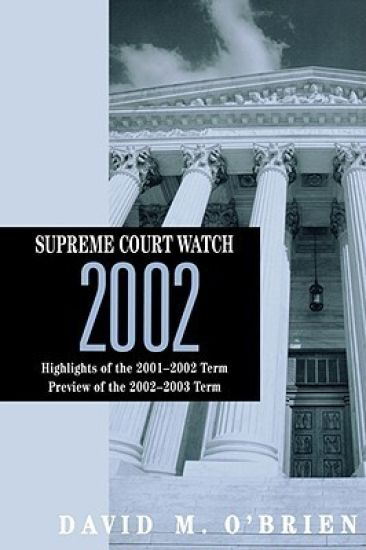
Each annual edition of Supreme Court Watch offers students narratives and analyses of legal disputes, political battles, and social confrontations as they unfold before the Supreme Court. Also included are numerous excerpts from the justices' opinions and dissents on the Court's most influential cases of the past three terms, as well as a running preview of the cases awaiting the Court in the forthcoming term. Supreme Court Watch is an indispensable resource for any course on law, legal studies, and the judiciary.

The Santeria religion of Cuba--the Way of the Saints--mixes West African Yoruba culture with Catholicism. Similar to Haitian voodoo, Santeria has long practiced animal sacrifice in certain rites. But when Cuban immigrants brought those rituals to Florida, local authorities were suddenly confronted with a controversial situation that pitted the regulation of public health and morality against religious freedom. After Ernesto Pichardo established a Santeria church in Hialeah in the 1980s, the city of Hialeah responded by passing ordinances banning ritual animal sacrifice. Although on the surface those ordinances seemed general in intent, they were clearly aimed at Pichardo's church. When Pichardo subsequently sued the city, a federal court ruled in the latter's favor, in effect privileging the regulation of public health and morality over the church's free exercise of its religion. The U.S. Supreme Court heard Pichardo's appeal in 1993 and unanimously decided that the city had overstepped its bounds in targeting this particular religious group; however, the court was sharply divided regarding the basis of its decision. Three concurring opinions registered distinctly different views of the First Amendment, the limits of government regulation, and the religious freedom of minorities. In the end, the nine justices collectively concluded that freedom of religious belief was absolute while the freedom to practice the tenets of any faith were subject to non-discriminatory local regulations. David O'Brien, one of America's foremost scholars of the Court, now illuminates this controversy and its significance for law, government, and religion in America. His lively account takes us behind the scenes at every stage of the litigation to reveal a riveting case with more twists and turns than a classic whodunit. Ranging with equal ease from primitive magic to municipal politics and to the most arcane points of constitutional law, O'Brien weaves a compelling and instructive tale with a fascinating array of politicians, lawyers, jurists, civil libertarians, and animal rights advocates. Offering sharp insights into the key issues and personalities, he highlights cultural clashes large and small, while maintaining a balance for both the needs of government and the religious rights of individuals. This book is part of the Landmark Law Cases and American Society series.

The Santeria religion of Cuba--the Way of the Saints--mixes West African Yoruba culture with Catholicism. Similar to Haitian voodoo, Santeria has long practiced animal sacrifice in certain rites. But when Cuban immigrants brought those rituals to Florida, local authorities were suddenly confronted with a controversial situation that pitted the regulation of public health and morality against religious freedom. After Ernesto Pichardo established a Santeria church in Hialeah in the 1980s, the city of Hialeah responded by passing ordinances banning ritual animal sacrifice. Although on the surface those ordinances seemed general in intent, they were clearly aimed at Pichardo's church. When Pichardo subsequently sued the city, a federal court ruled in the latter's favor, in effect privileging the regulation of public health and morality over the church's free exercise of its religion. The U.S. Supreme Court heard Pichardo's appeal in 1993 and unanimously decided that the city had overstepped its bounds in targeting this particular religious group; however, the court was sharply divided regarding the basis of its decision. Three concurring opinions registered distinctly different views of the First Amendment, the limits of government regulation, and the religious freedom of minorities. In the end, the nine justices collectively concluded that freedom of religious belief was absolute while the freedom to practice the tenets of any faith were subject to non-discriminatory local regulations. David O'Brien, one of America's foremost scholars of the Court, now illuminates this controversy and its significance for law, government, and religion in America. His lively account takes us behind the scenes at every stage of the litigation to reveal a riveting case with more twists and turns than a classic whodunit. Ranging with equal ease from primitive magic to municipal politics and to the most arcane points of constitutional law, O'Brien weaves a compelling and instructive tale with a fascinating array of politicians, lawyers, jurists, civil libertarians, and animal rights advocates. Offering sharp insights into the key issues and personalities, he highlights cultural clashes large and small, while maintaining a balance for both the needs of government and the religious rights of individuals. This book is part of the Landmark Law Cases and American Society series.
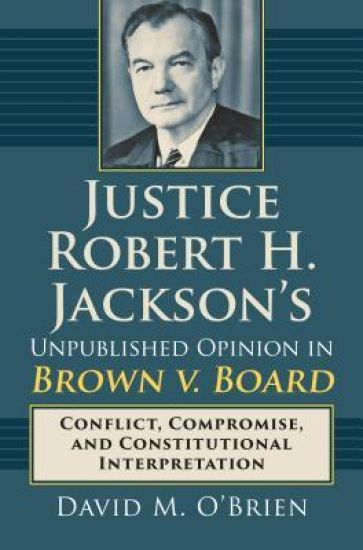
Justice Robert H. Jackson's Unpublished Opinion in Brown v. Board
David M. O'Brien
University Press of Kansas
2017
sidottu
Brown v. Board of Education is widely recognized as one of the US Supreme Court’s most important decisions in the twentieth century. Robert H. Jackson, an associate justice on the case, is generally considered one of the Court’s most gifted writers. Though much has been written about Brown, citing the writing and remarks of the justices who participated in the 1954 decision, comparatively little has been said about Jackson or his unpublished opinion, which is sometimes even mistakenly taken as a dissenting opinion. This book visits Brown v. Board of Education from Jackson’s perspective and, in doing so, offers a reinterpretation of the justice's thinking, and of the Supreme Court's decision making, in a ruling that continues to reverberate through the nation’s politics and public life.Weaving together judicial biography, legal history, and judicial politics, Justice Robert H. Jackson’s Unpublished Opinion in Brown v. Board provides a nuanced look at constitutional interpretation, and the intersection of law and politics, from inside the mind of a justice, within the context of a Court deciding a seminal case. Through an analysis of six drafts of Jackson's unpublished concurring opinion, David M. O’Brien explores the justice’s evolving thoughts on relevant issues at critical moments in the case. His retelling of Brown presents a new view of longstanding arguments confronted by Jackson and the other justices over “original intent” versus a “living Constitution,” the role of the Court, and social change and justice in American political life. The book includes the final draft of Jackson’s unpublished opinion, as well as the Warren Court's opinions in Brown and in Bolling v. Sharpe, for comparison, along with a timeline of developments and decision making leading to the Court’s landmark ruling.

A Study of Joseph Fuch's Writings on Human Nature and Morality
David M. O'Leary
University Press of America
2005
nidottu
Josef Fuchs, S.J. is one of the most respected Moral Theologians in the Roman Catholic Church today. He has spent a lifetime of teaching future priests and laity at the Gregorian University in Rome and throughout the world. This study of his writings on the human person and morality is meant as an introduction to a new generation of people. Fuchs' perspective on human nature allows one to discover the rich history of moral theology in the Roman Catholic Church, past and present. The first part of the book shows Fuchs' understanding and dynamic view of human nature. In order to understand his view of morality, one needs to clearly see his view of human nature and the underlying issues of basic freedom and basic conscience. The second part of the book shows the type of morality Fuchs offers within his understanding of human nature. Issues that are addressed are: God's salvation in Jesus the Christ as the foundation for a genuine morality; natural law and moral norms; human acts and their values; and fundamental option.
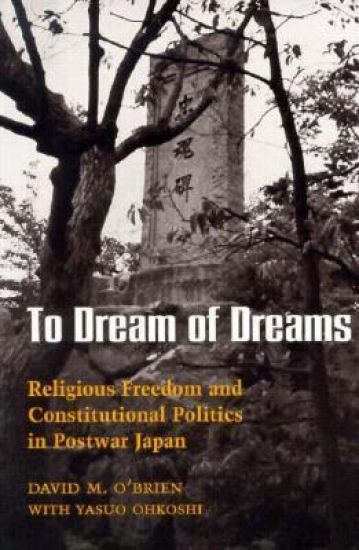
Prior to World War II, State Shinto, which was centered on the worship of the emperor and Yasukuni Shrine's cult of war dead, was established in support of the government and militarism. Since the end of the Occupation, Japanese conservatives have sought to restore State Shinto's institutions even as expanded military budgets have placed Japan among the top five countries in defense spending. This timely book focuses on the struggles against government attempts to revive "the emperor system" and Japan's prewar military presence. Organized around case studies and based on extensive interviews, it treats the operations of the Japanese court system thoroughly and uncovers important cases regarding religious liberty that remain little know even among specialists on modern Japanese history and society. It shows that litigation has been brought by pacifists, liberals, and others fiercely opposed to renewed militarism and to governmental support for the symbolism and institutions of State Shinto. Finally, it reveals how religious minorities have sought the enforcement of provisions for the free exercise of religion. Throughout, the author offers important information on the composition of courts involved and the attitudes of specific judges and provides translated texts of significant judicial decisions, in the process dispelling the stereotype of the Japanese as "reluctant litigants." In addition he provides a rich historical context by introducing U.S. cases showing the history of judicial interpretation of relations between religion and state.

The First Amendment declares that 'Congress shall make no law . . . abridging the freedom of speech, or of the press. . . . ' Yet, in the following two hundred years, Congress and the states have sought repeatedly to curb these freedoms. The Supreme Court of the United States in turn gradually expanded First Amendment protection for freedom of expression but also defined certain categories of expression_obscenity, defamation, commercial speech , and 'fighting words' or disruptive expression-as constitutionally unprotected. From the Alien and Sedition Act of 1798 to the most recent cases to come before the Supreme Court, noted legal scholar David M. O'Brien provides the first comprehensive examination of these exceptions to the absolute command of the First Amendment, providing a history of each category of unprotected speech and putting into bold relief the larger questions of what kinds of expression should (and should not) receive First Amendment protection. O'Brien provides readers interested in civil liberties, constitutional history and law, and the U. S. Supreme Court a treasure trove of information and ideas about how to think about the First Amendment.

There's a Beer in My Handbag: Unusual Thoughts about Everyday Faith
David M. O'Brien
Createspace Independent Publishing Platform
2012
nidottu
A Study of the Linear Self-adaptive System
David M. Gair Bruce O. Cart Altwegg
Hassell Street Press
2021
nidottu
This work has been selected by scholars as being culturally important and is part of the knowledge base of civilization as we know it.This work is in the public domain in the United States of America, and possibly other nations. Within the United States, you may freely copy and distribute this work, as no entity (individual or corporate) has a copyright on the body of the work.Scholars believe, and we concur, that this work is important enough to be preserved, reproduced, and made generally available to the public. To ensure a quality reading experience, this work has been proofread and republished using a format that seamlessly blends the original graphical elements with text in an easy-to-read typeface.We appreciate your support of the preservation process, and thank you for being an important part of keeping this knowledge alive and relevant.

Capital Punishment in Independent Ireland
David M. Doyle; Liam O'Callaghan
Liverpool University Press
2019
sidottu
This is a comprehensive and nuanced historical survey of the death penalty in Ireland from the immediate post-civil war period through to its complete abolition. Using original archival material, this book sheds light on the various social, legal and political contexts in which the death penalty operated and was discussed.In Ireland the death penalty served a dual function: as an instrument of punishment in the civilian criminal justice system, and as a weapon to combat periodic threats to the security of the state posed by the Irish Republican Army (IRA). Through close examination of cases dealt with in the ordinary criminal courts, this study elucidates ideas of class, gender, community and sanity and explores their impact on the administration of justice. The application of the death penalty also had a strong political dimension, most evident in the enactment of emergency legislation and the setting up of military courts specifically aimed at the IRA. As the book demonstrates, the civilian and the political strands converged in the story of the abolition of the death penalty in Ireland. Long after decision-makers accepted that the death penalty was no longer an acceptable punishment for ‘ordinary’ cases of murder, lingering anxieties about the threat of subversives dictated the pace of abolition and the scope of the relevant legislation.