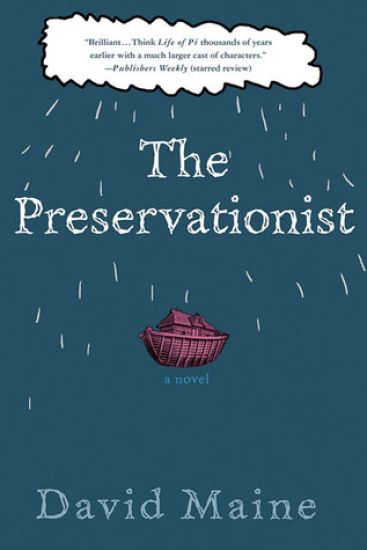
"Noe says, -I must build a boat.-A boat, she says.-A ship, more like. I'll need the boys to help, he adds as an afterthought.-We're leagues from the sea, she says, or any river big enough to warrant a boat.This conversation is making Noe impatient. -I've no need to explain myself to you.-And when you're done, she says carefully, we'll be taking this ship to the sea somehow?As usual, Noe's impatience fades quickly. -We'll not be going to the sea. The sea will be coming to us." In this brilliant debut novel, Noah's family (or Noe as he's called here)-his wife, sons, and daughters-in-law-tell what it's like to live with a man touched by God, while struggling against events that cannot be controlled or explained. When Noe orders his sons to build an ark, he can't tell them where the wood will come from. When he sends his daughters-in-law out to gather animals, he can offer no directions, money, or protection. And once the rain starts, they all realize that the true test of their faith is just beginning. Because the family is trapped on the ark with thousands of animals-with no experience feeding or caring for them, and no idea of when the waters will recede. What emerges is a family caught in the midst of an extraordinary Biblical event, with all the tension, humanity-even humor-that implies.
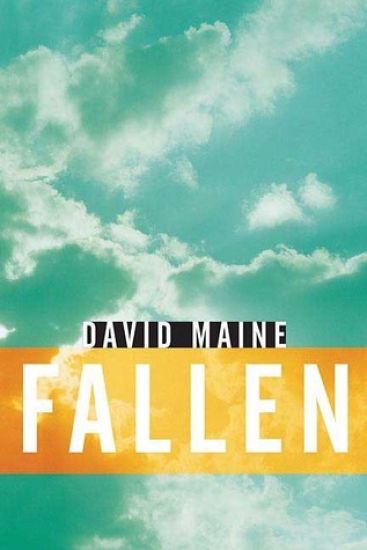
From the internationally acclaimed author of The Preservationist comes a provocative retelling of the story of Adam and Eve, Cain and Abel: a novel that gives new meaning to the words "temptation," "rivalry," and "murder." Their expulsion from the Garden is only the beginning: Eve and Adam have to find their way past recriminations and bitterness, to construct a new life together in a harsh land. But the challenges are many for the world's first family. Among their children are Cain and Abel, and soon they must discover how to be parents to one son who is everything they could hope for, and another who is sullen, difficult, and rife with insecurities and jealousies. In the background, always, is the incomprehensibility of God's motives as He watches over their faltering attempts to build a life. In Fallen, David Maine has drawn a convincing, wryly observant, and enthralling portrait of a family--one driven (and riven) by passions, irrationality, and love. The result is an intimate, in-depth story of brothers, a husband, and a wife--people whose struggles are both completely familiar and yet utterly original.
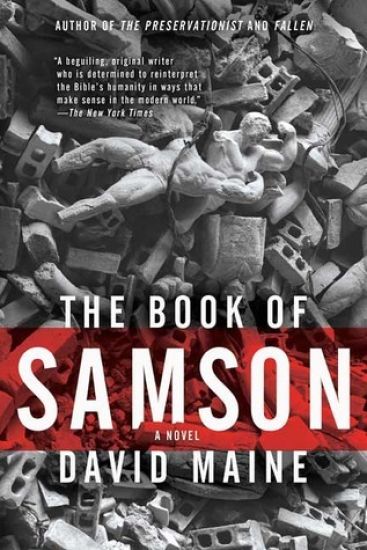
From the author of the acclaimed and provocative novels Fallen and The Preservationist comes a tale about a man who believes he is touched by the hand of God---and instructed by that God to slaughter his enemies. Told with crackling wit and black humor, this is the story of "this worldly existence of men & brutes desire & unkindness" and of the woman, the deadly and alluring Dalila, who figures at the center of it all. It's a story you think you know, but soon you will leave your preconceived notions at the door. In The Book of Samson, David Maine has created an unforgettable portrait, a unique and astonishing masterpiece that shows the human side of a previously faceless icon.
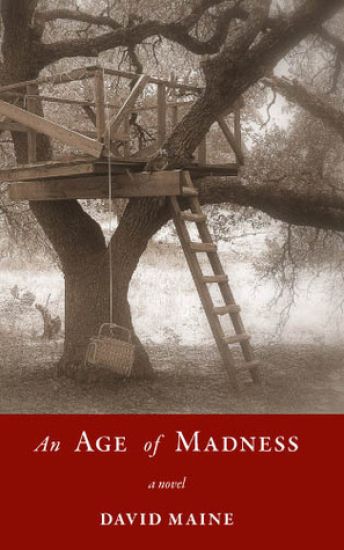
Dr. Regina Moss has built herself a successful career as a psychiatrist in Boston: she enjoys a lucrative private practice, hefty consultation fees, and a reputation that inspires colleagues and patients alike. Why then, is Regina haunted by her past? Why does her own daughter barely speak to her? WhatÆs the story with her gruff, softhearted husband Walter—and why canÆt Regina stop thinking about the lanky new tech on the ward? An Age of Madness peels back the layers of ReginaÆs psyche in a voice that is brash, bitter, and blackly humorous, laying bare her vulnerabilities while drawing the reader unnervingly close to this memorable heroine. From the author of The Preservationist, which was hailed as \u201chilarious and illuminating\u201d by The Los Angeles Times Book Review and \u201cpithy and smart\u201d by the New York Post, comes the latest turnabout in a career filled with unexpected surprises. An Age of Madness brings a sharp edge of psychological realism to a story filled with startling revelations and heartrending twists.
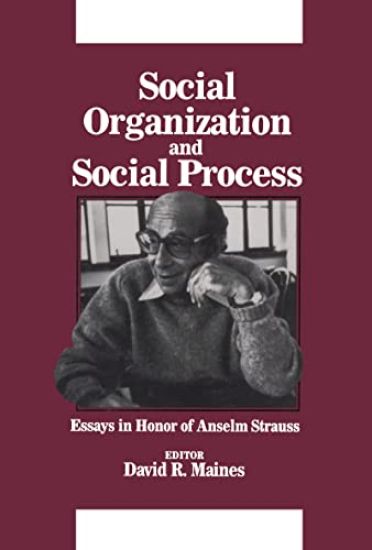
The essays gathered in this volume contain analyses based on the general action perspective of Chicago sociology and, in particular, on the contributions of Anselm L. Strauss, whose lengthy achievement this volume honors.
In this compendium of related and cross-referential essays, David R. Maines draws from pragmatist/symbolic interactionist assumptions to formulate a consistent new view of the entire field of sociology. Suitable for courses in social theory, qualitative methods, social psychology, and narrative inquiry, this volume will change the way the general public looks at interpretive sociology.This book is organized as an expression of the centrality of interactionism to general sociology. Each chapter is designed to articulate this view of the field. Symbolic interactionism, the way Maines has come to understand and use it, is essentially the concerted application of pragmatist principles of philosophy to social inquiry.There are four basic elements to this characterization. First, people transform themselves: people are self-aware beings who reflexively form their conduct and thus are capable of adjusting their lines of action and creating new ones. Second, people transform their social worlds: human action takes place in contexts of situations and social worlds. People can modify the social matrices in which they act, and thus people are agents of change. Third, people engage in social dialogue: communication is generic and is at the heart of both stability and change. A fourth element is that people respond to and deal with their transformations. Humans construct situations and societies; they establish social structures and cultures. These are the consequences of human action and, once formed, they reflexively function to direct and channel conduct.Maines argues that when people do things together they can create enduring group formations, such as divisions of labor, rules for inheritance, wage-labor relations, or ideologies. These are instances of group characteristics that influence human conduct and indeed are not reducible to the traits of individuals making up the group or society.
In this compendium of related and cross-referential essays, David R. Maines draws from pragmatist/symbolic interactionist assumptions to formulate a consistent new view of the entire field of sociology. Suitable for courses in social theory, qualitative methods, social psychology, and narrative inquiry, this volume will change the way the general public looks at interpretive sociology.This book is organized as an expression of the centrality of interactionism to general sociology. Each chapter is designed to articulate this view of the field. Symbolic interactionism, the way Maines has come to understand and use it, is essentially the concerted application of pragmatist principles of philosophy to social inquiry.There are four basic elements to this characterization. First, people transform themselves: people are self-aware beings who reflexively form their conduct and thus are capable of adjusting their lines of action and creating new ones. Second, people transform their social worlds: human action takes place in contexts of situations and social worlds. People can modify the social matrices in which they act, and thus people are agents of change. Third, people engage in social dialogue: communication is generic and is at the heart of both stability and change. A fourth element is that people respond to and deal with their transformations. Humans construct situations and societies; they establish social structures and cultures. These are the consequences of human action and, once formed, they reflexively function to direct and channel conduct.Maines argues that when people do things together they can create enduring group formations, such as divisions of labor, rules for inheritance, wage-labor relations, or ideologies. These are instances of group characteristics that influence human conduct and indeed are not reducible to the traits of individuals making up the group or society.
K. lives on an island in the South Pacific. Natives worship him, girls are sacrificed to him, legends surround him. A pleasurable life indeed! Until a new kind of creature is left as sacrifice - and those who came with her want her back. They want K. too, all forty feet of him, with his claws and fangs and butterfly wings. If K. could speak, or even think, he might be up for the adventure. As it is, all he can do is react...and protest...and resist."Monster, 1959" is a startling, nuanced view of our world that illuminates a distinct time in American pop culture and raises disturbing questions about who the real monsters are.
The Maine Woods is one of several excursion books by Henry David Thoreau. The copy presented here is the first book edition, published in the United States in 1864. Two of the sections had previously appeared in print: "Ktaadn" was published in The Union Magazine, (New York, ) in 1848, and "Chesuncook" in the Atlantic Monthly, in 1858. The final essay was printed for the first time in this 1864 volume............ Henry David Thoreau (see name pronunciation; July 12, 1817 - May 6, 1862) was an American essayist, poet, philosopher, abolitionist, naturalist, tax resister, development critic, surveyor, and historian. A leading transcendentalist, Thoreau is best known for his book Walden, a reflection upon simple living in natural surroundings, and his essay "Civil Disobedience" (originally published as "Resistance to Civil Government"), an argument for disobedience to an unjust state. Thoreau's books, articles, essays, journals, and poetry amount to more than 20 volumes. Among his lasting contributions are his writings on natural history and philosophy, in which he anticipated the methods and findings of ecology and environmental history, two sources of modern-day environmentalism. His literary style interweaves close observation of nature, personal experience, pointed rhetoric, symbolic meanings, and historical lore, while displaying a poetic sensibility, philosophical austerity, and Yankee attention to practical detail.He was also deeply interested in the idea of survival in the face of hostile elements, historical change, and natural decay; at the same time he advocated abandoning waste and illusion in order to discover life's true essential needs.He was a lifelong abolitionist, delivering lectures that attacked the Fugitive Slave Law while praising the writings of Wendell Phillips and defending the abolitionist John Brown. Thoreau's philosophy of civil disobedience later influenced the political thoughts and actions of such notable figures as Leo Tolstoy, Mahatma Gandhi, and Martin Luther King Jr. citation needed] Thoreau is sometimes referred to as an anarchist. Though "Civil Disobedience" seems to call for improving rather than abolishing government-"I ask for, not at once no government, but at once a better government"the direction of this improvement points toward anarchism: "'That government is best which governs not at all;' and when men are prepared for it, that will be the kind of government which they will have."...............
The Maine Woods is one of several excursion books by Henry David Thoreau. The copy presented here is the first book edition, published in the United States in 1864. Two of the sections had previously appeared in print: "Ktaadn" was published in The Union Magazine, (New York, ) in 1848, and "Chesuncook" in the Atlantic Monthly, in 1858. The final essay was printed for the first time in this 1864 volume.
David R. Maines (1940-2021), one of the most important sociological scholars of the 20th and 21st centuries, constructed a vast area of research to advance the field of symbolic interactionism during his career. Highlighting the significance of Maines’ works in symbolic interactionism, Festschrift in Honor of David R. Maines documents his most celebrated areas of scholarship, including social structure, narrative sociology, social interaction, dialectic perspective, temporality, and mesostructure. Including stories from individuals who knew Maines via kinship, friendship, or professional relationship, the chapters conclude with two new empirical studies to reflect Maines’ interest in continually advancing the field with cutting-edge research. The collection also features a list of Maines’ selected works for further reading to guide other symbolic interactionists in their research endeavors. Volume 57 of Studies in Symbolic Interaction is a source of both consolation and celebration for those who knew David R. Maines, as well as those who have just begun to discover his inspiring work.
This book has been considered by academicians and scholars of great significance and value to literature. This forms a part of the knowledge base for future generations. So that the book is never forgotten we have represented this book in a print format as the same form as it was originally first published. Hence any marks or annotations seen are left intentionally to preserve its true nature.
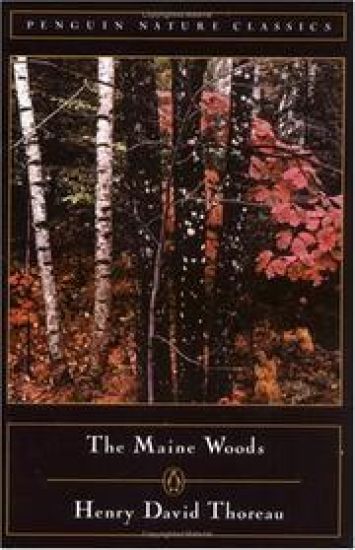
Henry D. Thoreau traveled to the backwoods of Maine in 1846, 1853, and 1857. Originally published in 1864, and published now with a new introduction by Paul Theroux, this volume is a powerful telling of those journeys through a rugged and largely unspoiled land. It presents Thoreau's fullest account of the wilderness. The Maine Woods is classic Thoreau: a personal story of exterior and interior discoveries in a natural setting--all conveyed in taut, masterly prose. Thoreau's evocative renderings of the life of the primitive forest--its mountains, waterways, fauna, flora, and inhabitants--are timeless and valuable on their own. But his impassioned protest against the despoilment of nature in the name of commerce and sport, which even by the 1850s threatened to deprive Americans of the "tonic of wildness," makes The Maine Woods an especially vital book for our own time.
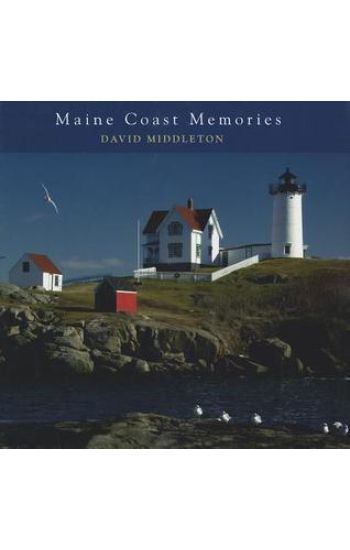
When your own photographs of the gorgeous places you visit can’t quite match what you have seen—a breathtaking coastline, a boulevard bustling with character, or iconic and famous monuments—you’ll want to take home a memento to capture the depth and substance of your experience. Now you can. Introducing a new series of beautiful photographic essays that let you relive—or see for the first time through an artist’s eye—the jagged vistas of the Maine coast; the gardens, malls, and iconic edifices of our nation’s capital; and the majestic purples of Oregon’s coast. The Memories series aims to celebrate the beauty and unique character of those destinations in America that are simply unforgettable.
Posthumously published in 1864, The Maine Woods depicts Henry David Thoreau’s experiences in the forests of Maine, and expands on the author’s transcendental theories on the relation of humanity to Nature. On Mount Katahdin, he faces a primal, untamed Nature. Katahdin is a place “not even scarred by man, but it was a specimen of what God saw fit to make this world.” In Maine he comes in contact with “rocks, trees, wind and solid earth” as though he were witness to the creation itself. Of equal importance, The Maine Woods depicts Thoreau’s contact with the American Indians and depicts his tribal education of learning the language, customs, and mores of the Penobscot people. Thoreau attempts to learn and speak the Abenaki language and becomes fascinated with its direct translation of natural phenomena as in the word sebamook—a river estuary that never loses is water despite having an outlet because it also has an inlet. The Maine Woods illustrates the author’s deeper understanding of the complexities of the primal wilderness of uplifted rocky summits in Maine and provides the reader with the pungent aroma of balsam firs, black spruce, mosses, and ferns as only Thoreau could. This new, redesigned edition features an insightful foreword by Thoreau scholar Richard Francis Fleck. Redesigned edition featuring an insightful foreword by Thoreau scholar Richard Francis Fleck. Fleck is a well-respected authority on Thoreau and the author of many books including Henry Thoreau and John Muir Among the Indians. Henry David Thoreau (July 12, 1817 – May 6, 1862) was an American author, poet, philosopher, abolitionist, naturalist, tax resister, development critic, surveyor, historian, and leading transcendentalist. This book was first published in 1864 (composed partly of articles he had written earlier for periodicals) and still in print, is an insightful reporter’s picture of a rugged wilderness the moment before being irrevocably altered by armies of loggers. Today the virgin forest seen by Thoreau is gone; trees have been cut, regrown, and harvested again. But modern travelers — hikers, campers, hunters, fishers, canoeists or back road wanderers — will still find, as Thoreau did, a land “more grim and wild than you had anticipated.” It’s also pin-drop tranquil, teeming with wildlife and, in places, challenging to reach. (NYTimes) Following Thoreau into the Maine Woods is hardly a new idea, but it is becoming easier. The Thoreau-Wabanaki Trail was inaugurated, delineating and celebrating Thoreau’s passage on routes that Penobscot Indians had used for thousands of years. (NYTimes) Nature tourism is a $37 billion annual industry in the United States (Outdoor Industry Association).