Today's American, hand-crafted furniture is bristling with originality. Blending art and functionality, David Ebner creates unique benches, tables, and chairs. This designer-craftsman's work subtly surpasses the limits of the furniture world and often crosses over into the realm of sculpture. Fine woods with interesting patterns are featured in his practical designs, which reflect natural elements of the places where he has worked in New York state. He fuses traditional and modern techniques and is well known for his scallion coat rack, Renwick benches, and Bellport chairs. See more than 340 color photos and sketches of Ebner's designs for diverse forms created with "twisted sticks," tubular metal, iron sections, and bamboo laminates. In his lifetime, he's made more than 1,400 pieces. Especially interesting are projects he continues to design today in his ever-evolving style.
Rock 'n' Roll and War and Peace chronicles and examines the relationship between popular music in the Rock era and the politics and ideology of war and peace throughout the past half-century, with emphasis on the Vietnam War and Iraq War, among others. This is a topic that, while it's been touched on in a variety of ways, has never been deeply explored in a single coherent work, especially one that links the various eras and movements, from the 1960s through the 2000s.The book offers portraits of dozens of artists and insights into the meaning and impact of hundreds of songs across more than five decades.The focus of the first section, "Ending War," is the Vietnam War and the 1960s Woodstock Generation: the first time in history that popular music turned against an active American war effort. The author reviews all of the highlights of this period of vintage protest music, from Folk pioneers Pete Seeger and Bob Dylan, through Jimi Hendrix and Marvin Gaye, to John Lennon and Crosby, Stills, Nash, and Young. The dominance of these revolutionary artists, and of similar anti-war messages from a wide variety of musicians, represented a cultural and political shift of seismic proportions that would carry across generations.The second section, "Living in Peace," then chronicles the musical and social transformation that followed the end of Vietnam hostilities starting in the mid-1970s: the rise of Folk Rock and mellow singer-songwriters, and a new introspective, detached and melancholy ethos within the growing Rock/Pop culture. The likes of Neil Young, Joni Mitchell, and James Taylor carried forward the idealism of the '60s pacifist movements, but focused away from global geopolitics and inward on the dreams and insecurities of adulthood. A strain of peaceful Soft Rock came to dominate the post-War airwaves, which the chapter relives with insights into dozens of performers and songs of the period.Part 3 is then called "Returning to Battle," and highlights the renewed focus on anti-militarism of the next generations of Rock musicians and fans. If the Woodstock movement could help end an ill-conceived war, how would those '60s veterans' children respond when the next waves of war drums began to sound? The answers are found in a wealth of musical reactions to global events from the 1980s to the recent past: nuclear saber-rattling under Reagan and Thatcher; the unraveling of the Cold War and the Soviet empire; the first Gulf War; the 9/11 attacks; and the massive protests against the Iraq War.This latest period in particular has received relatively little attention compared with Vietnam era protest music, yet it yielded its own large body of diverse contributions: from major established stars (Springsteen, U2), highly popular newcomers (Green Day, Black-Eyed Peas), and senior veterans of the original movement (Neil Young). The story of these musical and ideological linkages, from the earliest roots of 1960s anti-war protests through the peaks of their revival in the 2000s, is one that will be of interest to a large audience of music fans, history buffs, and social activists alike.
A 200-page journal for tracking and new and clean fresh sounds that you find on streaming radio. Sounds and beats that provoke thought and a call to action. A great way to track new sounds from new artists.As new sounds are discovered, you can feel free to jot down those sounds and write about the beat and rhythm.
This is the second volume of transcribed interviews about the poet Dylan Thomas. Journalist, broadcaster, and author Colin Edwards interviewed numerous sources close to Thomas for a planned biography of the poet, but he was unable to begin work before his early death. The transcribed tapes have been edited into two collections. This volume contains interviews with Fred Janes, Mably Owen, Vernon Watkins, Glyn Jones, and the villagers of Dylan's stomping grounds of New Quay, South Leigh, and Laughern, as well as with many others, including Dylan's friends, colleagues, and acquaintances.
Who and what killed Dylan Thomas? The death of this iconic writer, in New York in November 1953, remains shrouded in mystery fifty-five years later. What might have been a triumphant new departure in his career and life with the first production of Under Milk Wood, and plans to work on operas with Igor Stravinsky and Samuel Barber turned instead into a requiem for man whose life spiralled out of control.Was it alcohol abuse, diabetes, a heart attack, medical incompetence – all reasons previously advanced? And was Thomas himself at fault? What part was played by his lover, Liz Reitell, her doctor Milton Feltenstein, hospital doctors McVeigh and Glibertson, the literary impressario John Malcolm Brinnin?Leading Dylan Thomas authority David N. Thomas draws on his extensive research, and uncovers startling new evidence, to produce the definitive answers in a superbly written account which balances historical context with forensic detail, Thomas' character with the demands made upon him by friends, lovers and his reading public. His verdict is a chilling study of a poet, a place and a death.David Thomas is the author of several books on Dylan Thomas, including Dylan Thomas: A Farm, Two Mansions and a Bungalow, an account of his life in wartime west Wales, which has been made into the film, The Edge of Love, starring Keira Knightly and Sienna Miller.
This great guide is packed with juicy tidbits on software and digital photography techniques. Get updates on new features and new technologies. Learn tips and techniques for transforming digital pictures, printing, improving detailed areas, shape configuring, and going beyond the basics with text, edges and filters. Whether you're a beginner or a pro, author David Plotkin has plenty of help for you.
How have the Jews survived? For millennia, they have defied odds by overcoming the travails of exile, persecution, and recurring plans for their annihilation. Many have attempted to explain this singular success as a result of divine intervention. In this engaging book, David N. Myers charts the long journey of the Jews through history. At the same time, it points to two unlikely-and decidedly this-worldly--factors to explain the survival of the Jews: antisemitism and assimilation. Usually regarded as grave dangers, these two factors have continually interacted with one other to enable the persistence of the Jews. At every turn in their history, not just in the modern age, Jews have adapted to new environments, cultures, languages, and social norms. These bountiful encounters with host societies have exercised the cultural muscle of the Jews, preventing the atrophy that would have occurred if they had not interacted so extensively with the non-Jewish world. It is through these encounters--indeed, through a process of assimilation--that Jews came to develop distinct local customs, speak many different languages, and cultivate diverse musical, culinary, and intellectual traditions. Left unchecked, the Jews' well-honed ability to absorb from surrounding cultures might have led to their disappearance. And yet, the route toward full and unbridled assimilation was checked by the nearly constant presence of hatred toward the Jew. Anti-Jewish expression and actions have regularly accompanied Jews throughout history. Part of the ironic success of antisemitism is its malleability, its talent in assuming new forms and portraying the Jew in diverse and often contradictory images--for example, at once the arch-capitalist and revolutionary Communist. Antisemitism not only served to blunt further assimilation, but, in a paradoxical twist, affirmed the Jew's sense of difference from the host society. And thus together assimilation and antisemitism (at least up to a certain limit) contribute to the survival of the Jews as a highly adaptable and yet distinct group.
We are accustomed to thinking of science and its findings as universal. After all, one atom of carbon plus two of oxygen yields carbon dioxide in Amazonia as well as in Alaska; a scientist in Bombay can use the same materials and techniques to challenge the work of a scientist in New York; and of course the laws of gravity apply worldwide. Why, then, should the locations where science is done matter at all? David N. Livingstone here puts that question to the test with his fascinating study of how science bears the marks of its place of production. Putting Science in Its Place establishes the fundamental importance of geography in both the generation and the consumption of scientific knowledge, using historical examples of the many places where science has been practiced. Livingstone first turns his attention to some of the specific sites where science has been made - the laboratory, museum, and botanical garden, to name some of the more conventional locales, but also places like the coffeehouse and cathedral, ship's deck and asylum, even the human body itself. In each case, he reveals just how the space of inquiry has conditioned the investigations carried out there. Putting Science in Its Place powerfully concludes by examining the remarkable mobility of science and the seemingly effortless way it moves around the globe.
Interventionism—the manipulation of the internal politics of one country by another—has long been a feature of international relations. The practice shows no signs of abating, despite the recent collapse of Communism and the decline of the Cold War. In The Political Economy of Third World Intervention, David Gibbs explores the factors that motivate intervention, especially the influence of business interests. He challenges conventional views of international relations, eschewing both the popular "realist" view that the state is influenced by diverse national interests and the "dependency" approach that stresses conflicts between industrialized countries and the Third World. Instead, Gibbs proposes a new theoretical model of "business conflict" which stresses divisions between different business interests and shows how such divisions can influence foreign policy and interventionism. Moreover, he focuses on the conflicts among the core countries, highlighting friction among private interests within these countries. Drawing on U.S. government documents—including a wealth of newly declassified materials—he applies his new model to a detailed case study of the Congo Crisis of the 1960s. Gibbs demonstrates that the Crisis is more accurately characterized by competition among Western interests for access to the Congo's mineral wealth, than by Cold War competition, as has been previously argued. Offering a fresh perspective for understanding the roots of any international conflict, this remarkably accessible volume will be of special interest to students of international political economy, comparative politics, and business-government relations. "This book is an extremely important contribution to the study of international relations theory; Gibbs' treatment of the Congo case is superb. He effectively takes the "statists" to task and presents a compelling new way of analyzing external interventions in the Third World."—Michael G. Schatzberg, University of Wisconsin "David Gibbs makes an original and important contribution to our understanding of the influence of business interests in the making of U.S. foreign policy. His business conflict model provides a synthetic theoretical framework for the analysis of business-government relations, one which yields fresh insights, overcomes inconsistencies in other approaches, and opens new ground for important research. . . . [Gibbs] provides a sophisticated analysis of the conflicts within the U.S. business community and identifies the complex ways in which they interacted with agencies within the government to form U.S. foreign policy toward the Congo. . . . This is a well-crafted analysis of a critical case of U.S. postwar intervention which should be of general interest to scholars and others concerned with the domestic bases of foreign policy."—Thomas J. Biersteker, Director, School of International Relations, University of Southern California
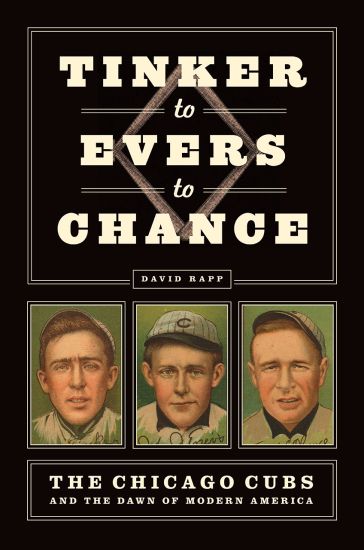
Their names were chanted, crowed, and cursed. Alone they were a shortstop, a second baseman, and a first baseman. But together they were an unstoppable force. Joe Tinker, Johnny Evers, and Frank Chance came together in rough-and-tumble early twentieth-century Chicago and soon formed the defensive core of the most formidable team in big league baseball, leading the Chicago Cubs to four National League pennants and two World Series championships from 1906 to 1910. At the same time, baseball was transforming from smalltime diversion into a nationwide sensation. Americans from all walks of life became infected with "baseball fever," a phenomenon of unprecedented enthusiasm and social impact. The national pastime was coming of age.Tinker to Evers to Chance examines this pivotal moment in American history, when baseball became the game we know today. Each man came from a different corner of the country and brought a distinctive local culture with him: Evers from the IrishAmerican hothouse of Troy, New York; Tinker from the urban parklands of Kansas City, Missouri; Chance from the verdant fields of California's Central Valley. The stories of these early baseball stars shed unexpected light not only on the evolution of baseball and on the enthusiasm of its players and fans all across America, but also on the broader convulsions transforming the US into a confident new industrial society. With them emerged a truly national culture. This iconic trio helped baseball reinvent itself, but their legend has largely been relegated to myths and barroom trivia. David Rapp's engaging history resets the story and brings these men to life again, enabling us to marvel anew at their feats on the diamond. It's a rare look at one of baseball's first dynasties in action.