Kirjojen hintavertailu. Mukana 11 238 995 kirjaa ja 12 kauppaa.

Kirjahaku

Etsi kirjoja tekijän nimen, kirjan nimen tai ISBN:n perusteella.

1000 tulosta hakusanalla David Nicol

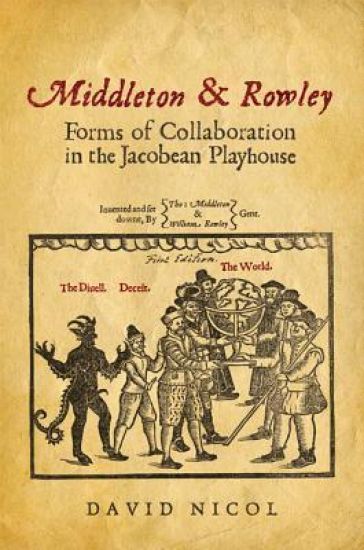
Middleton & Rowley

Middleton & Rowley

David Nicol

University of Toronto Press
2012
sidottu
Can the inadvertent clashes between collaborators produce more powerful effects than their concordances? For Thomas Middleton and William Rowley, the playwriting team best known for their tragedy The Changeling, disagreements and friction proved quite beneficial for their work. This first full-length study of Middleton and Rowley uses their plays to propose a new model for the study of collaborative authorship in early modern English drama. David Nicol highlights the diverse forms of collaborative relationships that factor into a play’s meaning, including playwrights, actors, companies, playhouses, and patrons. This kaleidoscopic approach, which views the plays from all these perspectives, throws new light on the Middleton-Rowley oeuvre and on early modern dramatic collaboration as a whole.
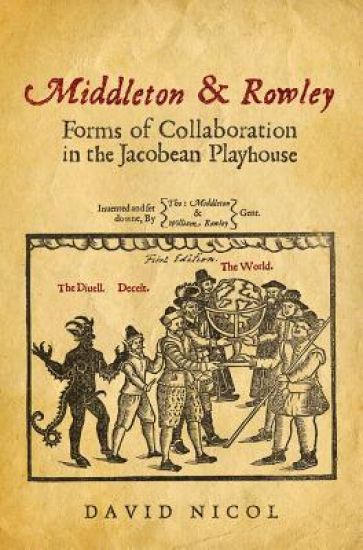
Middleton & Rowley

Middleton & Rowley

David Nicol

University of Toronto Press
2018
pokkari
Can the inadvertent clashes between collaborators produce more powerful effects than their concordances? For Thomas Middleton and William Rowley, the playwriting team best known for their tragedy The Changeling, disagreements and friction proved quite beneficial for their work. This first full-length study of Middleton and Rowley uses their plays to propose a new model for the study of collaborative authorship in early modern English drama. David Nicol highlights the diverse forms of collaborative relationships that factor into a play’s meaning, including playwrights, actors, companies, playhouses, and patrons. This kaleidoscopic approach, which views the plays from all these perspectives, throws new light on the Middleton-Rowley oeuvre and on early modern dramatic collaboration as a whole.
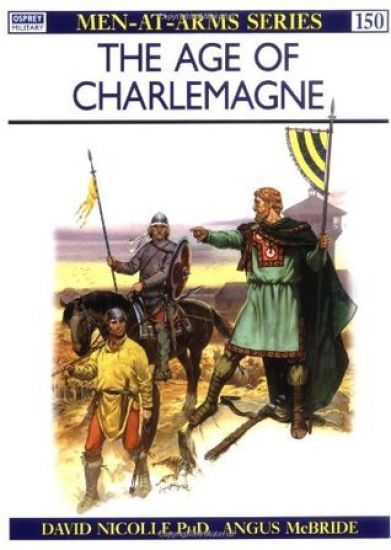
The Age of Charlemagne

The Age of Charlemagne

David Nicolle

Osprey Publishing
1984
nidottu
An in-depth and fully illustrated examination of Charlemagne's military and empire - and his opponents - from the 8th century to the 10th century AD.Most historians agree that the Carolingian Age, from the 8th to 10th centuries AD, represented one of the most important turning points in European history. It can be said with some certainty that early Carolingian military success was built on good leadership, adequate administration, and troops whose morale was almost consistently superb. It is also clear that the Carolingian army managed to adapt itself to face many and differing foes. This absorbing text by David Nicolle explores the organisation and history of the Carolingian Empire during the age of one of history's most romanticised and heroic figures - Charlemagne.
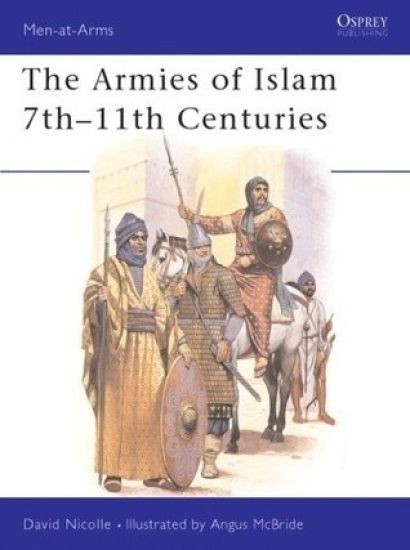
The Armies of Islam 7th–11th Centuries

The Armies of Islam 7th–11th Centuries

David Nicolle

Osprey Publishing
1982
nidottu
A fully-illustrated, in-depth exploration of early Islamic military forces, their weapons and armour, and the conflicts in which they fought.During the Middle Ages, Islam was Christian Europe's only civilised and most troublesome neighbour; the Middle Ages saw almost continual strife between these two distinct cultures. By the time the Frankish Crusaders reached the Middle East at the end of the 11th century, Islam had already incorporated three major races: Arabs, Persians and Turks, each of which contributed different strengths to the armoury of Islam. This title explores the organisation, uniforms and equipment of the armies of Islam from the 7th to 11th centuries, backed by illustrations, museum photographs and eight full page colour plates by popular Osprey artist Angus McBride.
Italian Medieval Armies 1300–1500

Italian Medieval Armies 1300–1500

David Nicolle

Osprey Publishing
1983
nidottu
Mercenaries were a common feature throughout most of Europe in the 14th and 15th centuries, and had been known far earlier. But nowhere did such a sophisticated system of hiring, payment and organisation of mercenaries develop as it did in Italy. The condottiere – whose name came from the condotta or contract between himself and his employer – was the result. Whether commander or humble trooper, the condottiere was a complete professional. His skill has never been doubted, but his loyalty and dedication to a particular cause often has. David Nicolle provides a fascinating exploration of the condottiere; his roles, arms and equipment.
Armies of the Ottoman Turks 1300–1774

Armies of the Ottoman Turks 1300–1774

David Nicolle

Osprey Publishing
1983
nidottu
The birth of the Ottoman state is shrouded in legend. Whatever the truth of its origins, the Ottoman's formed an Empire which almost succeeded in bringing Christian Europe to its knees. During the last decades of the 13th century, the ambitious Osman Bey's tiny mountain state took eight frontier castles plus the Turkish town of Eskisehir. In 1299 Osman seized Yenisehir after working up the Kara Su valley. With this as its first real capital, the Ottoman state emerged into history poised above the fertile shores of the Sea of Marmara.
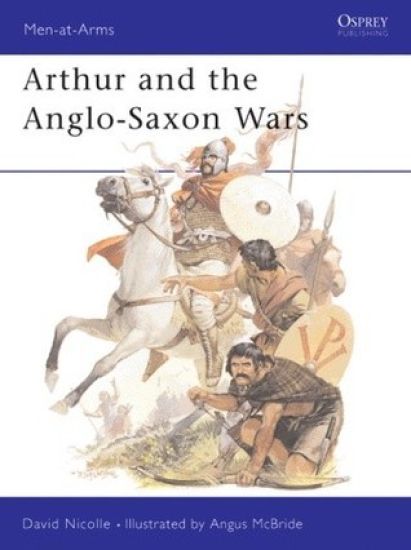
Arthur and the Anglo-Saxon Wars

Arthur and the Anglo-Saxon Wars

David Nicolle

Osprey Publishing
1984
nidottu
A fully-illustrated history of Anglo-Saxon England and its conflicts, including the Celts, Picts, Irish, and Vikings, from the 6th through to the 11th century AD.The Arthurian Age; the Celtic Twilight; the Dark Ages; the Birth of England; these are the powerfully romantic names often given to one of the most confused yet vital periods in British history. It is an era upon which rival Celtic and English nationalisms frequently fought. It was also a period of settlement, and of the sword. This absorbing volume by David Nicolle transports us to an England shrouded in mystery and beset by savage conflict, a land which played host to one of the most enduring figures of our history – Arthur.
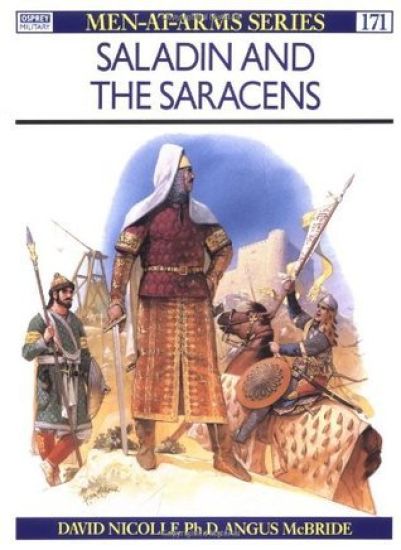
Saladin and the Saracens

Saladin and the Saracens

David Nicolle

Osprey Publishing
1992
nidottu
Salah al Din Yusif ibn Ayyub, known to his Muslim contemporaries as al Nasi, 'The Victorious', and to an admiring Europe as Saladin, is the most famous single figure in the history of the Crusades, being even better known outside the English-speaking world than his Christian foe Richard the Lionheart. Traditionally portrayed as a quiet, deeply religious and even humble man, Saladin was a typical product of his day and his culture. This title shows how the societies and military systems that he and his successors led from defeat to eventual triumph were far more sophisticated than is generally realised, and brings vividly to life the history, organisation, arms and armour of Saladin and the Saracens.
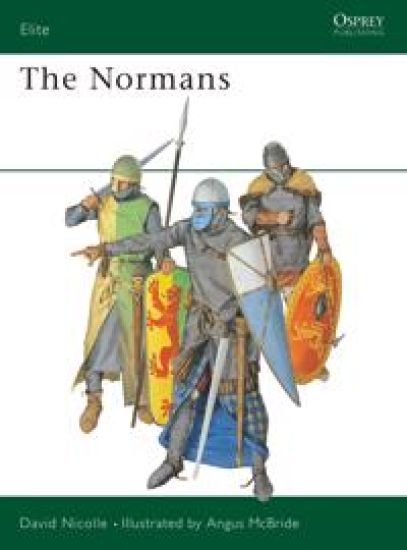
The Normans

The Normans

David Nicolle

Osprey Publishing
1987
nidottu
Despite the small geographic extent of Normandy its people played a crucial role in the history of the medieval world. Ferocity, boundless energy, cunning and a capacity for leadership were their heritage, to which modern scholars would add supreme adaptability and a simple piety. Their amazing military successes resulted from careful planning, speed of movement, decisiveness, daring and sheer ruthlessness. Added to this was a strong business sense and an appreciation of the value of money. Veteran Osprey author David Nicolle describes the history, arms and armour of the remarkable Normans in this fascinating volume.
El Cid and the Reconquista 1050–1492

El Cid and the Reconquista 1050–1492

David Nicolle

Osprey Publishing
1988
nidottu
The very name El Cid sums up much of the special character of medieval Spanish warfare. It comes from the Arabic al sayyid, master or chieftain, and seems to have been given to Rodrigo de Vivar by his Muslim foes. But was it given in recognition of El Cid's victories against Islam in the 'Reconquista' – or because this Castilian nobleman was as content to serve beside the Muslims as to fight them? The story of the Christian conquest of the Iberian peninsula which gave rise to the legend of El Cid, is here examined by David Nicolle, who outlines the history, tactics, arms and armour of the period.
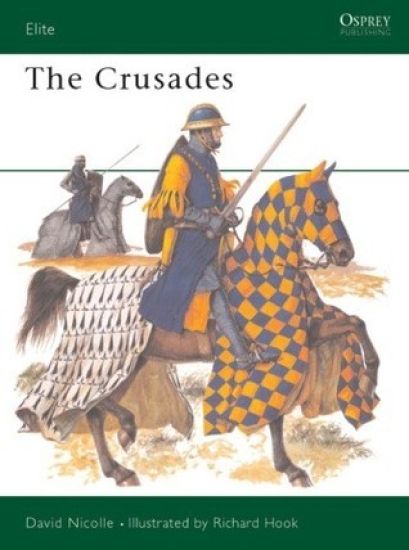
The Crusades

The Crusades

David Nicolle

Osprey Publishing
1988
nidottu
Born of a mixture of religious fervour, military ardour and political will, the Crusades remain a fascinating and misunderstood aspect of medieval history. Born amid immense suffering and bloodshed the Kingdom of Jerusalem remained a battlefield for almost 200 years. The Crusades raised to campaign for it gave rise to the Military Orders of the Templars and Hopitallers as well as numerous smaller orders, and were a backdrop to the careers of some of history's most famous leaders including Richard 'The Lionheart' and Saladin. David Nicolle recounts the background and events of these fundamental campaigns that scarred the Late Medieval period.
Lawrence and the Arab Revolts

Lawrence and the Arab Revolts

David Nicolle

Osprey Publishing
1989
nidottu
The Great War of 1914-18 is often seen as one major battleground – the Western Front – with numerous 'side-shows'. The other battle zones were not side-shows to those involved, however, although the local inhabitants often fought for motives which remained a closed book to their European allies or foes. David Nicolle relates the story of the Arab revolts, and discusses just how important (or unimportant) was the role of T. E. Lawrence in the affair, in a fascinating text backed by a fine collection of contemporary photographs and eight full page colour plates by Richard Hook.
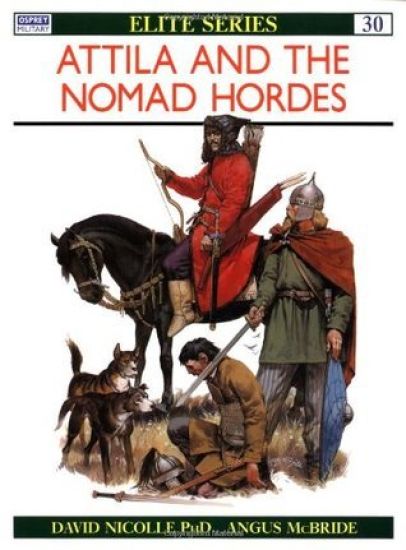
Attila and the Nomad Hordes

Attila and the Nomad Hordes

David Nicolle

Osprey Publishing
1990
nidottu
Of all the conquerors who swept out of Central Asia, two names stand out in European memory – Attila the Hun and Genghis Khan the Mongol. Both are remembered for massacres and devastation; yet whereas Genghis is also famous for the laws he imposed on half of Asia and for the trade which flourished under Mongol rule, Attila's notoriety seems unrelieved by positive achievements. But what was Attila's short-lived empire really like? What happened to the Huns afterwards, and what role did the nomads of Central Asia play in the centuries between Attila and Genghis Khan?
Warriors and their Weapons around the Time of the Crusades

Warriors and their Weapons around the Time of the Crusades

David Nicolle

Ashgate Publishing Limited
2002
sidottu
The technological relationship between the three main civilizations of the Western world - Byzantium, the Islamic world and the West - most particularly in the area of arms, armour and military technology is a field of research for which Dr Nicolle is noted. This volume deals principally with Western Europe and Byzantium, which for many centuries learnt from the Muslims in these matters; several articles also focus on military interactions in the Crusader states. The work draws upon both written and archaeological sources, but above all makes use of the depictions of war and military equipment in contemporary art to examine the interconnections across the medieval world.
Asymptotic Chaos Expansions in Finance

Asymptotic Chaos Expansions in Finance

David Nicolay

Springer London Ltd
2014
nidottu
Stochastic instantaneous volatility models such as Heston, SABR or SV-LMM have mostly been developed to control the shape and joint dynamics of the implied volatility surface. In principle, they are well suited for pricing and hedging vanilla and exotic options, for relative value strategies or for risk management. In practice however, most SV models lack a closed form valuation for European options. This book presents the recently developed Asymptotic Chaos Expansions methodology (ACE) which addresses that issue. Indeed its generic algorithm provides, for any regular SV model, the pure asymptotes at any order for both the static and dynamic maps of the implied volatility surface. Furthermore, ACE is programmable and can complement other approximation methods. Hence it allows a systematic approach to designing, parameterising, calibrating and exploiting SV models, typically for Vega hedging or American Monte-Carlo.Asymptotic Chaos Expansions in Finance illustrates the ACE approach for single underlyings (such as a stock price or FX rate), baskets (indexes, spreads) and term structure models (especially SV-HJM and SV-LMM). It also establishes fundamental links between the Wiener chaos of the instantaneous volatility and the small-time asymptotic structure of the stochastic implied volatility framework. It is addressed primarily to financial mathematics researchers and graduate students, interested in stochastic volatility, asymptotics or market models. Moreover, as it contains many self-contained approximation results, it will be useful to practitioners modelling the shape of the smile and its evolution.
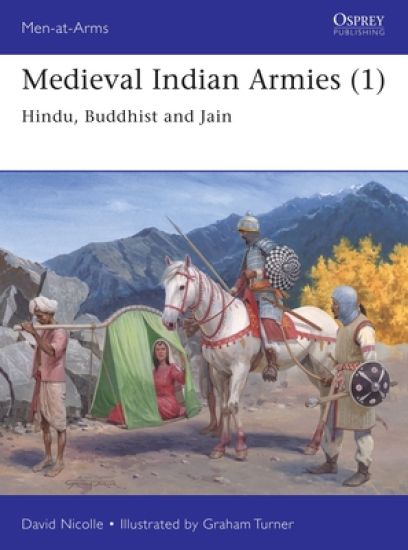
Medieval Indian Armies (1)

Medieval Indian Armies (1)

David Nicolle

BLOOMSBURY PUBLISHING PLC
2022
nidottu
This fully illustrated study explores the armies of the Hindu, Buddhist and Jain states within what are now India, Pakistan, Bangladesh, Sri Lanka and Nepal during the period AD 500–1500, as well as Afghanistan until the early 13th century AD.Following the emergence of a distinct ‘medieval Indian’ civilization in the Late Classical and Early Medieval periods, there was a prolonged struggle between this civilization and that of the eastern Islamic world, concluding with the rise of the Mughal Empire at the start of the 16th century. In this fully illustrated study, David Nicolle investigates the traditions and enduring conservatism of non-Islamic medieval Indian warfare, notably evident in recruitment patterns and the significance of archery and cavalry. The role and impact of war-elephants, both positive and negative, are also considered, as well as the influence of climate and weather (notably the seasonal monsoon) on warfare in this region. As well as assessing arms and armour – contrasting the advanced technology and high status of Indian weapons (especially swords) with the remarkable lack of metallic armour in the region during this period – the author also explores siege warfare and riverine and naval warfare in South Asia. This book assesses the contributing factors identified by those who have sought to explain why the huge wealth and substantial populations of the traditional non-Islamic Indian states did not prevent their persistent failure in the face of Islamic invasion and conquest.