

Kirjahaku
Etsi kirjoja tekijän nimen, kirjan nimen tai ISBN:n perusteella.
1000 tulosta hakusanalla David Nicolle
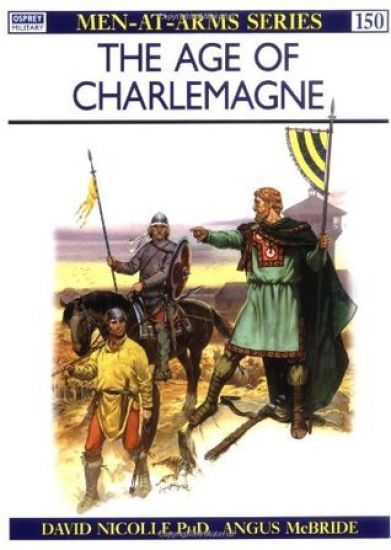
An in-depth and fully illustrated examination of Charlemagne's military and empire - and his opponents - from the 8th century to the 10th century AD.Most historians agree that the Carolingian Age, from the 8th to 10th centuries AD, represented one of the most important turning points in European history. It can be said with some certainty that early Carolingian military success was built on good leadership, adequate administration, and troops whose morale was almost consistently superb. It is also clear that the Carolingian army managed to adapt itself to face many and differing foes. This absorbing text by David Nicolle explores the organisation and history of the Carolingian Empire during the age of one of history's most romanticised and heroic figures - Charlemagne.
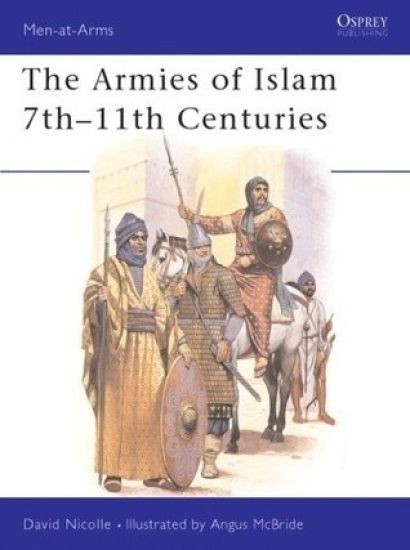
A fully-illustrated, in-depth exploration of early Islamic military forces, their weapons and armour, and the conflicts in which they fought.During the Middle Ages, Islam was Christian Europe's only civilised and most troublesome neighbour; the Middle Ages saw almost continual strife between these two distinct cultures. By the time the Frankish Crusaders reached the Middle East at the end of the 11th century, Islam had already incorporated three major races: Arabs, Persians and Turks, each of which contributed different strengths to the armoury of Islam. This title explores the organisation, uniforms and equipment of the armies of Islam from the 7th to 11th centuries, backed by illustrations, museum photographs and eight full page colour plates by popular Osprey artist Angus McBride.

Mercenaries were a common feature throughout most of Europe in the 14th and 15th centuries, and had been known far earlier. But nowhere did such a sophisticated system of hiring, payment and organisation of mercenaries develop as it did in Italy. The condottiere – whose name came from the condotta or contract between himself and his employer – was the result. Whether commander or humble trooper, the condottiere was a complete professional. His skill has never been doubted, but his loyalty and dedication to a particular cause often has. David Nicolle provides a fascinating exploration of the condottiere; his roles, arms and equipment.

The birth of the Ottoman state is shrouded in legend. Whatever the truth of its origins, the Ottoman's formed an Empire which almost succeeded in bringing Christian Europe to its knees. During the last decades of the 13th century, the ambitious Osman Bey's tiny mountain state took eight frontier castles plus the Turkish town of Eskisehir. In 1299 Osman seized Yenisehir after working up the Kara Su valley. With this as its first real capital, the Ottoman state emerged into history poised above the fertile shores of the Sea of Marmara.
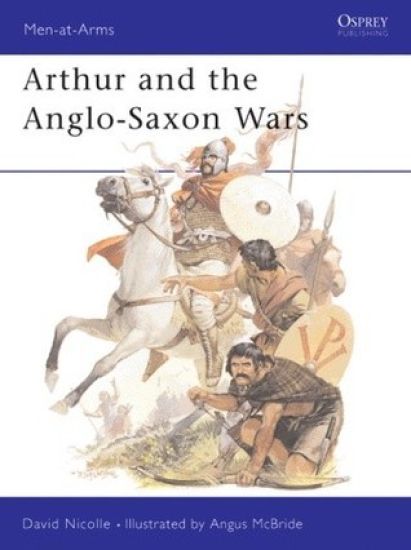
A fully-illustrated history of Anglo-Saxon England and its conflicts, including the Celts, Picts, Irish, and Vikings, from the 6th through to the 11th century AD.The Arthurian Age; the Celtic Twilight; the Dark Ages; the Birth of England; these are the powerfully romantic names often given to one of the most confused yet vital periods in British history. It is an era upon which rival Celtic and English nationalisms frequently fought. It was also a period of settlement, and of the sword. This absorbing volume by David Nicolle transports us to an England shrouded in mystery and beset by savage conflict, a land which played host to one of the most enduring figures of our history – Arthur.
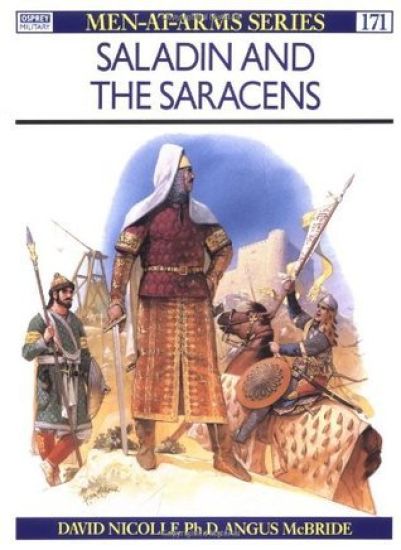
Salah al Din Yusif ibn Ayyub, known to his Muslim contemporaries as al Nasi, 'The Victorious', and to an admiring Europe as Saladin, is the most famous single figure in the history of the Crusades, being even better known outside the English-speaking world than his Christian foe Richard the Lionheart. Traditionally portrayed as a quiet, deeply religious and even humble man, Saladin was a typical product of his day and his culture. This title shows how the societies and military systems that he and his successors led from defeat to eventual triumph were far more sophisticated than is generally realised, and brings vividly to life the history, organisation, arms and armour of Saladin and the Saracens.
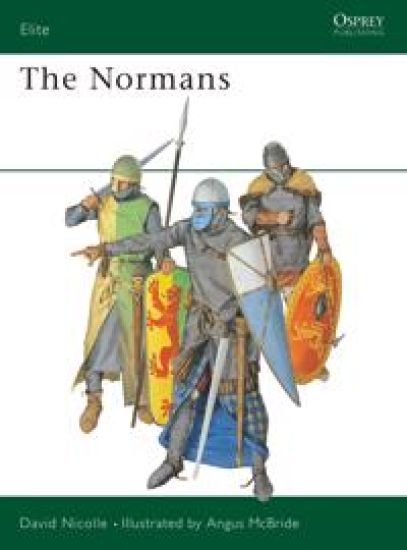
Despite the small geographic extent of Normandy its people played a crucial role in the history of the medieval world. Ferocity, boundless energy, cunning and a capacity for leadership were their heritage, to which modern scholars would add supreme adaptability and a simple piety. Their amazing military successes resulted from careful planning, speed of movement, decisiveness, daring and sheer ruthlessness. Added to this was a strong business sense and an appreciation of the value of money. Veteran Osprey author David Nicolle describes the history, arms and armour of the remarkable Normans in this fascinating volume.

The very name El Cid sums up much of the special character of medieval Spanish warfare. It comes from the Arabic al sayyid, master or chieftain, and seems to have been given to Rodrigo de Vivar by his Muslim foes. But was it given in recognition of El Cid's victories against Islam in the 'Reconquista' – or because this Castilian nobleman was as content to serve beside the Muslims as to fight them? The story of the Christian conquest of the Iberian peninsula which gave rise to the legend of El Cid, is here examined by David Nicolle, who outlines the history, tactics, arms and armour of the period.
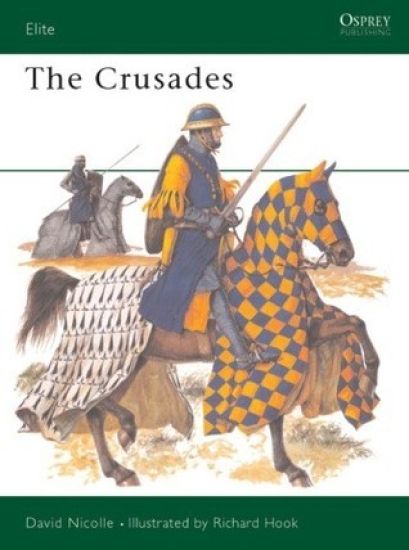
Born of a mixture of religious fervour, military ardour and political will, the Crusades remain a fascinating and misunderstood aspect of medieval history. Born amid immense suffering and bloodshed the Kingdom of Jerusalem remained a battlefield for almost 200 years. The Crusades raised to campaign for it gave rise to the Military Orders of the Templars and Hopitallers as well as numerous smaller orders, and were a backdrop to the careers of some of history's most famous leaders including Richard 'The Lionheart' and Saladin. David Nicolle recounts the background and events of these fundamental campaigns that scarred the Late Medieval period.

The Great War of 1914-18 is often seen as one major battleground – the Western Front – with numerous 'side-shows'. The other battle zones were not side-shows to those involved, however, although the local inhabitants often fought for motives which remained a closed book to their European allies or foes. David Nicolle relates the story of the Arab revolts, and discusses just how important (or unimportant) was the role of T. E. Lawrence in the affair, in a fascinating text backed by a fine collection of contemporary photographs and eight full page colour plates by Richard Hook.
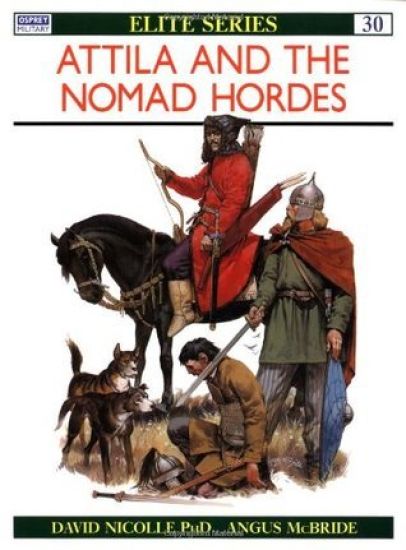
Of all the conquerors who swept out of Central Asia, two names stand out in European memory – Attila the Hun and Genghis Khan the Mongol. Both are remembered for massacres and devastation; yet whereas Genghis is also famous for the laws he imposed on half of Asia and for the trade which flourished under Mongol rule, Attila's notoriety seems unrelieved by positive achievements. But what was Attila's short-lived empire really like? What happened to the Huns afterwards, and what role did the nomads of Central Asia play in the centuries between Attila and Genghis Khan?

Warriors and their Weapons around the Time of the Crusades
David Nicolle
Ashgate Publishing Limited
2002
sidottu
The technological relationship between the three main civilizations of the Western world - Byzantium, the Islamic world and the West - most particularly in the area of arms, armour and military technology is a field of research for which Dr Nicolle is noted. This volume deals principally with Western Europe and Byzantium, which for many centuries learnt from the Muslims in these matters; several articles also focus on military interactions in the Crusader states. The work draws upon both written and archaeological sources, but above all makes use of the depictions of war and military equipment in contemporary art to examine the interconnections across the medieval world.
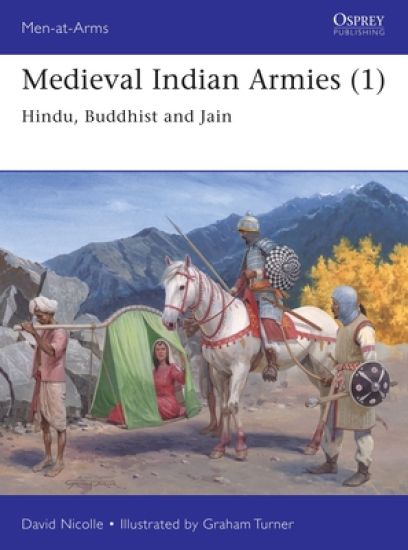
This fully illustrated study explores the armies of the Hindu, Buddhist and Jain states within what are now India, Pakistan, Bangladesh, Sri Lanka and Nepal during the period AD 500–1500, as well as Afghanistan until the early 13th century AD.Following the emergence of a distinct ‘medieval Indian’ civilization in the Late Classical and Early Medieval periods, there was a prolonged struggle between this civilization and that of the eastern Islamic world, concluding with the rise of the Mughal Empire at the start of the 16th century. In this fully illustrated study, David Nicolle investigates the traditions and enduring conservatism of non-Islamic medieval Indian warfare, notably evident in recruitment patterns and the significance of archery and cavalry. The role and impact of war-elephants, both positive and negative, are also considered, as well as the influence of climate and weather (notably the seasonal monsoon) on warfare in this region. As well as assessing arms and armour – contrasting the advanced technology and high status of Indian weapons (especially swords) with the remarkable lack of metallic armour in the region during this period – the author also explores siege warfare and riverine and naval warfare in South Asia. This book assesses the contributing factors identified by those who have sought to explain why the huge wealth and substantial populations of the traditional non-Islamic Indian states did not prevent their persistent failure in the face of Islamic invasion and conquest.
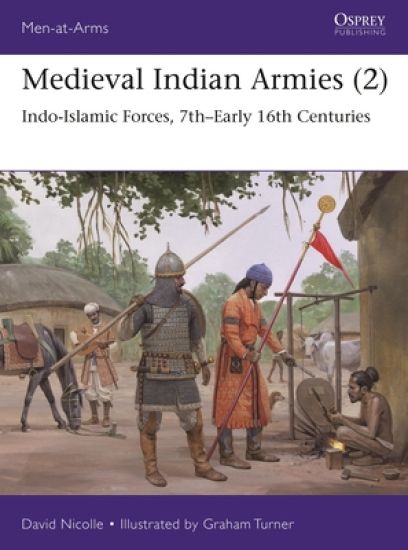
This illustrated study investigates the Indo-Islamic fighting men of South Asia from the 7th century AD to the Mughal conquest of the 16th century.From 1206, much of what is now India as well as parts of Pakistan, Bangladesh and Nepal were ruled by a succession of Islamic dynasties that had their origins in the Ghurid forces that conquered parts of northern India in the 12th century. Although it was never complete, the Islamic domination of this huge region also had a profound impact upon Islamic civilization as a whole, not least in military terms, being felt as far west as Africa. Within South Asia, the war-torn medieval centuries laid the foundations for the subsequent even more brilliant Mughal Empire.Featuring eight plates of superb artwork alongside carefully chosen photographs and illustrations, this study complements the same author's Medieval Indian Armies (1): Hindu, Buddhist and Jain. It describes and illustrates the Indo-Islamic forces operating in South Asia, from the Umayyad Caliphate’s frontier in north-western India and Afghanistan in the late 7th century through to the Delhi Sultanate, the Sultanate of Bengal and the Bahmani Sultanate in the 15th and 16th centuries.David Nicolle explains how, with respect to arms, armour, fortification and transport both on land and at sea, the widely successful Muslim armies learned a great deal from their more numerous Hindu, Jain and Buddhist opponents. This was especially evident in developments such as the use of war-elephants and the adoption of lighter, often textile-based forms of protection such as ‘soft armour’ made of cotton. On the other side, there would be widespread adoption of more potent weapons such as the composite bow, and considerably more sophisticated systems of cavalry warfare, among the non-Islamic forces of the Indian sub-continent. Fully illustrated, this absorbing account casts light on many centuries of warfare in South Asia.
This is NOT just another retelling of the Fall of Constantinople, though it does include a very fine account of that momentous event. It is the history of a quite extraordinary century and a bit which began when a tiny of force of Ottoman Turkish warriors was invited by the Christian Byzantine Emperor to cross the Dardanelles from Asia into Europe to assist him in one of the civil wars which were tearing the fast-declining Byzantine Empire apart. One hundred and eight years later the Byzantine capital of Constantinople fell to what was by then a hugely powerful and expanding empire of the Islamic Ottoman Turks, whose rulers came to see themselves as the natural and legitimate heirs of their Byzantine and indeed Roman predecessors. The book sets the scene, explains the background and tells the story, both military, political, cultural and personal, of the winners and the losers, plus those 'outsiders' who were increasingly being drawn into the dramatic story of the rise of the Ottoman Empire.

The Saljuq Turks’ defeat of the Byzantines at Manzikert opened the way for their conquest of Anatolia and domination of the Near East.On 26 August 1071 a large Byzantine army under Emperor Romanus IV met the Saljuq Turk forces of Sultan Alp Arslan near the town of Manzikert. The battle ended in a decisive defeat for the Byzantine forces, with the Byzantine emperor captured and much of his fabled Varangian guard killed. This battle is seen as the primary trigger of the Crusades, and as the moment when the power of the East Roman or Byzantine Empire was irreparably broken.The Saljuq victory opened up Anatolia to Turkish-Islamic conquest, which was eventually followed by the establishment of the Ottoman state. Nevertheless the battle itself was the culmination of a Christian Byzantine offensive, intended to strengthen the eastern frontiers of the empire and re-establish Byzantine domination over Armenia and northern Mesopotamia. Turkish Saljuq victory was in no sense inevitable and might, in fact, have come as something of a surprise to those who achieved it.As David Nicolle outlines in this highly illustrated account, it was not only the battle of Manzikert that had such profound and far-reaching consequences, many of these stemmed from the debilitating Byzantine civil war which followed and was a direct consequence of the defeat.

A commercial and defensive federation of merchant guilds based in harbour towns along the North Sea and Baltic coasts, the Hanseatic League eventually dominated maritime trade in Northern Europe and spread its influence much further afield.The League was formed to protect the economic and political interests of member cities throughout a vast and complex trading network. During its 300 years of dominance the League’s large ships – called ‘cogs’ – were at the forefront of maritime technology, were early users of cannon, and were manned by strong fighting crews to defend them from pirates in both open-sea and river warfare. David Nicolle explores these approaches, as well as the fortifications and gunpowder weapons they invested in, to protect them from the sieges they were subjected to.Featuring specially commissioned artwork, this is first detailed, illustrated study in English of the fighting men, weapons and ships of the greatest mercantile and naval power of medieval northern Europe.
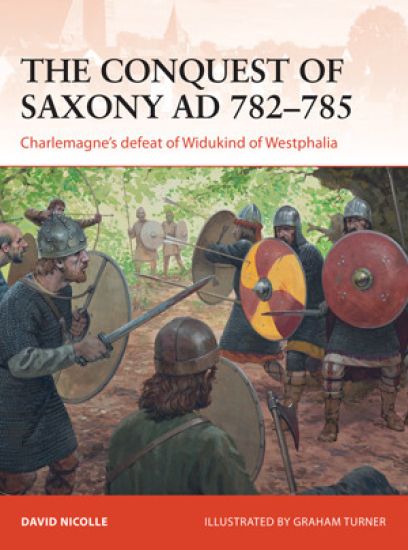
A detailed account of the key years that saw Charlemagne take personal command and finally subjugate the Saxons - one of the most epic campaigns of his long reign.Charlemagne's conquest of the Saxons was the hardest fought and most protracted of his wars; it involved 18 campaigns spread across 33 years, a great deal of lower-level fighting and the harshest final peace settlement that Charlemagne ever imposed upon a defeated foe. Rapidly taking on the character of a religious conquest from its outset, it also became the most important of all Charlemagne's wars for the future direction and character of European history and began the long process of uniting the German-speaking peoples.With extensive photographs, full colour artworks, maps and bird’s-eye-views, this volume unravels the initial stages of a convoluted sequence of events that led to the conquest of the Saxons and ultimately Charlemagne’s consolidation of Saxony into the greater Carolingian Empire.
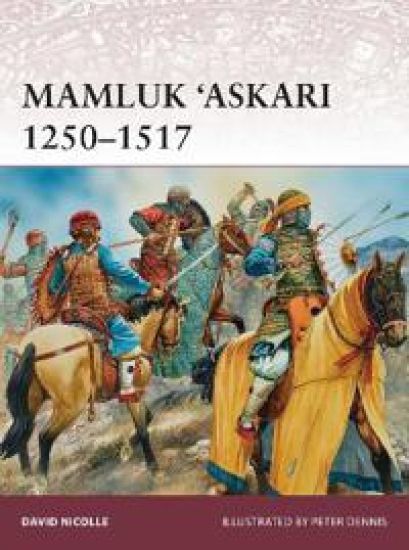
New archaeological material and research underpins this extensive, detailed and beautifully illustrated account of the famous Mamluk Askars who are credited with finally defeating and expelling the Crusaders, halting the Mongol invasion of the Islamic Middle East, and facing down Tamerlane. Probably the ultimate professional soldiers of the medieval period they were supposedly recruited as adolescent slaves, though recent research has begun to undermine this oversimplified interpretation of what has been called the "Mamluk phenomenon".