

Kirjahaku
Etsi kirjoja tekijän nimen, kirjan nimen tai ISBN:n perusteella.
1000 tulosta hakusanalla David Nielsen

The acquisition history and the technical specifics of the Mauser rifles and carbines sold to Chile from 1895 to 1935 As part of its rise as a regional South American power, Chile chose to emulate the highly successful Prussian military system in the last decades of the 19th century. Prior conflicts and the prospect of war with Argentina, which came to a head in the early 1890s, can be seen as the pretext for Chile’s purchase of "Prussian" military equipment, including Mauser rifles and Krupp cannons. This book summarizes important regional events, while also offering a general historical overview of Mauser developments. It will then proceed to expose the particulars of Chile’s Mausers, purchases that resulted in the Model 1895, 1912, and 1935. Also detailed are the technical specifics of each of these three models and the historical events surrounding their acquisition. The result is the first comprehensive attempt at documenting these important artifacts and events.

As a formative exemplar of early architectural modernism, Bruno Taut’s seminal exhibition pavilion the Glashaus (literally translated Glasshouse) is logically part of the important debate of rethinking the origins of modernism. However, the historical record of Bruno Taut’s Glashaus has been primarily established by one art historian and critic. As a result the historical record of the Glashaus is significantly skewed toward a singlular notion of Expressionism and surprisingly excludes Taut’s diverse motives for the design of the building. In an effort to clarify the problematic historical record of the Glashaus, this book exposes Bruno Taut’s motives and inspirations for its design. The result is that Taut’s motives can be found in yet unacknowledged precedents like the botanical inspiration of the Victoria regia lily; the commercial interests of Frederick Keppler as the Director of the Deutche Luxfer Prismen Syndikat; and imitation that derived openly from the Gothic. The outcome is a substantial contribution to the re-evaluation of the generally accepted histories of the modern movement in architecture.

As a formative exemplar of early architectural modernism, Bruno Taut’s seminal exhibition pavilion the Glashaus (literally translated Glasshouse) is logically part of the important debate of rethinking the origins of modernism. However, the historical record of Bruno Taut’s Glashaus has been primarily established by one art historian and critic. As a result the historical record of the Glashaus is significantly skewed toward a singlular notion of Expressionism and surprisingly excludes Taut’s diverse motives for the design of the building. In an effort to clarify the problematic historical record of the Glashaus, this book exposes Bruno Taut’s motives and inspirations for its design. The result is that Taut’s motives can be found in yet unacknowledged precedents like the botanical inspiration of the Victoria regia lily; the commercial interests of Frederick Keppler as the Director of the Deutche Luxfer Prismen Syndikat; and imitation that derived openly from the Gothic. The outcome is a substantial contribution to the re-evaluation of the generally accepted histories of the modern movement in architecture.
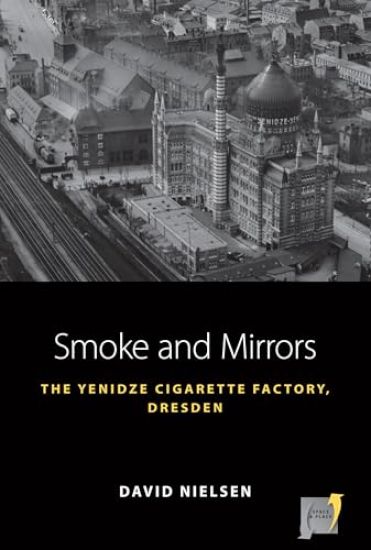
The Yenidze Cigarette Factory of 1909 was constructed as an industrial, architectural object that advertised Dresden as a center for the tobacco trade. Born from a unique client-architect relationship between Hugo Zietz and Martin Hammitzsch, the factory’s importance to modernism has been understated. Smoke and Mirrors uncovers the history of the factory’s planning, design, and construction, and for the first time, apart from the building’s historical narrative, positions this addition to Dresden’s skyline within the formative histories of the modern movement.
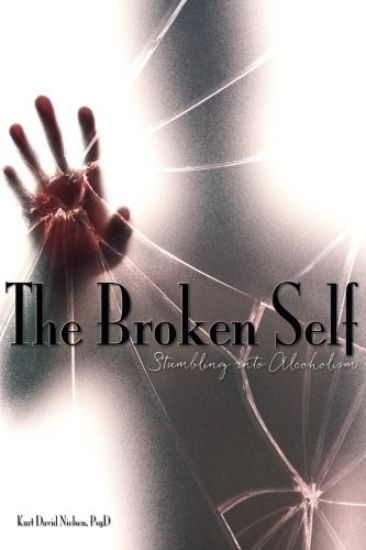
The Broken Self: Stumbling into alcoholism
Kurt David Nielsen Psyd
Createspace Independent Publishing Platform
2014
nidottu
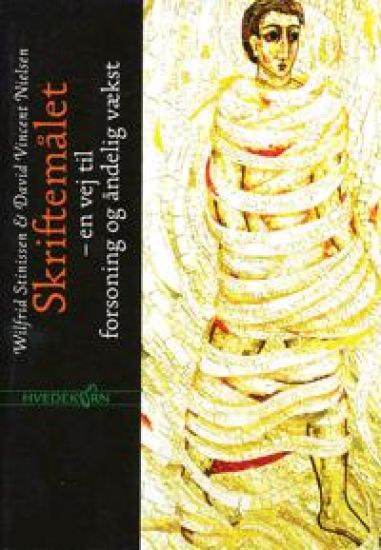
Længslen efter forsoning og åndelig vækstligger dybt i mennesket. Denne bog viser hen til det kristne svar på disse længsler: forsoningens sakramente (skriftemålet) og åndelig vækst gennem regelmæssig samvittighedsransagelse. Forsoningens sakramente er Guds udstrakte hånd, men vi skal gribe den for at kunne modtage Hans hjælp. Det er ofte sværere, end man tror, og skriftemålet hører da også til dem af Kirkens gode tilbud, der ikke værdsættes efter fortjeneste. Det kan have flere grunde, som broder Wilfrid Stinissen OCD i sit bidrag til denne bog også kommer ind på, men det er ikke desto mindre synd og skam. Skriftemålet trænger til at blive genopdaget. En af grundene til, at skriftemålet ikke rigtig værdsættes, er måske, at vi har vænnet os af med at pleje det åndelige liv, vænnet os af med at se åndelig vækst som en opgave for enhver af os. Her lever vi for tiden i en overgangstid, for personlig, åndelig vækst er på ny blevet et tema i offentligheden. Kirken råder på dette punkt over en stor rigdom af spirituelle traditioner, der kan hjælpe og støtte sand åndelig vækst. En af de vigtigste og mest effektive af disse traditioner går tilbage til Sankt Ignatius af Loyola, og det er den, broder David Vincent Nielsen OCD øser af i sit bidrag om samvittighedsransagelse og åndelig vækst. Bogen afsluttes med to skriftespejle og ritualet for skriftemål.
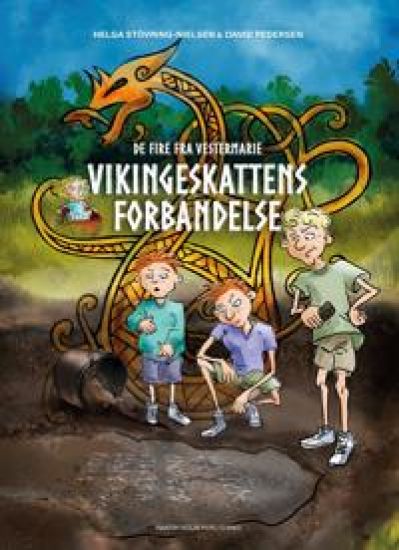
Roar har fået lov til at hjælpe Bornholms Museum med en arkæologisk udgravning lidt udenfor byen Vestermarie. En eftermiddag, hvor han har sine tre søskende med, er udgravningen helt øde og forladt. Roar - og Helge, Bjørn og Ingeborg - finder spor efter nogle mærkelige hændelser, og de finder en stor sten med nogle mystiske tegn på. Samme aften bliver museets udgravningshold fundet sovende - i en mystisk koma. De fire søskende forsøger at gå til politiet med deres opdagelser fra dagen før, men de bliver ikke taget seriøst. Med Roar i spidsen beslutter børnene selv at opklare dette mysterium. Hvad er der sket med udgravningsholdet? Hvad betyder de mærkelige tegn på stenen? Og hvorfor foregår det hele her i Vestermarie? Mysteriet trækker tråde langt tilbage til de nordiske guder - og sætter børnene på sporet af en forbandet vikingeskat. Efterskrift om de rigtige skatte fundet ved Vestermarie og området omkring Smørenge. Skrevet af René Laursen, museumsassistent ved Bornholms Museum.
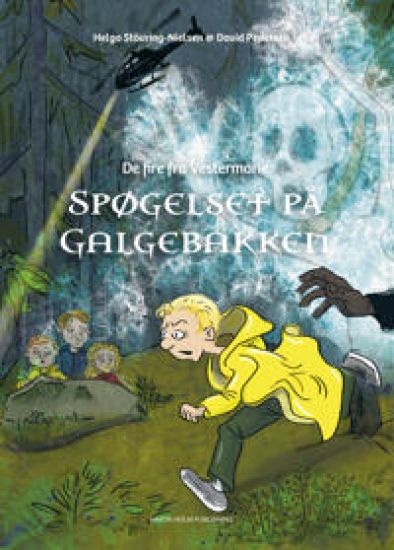
De fire fra Vestermaries farmor oplever noget mystisk, da hun en mørk efterårsaften skal køre alene hjem igennem Vestermarie plantage. Hun tror hun har mødt spøgelset fra galgebakken. De voksne i familien tror farmoren er ved at blive gammel og har set syner, men børnene beslutter at lade tvivlen komme hende til gode. Aftenen efter går de fire på spøgelsesjagt, men da det går op for dem, ar det ikke er de udøde, de skal være bange for i mørket, så er det allerede for sent.Med efterskrift af den sande historie om mordet i Vestermarie. Bogen er på 112 sider og med illustrationer af Engelke Toklum.Målgruppe:Velegnet til børn og unge på 10-14 år. Eller som højtlæsning for lidt yngre.

After the death of Mahler in 1911 the great Austro-German symphonic line was carried on mainly in England, America, Scandinavia and Russia. The Fifth Symphony of Carl Nielsen, Denmark's greatest composer, was composed in 1921–2. David Fanning discusses its place within the symphonic tradition since Beethoven, revealing the personal background to the work and taking full account of the extensive Danish commentaries, including the composer's own, which are given in English for the first time. In an absorbing analysis of the music he lays bare the origins of its images of inertia, anxiety and collapse in Nielsen's tone poems and incidental music for the theatre. Insights are offered into the symphony's 'progressive tonality' and its relationship to traditional structural models.
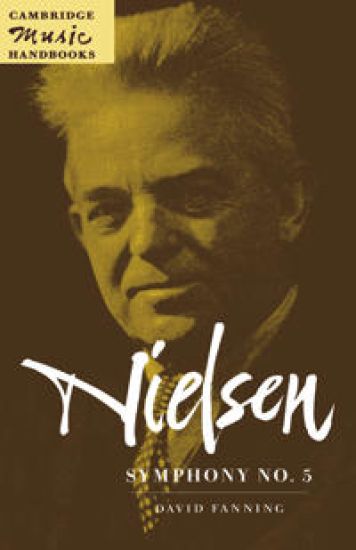
After the death of Mahler in 1911 the great Austro-German symphonic line was carried on mainly in England, America, Scandinavia and Russia. The Fifth Symphony of Carl Nielsen, Denmark’s greatest composer, was composed in 1921–2. David Fanning discusses its place within the symphonic tradition since Beethoven, revealing the personal background to the work and taking full account of the extensive Danish commentaries, including the composer’s own, which are given in English for the first time. In an absorbing analysis of the music he lays bare the origins of its images of inertia, anxiety and collapse in Nielsen’s tone poems and incidental music for the theatre. New insights are offered into the symphony’s ‘progressive tonality’ and its relationship to traditional structural models.

This documented journey follows a 22-year-old New Zealand soldier who departed New Zealand destined for the shores of Italy in World War II. Using notes, Private Nielsen's letters, photographs, maps, research and experiencing first-hand the terrain of the Italian battlefields, David Nielsen tracks his father's journey to Italy and beyond. David explains how his father initially did not really like to talk about the war but as time went by, David learnt how to ask careful questions and with respectful prompting, his story began to come forth. He and his Dad marked up a big map of Italy to record the places he went - this was also the first time he spoke in detail about his experiences, and also marked the beginning of One Man's War: Private Nielsen in Italy. After the passing of his father, David completed his story through many years of research, compiling notes and collating his father's letters. Finally, a trip to Italy in 2017 allowed him to experience first-hand the places his father had told him about. The history of World War II may have been well recorded, however the soldiers' experiences will soon no longer be heard first-hand. As this era of brave men pass on, preserving their memories is as important as history itself. Private E.R. Nielsen served as a radio operator with New Zealand 21 Battalion as part of the 2nd NZ Expeditionary Force Division, British 8th Army. Private Nielsen's experiences include the night of the final battle for Monte Cassino, where he crossed the Liri Valley with 21 Battalion and headed up into the hills towards the Gustav Line, a prepared German defence line spanning the width of Italy.

The Essential Handbook of Ground-Water Sampling
David M. Nielsen; Gillian Nielsen
CRC Press
2017
sidottu
Tremendous improvements in ground-water sampling methodologies and analytical technologies have made it possible to collect and analyze truly representative samples to detect increasingly lower levels of contaminants—now in the sub-parts-per-billion range. Though these new methods produce more accurate and precise data and are less expensive, many companies and government agencies are reluctant to update their sampling protocols and regulations claiming the transition would be too costly.The Essential Handbook of Ground-Water Sampling clearly details the economic and scientific case for adopting these new methodologies. Citing examples of unnecessary expenditure due to the inaccuracy of out-dated techniques, the editors point out that the expense of making incorrect decisions based on poor quality samples clearly negates any savings that might be realized by using older, more inefficient, and effectively short-sighted, methods. Using numerous figures, tables, and references to recent research, the editors explain the efficiency of utilizing newer, more accurate, techniques that produce higher quality data. The text provides a detailed discussion of every aspect of ground-water sampling from the development of a sampling and analysis plan, through sample collection, pre-treatment, handling, shipping, and analysis, to the documentation, interpretation, and presentation of ground-water quality data. Successful sampling events and accurate data provide a sound foundation for making important, potentially expensive decisions regarding site monitoring, risk assessment, remediation, and closure. Armed with the information presented in this handbook, environmental professionals will be able to make sound technological and economic decisions regarding the choice of sampling equipment, methodologies, and procedures to meet their site-specific objectives and ensure the success of their ground-water sampling programs.

The Essential Handbook of Ground-Water Sampling
David M. Nielsen; Gillian Nielsen
CRC Press Inc
2006
nidottu
Tremendous improvements in ground-water sampling methodologies and analytical technologies have made it possible to collect and analyze truly representative samples to detect increasingly lower levels of contaminants—now in the sub-parts-per-billion range. Though these new methods produce more accurate and precise data and are less expensive, many companies and government agencies are reluctant to update their sampling protocols and regulations claiming the transition would be too costly.The Essential Handbook of Ground-Water Sampling clearly details the economic and scientific case for adopting these new methodologies. Citing examples of unnecessary expenditure due to the inaccuracy of out-dated techniques, the editors point out that the expense of making incorrect decisions based on poor quality samples clearly negates any savings that might be realized by using older, more inefficient, and effectively short-sighted, methods. Using numerous figures, tables, and references to recent research, the editors explain the efficiency of utilizing newer, more accurate, techniques that produce higher quality data. The text provides a detailed discussion of every aspect of ground-water sampling from the development of a sampling and analysis plan, through sample collection, pretreatment, handling, shipping, and analysis, to the documentation, interpretation, and presentation of ground-water quality data. Successful sampling events and accurate data provide a sound foundation for making important, potentially expensive decisions regarding site monitoring, risk assessment, remediation, and closure. Armed with the information presented in this handbook, environmental professionals will be able to make sound technological and economic decisions regarding the choice of sampling equipment, methodologies, and procedures to meet their site-specific objectives and ensure the success of their ground-water sampling programs.
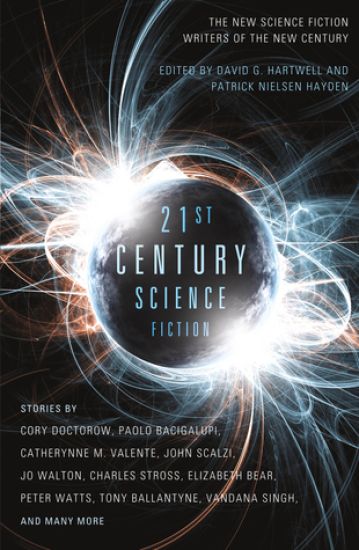
Twenty-First Century Science Fiction
Hartwell David G.; Hayden Patrick Nielsen
Tor Books
2014
nidottu
Twenty-First Century Science Fiction is an enormous anthology - close to 250,000 words - edited by two of the most prestigious and award-winning editors in the SF field and featuring recent stories from some of science fiction's greatest up-and-coming authors. David Hartwell and Patrick Nielsen Hayden have long been recognized as two of the most skilled and trusted arbiters of the field, but Twenty-First Century Science Fiction presents fans' first opportunities to see what their considerable talents come up with together, and also to get a unique perspective on what's coming next in the science fiction field. The anthology includes authors ranging from bestselling and established favourites to incandescent new talents including Paolo Bacigalupi, Cory Doctorow, Catherynne M. Valente, John Scalzi, Jo Walton, Charles Stross, Elizabeth Bear, and Peter Watts, and the stories selected include winners and nominees of all of the science fiction field's major awards.

The World Cut Out with Crooked Scissors – Selected Prose Poems
Carsten René Nielsen; David Keplinger
Western Michigan University, New Issues Press
2007
nidottu
Born in 1966, Nielsen works as a full time writer in Aarhus, the second largest Danish city, an academic and cultural center located on the peninsula of Jutland. Aarhus is also the home of the Grauballe Man, a bog man 2000 years old and displayed year round at Moesgaard Museum in a wooded area south of the city. This man, his cut open throat, his fractured shin, his beard stubble, his skin--even his fingerprints--preserved by the tannins of the bog, though flattened by its tremendous weight, lies displayed under glass, a ghastly testament to our common tribal past. I find in Nielsen's poems a similar spectacle--the little glass box of form, and, within, something old, nasty, fascinating, human.
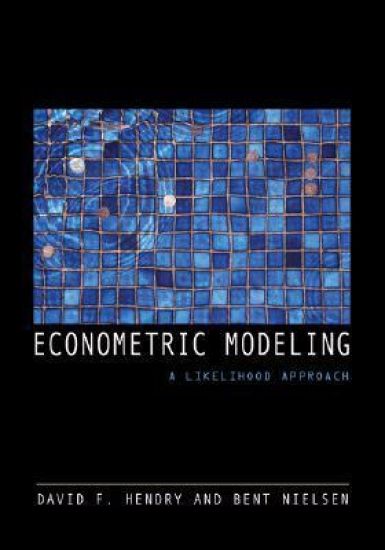
Econometric Modeling provides a new and stimulating introduction to econometrics, focusing on modeling. The key issue confronting empirical economics is to establish sustainable relationships that are both supported by data and interpretable from economic theory. The unified likelihood-based approach of this book gives students the required statistical foundations of estimation and inference, and leads to a thorough understanding of econometric techniques. David Hendry and Bent Nielsen introduce modeling for a range of situations, including binary data sets, multiple regression, and cointegrated systems. In each setting, a statistical model is constructed to explain the observed variation in the data, with estimation and inference based on the likelihood function. Substantive issues are always addressed, showing how both statistical and economic assumptions can be tested and empirical results interpreted. Important empirical problems such as structural breaks, forecasting, and model selection are covered, and Monte Carlo simulation is explained and applied. Econometric Modeling is a self-contained introduction for advanced undergraduate or graduate students. Throughout, data illustrate and motivate the approach, and are available for computer-based teaching. Technical issues from probability theory and statistical theory are introduced only as needed. Nevertheless, the approach is rigorous, emphasizing the coherent formulation, estimation, and evaluation of econometric models relevant for empirical research.
21st Century Science Fiction
David G. Hartwell; Patrick Nielsen Hayden
Constable And Robinson
2013
pokkari
Ambitious, definitive ... the best short-form SF published this century so far.

George John Beto (1916-1991) is best known for his contributions to criminal justice, but his fame is not limited to this field. ""Walking George"", authored by two of his former students, David M. Horton and George R. Nielsen, examines the entire life of Beto and his many achievements in the fields of both education and criminal justice - and how he wedded the two whenever possible. Beto initially studied to become a Lutheran pastor but instead was called to teach at Concordia Lutheran College in Austin, Texas. His successes there led him to revitalize a seminary in Springfield, Illinois, for three years, after which he left to become the director of the Texas Department of Corrections. Beto had no formal training in corrections, but during his years in Austin, he had served on the Texas Prison Board, a volunteer board that supervised the entire prison system. During his ten-year term as the director of the Texas Department of Corrections, Beto spearheaded many education and reform programs aimed at rehabilitating inmates. Most notable was his effort in 1969 to establish the Windham school district for educating inmates, the first of its kind at any prison in the United States. Beto's predilection to show up on foot in front of a given Texas prison, at all hours of the day and night, ready for an inspection and tour, earned him the nickname ""Walking George."" After retiring as head of the Texas prison system in 1972, he became a professor at Sam Houston State University's College of Criminal Justice until 1991. His leadership and participation propelled it to become the most esteemed program in the country.

The Origins of All Things
David A.T. Harper; Ole Seberg; Jan Audun Liljeroth Rasmussen; Anthony D. Barnosky; Arden Roy Bashforth; Mary L. Berbee; Meredith Blackwell; Gilles Cuny; Tais W. Dahl; Danny Eibye-Jacobsen; Jon Fjeldså; M. Thomas P. Gilbert; Michael Houmark-Nielsen; Henning Haack; Eline Lorenzen; Nina Lundholm; Jesper Milàn; Gitte Petersen; Minik Rosing; Hannes Schroeder; Svend Stouge; Martin V. Sørensen; Lars Vilhelmsen; Colin N. Waters; Mark Williams; Jan Zalasiewicz
Gyldendal
2023
sidottu
This book invites the reader to take a unique journey through the history of the Solar System, the Earth, its evolving biodiversity and ecosystems, and the current state of the planet. It is an attempt to stimulate the reader’s sense of wonder and fascination with our planet: how it was created, the eons before it was populated by ourselves, how organic life, including humans, developed and evolved, and some of the threats we face during the Late Holocene. The Origins of All Things is well suited for teaching purposes, as it offers a synoptic, well-supported overview of key issues in biology and geology, and an easy introduction to key publications that broaden the scope of each chapter. The book is relevant for students of biology, geography, geology and anyone interested in the origin of life on Earth and its evolution.