In this new biography of Jane Austen, David Nokes plays master sleuth and storyteller in presenting the great novelist 'not in the modest pose which her family determined for her, but rather, as she most frequently presented herself, as rebellious, satirical, and wild'.
'Pictures of perfection make me sick and wicked,' Jane Austen wrote to her niece Fanny Knight a few months before she died. Yet most traditional accounts of Austen's life have insisted on portraying her as just such a picture of perfection. In his 1997 biography David Nokes re-examined Austen, and presented a far richer and livelier picture of the woman who once wrote in another of her letters, 'If I am a wild beast, I cannot help it ...'.'A fine book, probably the best tribute to the genius of Jane.' Glasgow Herald'[This book] cries out to be read, not alone by fans of Jane Austen but by anyone who enjoys a great, witty, gossipy read.' Irish Times'What fun Nokes's book is.' Fay Weldon, Independent'David Nokes is assertive, energetic, opinionated, satirical, supremely confident, dramatising and gleefully splenetic.' Hermione Lee
David Nokes presents a gripping and authoritative portrait of Swift in his multifarious roles as satirist, politician, churchman and friend. Drawing on the most recent scholarship, he seeks in particular to re-establish a proper balance between Swift's public and private lives.'The best biography of Swift to date.' Michael Foot, Observer'David Nokes's book is splendid.' Denis Donoghue, London Review of Books'Should remain the standard one-volume Life for years to come.' New York Times
First published in 1995, David Nokes' major biography of John Gay (1685-1732) was the first full-length life of Gay for over fifty years, and drew on hitherto unpublished letters. Presenting Gay as a complex character, torn between the hopes of court preferment and the assertion of literary independence, Nokes offers both a lively and accessible read for the non-specialist and a comprehensive scholarly study. Best-known for The Beggar's Opera, Gay is here revealed as a contradictory figure. Nokes argues that Gay's self-effacing and self-mocking literary persona was largely responsible for perpetuating an image of himself as a genial literary non-entity. Often cast as a neglected genius, dependent on others, he in fact left a considerable fortune after his death. Depicted by his friends as both a childlike innocent and a rakish ladies' man, he produced the most successful and subversive theatrical satire of his generation, and volumes of bestselling Fables.
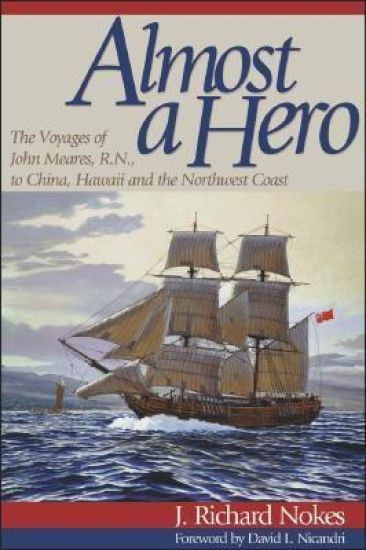
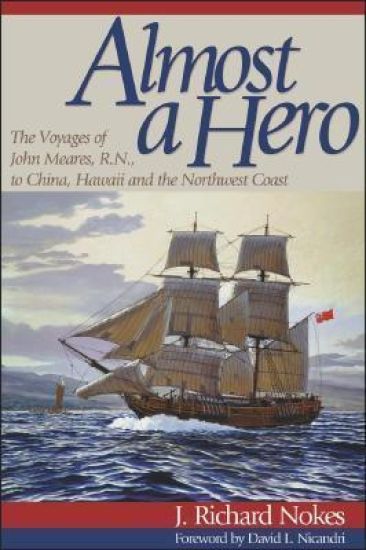
Beginning in 1786, Captain John Meares of Great Britain bravely explored and charted routes in the North Pacific, but his bold attempt to dominate the rich new fur trade between the Northwest Coast and Asia was frustrated when the Spanish navy seized his ships off Vancouver Island in 1789. His appeal to Parliament nearly resulted in war between England and Spain. Meares also built the first ship on the Northwest Coast and brought the first Chinese and a Hawaiian prince to the area, but missed the opportunity to explore Puget Sound or discover the Columbia River. Hence, he was "almost a hero."Meares' story is a fascinating glimpse into the period when the great European maritime powers and the newly-established United States vied for geographical knowledge, empire, and control of the Indian fur trade.
Beginning in 1786, Captain John Meares of Great Britain bravely explored and charted routes in the North Pacific, but his bold attempt to dominate the rich new fur trade between the Northwest Coast and Asia was frustrated when the Spanish navy seized his ships off Vancouver Island in 1789. His appeal to Parliament nearly resulted in war between England and Spain. Meares also built the first ship on the Northwest Coast and brought the first Chinese and a Hawaiian prince to the area, but missed the opportunity to explore Puget Sound or discover the Columbia River. Hence, he was "almost a hero."Meares' story is a fascinating glimpse into the period when the great European maritime powers and the newly-established United States vied for geographical knowledge, empire, and control of the Indian fur trade.
Title: The History of Norway Maine] etc.Publisher: British Library, Historical Print EditionsThe British Library is the national library of the United Kingdom. It is one of the world's largest research libraries holding over 150 million items in all known languages and formats: books, journals, newspapers, sound recordings, patents, maps, stamps, prints and much more. Its collections include around 14 million books, along with substantial additional collections of manuscripts and historical items dating back as far as 300 BC.The HISTORY OF COLONIAL NORTH AMERICA collection includes books from the British Library digitised by Microsoft. This collection refers to the European settlements in North America through independence, with emphasis on the history of the thirteen colonies of Britain. Attention is paid to the histories of Jamestown and the early colonial interactions with Native Americans. The contextual framework of this collection highlights 16th century English, Scottish, French, Spanish, and Dutch expansion. ++++The below data was compiled from various identification fields in the bibliographic record of this title. This data is provided as an additional tool in helping to insure edition identification: ++++ British Library Noyes, David; 1852. 8 . 10411.f.19.
This is a comprehensive glossary with over 300 entries to aid readers of David Copperfield by Charles Dickens. It provides information and definitions for terms (or even actual things) that were familiar to readers during Dickens' time but are no longer used or known. Simply written derivations are provided for most words. To accommodate the different editions of David Copperfield, words are listed alphabetically by chapter, with an alphabetical word list in the back for reference.
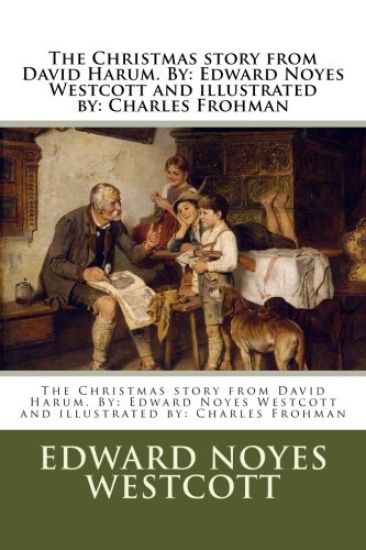
Edward Noyes Westcott (September 27, 1846 - March 31, 1898) was an American banker and writer. Westcott is best known for his book David Harum, a novel set in upstate New York. When he was afflicted with chronic tuberculosis in 1895, he was forced to take an extended leave from work, and during that period he wrote David Harum. The manuscript was rejected by several publishers before it came to Ripley Hitchcock at Appleton in December 1897. With Westcott's permission Ripley made a few minor changes to the book which subsequently became a bestseller
David E. Harpool served as the pastor at Antioch Missionary Baptist Church in Wichita, KS from 1958 to 1971. In 1971, Harpool resigned in order to complete mission work in the Wichita area. In 1973, Harpool returned to Antioch MBC as pastor where he would serve until retirement in 1992.After going home to be with The Lord in 2009, he left behind a good amount of study tools and notes. With a doctorate in Bible languages, these notes and messages are extremely powerful, and provide a glimpse into the knowledge and ability Harpool used to spread the gospel for many years. In this book, one can find a wide variety of messages, studies, and lectures used and constructed by Harpool. The content was produced by David Harpool, and was complied into a book by his grandson, Logan Harpool, in 2018.
This book is a landmark work on the life of King David. The author presents a goldmine of insight on the character, heart and walk of David before God. However rejected, however misunderstood, however broken David was, He stood immovable in His life before God. The most important takeaway is the practical truth that we can walk after God in the same way.