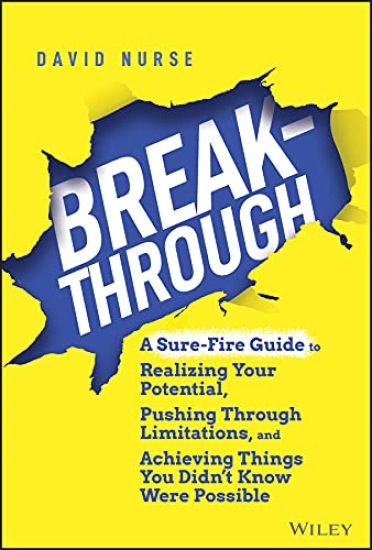
Deliver innovative results like clockwork with this repeatable formula for creativity-on-demand Have you ever sat down at your desk with an impossible deadline or an insurmountable obstacle staring you directly in the face and an expectation that you’ll come up with a groundbreaking idea and solution? In Breakthrough, you’ll find a powerful framework for bringing innovation and creativity to the surface not just once, but on a regular, daily basis. In Breakthrough, bestselling author, acclaimed speaker, and life optimization coach David Nurse provides an actionable and clearly organized structure for maximizing your breakthrough ideas. Breakthrough outlines easy-to-follow steps for outperforming your potential: An accessible blueprint—backed by scientific data and years of case studies with the top athletes, entrepreneurial minds, and leaders throughout the world—to unlocking your creative potentialConclusive proof that busts the myths of the lone genius, unpredictable ‘a-ha’ lightbulb moments, and little happy accidentsWays to promote an environment and mindset in which groundbreaking new ideas can flow and occur naturally and seamlessly based on a repeatable formula A must-read for any athlete, manager, executive, or parent tasked with delivering dynamic results in a flash, Breakthrough also belongs on the bookshelves of product design professionals, marketers, and other creative types who seek to consistently exceed expectations. Breakthrough is not about going from good to great; it’s about going from great to outstanding!
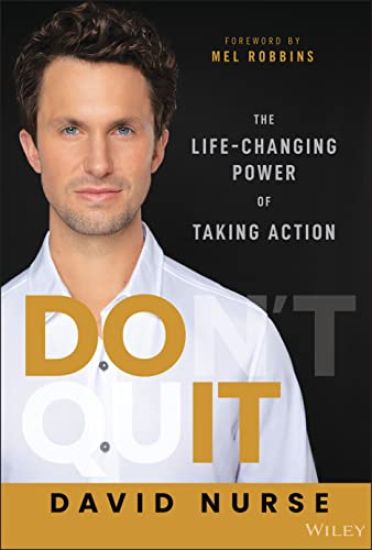
Demolish roadblocks, take action, and transform your future No matter what is holding you back, Do It offers a proven solution to actualizing the life you long for. Author and renowned mindset specialist, David Nurse, reveals the nine reasons that you don’t take action, how to successfully overcome your personal roadblocks, and the secret to achieving remarkable results. The reason you aren’t accomplishing your dreams is not because you don’t want to; it’s because you don’t know how to. And the reason you don’t know how to is not because you aren’t capable or smart enough. It’s simply because you—and 99% of the population—have roadblocks you are completely unaware of. Before you can conquer the enemy, you must identify the enemy. Based on extensive research studies, the science of the heart and mind connection, and captivating examples throughout history, Do It reveals the enemy that is holding you back—what Nurse calls your “action archetype.” These arechetypes include The Allodaxophobic, The Burned, The Blamer, The Perfectionist, and more. Through the nine archetypes, you’ll learn profound lessons about yourself and you'll come away: A newfound awareness about what holds you backPowerful, actionable tools to propel you forwardStories of influential people who have overcome their own roadblocks to achieve extraordinary success Nurse’s revolutionary philosophy will completely reshape the way you think about failure and success and propel you to levels you didn't even imagine were possible—all through the life-changing habit of taking action.
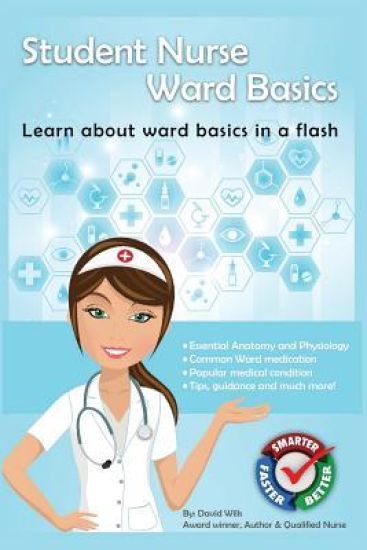
The ESSENTIAL student nurse ward basics is an easy to read book that takes the student nurse through all the basic essentials they need to know about working within the hospital. David Wills is a registered general nurse with over 23 years healthcare experience and feels that it's time to learn the basics via the simplest method and will guide you through everything you need to know before starting work within a hospital ward. This will give you a serious head start and will put your way out in front of your colleagues when it comes to drug, ward and medical knowledge. They will be amazed at what you know and how quick you are learning. Below is a list of essentials you will easily be able to master within two weeks. The course will take the student nurse through the: -Most common drugs that are used within a hospital. -Most common medical complaints. -Essential anatomy and physiology. -Common abbreviations -Communication -Life as a student nurse
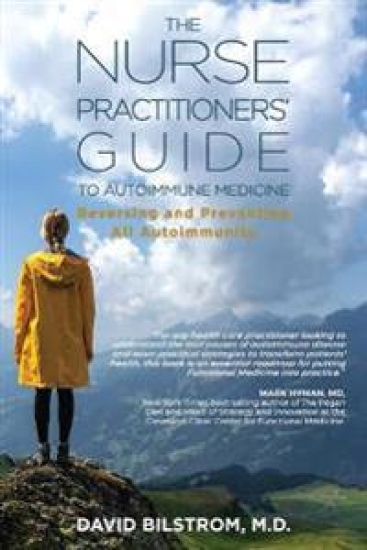
This book is for every NP who wants to change the world. Not only changing your local community and the world of the patients seen in your clinic every day but the world as a whole. How does one NP change the world? By being part of a revolution. The epidemic that is autoimmune disease is changing the world. The 50 million Americans alone with autoimmune disease (AD) already need a revolution. Now. The people who will get ADs, need a revolution. The next generations need a revolution. The revolution? Reversing and preventing AD. Holistically treating the person with the disease (and those who will get them), rather than only putting a bandaid on a specific symptom. So many chronic diseases are now known to involve immune dysregulation as well. Osteoporosis, cardiovascular disease, seizures, and even pain itself for example. Plus, the causes of AD tend to be the cause of all chronic disease. Reverse and prevent AD is reversing and preventing all disease. This will therefore also change the world that is the NP's own family. Parents, spouse, children, and grandchildren. Keeping your family as healthy as possible to allow you to more easily do your work as an NP. Every community needs practitioners that are experts in reversing and preventing AD. There are already plenty of people who are willing to prescribe medications with profound side effects (including cancer, life-threatening infections, and new ADs) for no more benefit than a short term control of a few symptoms. As more communities have this "expert" the revolution builds. Imagine reversing autoimmune disease. Imagine preventing 90% of Type 1 Diabetes, 50% of multiple sclerosis, and 82% of breast cancer (yes, cancer is an immune system issue as well).David Bilstrom, M.D. is a fellow of the American Academy of Integrative Medicine and American Academy of Medical Acupuncture as well as an advanced fellow in anti-aging, regenerative, and functional medicine. Dr. David Bilstrom is quadruple board certified in Anti-aging and Regenerative Medicine, Integrative Medicine, Physical Medicine & Rehabilitation, and Medical Acupuncture. Dr. Bilstrom is the director of the International Autoimmune Institute and the Bingham Memorial Center for Functional Medicine-the first medical center in the country associated with a teaching hospital to treat all types of autoimmune diseases. It is also the first to use nature and its ability to improve human health and well-being as an integral part of a wellness program. Dr. Bilstrom is devoted to educating medical professionals on the effectiveness of treating and preventing autoimmune disease rather than just symptom controlled medications that cause additional illness. Improving the patient's experience and quality of life.
Finalist for the 2023 Joyce Carol Oates Prize A new collection of stories by David Means, a visionary "master of the form" (The Observer). Two nurses meet in the hospital parking lot to share a cigarette. They flirt and imagine a future together. They tell stories of patients lost and patients saved, of the darkest corners of human suffering and the luminous moments that break through, even here, in the shadow of death. In David Means's virtuosic new collection, time unfolds in unexpected ways: a single, quiet moment swells with the echoes of a widower's complicated marriage; a dachshund, given a new name and a new life by a new owner, catches the scent of the troubled man who previously abandoned her; young lovers become old; estranged couples return to their vows; and those who have died live on in perpetuity in the memories of those whom they touched. The stories in this collection--which have won the O. Henry Prize and the Pushcart Prize, and have been featured in The Best American Short Stories--confirm the promise of a writer who "believes in the power of stories to rescue and redeem people" (Max Liu, Financial Times). A revelatory meditation on trauma and catharsis, isolation and communion, Two Nurses, Smoking reflects the dislocations and anguish of our age, as well as the humanity and humor that buoy us.
Finalist for the 2023 Joyce Carol Oates Prize A new collection of stories by David Means, a visionary "master of the form" (The Observer). Two nurses meet in the hospital parking lot to share a cigarette. They flirt and imagine a future together. They tell stories of patients lost and patients saved, of the darkest corners of human suffering and the luminous moments that break through, even here, in the shadow of death. In David Means's virtuosic new collection, time unfolds in unexpected ways: a single, quiet moment swells with the echoes of a widower's complicated marriage; a dachshund, given a new name and a new life by a new owner, catches the scent of the troubled man who previously abandoned her; young lovers become old; estranged couples return to their vows; and those who have died live on in perpetuity in the memories of those whom they touched. The stories in this collection--which have won the O. Henry Prize and the Pushcart Prize, and have been featured in The Best American Short Stories--confirm the promise of a writer who "believes in the power of stories to rescue and redeem people" (Max Liu, Financial Times). A revelatory meditation on trauma and catharsis, isolation and communion, Two Nurses, Smoking reflects the dislocations and anguish of our age, as well as the humanity and humor that buoy us.
Life-Flight-Teams are called to transport those in need of critical medical care to an institution capable of managing their condition. On occasion, life-altering events can be prevented from ever occurring, or measures may be taken by both patients and medical providers to reduce the impact these events have. This book was written for two reasons, to enlighten those curious about the flight-nurse profession and to share some take home lessons from these medical emergencies with the public, nurses, and EMS providers.The author is an acute care nurse practitioner for the Cleveland Metro Life Flight Team. After being asked frequently about his career as a life-flight nurse, David Kaniecki decided to answer this question by sharing his more memorable experiences as a life-flight nurse, linking each story to a teachable event. In his book, he describes many of his exciting adventures of critical care transport with various emergent disease processes. For those unfamiliar to critical care, he helps explain these diseases in an easy to understand format prior to sharing his story. David believes the greatest teaching methods are through real life experiences. After each story, he shares key lessons that can be taken away from these events.
Since the McMartin Preschool case in Manhattan Beach, California, many communities around the country have also been rocked by cases of sexual abuse of very young children in day care. While child welfare workers, prosecutors, and counselors have deliberated about how to respond to such cases, parents, day care staff, and state regulators have wondered whether day care was still a safe place for children. Now a new book addresses this disturbing problem, based on the first nationwide study of 270 cases of sexual abuse in day care. How could children be abused without their parents suspecting? How could trusted day care employees conceal abuse? Can offenders be screened from the ranks of day care employees? Can abusers be brought to justice without further trauma to the children? The authors, well known researchers in the field of child abuse, explore these questions and many others using a wealth of case material and careful analyses. Chapters cover incidence and dynamics, the impact on victims, disclosure and detection, the perpetrators, and the impact on local communities. Over 16 recommendations are forwarded for the prevention, detection, and investigation of these cases. Practitioners, researchers, policymakers, and students will benefit from the information provided in this long-awaited study. "I urge everyone who is concerned about the well being of children, both in day care and out, to obtain a copy of this [book], read it, and to use it. Its recommendations for parents, child care providers, policy makers, and government are both well-based on the researchers' findings and well-reasoned as practical, feasible responses." --John Chafee, United States Senator "Students and professionals researching the topic of sexual abuse of preschool-age children will welcome this well-documented study, which discusses the types of people who perpetrate such crimes and the characteristics of the victims (including risk factors). Case studies--with synopses of the abuse incidents--are presented in the search for answers to why these crimes happen, how they can be prevented, and what impact they have on the victims. Final chapters present the authors' recommendations as to how child abuse can be prevented. An excellent piece of research and analysis for larger public libraries." --Booklist "Written by our nation's premier workers in the field of sexual abuse, Nursery Crimes: Sexual Abuse in Day Care is an enlightening and thought-provoking book. . . a scholarly endeavor that culminates with pragmatic and concrete policy recommendations. This book is must reading for all researchers and policy makers interested in this important and timely topic." --Edward Zigler, Yale University "This is an incredibly important source book on the subject." --Journal of the Institute of Health Education "This volume examines the incidence of the problem, describes the perpetrators of this abuse, evaluates screening strategies for limiting their access to children, and describes the victims, abuse dynamics, and whether the characteristics of the facilities minimize the risk of child sexual abuse. The book also discusses the detection and disclosure process and the impact on children. . . . This book is an excellent resource for all professionals working in the child sexual abuse area, ranging from therapists to investigators to judicial personnel." --Contemporary Psychology "This research project marks an important step toward understanding abuse in day care, and the book extends its usefulness to researchers, educators, administrators, and policymakers, as well as parents. . . . In the midst of widespread fear and confusion about sexual abuse in day care, Nursery Crimes provides practical strategies for confronting this problem." --Criminal Justice Review
With a focus on chemistry and physics content that is directly relevant to the practice of anesthesia, this text--written in an engaging, conversational style--supplies all the scientific information required for the combined chemistry and physics course for nurse anesthesia students. Now in its third edition, the text is updated and reorganized to facilitate a greater ease and depth of understanding. The addition of a third author--a practicing nurse anesthetist--enhances the clinical relevance of the scientific information. Clinical scenarios now begin every chapter, and a concluding chapter, new to this edition, provides detailed, step-by-step solutions to the book's review questions. Also included is a comprehensive list of need-to-know equations. The third edition retains the many outstanding learning features from earlier editions, including a special focus on gases, the use of illustrations to demonstrate how scientific concepts relate directly to their clinical application in anesthesia, and end-of-chapter summaries and review questions to facilitate self-assessment. Fifteen online videos enhance teaching and learning, and abundant clinical application scenarios help reinforce scientific principles and relate them to day-to-day anesthesia procedures. This clear, easy-to-read text will help even the most chemistry- and physics-phobic students to master the foundations of these sciences and competently apply them in a variety of clinical situations. NEW TO THE THIRD EDITION: Increased focus on clinical relevance Revised and updated chapters foster ease of understanding Clinical application scenarios open each chapter A new chapter provides guidance about calculator use and a unique problem-solving method Detailed step-by-step solutions clarify answers to end-of-chapter problems Comprehensive list of all key equations with explanation of symbols KEY FEATURES: Written in an engaging, informal style for ease of understanding Focuses solely on chemistry and physics principles relevant to nurse anesthetists Provides end-of-chapter summaries and review questions Fifteen online videos enhance teaching and learning Includes abundant illustrations that apply theory to practice
How to be a Nurse or Midwife Leader is an indispensable guide for all nurses and midwives who wish to develop and improve their practice as leaders. Written in collaboration with the NHS Leadership Academy, this practical book draws on the real experience of over 10,000 nurses and midwives to bring leadership dilemmas to life in specific situations. Key learning features include: How to develop your self-awarenessHow to develop your personal impact and presenceHow to survive and thriveHow to get your message acrossHow to get the best out of othersHow to work with and lead other professionals and patientsHow to have courageous conversationsHow to balance conflicting demands and needs Containing exercises and reflective questions to help apply theory to leadership practice, How to be a Nurse or Midwife Leader is an ideal companion for all nurses and midwives, whether you are newly qualified, or stepping into a team leader role.
**Selected for 2025 Doody’s Core Titles® in Oncology** This new book covers the basics of oncology for all practitioners who are likely to provide health care to cancer patients, especially those who do not have an oncology or medical background. Cancer educator David O’Halloran provides a unique insight by bridging the gap between normal anatomy and what happens when cancer develops. Information is provided using a layered approach, starting with simple concepts of general cancer biology and moving through to more complicated aspects of specific tumour sites and cancer treatment. Easy to read and follow, Oncology: An Introduction for Nurses & Healthcare Professionals is written in such a way that non-specialist readers will quickly understand complex terminology and concepts, making them relatable and understandable for experienced and junior nurses alike. Logical and easy-to-follow approach Accessible language throughout - does not assume a prior level of knowledge Explains cancer terminology for non-experts Takes a graded approach to information to help learning Provides an understanding of cancer and how it progresses, how to link anatomy to the staging of cancer, and how to explain how modern cancer treatments work Invaluable in helping explain conditions and treatment to patients and families Self-assessment exercises throughout help test learning
A biographical history of the evolution of Developmentally Appropriate Practice, written by best-selling early childhood author David Elkind, PhD. Examine the evolution of developmentally appropriate practice with this biographical history of early childhood education. This book explores the theory's progression from its beginnings in writings of sixteenth- and seventeenth-century philosophers, its experimental implementation by eighteenth- and nineteenth-century practitioner, to its scientific grounding in contemporary theory and research. Included are biographical sketches and perspectives of eleven philosophical, pedagogical, and theoretical figures - the giants - whose contributions mark turning points in early childhood education.
Doctors, nurses and patients need to understand one another. With that in mind, this book describes the many characters they can each portray. In the first chapter, I describe 120 caricatures of doctors and nurses, together with many pertinent and amusing anecdotes, some of which are deadly serious.In the second chapter, I describe 70 patient types of patient, together with many illustrative anecdotes.In the third chapter, I explore the interrelationship between patients, doctors and nurses, and how they relate to medical bureaucracy. This is important now that it affects the morbidity and mortality of patients and the working conditions of nurses and doctors in the UK.When considered as characters, doctors, nurses and patients each play their role in different ways. How each doctor and nurse behaves can affect a patient's quality of life and also their morbidity and mortality. Doctors and nurses gain an advantage when they understand their patients well, and patients will benefit when they understand the difference, various types of doctor and nurse can make to their life. Doctors and nurses are not all equally effective when treating people, and patients deserve to know why this is. This book will not only enable doctors and nurses to better understand those they treat, it will also help patients decide who they should allow to treat them. Some doctors and nurses prefer to treat patients as numbers, others insist on treating patients as sentient human beings. Most specialist doctors now only treat specific problems, whereas once we had general physicians and surgeons capable of much more. Only GPs have kept their ability to treat all-comers. Although I refer mainly to doctors and nurses, I must acknowledge that many others care for patients. They include pharmacists, hairdressers, carers, counsellors, social workers, paramedics and friends. They should assume that they are all included in my descriptions. In the 1960s when I first worked as a junior doctor, patients had relationships with doctors that were more formal than today. Doctors then came from rich educated families, and many had experienced the work doctors did as members of their family. Those who practiced medicine had a vocation and were middle-class. Those who became nurses and doctors represented those given to public duty, and not to business. Their aim was to serve. Many would have pursued their vocation, even if their work had been unpaid. Things have changed considerably, but has it been for the better?The media and medical bureaucrats have made patients aware that every doctor is a potential Dr. Harold Shipman, and every nurse a potential Lucy Letby, until proven otherwise. The result has been that doctors and nurses have changed their approach to patients. Some now see patients as potential litigants. Everything doctors and nurses do now has a medico-legal dimension, with everything that is said or done, recorded and audited for the satisfaction of managers with MBAs and law degrees, many of whom should run baked-bean factories, not medical facilities. One unfortunate result has been that the focus of some nurses and doctors has had to move from patient care to consider the needs of the corporate management system controlling them. The actions of doctors and nurses has thus changed, and with it the doctor-patient and nurse-patient relationship, but not for the better. Bureaucracy has raised patient expectations, while the services they can access in the UK have become less. My hope is for patients, doctors and nurses to better understand one another. I have aimed to make the information provided both useful and amusing.