Kirjojen hintavertailu. Mukana 11 244 527 kirjaa ja 12 kauppaa.

Kirjahaku

Etsi kirjoja tekijän nimen, kirjan nimen tai ISBN:n perusteella.

1000 tulosta hakusanalla David Phillips; James Barber

Life And Scientific Legacy Of George Porter, The

Life And Scientific Legacy Of George Porter, The

David Phillips; James Barber

Imperial College Press
2006
sidottu
Sir George Porter (Lord Porter of Luddenham) was one of the most highly regarded and well known scientists in Britain. He was appointed Director of the Royal Institution in 1966, awarded a Nobel Prize in Chemistry in 1967, and was the only Director of the Royal Institution to later become President of the Royal Society (1985-1990). Porter had a marvellous gift for communicating his infectious enthusiasm for science, and as President of the Royal Society, he worked hard to improve the status of science, and employed his communication skills ably in the defence of British science under attack from inadequate government funding, of which he was fiercely critical.It was for his work on flash photolysis in Cambridge that ultimately led him to win the Nobel Prize. Together with Ronald Norrish and Manfred Eigen, he shared the 1967 Nobel Prize for Chemistry, for their work on techniques for observing and studying extremely fast chemical reactions during the processes of combustion, explosion and chain reaction.In this volume, his peers, former colleagues, students and friends — themselves highly regarded and well known scientists in their own right — come together to honour and celebrate the enormous contributions of this man. They comment on their respective personal and working relationships with Porter and on his work.The contributors include Mary Archer (University of Cambridge, UK), James Barber (Imperial College London, UK), Godfrey Beddard (University of Leeds, UK), Graham Fleming (University California, Berkeley, USA), Michael George (University of Nottingham, UK), Anthony Harriman (University of Newcastle Upon Tyne, UK), David Klug (Imperial College London, UK), Harry Kroto (University of Sussex, UK), Edward Land (Keele University, UK), A J MacRobert (University of College London, UK), David Phillips (Imperial College London, UK), Martyn Poliakoff (University of Nottingham, UK), F Sherwood Rowland (University of California, Irvine, USA), Brian Thrush (University of Cambridge, UK), George Truscott (Keele University, UK), James Turner (University of Nottingham, UK), Barry Ward (UK), Frank Wilkinson (Loughborough University of Technology, UK), Keitaro Yoshihara (Japan Advanced Institute of Science and Technology, Japan), and Ahmed Zewail (California Institute of Technology, USA).
Life And Scientific Legacy Of George Porter, The

Life And Scientific Legacy Of George Porter, The

David Phillips; James Barber

Imperial College Press
2006
nidottu
Sir George Porter (Lord Porter of Luddenham) was one of the most highly regarded and well known scientists in Britain. He was appointed Director of the Royal Institution in 1966, awarded a Nobel Prize in Chemistry in 1967, and was the only Director of the Royal Institution to later become President of the Royal Society (1985-1990). Porter had a marvellous gift for communicating his infectious enthusiasm for science, and as President of the Royal Society, he worked hard to improve the status of science, and employed his communication skills ably in the defence of British science under attack from inadequate government funding, of which he was fiercely critical.It was for his work on flash photolysis in Cambridge that ultimately led him to win the Nobel Prize. Together with Ronald Norrish and Manfred Eigen, he shared the 1967 Nobel Prize for Chemistry, for their work on techniques for observing and studying extremely fast chemical reactions during the processes of combustion, explosion and chain reaction.In this volume, his peers, former colleagues, students and friends — themselves highly regarded and well known scientists in their own right — come together to honour and celebrate the enormous contributions of this man. They comment on their respective personal and working relationships with Porter and on his work.The contributors include Mary Archer (University of Cambridge, UK), James Barber (Imperial College London, UK), Godfrey Beddard (University of Leeds, UK), Graham Fleming (University California, Berkeley, USA), Michael George (University of Nottingham, UK), Anthony Harriman (University of Newcastle Upon Tyne, UK), David Klug (Imperial College London, UK), Harry Kroto (University of Sussex, UK), Edward Land (Keele University, UK), A J MacRobert (University of College London, UK), David Phillips (Imperial College London, UK), Martyn Poliakoff (University of Nottingham, UK), F Sherwood Rowland (University of California, Irvine, USA), Brian Thrush (University of Cambridge, UK), George Truscott (Keele University, UK), James Turner (University of Nottingham, UK), Barry Ward (UK), Frank Wilkinson (Loughborough University of Technology, UK), Keitaro Yoshihara (Japan Advanced Institute of Science and Technology, Japan), and Ahmed Zewail (California Institute of Technology, USA).
A Long Way Home

A Long Way Home

William Beinart; Julia Charlton; David Coplan; Peter Delius; Jacob Dlamini; Patrick Harries; Michelle Hay; Deborah James; Sekibakiba Peter Lekgoathi; Jock McCulloch; Anitra Nettleton; Noor Nieftagodien; Laura Phillips; Dinah Rajak; Fiona Rankin-Smith; Micah Reddy; Jonny Steinberg

Wits University Press
2014
nidottu
In no other society in the world have urbanisation and industrialisation been as comprehensively based on migrant labour as in South Africa. Rather than focusing on the well-documented narrative of displacement and oppression, A Long Way Home captures the humanity, agency and creative modes of self-expression of the millions of workers who helped to build and shape modern South Africa.The book spans a three-hundred-year history beginning with the exportation of slave labour from Mozambique in the eighteenth century and ending with the strikes and tensions on the platinum belt in recent years. It shows not only the age-old mobility of African migrants across the continent but also, with the growing demand for labour in the mining industry, the importation of Chinese slaves. The essays and visual materials traverse homesteads, chiefdoms and mining hostels in their portrayal of migrant workers’ and their families’ attempts to maintain contact across large distances and uphold their rural customs, traditions and rituals in new spaces and locations. Together, they provide multiple perspectives on the lived experience of migrant labourers and celebrate their extraordinary journeys. A Long Way Home was conceived during the planning of an art exhibition entitled `Ngezinyawo: Migrant Journeys’ at the Wits Art Museum. The interdisciplinary nature of the contributions and the extraordinary collection of images selected to complement and expand on the text make this a unique collection.
Habits of Success

Habits of Success

Alinka Rutkowska; Amauche Chidozie; Andreas Schweitzer; Antony Gordon; Carl Worden; Chris Shockowitz; Christina Alva; David Solyomi; George Putnam; Gordon Wollman; Ingrid Dedecker; James D Shields; Jewel Grutman; Johnny Welsh; Joseph Clark; Joseph Laporta; Kathryn Eriksen; Kathy Oaks; Krishanthi Rondon Fuentes; Laura Gallaher; Lyndon Cerejo; Markus Pfeiler; Michael Middleton; Michelle Beyo; Mika Tienhaara; Moritz Davidesko; Muhammad Arif Anis; Patricia A Talbot; Patrick Thean; Paul L Gunn; Phillip John Campbell; Phillip Meade

Leaders Press SRL
2022
nidottu
For the sleeping giants of our workforce pursuing a more productive life, HABITS OF SUCCESS is an anthology illuminating the varieties of choices, habits and strategies that lead to the same goal: success. READING IS A KEY HABIT OF SUCCESS. FORM THE HABIT WITH ANOTHER STELLAR ANTHOLOGY FROM LEADERS PRESS As the world resumes from a year and a half of pandemic disruption, we find ourselves wondering what to do next? Should we go back to normal or move forward to better? How do we maximize our time and efforts to find our most successful selves? What habits will sustain that success the next time our world is shaken up? You will find these answers reading the brilliant contributors to HABITS OF SUCCESS. This anthology draws wisdom from over a dozen exceptional leaders, ranging from CEOs to Coaches to world-changers. Habits of Success presents a diverse array of habits that you may choose to suit your concept of success. Each chapter in Habits of Success will shed light on different methods for acquiring habits and how to utilize them on your path to success: Adopt the habit of understanding what success means to you. Practice the habit of taking risks, knowing when to diverge from the traditional path and experience the life you've always wanted to live. Thrive through the habit of adaptation to stay productive even as your world turns completely upside down. Develop daily habits of planning to improve collaborations with yourself, your coworkers, and your family. Embrace the habit of renewal as you evolve into this next chapter of life. As the world restarts, take this opportunity to assess the path you are on. Are you taking the most efficient path? How certain are you that success awaits and the end of this journey? Fortunately, habits are products of behavior. You can always adapt them to suit the situation and goals. What habits will accompany you on the next leg of your journey? Get a copy of Habits of Success and pave your path to success today
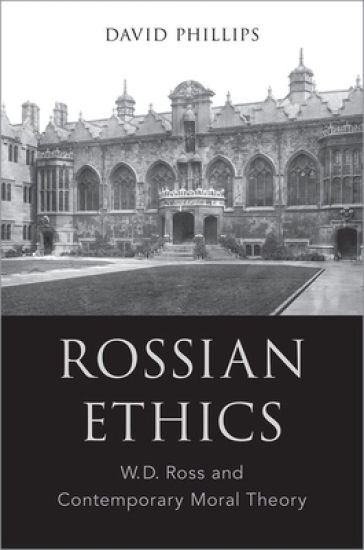
Rossian Ethics

Rossian Ethics

David Phillips

Oxford University Press Inc
2019
sidottu
W.D. Ross (1877-1971) was the most important opponent of utilitarianism and consequentialism in British moral philosophy between 1861 and 1939. In Rossian Ethics, David Phillips offers the first monograph devoted exclusively to Ross's seminal contribution to moral philosophy. The book has two connected aims. The first is to interpret and evaluate Ross's moral theory, focusing on its three key elements: his introduction of the concept of prima facie duty, his limited pluralism about the right, and his limited pluralism about the good. The metaethical and epistemological framework within which Ross develops his moral theory is the subject of the fifth and final chapter of the book. The second aim is to articulate a distinctive view intermediate between consequentialism and absolutist deontology, which Phillips calls "classical deontology." According to classical deontology the most fundamental normative principles are principles of prima facie duty, principles which specify general kinds of reasons. Consequentialists are right to think that reasons always derive from goods; ideal utilitarians are right, contra hedonistic utilitarians, to think that there are a small number of distinct kinds of intrinsic goods. But consequentialists are wrong to think that all reasons have the same weight for all agents. Instead there are a small number of distinct kinds of agent-relative intensifiers: features that increase the importance of certain goods for certain agents. Phillips claims that classical deontology combines the best elements of the moral theories of Ross and of Sidgwick, ultimately arguing that Ross is best interpreted as a classical deontologist.
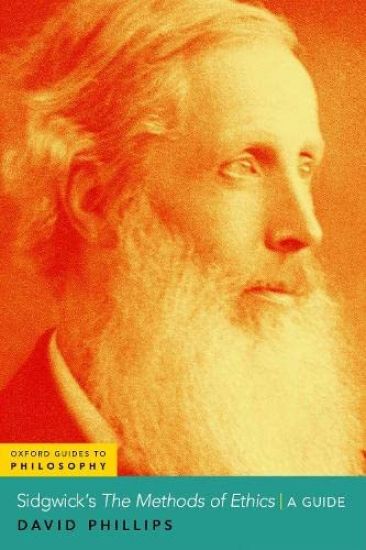
Sidgwick's The Methods of Ethics

Sidgwick's The Methods of Ethics

David Phillips

OXFORD UNIVERSITY PRESS INC
2022
sidottu
Henry Sidgwick's The Methods of Ethics has been a central part of the utilitarian canon since its publication in 1874. This book, part of the Oxford Guides to Philosophy series, is a consice companion to Sidgwick's masterpiece, written primarily to aid advanced undergraduate students and interested general readers in navigatiing and interpreting the original text. Author David Phillips connects Sidgwick's work to work in contemporary moral philosophy and in the history of moral philosophy, paying particular attention to his relationships with key predecessors, including Kant and Mill, and with Moore and Ross, his most influencial successors in the British intuitionist tradition. The book's first eight chapters end with brief suggestions for further reading. At the end of the final three chapters there are more substantial overviews of the secondary literature on the aspects of Sidgwick's work that have generated the most interest among his commentators: metaethics and moral epistemology; consequentialism versus deontology; and egoism and the dualism of practical reason. The result is an Oxford Guide that will be a helpful resource for both students and scholars.
Sidgwick's The Methods of Ethics

Sidgwick's The Methods of Ethics

David Phillips

OXFORD UNIVERSITY PRESS INC
2022
nidottu
Henry Sidgwick's The Methods of Ethics has been a central part of the utilitarian canon since its publication in 1874. This book, part of the Oxford Guides to Philosophy series, is a concise companion to Sidgwick's masterpiece, written primarily to aid advanced undergraduate students and interested general readers in navigating and interpreting the original text. Author David Phillips connects Sidgwick's work to work in contemporary moral philosophy and in the history of moral philosophy, paying particular attention to his relationships with key predecessors, including Kant and Mill, and with Moore and Ross, his most influential successors in the British intuitionist tradition. The book's first eight chapters end with brief suggestions for further reading. At the end of the final three chapters there are more substantial overviews of the secondary literature on the aspects of Sidgwick's work that have generated the most interest among his commentators: metaethics and moral epistemology; consequentialism versus deontology; and egoism and the dualism of practical reason. The result is an Oxford Guide that will be a helpful resource for both students and scholars.Â
Sidgwickian Ethics

Sidgwickian Ethics

David Phillips

Oxford University Press Inc
2011
sidottu
Henry Sidgwick's The Methods of Ethics is one of the most important books in the history of moral philosophy. But it has not hitherto received the kind of sustained scholarly attention its stature merits. David Phillips aims in Sidgwickian Ethics to do something that has (surprisingly) not been done before: to interpret and evaluate the central argument of the Methods, in a way that brings out the important conceptual and historical connections between Sidgwick's views and contemporary moral philosophy. Sidgwick distinguished three basic methods: utilitarianism, egoism, and dogmatic intuitionism. And he focused on two conflicts: between utilitarianism and dogmatic intuitionism and between utilitarianism and egoism. Sidgwick believed he could largely resolve the conflict between utilitarianism and dogmatic intuitionism, but could not resolve the conflict between utilitarianism and egoism. Phillips suggests that the best way to approach Sidgwick's ideas is to start with his views on these two conflicts, and with the metaethical and epistemological ideas on which they depend. Phillips interprets and largely defends Sidgwick's non-naturalist metaethics and moderate intuitionist moral epistemology. But he argues for a verdict on the two conflicts different from Sidgwick's own. Phillips claims that Sidgwick is less successful than he thinks in resolving the conflict between utilitarianism and dogmatic intuitionism, and that Sidgwick's treatment of the conflict between utilitarianism and egoism is more successful than he thinks in that it provides the model for a plausible view of practical reason.
Quality of Life

Quality of Life

David Phillips

Routledge
2006
sidottu
Quality of life is one of the most important issues facing the world today and is central to the development of social policy. This innovative book discusses this crucial topic, assessing the criteria for judging attempts to raise quality of life, including the satisfaction of basic and social needs, autonomy to enjoy life and social connectivity. It considers key topics such as:individual well-being and health-related quality of life human needs - living fulfilling and flourishing livespoverty and social exclusion social solidarity, altruism and trust within communities. Quality of Life is the first systematic presentation of this subject from both individual and collective perspectives. It provides a powerful overview of a concept which is becoming increasingly prominent in the social sciences and is essential reading for students of social policy, sociology and health studies.
Quality of Life

Quality of Life

David Phillips

Routledge
2006
nidottu
Quality of life is one of the most important issues facing the world today and is central to the development of social policy. This innovative book discusses this crucial topic, assessing the criteria for judging attempts to raise quality of life, including the satisfaction of basic and social needs, autonomy to enjoy life and social connectivity. It considers key topics such as:individual well-being and health-related quality of life human needs - living fulfilling and flourishing livespoverty and social exclusion social solidarity, altruism and trust within communities. Quality of Life is the first systematic presentation of this subject from both individual and collective perspectives. It provides a powerful overview of a concept which is becoming increasingly prominent in the social sciences and is essential reading for students of social policy, sociology and health studies.
Comparative Inquiry and Educational Policy Making
Building on an increasingly sophisticated body of research on policy ‘borrowing’ in education, this collection explores ways in which the foreign example in education has been and is being used by policy makers in a variety of settings, its principal aim being to assess the usefulness of ‘foreign’ experience in ‘home’ contexts.
Comparative Inquiry and Educational Policy Making
Building on an increasingly sophisticated body of research on policy ‘borrowing’ in education, this collection explores ways in which the foreign example in education has been and is being used by policy makers in a variety of settings, its aim being to assess the usefulness of ‘foreign’ experience in ‘home’ contexts.
The Historians of Ancient Greece

The Historians of Ancient Greece

David Phillips

Routledge
2023
sidottu
The Historians of Ancient Greece provides a large collection of extended extracts, with modern translations, from the key historians of ancient Greece in one volume. This volume includes the most famous, characteristic, or otherwise significant passages from, among others, Herodotus, Thucydides, Xenophon, Diodorus, Arrian, and Plutarch. Augmented by an introduction to Greek historiography, section introductions, notes and commentary, and lists of related sources, the volume will crucially support students of the history and culture of ancient Greece.
The Historians of Ancient Greece

The Historians of Ancient Greece

David Phillips

Routledge
2023
nidottu
The Historians of Ancient Greece provides a large collection of extended extracts, with modern translations, from the key historians of ancient Greece in one volume. This volume includes the most famous, characteristic, or otherwise significant passages from, among others, Herodotus, Thucydides, Xenophon, Diodorus, Arrian, and Plutarch. Augmented by an introduction to Greek historiography, section introductions, notes and commentary, and lists of related sources, the volume will crucially support students of the history and culture of ancient Greece.
Athenian Political Oratory

Athenian Political Oratory

David Phillips

Routledge
2004
sidottu
The celebrated orators and speeches of ancient Athens have been read and enjoyed for thousands of years. Focusing on the works of three of the greatest orators in history-Demosthenes, Lysias, and Hypereides-this collection of speeches is an indispensable source for anyone interested in classical civilization and literature, political science and rhetoric. Each of the three sections-The Thirty Tyrants, Philip and Athens, and Athens Under Alexander-includes an introduction providing an historical overview of the period and each speech is preceded by its own brief introduction. Rendered in lively, readable prose, the translations capture the energy, vigor and power of the originals.
Athenian Political Oratory

Athenian Political Oratory

David Phillips

Routledge
2004
nidottu
The celebrated orators and speeches of ancient Athens have been read and enjoyed for thousands of years. Focusing on the works of three of the greatest orators in history-Demosthenes, Lysias, and Hypereides-this collection of speeches is an indispensable source for anyone interested in classical civilization and literature, political science and rhetoric. Each of the three sections-The Thirty Tyrants, Philip and Athens, and Athens Under Alexander-includes an introduction providing an historical overview of the period and each speech is preceded by its own brief introduction. Rendered in lively, readable prose, the translations capture the energy, vigor and power of the originals.