Kirjojen hintavertailu. Mukana 11 238 394 kirjaa ja 12 kauppaa.

Kirjahaku

Etsi kirjoja tekijän nimen, kirjan nimen tai ISBN:n perusteella.

1000 tulosta hakusanalla David Punter

William Blake

William Blake

David Punter

Red Globe Press
1996
nidottu
This New Casebook contains ten essays written about Blake's poetry since 1970 selected to show the diversity of Blake criticism during the last twenty years and the ways in which contemporary critical theories open up new readings of his work. Essays representative of Marxist, psychoanalytic, deconstructionist, feminist and new historicist criticism are included. David Punter's Introduction places these in the context of recent developments in critical theory and shows how today's student can best engage with Blake's complex and rewarding work.
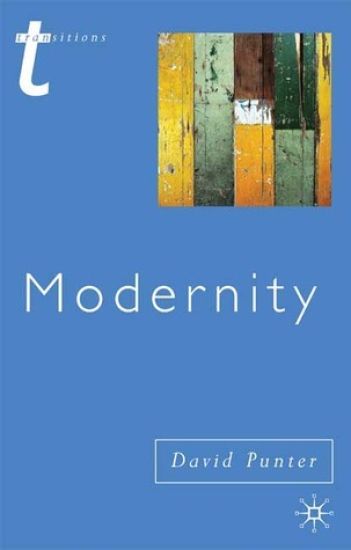
Modernity

Modernity

David Punter

Red Globe Press
2007
nidottu
This exciting volume in the Transitions series explores both history and contemporary ideas, pushing forward the boundaries of what we understand by 'modernity'. This book is distinguished from its competitors by its clear focus on close readings of commonly-studied texts and a strict policy on writing for an undergraduate readership.
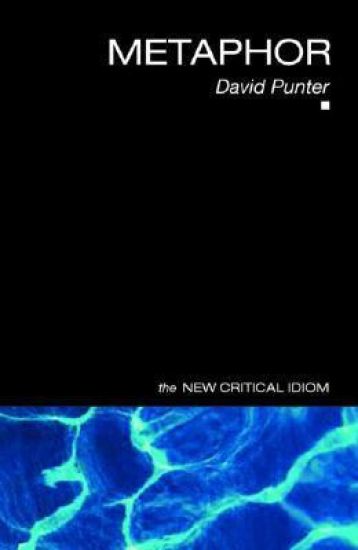
Metaphor

Metaphor

David Punter

Routledge
2007
sidottu
Metaphor is a central concept in literary studies, but it is also prevalent in everyday language and speech. Recent literary theories such as postmodernism and deconstruction have transformed the study of the text and revolutionized our thinking about metaphor.In this fascinating volume, David Punter:establishes the classical background of the term from its philosophical roots to the religious and political tradition of metaphor in the Eastrelates metaphor to the public realms of culture and politics and the way in which these influence the literary examines metaphor in relation to literary theory, philosophy, psychoanalysis and postcolonial studies illustrates his argument with specific examples from western and eastern literature and poetry. This comprehensive and engaging book emphasizes the significance of metaphor to literary studies, as well as its relevance to cultural studies, linguistics and philosophy.
Metaphor

Metaphor

David Punter

Routledge
2007
nidottu
Metaphor is a central concept in literary studies, but it is also prevalent in everyday language and speech. This volume establishes the classical background of the term from its philosophical roots to the religious and political tradition of metaphor in the East; and relates metaphor to the public realms of culture and politics.
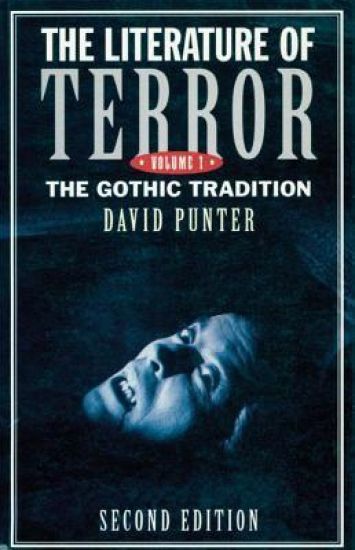
The Literature of Terror: Volume 1
The first edition was regarded as the definitive survey of Gothic and related terror writing in English. No other text considers this genre on such a scale and covers the theoretical perspectives so comprehensively. In the latest edition, the broad range of theoretical perspectives has been enlarged to include modern critical theories. Volume One is a thoroughly updated edition of the original text, covering the period from 1765 up to the Edwardian age, exploring the richness and literary diversity of the gothic form: from the original eighteenth-century gothic of Ann Radcliffe to the melodramatic fiction of Wilkie Collins.
The Literature of Terror: Volume 2
The Literature of Terror: the Modern Gothic is the second volume in David Punter's impressive survey of gothic writing covering over two centuries. This long awaited second edition has been expanded to take into account the latest critical research, and is now published in two volumes. Volume One covers the period from 1765 to the Edwardian age while Volume Two discusses modern gothic, starting with the 'decadent' gothic writing of Oscar Wilde and continuing through the twentieth century.
Writing the Passions

Writing the Passions

David Punter

Longman
2000
nidottu
Writing the Passions is a book of literary criticism, of philosophy and of the politics of modernity. It explores the arguments on the location of feeling in literature; on the fragmentation of the self under the pressure of the passions; of the place of the passions in psychoanalytic practice and theory; and on the notions of multiplicity, soul, spirit, polytheism and animism developed from their bases in psychoanalytic and Derridean theory.The relations between writing and the passions are addressed through individual texts, ranging across many centuries and from Europe to China. Writers and texts discussed include Plato, Andrew Marvell, Swinburne, Salman Rushdie, Iain Banks, Deleuze, Guattari and many others. Topics addressed include: the meaning of crime passionnel; art and the wound; passion and ceremonial; adoration and abjection; dread and disgust; the nature of the exotic; shame and irony; separation, incompletion and the cure.Written in a uniquely engaging and accessible style, Writing the Passions provides readers with a fascinating exploration of the general notion of 'the passions', together with a set of historical insights into how the passions have been considered and treated in different literatures and cultures.
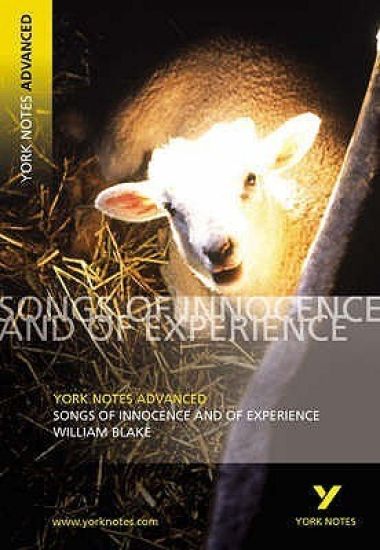
Songs of Innocence and Experience: York Notes Advanced - everything you need to study and prepare for the 2025 and 2026 exams
York Notes Advanced offer a fresh and accessible approach to English Literature. This market-leading series has been completely updated to meet the needs of today's A-level and undergraduate students. Written by established literature experts, York Notes Advanced intorduce students to more sophisticated analysis, a range of critical perspectives and wider contexts.
Postcolonial Imaginings

Postcolonial Imaginings

David Punter

Edinburgh University Press
2000
nidottu
This deeply engaging, historically and culturally informed book provides new perspectives on a wide range of writers, and at the same time provides a radically new development of many of the most pertinent issues in the field of postcolonial writing and theory. It constitutes a major new engagement between the 'postcolonial' and a conception of the literary which is richly innovative in its deployment of psychoanalytic, deconstructive and other approaches to the text. The book begins with some brief background to the issue of decolonisation and its contemporary effects. It is informed throughout by a clear sense of literary and political context, within which chosen texts - by well-known writers (Derek Walcott, Chinua Achebe, Edward Kamau Brathwaite) as well as less well-known ones (Joan Riley, Susan Power, Abdulrazak Gurnah) and writers not often seen in a postcolonial context (James Kelman, Seamus Deane, Hanif Kureishi) - can be situated. The chapters which follow are based around themes such as violent geographics; hallucination, dream and the exotic; mourning and melancholy; diaspora and exile; delocalisation and the alibi. This profoundly new approach to the complexities of the postcolonial allows the reader to appreciate some of the richness, but at the same time the political and cultural ambivalence, which underlies postcolonial writing. Throughout the book David Punter continually questions, as one would expect from his many previous books, the definition and scope of the 'postcolonial'. It is seen throughout as a phenomenon not restricted to the ex- or neo-colonies but as a key characterisation of all our lives at the beginning of the twenty-first century. It is an indissoluble part of the development of national imaginings and, at the same time, an alibi for the emergence of a violently assertive 'new world order' committed to the management or obliteration of difference. By juxtaposing texts from different cultural traditions and topographies, from Things Fall Apart to The Bone People, from Another Life to Feeding the Ghosts, from A House for Mr Biswas to The Black Album, David Punter points to the explosion of energy which characterises postcolonial writing while also raising crucially new questions about the relation between this literary energy, the professionalisation of Western literary criticism, the meaning of the notion of 'theory' and the wider global political and economic climate. Features: * A new and polemical engagement with the principal theorists, writers and critics of the postcolonial * A breadth of thematic approach through a radically new canon of linked studies * An approach to the postcolonial which includes the effects on colonising societies as well as on the 'ex-colonies' * An emphasis on the complexities of the 'postcolonial psyche' which brings together political and psychoanalytical approaches * An insistence on the 'phantomatic' and spectral aspects of postcolonial writing which constitutes a new critique of conventional notions of hybridity and the subaltern
The Literature of Pity

The Literature of Pity

David Punter

Edinburgh University Press
2014
sidottu
This book traces an entire history of pity, as an emotion and as an element in the arts. Pity represents a combination of fear, helplessness and overwhelming agitation. It is a term which suffuses our everyday lives, it is also a dangerous term hovering between approval of sympathy and disapproval of emotional wallowing (as in 'self-pity'). David Punter here engages with a wealth of theoretical ideas to explore the literature of pity, including Freud, Derrida, Levinas and others. He begins with an 'Introduction: Distinguishing Pity'; followed by chapters on the Aristotelian framework; Buddhism and pity; the pieta in the Middle Ages and Renaissance; Shakespeare on pity; Milton's pitiless Christianity; pity and charity in the early novel; Blake's views on pity; the Victorian debate; from Austen to Dickens and George Eliot; Brecht and Chekhov on pity and self-pity; 'war, and the pity of war'; Jean Rhys and Stevie Smith; pity, immigration and the colony and finally three contemporary texts by Michel Faber, Kazuo Ishiguro and Cormac McCarthy.
The Literature of Terror: Volume 1
The first edition was regarded as the definitive survey of Gothic and related terror writing in English. No other text considers this genre on such a scale and covers the theoretical perspectives so comprehensively. In the latest edition, the broad range of theoretical perspectives has been enlarged to include modern critical theories. Volume One is a thoroughly updated edition of the original text, covering the period from 1765 up to the Edwardian age, exploring the richness and literary diversity of the gothic form: from the original eighteenth-century gothic of Ann Radcliffe to the melodramatic fiction of Wilkie Collins.
Writing the Passions

Writing the Passions

David Punter

Routledge
2017
sidottu
Writing the Passions is a book of literary criticism, of philosophy and of the politics of modernity. It explores the arguments on the location of feeling in literature; on the fragmentation of the self under the pressure of the passions; of the place of the passions in psychoanalytic practice and theory; and on the notions of multiplicity, soul, spirit, polytheism and animism developed from their bases in psychoanalytic and Derridean theory.The relations between writing and the passions are addressed through individual texts, ranging across many centuries and from Europe to China. Writers and texts discussed include Plato, Andrew Marvell, Swinburne, Salman Rushdie, Iain Banks, Deleuze, Guattari and many others. Topics addressed include: the meaning of crime passionnel; art and the wound; passion and ceremonial; adoration and abjection; dread and disgust; the nature of the exotic; shame and irony; separation, incompletion and the cure.Written in a uniquely engaging and accessible style, Writing the Passions provides readers with a fascinating exploration of the general notion of 'the passions', together with a set of historical insights into how the passions have been considered and treated in different literatures and cultures.
The Literature of Terror: Volume 2
The Literature of Terror: the Modern Gothic is the second volume in David Punter's impressive survey of gothic writing covering over two centuries. This long awaited second edition has been expanded to take into account the latest critical research, and is now published in two volumes. Volume One covers the period from 1765 to the Edwardian age while Volume Two discusses modern gothic, starting with the 'decadent' gothic writing of Oscar Wilde and continuing through the twentieth century.
The Gothic Condition

The Gothic Condition

David Punter

University of Wales Press
2016
sidottu
This book brings together fourteen of the most ambitious and thought-provoking recent essays by David Punter, who has been writing on the Gothic to academic and general acclaim for over thirty years. Punter addresses developments in Gothic writing and Gothic criticism since the mid-eighteenth century, by isolating and discussing specific themes and scenarios that have remained relevant to literary and philosophical discussion over the decades and centuries, and also by paying close attention to the motifs, figures and recurrences that loom so large in twenty-first-century engagements with the Gothic. This book, while engaging deeply with Gothic history, constantly addresses our continuing immediate encounters with Gothic tropes – the vampire, the zombie, the phantom, the living dead.
Stranger

Stranger

David Punter

Cinnamon Press
2020
nidottu
In Stranger we journey from people to places, visiting creatures, objects and conditions, all of which are odd, slightly off-kilter, seen from a unusual perspective… Linguistically deft and formally inventive, the poems challenge us to reflect on the stranger in our midst, conceptions of social and personal estrangement, the strangeness of everyday life and what we might take as apparitions. With sections introduced by translations of Chinese Sung Dynasty poetry, the poems move between brief aperçus to longer meditations. Original, haunting, alive to our current global situation, even at their most oneiric, these are inventive poems brimming with integrity from a distinctive voice.
Rapture

Rapture

David Punter

Sussex Academic Press
2009
sidottu
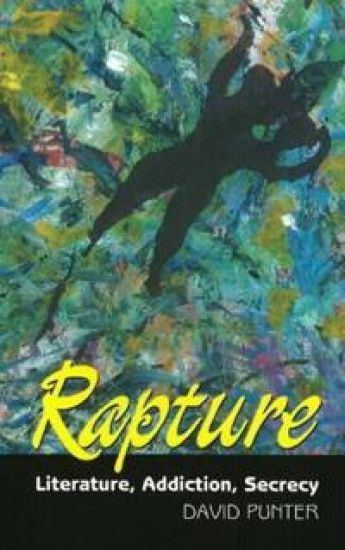
Rapture': The act of seizing or carrying off as prey or plunder; the act of carrying or being carried; and the expression of ecstasy or euphoria in words. The concept of rapture in literature navigates along a specific trajectory, from rapine status through to being carried (away)'. This book identifies the apparent impossibility of recounting such rapturous states', and of fixing them in words or in time within cultural expectations, while questioning what we can do with those who are enrapt', and what we do inside ourselves with reading moments of rapture. "Rapture: Literature, Secrecy, Addiction" engages with the states of heightened awareness', and seeks to connect with the notion of addiction as an alternative to the moral law. Punter deals with notions of writing as itself a kind of seizure', writing as a fit', in the works of Blake, Hoelderlin, Novalis, Nietzsche, Fitzgerald, Faulkner, Genet, and Ballard. Writing it down' -- the process of returning from states of exaltation to find oneself writing in often bleak locations, underlines the relationship between rapture and literature. The author concludes that the very possibility of communication and interpretation is radically open to doubt. The addict-writer becomes representative of the dialectic of writing as an act of communication; an act which is tragically doomed from the outset.
Rapture

Rapture

David Punter

Sussex Academic Press
2009
nidottu
Rapture': The act of seizing or carrying off as prey or plunder; the act of carrying or being carried; and the expression of ecstasy or euphoria in words. The concept of rapture in literature navigates along a specific trajectory, from rapine status through to being carried (away)'. This book identifies the apparent impossibility of recounting such rapturous states', and of fixing them in words or in time within cultural expectations, while questioning what we can do with those who are enrapt', and what we do inside ourselves with reading moments of rapture. "Rapture: Literature, Secrecy, Addiction" engages with the states of heightened awareness', and seeks to connect with the notion of addiction as an alternative to the moral law. Punter deals with notions of writing as itself a kind of seizure', writing as a fit', in the works of Blake, Hoelderlin, Novalis, Nietzsche, Fitzgerald, Faulkner, Genet, and Ballard. Writing it down' -- the process of returning from states of exaltation to find oneself writing in often bleak locations, underlines the relationship between rapture and literature. The author concludes that the very possibility of communication and interpretation is radically open to doubt. The addict-writer becomes representative of the dialectic of writing as an act of communication; an act which is tragically doomed from the outset.
The Gothic

The Gothic

David Punter; Glennis Byron

Blackwell Publishers
2003
sidottu
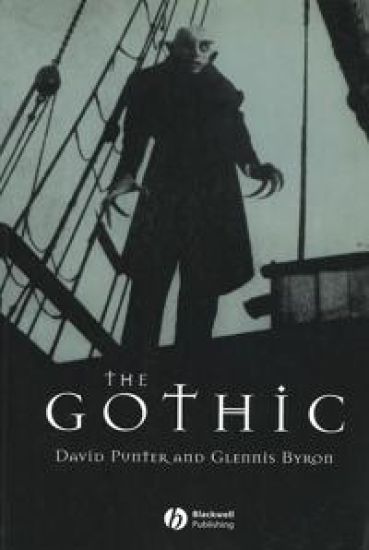
This guide provides an overview of the most significant issues and debates in Gothic studies. Provides an overview of the most significant issues and debates in Gothic studies. Explains the origins and development of the term Gothic. Explores the evolution of the Gothic in both literary and non-literary forms, including art, architecture and film. Features authoritative readings of key works, ranging from Horace Walpole’s The Castle of Otranto to Bret Easton Ellis’s American Psycho. Considers recurrent concerns of the Gothic such as persecution and paranoia, key motifs such as the haunted castle, and figures such as the vampire and the monster. Includes a chronology of key Gothic texts, including fiction and film from the 1760s to the present day, and a comprehensive bibliography.
The Gothic

The Gothic

David Punter; Glennis Byron

Blackwell Publishers
2003
nidottu
This guide provides an overview of the most significant issues and debates in Gothic studies. Provides an overview of the most significant issues and debates in Gothic studies. Explains the origins and development of the term Gothic. Explores the evolution of the Gothic in both literary and non-literary forms, including art, architecture and film. Features authoritative readings of key works, ranging from Horace Walpole’s The Castle of Otranto to Bret Easton Ellis’s American Psycho. Considers recurrent concerns of the Gothic such as persecution and paranoia, key motifs such as the haunted castle, and figures such as the vampire and the monster. Includes a chronology of key Gothic texts, including fiction and film from the 1760s to the present day, and a comprehensive bibliography.
Romanticism and Ideology

Romanticism and Ideology

David Aers; Jonathan Cook; David Punter

Routledge
2016
sidottu
First published in 1981.The primary purpose of this book is to serve as an introduction to writing in the late eighteenth and early nineteenth centuries. In addition to major Romantic poets – Blake, Wordsworth, Coleridge and Shelly – the authors discuss writers such as Austen, Hazlitt and Burke, who are usually studied in a different context, and genres such as fiction and political writing, which are often cut off from the central body of poetry.An original and highly stimulated study, this book will appeal to all those who are dissatisfied with the conventional categories into which writers and literary movements are usually placed..