This third annual volume from the Organization of American Historians, containing the best American history articles published between the summers of 2006 and 2007, provides a quick and comprehensive overview of the top work and the current intellectual trends in the field of American history. With contributions from a diverse group of historians, this collection appeals both to scholars and to lovers of history alike.
David R. Roediger's powerful book argues that in its political workings, its distribution of advantages, and its unspoken assumptions, the United States is a 'still white' nation. Race is decidedly not over. The critical portraits of contemporary icons that lead off the book - Rush Limbaugh, Bill Clinton, O.J. Simpson, and Rudolph Giuliani - insist that continuities in white power and white identity are best understood by placing the recent past in historical context. Roediger illuminates that history in an incisive critique of the current scholarship on whiteness and an account of race-transcending radicalism exemplified by vanguards such as W.E.B. Du Bois and John Brown. He shows that, for all of its staying power, white supremacy in the United States has always been a pursuit rather than a completed project, that divisions among whites have mattered greatly, and that 'nonwhite' alternatives have profoundly challenged the status quo. "Colored White" reasons that, because race is a matter of culture and politics, racial oppression will not be solved by intermarriage or demographic shifts, but rather by political struggles that transform the meaning of race - especially its links to social and economic inequality. This landmark work considers the ways that changes in immigration patterns, the labor force, popular culture, and social movements make it possible - though far from inevitable - that the United States might overcome white supremacy in the twenty-first century. Roediger's clear, lively prose and his extraordinary command of the literature make this one of the most original and generative contributions to the study of race and ethnicity in the United States in many decades.
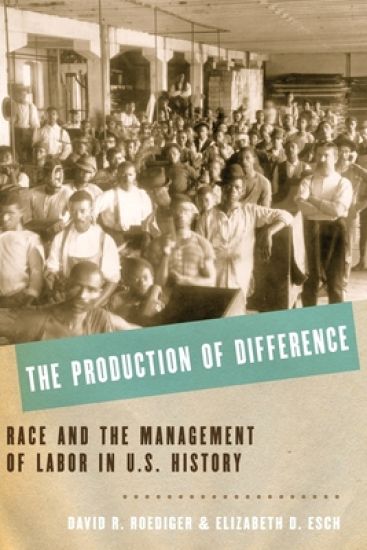
In 1907, pioneering labor historian and economist John Commons argued that U.S. management had shown just one "symptom of originality," namely "playing one race against the other." In this eye-opening book, David Roediger and Elizabeth Esch offer a radically new way of understanding the history of management in the United States, placing race, migration, and empire at the center of what has sometimes been narrowly seen as a search for efficiency and economy. Ranging from the antebellum period to the coming of the Great Depression, the book examines the extensive literature slave masters produced on how to manage and "develop" slaves; explores what was perhaps the greatest managerial feat in U.S. history, the building of the transcontinental railroad, which pitted Chinese and Irish work gangs against each other; and concludes by looking at how these strategies survive today in the management of hard, low-paying, dangerous jobs in agriculture, military support, and meatpacking. Roediger and Esch convey what slaves, immigrants, and all working people were up against as the objects of managerial control. Managers explicitly ranked racial groups, both in terms of which labor they were best suited for and their relative value compared to others. The authors show how whites relied on such alleged racial knowledge to manage and believed that the "lesser races" could only benefit from their tutelage. These views wove together managerial strategies and white supremacy not only ideologically but practically, every day at workplaces. Even in factories governed by scientific management, the impulse to play races against each other, and to slot workers into jobs categorized by race, constituted powerful management tools used to enforce discipline, lower wages, keep workers on dangerous jobs, and undermine solidarity. Painstakingly researched and brilliantly argued, The Production of Difference will revolutionize the history of labor race in the United States.
In 1907, pioneering labor historian and economist John Commons argued that US management had shown just one "symptom of originality," namely "playing one race against the other." In this eye-opening book, David Roediger and Elizabeth Esch offer a radically new way of understanding the history of management in the United States, placing race, migration, and empire at the center of what has sometimes been narrowly seen as a search for efficiency and economy. Ranging from the antebellum period to the coming of the Great Depression, the book examines the extensive literature slave masters produced on how to manage and "develop" slaves; explores what was perhaps the greatest managerial feat in U.S. history, the building of the transcontinental railroad, which pitted Chinese and Irish work gangs against each other; and concludes by looking at how these strategies survive today in the management of hard, low-paying, dangerous jobs in agriculture, military support, and meatpacking. Roediger and Esch let us see afresh what slaves, immigrants, and all working people were up against as the objects of managerial control. Managers explicitly ranked racial groups, both in terms of which labor they were best suited for and their relative value compared to others. The authors show how whites relied on such alleged racial knowledge to manage and believed that the "lesser races" could only benefit from their tutelage. These views wove together managerial strategies and white supremacy not only ideologically but practically, every day at workplaces. Even in factories governed by scientific management, the impulse to play races against each other, and to slot workers into jobs categorized by race, constituted powerful management tools used to enforce discipline, lower wages, keep workers on dangerous jobs, and undermine solidarity. Painstakingly researched and brilliantly argued, The Production of Difference will revolutionize the history of labor and race in the United States.
Our Own Time provides the first full account of the movement to shorten the working day in the United States. Combining the narrative and trade union emphasis of traditional labor history with the focus on culture and the labor process characteristic of contemporary labor history, the book offers an illuminating reinterpretation of the history of the U.S. labor movement from the colonial period onward. The authors argue that the length of the working day or week historically has been the central issue raised by the American labor movement during its most vigorous periods of organization.Beginning with a picture of working hours in colonial America and the early republic, Roediger and Foner then analyze the ideology of the movement for a ten-hour workday in the early nineteenth century. They demonstrate that the ten-hour issue was a key to the dynamism of the Jacksonian labor movement as well as to the unity of male artisans and female factory workers in the 1840s. The authors proceed to examine the subsequent demands for an eight-hour day, which helped to produce the mass labor struggles of the late nineteenth century and established the American Federation of Labor as the dominant force in American trade unionism. Chapters on labor movement defeats following World War I, on the depression years, and on the lack of progress over the last half-century complete the study. Our Own Time will be an ideal supplemental text for courses in U.S. labor and economic history.
Towards the Abolition of Whiteness collects David Roediger's recent essays, many published here for the first time, and counts the costs of whiteness in the past and present of the US. It finds those costs insupportable. At a time when prevailing liberal wisdom argues for the downplaying of race in the hope of building coalitions dedicated to economic reform, Roediger wants to open, not close, debates on the privileges and miseries associated with being white. He closely examines the way in which white identities have historically prepared white Americans to accept the oppression of others, the emptiness of their own lives, and the impossibility of change.Whether discussing popular culture, race and ethnicity, the evolution of such American keywords as gook, boss and redneck, the strikes of 1877 or the election of 1992, Roediger pushes at the boundaries between labor history and politics, as well as those between race and class. Alive to tension within what James Baldwin called "the lie of whiteness," Roediger explores the record of dissent from white identity, especially in the cultural realm, and encourages the search for effective political challenges to whiteness.
Our Own Time retells the story of American labor by focusing on the politics of time and the movements for a shorter working day. It argues that the length of the working day has been the central issue for the American labor movement during its most vigorous periods of activity, uniting workers along lines of craft, gender and ethnicity. The authors hold that the workweek is likely again to take on increased significance as workers face the choice between a society based on free time and one based on alienated work and unemployment.
How did America recover after its years of civil war? How did freed men and women, former slaves, respond to their newly won freedom? David Roediger's radical new history redefines the idea of freedom after the jubilee, using fresh sources and texts to build on the leading historical accounts of Emancipation and Reconstruction.Reinstating ex-slaves' own "freedom dreams" in constructing these histories, Roediger creates a masterful account of the emancipation and its ramifications on a whole host of day-to-day concerns for Whites and Blacks alike, such as property relations, gender roles, and labor.
Seen as a key figure in the critical study of whiteness, US historian David Roediger has sometimes received criticism, and praise, alleging that he left Marxism behind in order to work on questions of identity. This volume collects his recent and new work implicitly and explicitly challenging such a view. In his historical studies of the intersections of race, settler colonialism, and slavery, in his major essay (with Elizabeth Esch) on race and the management of labour, in his detailing of the origins of critical studies of whiteness within Marxism, and in his reflections on the history of solidarity, Roediger argues that racial division is part of not only of the history of capitalism but also of the logic of capital.
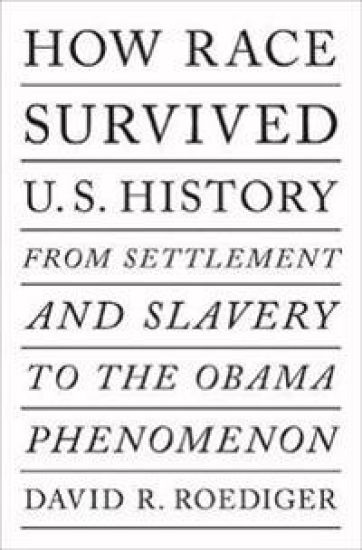
In this absorbing chronicle of the role of race in US history, David R. Roediger explores how the idea of race was created and recreated from the 1600s to the present day. From the late seventeenth century-the era in which Du Bois located the emergence of "whiteness"-through the American revolution and the emancipatory Civil War, to the civil rights movement and the emergence of the American empire, How Race Survived US History reveals how race did far more than persist as an exception in a progressive national history. Roediger examines how race intersected all that was dynamic and progressive in US history, from democracy and economic development to migration and globalisation.
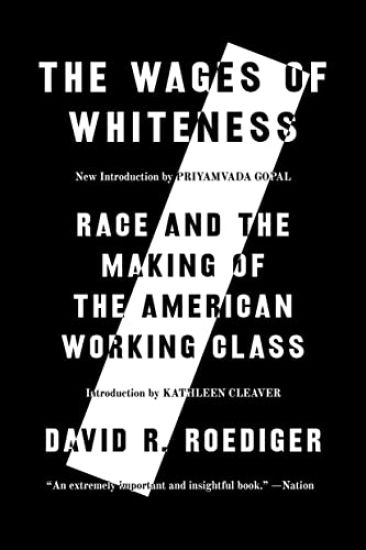
An enduring history of how race and class came together to mark the course of the antebellum US and our present crisis. Roediger shows that in a nation pledged to independence, but less and less able to avoid the harsh realities of wage labor, the identity of "white" came to allow many Northern workers to see themselves as having something in common with their bosses. Projecting onto enslaved people and free Blacks the preindustrial closeness to pleasure that regimented labor denied them, "white workers" consumed blackface popular culture, reshaped languages of class, and embraced racist practices on and off the job. Far from simply preserving economic advantage, white working-class racism derived its terrible force from a complex series of psychological and ideological mechanisms that reinforced stereotypes and helped to forge the very identities of white workers in opposition to Blacks. Full of insight regarding the precarious positions of not-quite-white Irish immigrants to the US and the fate of working class abolitionism, Wages of Whiteness contributes mightily and soberly to debates over the 1619 Project and critical race theory.
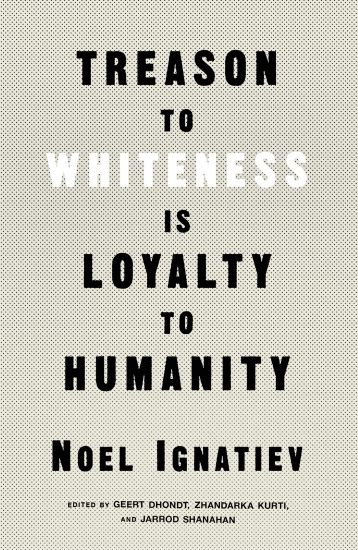
For sixty years, Noel Ignatiev provided an unflinching account of "whiteness" - a social fiction and an unmitigated disaster for all working-class people. This new essay collection from the late firebrand covers the breadth of his life and insights as an autodidact steel worker, a groundbreaking theoretician, and a bitter enemy of racists everywhere.In these essays, Ignatiev confronts the Weather Underground and recounts which strategies proved most effective to winning white workers in Gary, Indiana, to black liberation. He discovers the prescient political insights of the nineteenth-century abolition movement, surveys the wreckage of the revolutionary twentieth century with C.L.R. James, and attends to the thorny and contradictory nature of working-class consciousness. Through it all, our attentions are turned to the everyday life of "ordinary" people, whose actions anticipate a wholly new society they have not yet recognized or named.In short, Ignatiev reflects on the incisive questions of his time and ours: How can we drive back the forces of racism in society? How can the so-called "white" working class be won over to emancipatory politics? How can we build a new human community?
In this acclaimed historical study, Alexander Saxton establishes the centrality of white racism to American politics and culture. Examining images of race at a popular level - from blackface minstrelsy to the construction of the Western hero, from grassroots political culture to dime novels - as well as the philosophical constructions of the political elite, it is a powerful and comprehensive account of the ideological forces at work in the formation of modern America.
'A scholarly study of the real roots of what Jacobson calls 'America's largely assimilated but ultimately 'unmeltable' ethics'. It's a startling point of view for readers who are accustomed to the self-congratulatory myth of America as a beacon of liberty to which the 'huddled masses' of the world look with longing' - Jonathan Kirsch, "Los Angeles Times".
The first critical edition of the writings of the prolific radical workers’ newspaper columnist and musician who rode the rails during the Great DepressionThe Popular Wobbly brings together a wide selection of writings by T-Bone Slim, the most popular and talented writer belonging to the Industrial Workers of the World (IWW). Slim wrote humorous, polemical pieces, engaging with topics like labor and class injustice, which were mostly published in IWW publications from 1920 until his death in 1942. Although relatively little is known about Slim, editors Owen Clayton and Iain McIntyre coalesce the latest research on this enigmatic character to create a vivid portrait that adds valuable context for the array of writings assembled here. Known as “the laureate of the logging camps,” Slim also composed numerous songs that have been performed and recorded by Pete Seeger, Utah Phillips, and Candie Carawan, who in 1960 updated Slim’s song “The Popular Wobbly” with Civil Rights–era lyrics. Slim’s witticisms, sayings, and exhortations (“Wherever you find injustice, the proper form of politeness is attack”; “Only the poor break laws-the rich evade them”) were widely discussed among fellow hobos across the “jungle” campfires that dotted the railways, and some even transcribed his commentary on boxcars that traveled the country. Yet despite Slim’s importance and fame during his lifetime, his work disappeared from public view almost immediately after his death.The Popular Wobbly is the first critical edition of Slim’s work and also a significant contribution to literature about working-class writers, the radical labor movement, and the history and culture of nomadism and precarity. With this publication, Slim’s rediscovered writings can once again inspire artists and activists to march and agitate for a more just and equitable world.
The first critical edition of the writings of the prolific radical workers’ newspaper columnist and musician who rode the rails during the Great DepressionThe Popular Wobbly brings together a wide selection of writings by T-Bone Slim, the most popular and talented writer belonging to the Industrial Workers of the World (IWW). Slim wrote humorous, polemical pieces, engaging with topics like labor and class injustice, which were mostly published in IWW publications from 1920 until his death in 1942. Although relatively little is known about Slim, editors Owen Clayton and Iain McIntyre coalesce the latest research on this enigmatic character to create a vivid portrait that adds valuable context for the array of writings assembled here. Known as “the laureate of the logging camps,” Slim also composed numerous songs that have been performed and recorded by Pete Seeger, Utah Phillips, and Candie Carawan, who in 1960 updated Slim’s song “The Popular Wobbly” with Civil Rights–era lyrics. Slim’s witticisms, sayings, and exhortations (“Wherever you find injustice, the proper form of politeness is attack”; “Only the poor break laws-the rich evade them”) were widely discussed among fellow hobos across the “jungle” campfires that dotted the railways, and some even transcribed his commentary on boxcars that traveled the country. Yet despite Slim’s importance and fame during his lifetime, his work disappeared from public view almost immediately after his death.The Popular Wobbly is the first critical edition of Slim’s work and also a significant contribution to literature about working-class writers, the radical labor movement, and the history and culture of nomadism and precarity. With this publication, Slim’s rediscovered writings can once again inspire artists and activists to march and agitate for a more just and equitable world.
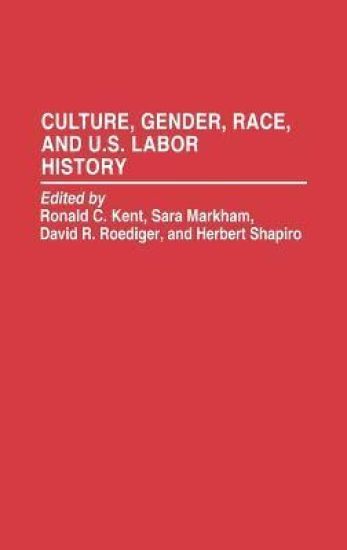
This contributor volume brings the best work of such established historians as Morris Schappes, Nathan Godfried, and Eric Foner together with the newer voices of Elizabeth Sharpe and Jennifer Bosch. Its eleven essays challenge the boundary between the older, institutional labor history and the more recent social histories of working people. By combining a focus on culture, women's history, and race relations that is characteristic of the best of the latest working class history with an emphasis on formal protests, leadership, and power, the volume suggests that a truly new labor history will reflect a variety of concerns and draw on diverse inspirations.In three chapters elucidating new features of labor biography and working-class politics, the volume's opening section considers George Edwin McNeill, the Socialist Party's efforts to free Eugene Debs, and the Socialist Party's left wing. Turning to women in labor history, the next section includes two chapters on Union W.A.G.E., an organization of mainly white, working class women, and Ellen Gates Starr, co-founder of Hull House. In a third section on African-American history, two scholars consider Black labor and African-American laborers in the Reconstruction era. The final section considers culture, education, and the working class. These chapters analyze the role of broadcasting and the Socialists' effort to establish an alternative radio station; labor education in the 1920s; the literary portrayal of sailors in Dana's Two Years Before the Mast, and the victims of the Rapp-Coudert Committee. By placing workers and their organizations convincingly within the context of their culture, this volume helps to demonstrate the ways the labor movement has remade this nation and how the nation has shaped the labor movement.
Realize your true potential, dissolve the ego limitations, learn how to master your emotions, and awaken your inner genius with this groundbreaking self-development book from renowned psychiatrist, clinician, and spiritual teacher, David R. Hawkins, M.D., Ph.D.How does one traverse the spiritual landscape to move beyond suffering to experience the peace and love of God, to transcend illusion and realize the state of enlightenment? In this collection of inspiring passages from Dr. David R. Hawkins's work, you'll learn the illusory nature of the personal self (identification of the ego/mind) and the direct pathways to transcend the ego/mind's trappings. "I consider myself a student of David Hawkins and return to his books and work time and time again. His wisdom deeply resonates with my lived experiences; he is often able to beautifully articulate what I cannot put into words." - Vex King This pocket edition is designed especially for today's spiritual student on the go, to inspire contemplation and reflection during a break at work, while hiking in the woods, during a quiet coffee-shop moment, on an airplane, with a partner--in whatever environment one finds oneself.Dissolving the Ego, Realizing the Self is a reliable companion on your quest toward higher truth. Dr. David Hawkins takes you on an enlightening journey of understanding the intricate workings of the mind and ego, culminating in a groundbreaking explanation of consciousness. You'll learn how to: - Master your emotions with practical strategies and insights.- Attract positivity and abundance in your life.- Harness your personal power without resorting to force.- Heal the mind and soul for a healthier, happier existence. This motivational book seamlessly merges spirituality, psychology, and business principles, making it an essential read for anyone interested in philosophy, human behavior, leadership, and success. Experience a paradigm shift in your journey towards self-realization by immersing yourself in the wisdom of Dr. David Hawkins. Allow your consciousness to soar as you step towards a more enlightened and fulfilling life.
A collection of 365 insightful quotes from best-selling author and consciousness researcher Dr. David R. Hawkins to guide readers on the path to enlightenment. This collection of inspiring quotes from world-renowned consciousness researcher and mystic Dr. David R. Hawkins can help readers elevate their level of consciousness. In doing so, they will explore ways to understand truth, raise their awareness, and find enlightenment and infinite peace. Readers will engage with some of Dr. Hawkins's most profound insights from his classic works, such as: To best serve the world, seek enlightenment and transcend illusions rather than contribute to them.Success comes about automatically from knowing where to look. Not what to look for, but where to look. We do not look at what we have, nor at what we do, but at what we are. Once we find within ourselves what we've been searching for, we won't have to bother looking "out there."We can't own that which is great within ourselves unless we learn to recognize it in others.Peace comes with total inner surrender to what is.By continuously letting go, it is possible to stay in that state of freedom. Feelings come and go, and eventually you realize that you are not your feelings, but that the real "you" is merely witnessing them.
Prepare to step off the ego path onto a more rewarding, fulfilling and service-oriented journey of enlightenment.Praised by Mother Teresa and Dr Wayne Dyer for his breakthrough research and innovative teachings on the human mind, Dr David Hawkins took our understanding of spiritual truth and enlightenment to an entirely new level. A nationally renowned psychiatrist, physician, researcher, spiritual teacher and lecturer, Dr Hawkins was the founding director of the Institute for Spiritual Research Incorporated and the founder of the path of devotional non-duality. During his life, he devoted almost three full decades to understanding the potential of the human spirit. His exhaustive research led to techniques anyone can use to elevate their quality of life. In this book, adapted from Dr Hawkins’ many lectures, interviews and audio programmes, readers will be brought to higher levels of awareness, control and understanding. This book includes 10 volumes of Dr Hawkins’ core teachings that are most beneficial and relevant to today’s world, including his Map of Consciousness® calibration process.The Wisdom of Dr David R. Hawkins also includes one of Dr Hawkins’ last lectures on the most valuable qualities for a spiritual seeker.‘This book is a unique and wonderful resource of teachings from Dr Hawkins…. You might imagine that you are sitting there in his audience – listening and watching, laughing and receiving.’From the Foreword by Fran Grace PhD