Kirjojen hintavertailu. Mukana 11 244 527 kirjaa ja 12 kauppaa.

Kirjahaku

Etsi kirjoja tekijän nimen, kirjan nimen tai ISBN:n perusteella.

1000 tulosta hakusanalla David Robert-John

Our Gay Son

Our Gay Son

David Robert-John

Authorhouse UK
2012
pokkari
Our Gay Son is a moving account of the struggle of a Christian father to uncover the truth about homosexuality following the discovery that his younger son was gay. This son, along with all other gay people, was accused and condemned in the courts of most branches of Christianity, without a fair trial. David Robert-John begins his quest by first seeking healing for his stricken son. As events unfold, however, his journey takes unexpected turns and the validity of the case against gay people is called into question along with the legitimacy of his own beliefs. David's wife and son then add their own revealing insights. This will be a rewarding reading experience for anyone who is struggling (or who has ever struggled) to come to terms with having a "different" sexuality, and it can be read with equal profit by those most closely associated with them, particularly parents.

Homosexuality

Homosexuality

David Robert-John

Authorhouse UK
2012
pokkari
In Our Gay Son, David Robert-John described how he came to realise that the Bible's view of homosexuality was at odds with modern understanding. That was an extremely unsettling discovery for an evangelical Christian whose beliefs were based entirely on biblical teaching. In this sequel, the author continues his quest for truth by examining the Bible and asking how much traditional Christian belief can be derived with any certainty from its narratives. The disturbing answer seems to be very little. It is perhaps fortunate that religious beliefs seem to be grounded more in our emotions than in our intellect. This is not a book for the faint-hearted believer. The author raises concerns that most Christian leaders would prefer to be swept under the carpet and he asks questions that the faithful are discouraged even from thinking about. They are the concerns and questions that ultimately led to his own loss of faith because not only were there no satisfactory answers but nobody seemed to care. They are questions that will challenge even the most convinced, committed believers, and they leave the credibility of Christianity hanging by a thread.
All the Way with LBJ

All the Way with LBJ

Robert David Johnson

Cambridge University Press
2009
sidottu
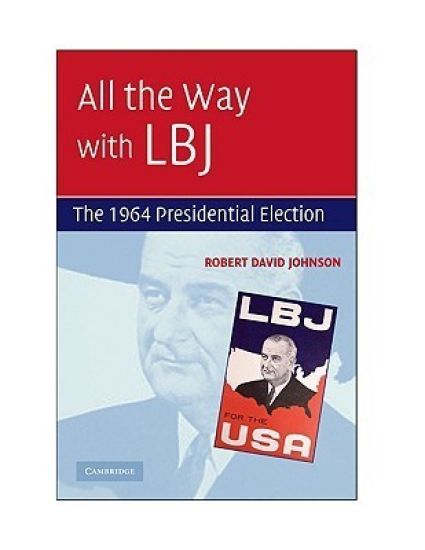
All the Way with LBJ mines an extraordinarily rich but underutilized source – the full range of LBJ tapes – to analyze the 1964 presidential campaign and the political culture of the mid-1960s. The president achieved a smashing victory over a divided Republican Party, which initially considered Henry Cabot Lodge II, then US ambassador to South Vietnam, before nominating Barry Goldwater, who used many of the themes that later worked for Republicans – a Southern strategy, portraying the Democrats as soft on defence, raising issues such as crime and personal ethics. Johnson countered with what he called a 'frontlash' strategy, appealing to moderate and liberal GOP suburbanites, but he failed to create a new, permanent Democratic majority for the post–civil rights era. The work's themes – the impact of race on the political process, the question of politicians' personal and political ethics, and the tensions between politics and public policy – continue to resonate.
Congress and the Cold War

Congress and the Cold War

Robert David Johnson

Cambridge University Press
2005
pokkari
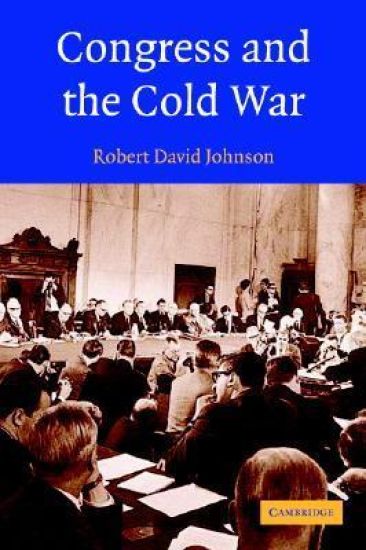
The first historical interpretation of the congressional response to the entire Cold War. Using a wide variety of sources, including several manuscript collections opened specifically for this study, the book challenges the popular and scholarly image of a weak Cold War Congress, in which the unbalanced relationship between the legislative and executive branches culminated in the escalation of the US commitment in Vietnam, which in turn paved the way for a congressional resurgence best symbolized by the passage of the War Powers Act in 1973. Instead, understanding the congressional response to the Cold War requires a more flexible conception of the congressional role in foreign policy, focused on three facets of legislative power: the use of spending measures; the internal workings of a Congress increasingly dominated by subcommittees; and the ability of individual legislators to affect foreign affairs by changing the way that policymakers and the public considered international questions.
All the Way with LBJ

All the Way with LBJ

Robert David Johnson

Cambridge University Press
2009
pokkari
All the Way with LBJ mines an extraordinarily rich but underutilized source – the full range of LBJ tapes – to analyze the 1964 presidential campaign and the political culture of the mid-1960s. The president achieved a smashing victory over a divided Republican Party, which initially considered Henry Cabot Lodge II, then US ambassador to South Vietnam, before nominating Barry Goldwater, who used many of the themes that later worked for Republicans – a Southern strategy, portraying the Democrats as soft on defence, raising issues such as crime and personal ethics. Johnson countered with what he called a 'frontlash' strategy, appealing to moderate and liberal GOP suburbanites, but he failed to create a new, permanent Democratic majority for the post–civil rights era. The work's themes – the impact of race on the political process, the question of politicians' personal and political ethics, and the tensions between politics and public policy – continue to resonate.
Ernest Gruening and the American Dissenting Tradition

Ernest Gruening and the American Dissenting Tradition

Robert David Johnson

Harvard University Press
1998
sidottu
Ernest Gruening is perhaps best known for his vehement fight against U.S. military involvement in Vietnam, where he set himself apart by casting one of two votes against the Tonkin Gulf Resolution in 1964. However, as Robert Johnson shows in this political biography, it's Gruening's sixty-year public career in its entirety that provides an opportunity for historians to explore continuity and change in dissenting thought, on both domestic and international affairs, in twentieth-century America.Gruening's outlook on domestic affairs took shape in the intellectual milieu of Progressive-era Boston, where he first devoted attention to foreign affairs in crusades against aggressive U.S. policies toward Haiti and Mexico. In the late 1920s, he was appointed editor of a reform newspaper in Portland, Maine, and moved from there to The Nation. By the early 1930s he had built a national reputation as an expert on Latin American affairs, prompting Franklin Roosevelt to appoint him chief U.S. policymaker for Puerto Rico. In 1939, Roosevelt named Gruening governor of Alaska, where for fourteen years he played a key role in the political development of the territory. In 1958 Alaskan voters elected him to the U.S. Senate, where he articulated a dissenting outlook in inter-American affairs, foreign aid policy, and the relationship between the federal government, the economy, and the issue of monopoly.Throughout his life, Gruening struggled to reconcile his ideological perspective, which drew on dissenting ideas long embedded in American history, with a desire for political effectiveness.
The Peace Progressives and American Foreign Relations

The Peace Progressives and American Foreign Relations

Robert David Johnson

Harvard University Press
1995
sidottu
This intensively researched volume covers a previously neglected aspect of American history: the foreign policy perspective of the peace progressives, a bloc of dissenters in the U.S. Senate, between 1913 and 1935. The Peace Progressives and American Foreign Relations is the first full-length work to focus on these senators during the peak of their collective influence. Robert David Johnson shows that in formulating an anti-imperialist policy, the peace progressives advanced the left-wing alternative to the Wilsonian agenda.The experience of World War I, and in particular Wilson’s postwar peace settlement, unified the group behind the idea that the United States should play an active world role as the champion of weaker states. Senators Asle Gronna of North Dakota, Robert La Follette and John Blaine of Wisconsin, and William Borah of Idaho, among others, argued that this anti-imperialist vision would reconcile American ideals not only with the country’s foreign policy obligations but also with American economic interests. In applying this ideology to both inter-American and European affairs, the peace progressives emerged as the most powerful opposition to the business-oriented internationalism of the decade’s Republican administrations, while formulating one of the most comprehensive critiques of American foreign policy ever to emerge from Congress.
Hiri

Hiri

Robert John Skelly; Bruno David

University of Hawai'i Press
2017
sidottu
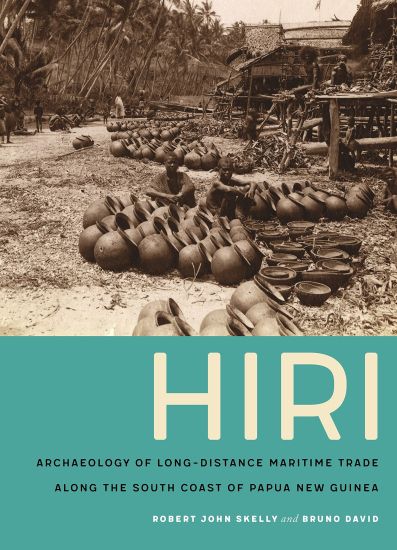
In the late 1800s, missionaries and government officials stationed along the south coast of Papua New Guinea began to observe large fleets of indigenous Motu sailing ships coming and going out of present-day Port Moresby. Each year the women of nearby villages manufactured tens of thousands of clay pots to be loaded onto the ships that men built, then sailed with their cargos westward some 400 kilometers. Upon arrival at prearranged destination-villages in distant lands to the west—lands populated by peoples speaking foreign languages—the pots together with the shell valuables were exchanged for hundreds of tons of sago flour. While in those villages, the men dismantled their ships and built them anew, literally from the bottom up, because trees of sufficient size to make large sailing ships did not grow in the landscapes of their home villages. Both the Motu of the Port Moresby region and sago producers of the Gulf of Papua to the west knew of these ventures as hiri.Through first-hand archaeological research at recipient villages, archaeologists Robert Skelly and Bruno David investigate the origins of this indigenous maritime trade system, from ancient roots in the famed Lapita culture of three thousand years ago up to the present. They offer details from archaeological digs that led them from the first ceramics of the south coast of Papua New Guinea to pottery with unmistakable signs of the ethnographic hiri. Along the south coast of Papua New Guinea, the maritime endeavor that is the hiri is revealed in historical perspective, including stories of its colonial past.
Voting for a Scottish Government

Voting for a Scottish Government

Robert Johns; David Denver; James Mitchell; Charles Pattie

Manchester University Press
2010
sidottu
In 2007 Labour lost an election in Scotland for the first time in half a century and the SNP went on to form the Scottish Government. This book explains why. Based on a unique three-wave survey of the Scottish electorate, it can truly be described as the first full-scale Scottish national election study. As such, it is notable not only for its innovative methodology but also because theories and concepts are taken from the recent electoral studies literature and applied to Scotland. Other questions investigated include the impact of campaigning and of the party leaders (at both Scottish and British level) on the election outcome. In addition, for the first time in the UK context, a special study is made of the causes and consequences of rejected ballots – the large number of which at this election caused a media outcry.This book will be required reading for anyone interested in, involved in, teaching or studying Scottish politics. It will also be an important text for those concerned with UK politics in general and attract particular interest among students of elections, both in the UK and internationally.
Elections and Voters in Britain

Elections and Voters in Britain

David Denver; Robert Johns

Springer Nature Switzerland AG
2021
nidottu
How do voters in Britain decide which party to vote for in elections? Have age and education replaced class as the social basis for voting? Are elections now ‘presidentialised’, with voters simply choosing between party leaders? What role do the media, new and old, play in all of this? The authors examine these and other questions in the fourth edition of this popular text. The core of the text is devoted to examining and explaining theories of party choice, including the debate about whether voters are driven more by issues and ideology or simply by which party and leader looks least likely to make a mess of things in office. The authors also devote separate chapters to turnout trends and patterns, the media, electoral systems, the geography of party support, and – new to this edition – referendums. Fully revised and with detailed analysis of the 2019 election and the electoral fallout of Brexit, the text incorporates the latest research on elections and voting behaviour, andincludes analysis of recent trends and developments – such as the effect of digital media on electoral politics and where recent misfires leave the opinion polls.
Elections and Voters in Britain

Elections and Voters in Britain

David Denver; Christopher Carman; Robert Johns

Red Globe Press
2012
sidottu
How do voters in Britain decide which party to vote for in elections?Why do smaller parties get more support than they used to?How do the mass media influence political opinions?The authors examine these and other questions in the third edition of this popular text. They trace the evolution of the British electorate over the post-war period, and focus in particular on recent elections – from Labour's victories in the 2000s through to the hung parliament of 2010. As well as examining and explaining theories of party choice – including the view that voters' evaluations of government performance and party leaders are now the key determinants of election outcomes – the authors also devote separate chapters to turnout trends and patterns, electoral systems and the geography of party support. Campaigning, opinion polls and the mass media are also considered. Fully revised, the text incorporates the latest research on elections and voting behaviour, and includes analysis of recent trends and developments – including how 'new media' are affecting election campaigning.
Elections and Voters in Britain

Elections and Voters in Britain

David Denver; Christopher Carman; Robert Johns

Red Globe Press
2012
nidottu
How do voters in Britain decide which party to vote for in elections?Why do smaller parties get more support than they used to?How do the mass media influence political opinions?The authors examine these and other questions in the third edition of this popular text. They trace the evolution of the British electorate over the post-war period, and focus in particular on recent elections – from Labour's victories in the 2000s through to the hung parliament of 2010. As well as examining and explaining theories of party choice – including the view that voters' evaluations of government performance and party leaders are now the key determinants of election outcomes – the authors also devote separate chapters to turnout trends and patterns, electoral systems and the geography of party support. Campaigning, opinion polls and the mass media are also considered. Fully revised, the text incorporates the latest research on elections and voting behaviour, and includes analysis of recent trends and developments – including how 'new media' are affecting election campaigning.
Reviewing Leadership – A Christian Evaluation of Current Approaches

Reviewing Leadership – A Christian Evaluation of Current Approaches

Robert J. Banks; Bernice M. Ledbetter; David C. Greenhalgh; William Dyrness; Robert Johnston

Baker Academic, Div of Baker Publishing Group
2016
nidottu
Evaluating Current Approaches to LeadershipThis book offers a comprehensive evaluation of current approaches to leadership from a discerning Christian perspective. Combining expertise in leadership, theology, and ministry, the authors take a historical look at leadership and how it is viewed and used in today's context. The book is informed by both biblical and leadership studies scholarship and interacts with a number of popular marketplace writings on leadership. It also evaluates exemplary role models of Christian leadership. The second edition has been updated and revised throughout.
My First Book the experiences of Walter Besant, James Payn, W. Clark Russell, Grant Allen, Hall Caine, George R. Sims, Rudyard Kipling, A. Conan Doyle, M.E. Braddon, F.W. Robinson, H. Rider Haggard, R.M. Ballantyne, I. Zangwill, Morley Roberts, David Christie Murray, Marie Corelli, Jerome K. Jerome, John Strange Winter, Bret Harte, Q., Robert Buchanan, Robert Louis Stevenson, with an introduction by Jerome K. Jerome. (Edition1)