

Kirjahaku
Etsi kirjoja tekijän nimen, kirjan nimen tai ISBN:n perusteella.
1000 tulosta hakusanalla David S. Brown

A Survey of the Cathedral Church of St. David's, and the Edifices Belonging to it, as They Stood in the Year 1715. To Which is Added, Some Memoirs Relating Thereto From a MS Wrote About the Latter end of Queen Elizabeth's Reign
Browne Willis
Gale Ecco, Print Editions
2018
sidottu
The 18th century was a wealth of knowledge, exploration and rapidly growing technology and expanding record-keeping made possible by advances in the printing press. In its determination to preserve the century of revolution, Gale initiated a revolution of its own: digitization of epic proportions to preserve these invaluable works in the largest archive of its kind. Now for the first time these high-quality digital copies of original 18th century manuscripts are available in print, making them highly accessible to libraries, undergraduate students, and independent scholars.The Age of Enlightenment profoundly enriched religious and philosophical understanding and continues to influence present-day thinking. Works collected here include masterpieces by David Hume, Immanuel Kant, and Jean-Jacques Rousseau, as well as religious sermons and moral debates on the issues of the day, such as the slave trade. The Age of Reason saw conflict between Protestantism and Catholicism transformed into one between faith and logic -- a debate that continues in the twenty-first century.++++The below data was compiled from various identification fields in the bibliographic record of this title. This data is provided as an additional tool in helping to insure edition identification: ++++British LibraryT094614With an index and a final errata leaf.London: printed for R. Gosling, 1717. 10],302, 8]p., plates; 8
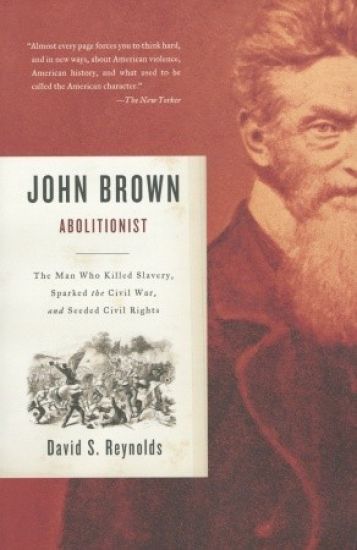
John Brown, Abolitionist: The Man Who Killed Slavery, Sparked the Civil War, and Seeded Civil Rights
David S. Reynolds
VINTAGE
2006
nidottu
A new biography by the award-winning author of Walt Whitman's America captures the turbulent life of John Brown, shedding new light on the controversial abolitionist who was responsible for the massacre of unarmed citizens in Kansas, liberation of slaves in Missouri, and raid on the federal arsenal in Harpers Ferry, Virginia, in his anti-slavery campaign. Reprint. 17,500 first printing.

Richard Hofstadter (1916-70) was America's most distinguished historian of the twentieth century. The author of several groundbreaking books, including "The American Political Tradition", he was a vigorous champion of the liberal politics that emerged from the New Deal. During his career, Hofstadter fought public campaigns against liberalism's most dynamic opponents, from McCarthy in the 1950s to Barry Goldwater and the Sun Belt conservatives in the 1960s. His opposition to the extreme politics of postwar America marked him as one of the nation's most important and prolific public intellectuals. In this masterly biography, David S. Brown explores Hofstadter's life within the context of the rise and fall of American liberalism. A fierce advocate of academic freedom, racial justice, and political pluralism, Hofstadter charted in his works the changing nature of American society from a provincial Protestant foundation to one based on the values of an urban and multiethnic nation. According to Brown, Hofstadter presciently saw in rural America's hostility to this cosmopolitanism signs of an anti-intellectualism that he believed was dangerously endemic in a mass democracy. By the end of a life cut short by leukemia, Hofstadter had won two Pulitzer Prizes and his books had attracted international attention. Yet the Vietnam years, as Brown shows, culminated in a conservative reaction to his work that is still with us. Whether one agrees with Hofstadter's critics or his fans, the importance of this seminal thinker cannot be denied.

As the United States went to war in 1941, "Time" magazine founder Henry Luce coined a term for what was rapidly becoming the establishment view of America's role in the world: the twentieth century, he argued, was the American Century. Many of the nation's most eminent historians - nearly all of them from the East Coast - agreed with this vision and its endorsement of the vigorous use of power and persuasion to direct world affairs. But an important concentration of Midwestern historians actively dissented. With "Beyond the Frontier", David S. Brown tells their little-known story of opposition. Raised in a cultural landscape that combined agrarian provincialism with reform-minded progressivism, these historians - among them Charles Beard, William Appleman Williams, and Christopher Lasch - argued strenuously against the imperial presidencies, interventionist foreign policies, and Keynesian capitalism that swiftly shaped cold war America. Casting a skeptical eye on the burgeoning military-industrial complex and its domestic counterpart, the welfare state, they warned that both components of the liberal internationalist vision jeopardized the individualistic, republican ethos that had long lain at the heart of American democracy. Drawing on interviews, personal papers, and correspondence of the key players in the debate, Brown has written a fascinating follow-up to his critically acclaimed biography of Richard Hofstadter. Illuminating key ideas that link Midwestern writers from Frederick Jackson Turner all the way to William Cronon and Thomas Frank, "Beyond the Frontier" is intellectual history at its best: grounded in real lives and focused on issues that remain salient - and unresolved - even today.
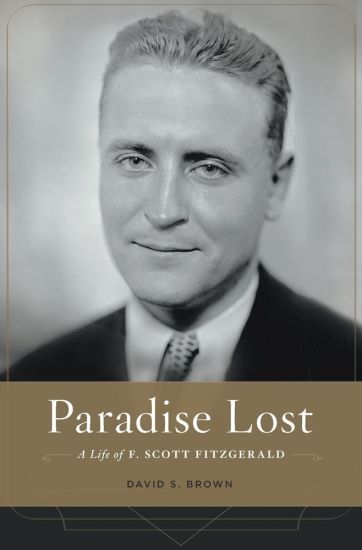
Pigeonholed in popular memory as a Jazz Age epicurean, a playboy, and an emblem of the Lost Generation, F. Scott Fitzgerald was at heart a moralist struck by the nation’s shifting mood and manners after World War I. In Paradise Lost, David Brown contends that Fitzgerald’s deepest allegiances were to a fading antebellum world he associated with his father’s Chesapeake Bay roots. Yet as a midwesterner, an Irish Catholic, and a perpetually in-debt author, he felt like an outsider in the haute bourgeoisie haunts of Lake Forest, Princeton, and Hollywood—places that left an indelible mark on his worldview.In this comprehensive biography, Brown reexamines Fitzgerald’s childhood, first loves, and difficult marriage to Zelda Sayre. He looks at Fitzgerald’s friendship with Hemingway, the golden years that culminated with Gatsby, and his increasing alcohol abuse and declining fortunes which coincided with Zelda’s institutionalization and the nation’s economic collapse.Placing Fitzgerald in the company of Progressive intellectuals such as Charles Beard, Randolph Bourne, and Thorstein Veblen, Brown reveals Fitzgerald as a writer with an encompassing historical imagination not suggested by his reputation as “the chronicler of the Jazz Age.” His best novels, stories, and essays take the measure of both the immediate moment and the more distant rhythms of capital accumulation, immigration, and sexual politics that were moving America further away from its Protestant agrarian moorings. Fitzgerald wrote powerfully about change in America, Brown shows, because he saw it as the dominant theme in his own family history and life.

In this lively book, David Brown locates jazz music within the broad aesthetic, political, and theoretical upheavals of our time, asserting that modern architecture and urbanism in particular can be strongly influenced and defined by the ways that improvisation is facilitated in jazz. Improvised music consists of diverse properties that fail to register in the object-oriented understanding of composition. As a result, it is often dismissed as noise—an interfering signal. However, Brown asserts, such interference can bear meaning and stimulate change. Noise Orders identifies how architecture can respond to the inclusive dynamics of extemporaneous movements, variable conceptions of composition, multiple durations, and wide manipulation of resources found in jazz to enable outcomes that far exceed a design’s seeming potential. By exploring overlapping moments between modernism and the cultural dimensions of jazz, Noise Orders suggests that the discipline of improvisation continues to open and redefine architectural theory and practice, creating a world where designers contribute to emerging environments rather than make predetermined ones. Comparing modern and avant-garde artists and architects with individuals and groups in jazz—including Piet Mondrian and boogie-woogie, John Cage and Rahsaan Roland Kirk, Le Corbusier and Louis Armstrong, and Ludwig Mies van der Rohe and the Association for the Advancement of Creative Musicians (AACM)—Brown examines how jazz can offer alternative design ideas and directions, be incorporated in contemporary architectural practices, and provide insight on how to develop dynamic metropolitan environments. Interdisciplinary in its approach, innovative in its methodology, and unexpected in its conclusions, Noise Orders argues for a deeper understanding of the infinite potential inherent in both music and architecture. David P. Brown is associate professor of architecture at the University of Illinois at Chicago.
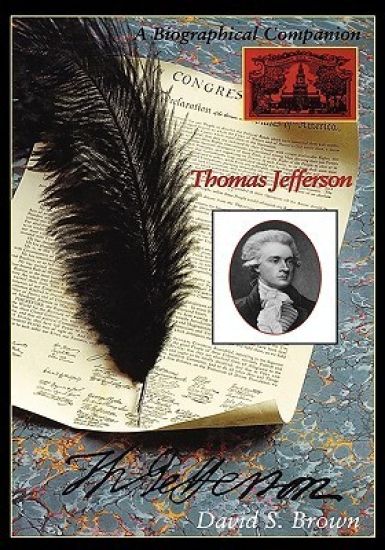
Thomas Jefferson advocated a society based on talent and virtue. His belief in the inherent goodness of humankind coupled with his faith in science made him the consummate gentleman-statesman. There was also an ethnocentric side to Jefferson. His agrarian bias led him to combat northern interests that encouraged the expansion of industry, and his legacy lends itself to continual reinterpretation. More than 180 entries in this text cover the significant events, people, philosophies, and legislation associated with Jefferson. Each entry describes and defines the topic and places it in historical context.

An Evaluation of Solar Air Heating at United States Air Force Installations
David S. Brown
BiblioScholar
2012
nidottu
The purpose of this research was to evaluate the use of solar air heating at United States (U.S.) Air Force installations. Specifically, this thesis analyzed Unglazed Transpired Collector (UTC) technology, more commonly known as SolarWalls . This thesis sought to determine if UTC systems are an economically and environmentally viable technology which Air Force energy managers should include in their portfolio of alternative energy options. This research question was answered through the use of case studies and life-cycle cost analysis. Case studies were performed at various U.S. military installations which have already utilized UTC systems to provide a consolidated source of lessons learned. A life-cycle cost analysis was performed to quantify the potential cost savings at various Air Force installations to help Air Force energy leaders determine if the technology should be further implemented, and if so, which installations should be considered for future UTC use. The quantitative results of this evaluation determined that the Air Force could realize significant economic and environmental benefits from the use of UTC technology. The information gathered from case studies can help ensure that future users of UTC systems utilize their systems in the most effective manner possible. This work has been selected by scholars as being culturally important, and is part of the knowledge base of civilization as we know it. This work was reproduced from the original artifact, and remains as true to the original work as possible. Therefore, you will see the original copyright references, library stamps (as most of these works have been housed in our most important libraries around the world), and other notations in the work. This work is in the public domain in the United States of America, and possibly other nations. Within the United States, you may freely copy and distribute this work, as no entity (individual or corporate) has a copyright on the body of the work. As a reproduction of a historical artifact, this work may contain missing or blurred pages, poor pictures, errant marks, etc. Scholars believe, and we concur, that this work is important enough to be preserved, reproduced, and made generally available to the public. We appreciate your support of the preservation process, and thank you for being an important part of keeping this knowledge alive and relevant.

The fierce polarization of contemporary politics has encouraged Americans to read back into their nation's past a perpetual ideological struggle between liberals and conservatives. However, in this timely book, David S. Brown advances an original interpretation that stresses the critical role of moderate statesmen, ideas, and alliances in making our political system work. Beginning with John Adams and including such key figures as Abraham Lincoln, Theodore Roosevelt, Henry Cabot Lodge Jr., and Bill Clinton, Brown charts the vital if uneven progress of centrism through the centuries. Moderate opposition to both New England and southern secessionists during the early republic and later resistance to industrial oligarchy and the modern Sunbelt right are part of this persuasion's far-reaching legacy. Time and again moderates, operating under a broad canopy of coalitions, have come together to reshape the nation's electoral landscape.Today's bitter partisanship encourages us to deny that such a moderate tradition is part of our historical development--one dating back to the Constitutional Convention. Brown offers a less polemical and far more compelling assessment of our politics.
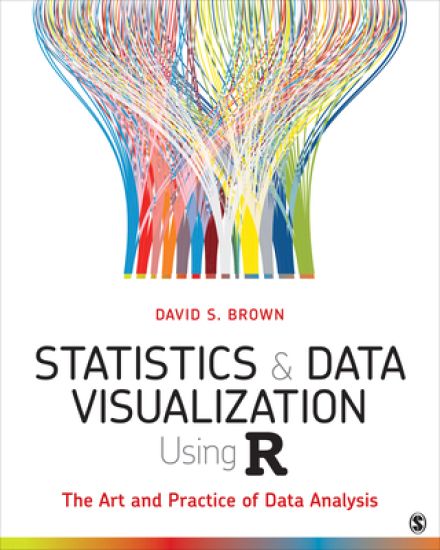
Designed to introduce students to quantitative methods in a way that can be applied to all kinds of data in all kinds of situations, Statistics and Data Visualization Using R: The Art and Practice of Data Analysis by David S. Brown teaches students statistics through charts, graphs, and displays of data that help students develop intuition around statistics as well as data visualization skills. By focusing on the visual nature of statistics instead of mathematical proofs and derivations, students can see the relationships between variables that are the foundation of quantitative analysis. Using the latest tools in R and R RStudio® for calculations and data visualization, students learn valuable skills they can take with them into a variety of future careers in the public sector, the private sector, or academia. Starting at the most basic introduction to data and going through most crucial statistical methods, this introductory textbook quickly gets students new to statistics up to speed running analyses and interpreting data from social science research.
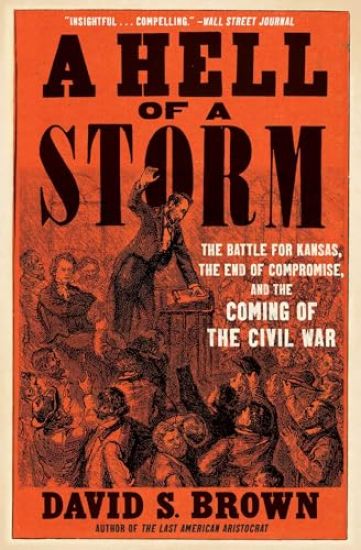
A Hell of a Storm: The Battle for Kansas, the End of Compromise, and the Coming of the Civil War
David S. Brown
Scribner Book Company
2025
nidottu
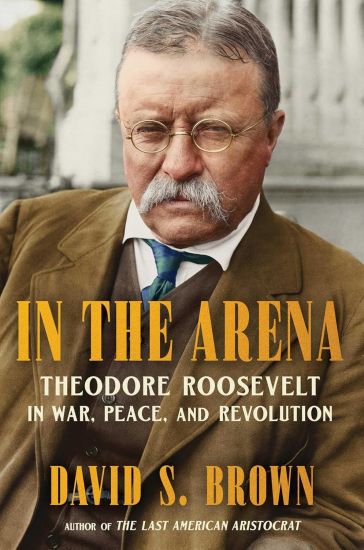
In the Arena: Theodore Roosevelt in War, Peace, and Revolution
David S. Brown
Scribner Book Company
2025
sidottu
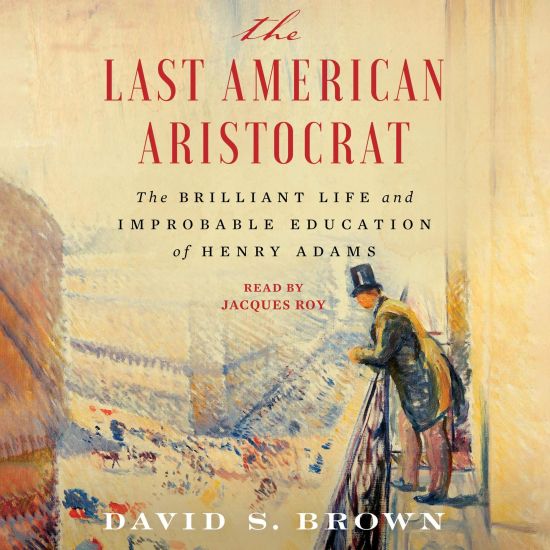
The Last American Aristocrat: The Brilliant Life and Improbable Education of Henry Adams
David S. Brown
Simon Schuster Audio
2020
cd

A revelatory, timely, and masterful biography of President Andrew Jackson that offers a new perspective on this charismatic figure in the context of American populism--identifying the reasons for his popularity as it shows us the man and politician in his full complexity.A number of bestselling and award-winning biographies have been written about the seventh president of the US, but none have placed Andrew Jackson within the context of populism. Now, historian David S. Brown traces Jackson's unusual life and legacy and sheds new light on his place in our nation's history, focusing on his role as a populist leader. Andrew Jackson rose from rural poverty to become the dominant figure in American politics between Jefferson and Lincoln. His reputation, however, defies easy description. Some regard him as the symbol of a powerful democratic movement that saw early 19th century suffrage restrictions recede for white men. Others stress his prominent role in removing Native American peoples from their ancestral lands, which were then opened to create a southern cotton kingdom, home to more than a million enslaved people. A self-defined champion of farmers, mechanics, and laborers, Jackson railed against the established ruling order, fostering a brand of democracy that struck a chord with the common man and helped catapult him into the presidency--he was the first westerner, first orphan, and first prisoner of war to occupy the office. Drawing on a wide range of research material, The First Populist takes a fresh look at Jackson's public career, including the momentous Battle of New Orleans and the far-reaching Bank War; it reveals his marriage to an already married woman, a deadly duel with a Nashville dandy, and analyzes his magnetic hold on much of the country at the time. Presenting a full portrait of a controversial American life, The First Populist offers a new way to interpret Jackson's legacy, connecting Old Hickory to a longer history of nativism, dissent, and partisanship that has come to define our current times.

The Last American Aristocrat: The Brilliant Life and Improbable Education of Henry Adams
David S. Brown
Scribner Book Company
2021
nidottu
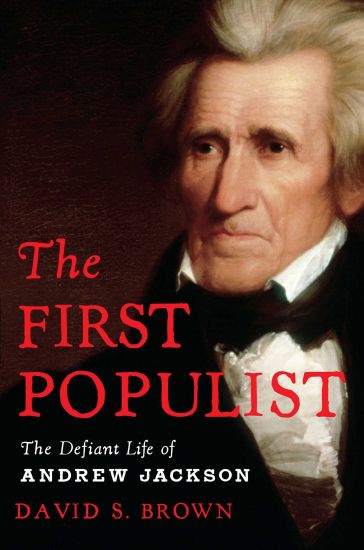
The First Populist: The Defiant Life of Andrew Jackson
David S. Brown
Scribner Book Company
2022
sidottu
A timely, "solidly researched and] gracefully written" (The Wall Street Journal) biography of President Andrew Jackson that offers a fresh reexamination of this charismatic figure in the context of American populism--connecting the complex man and the politician to a longer history of division, dissent, and partisanship that has come to define our current times. Andrew Jackson rose from rural poverty in the Carolinas to become the dominant figure in American politics between Jefferson and Lincoln. His reputation, however, defies easy description. Some regard him as the symbol of a powerful democratic movement that saw early 19th-century voting rights expanded for propertyless white men. Others stress Jackson's prominent role in removing Native American peoples from their ancestral lands, which then became the center of a thriving southern cotton kingdom worked by more than a million enslaved people. A combative, self-defined champion of "farmers, mechanics, and laborers," Jackson railed against East Coast elites and Virginia aristocracy, fostering a brand of democracy that struck a chord with the common man and helped catapult him into the presidency. "The General," as he was known, was the first president to be born of humble origins, first orphan, and thus far the only former prisoner of war to occupy the office. Drawing on a wide range of sources, The First Populist takes a fresh look at Jackson's public career, including the pivotal Battle of New Orleans (1815) and the bitterly fought Bank War; it reveals his marriage to an already married woman and a deadly duel with a Nashville dandy, and analyzes his magnetic hold on the public imagination of the country in the decades between the War of 1812 and the Civil War. "By assessing the frequent comparisons between Jackson and Donald Trump...the hope is that a fresh understanding of the divisive times of 'the country's original anti-establishment president' might shed light on our own" (The Christian Science Monitor).
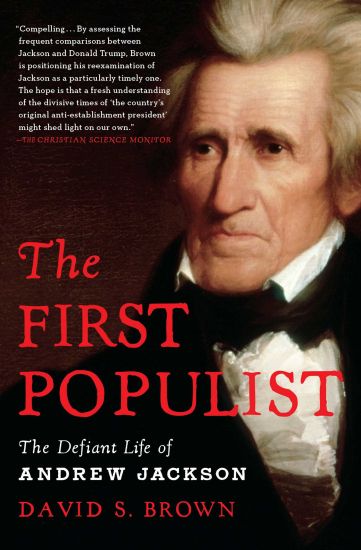
The First Populist: The Defiant Life of Andrew Jackson
David S. Brown
Scribner Book Company
2023
nidottu
A timely, "solidly researched and] gracefully written" (The Wall Street Journal) biography of President Andrew Jackson that offers a fresh reexamination of this charismatic figure in the context of American populism--connecting the complex man and the politician to a longer history of division, dissent, and partisanship that has come to define our current times. Andrew Jackson rose from rural poverty in the Carolinas to become the dominant figure in American politics between Jefferson and Lincoln. His reputation, however, defies easy description. Some regard him as the symbol of a powerful democratic movement that saw early 19th-century voting rights expanded for propertyless white men. Others stress Jackson's prominent role in removing Native American peoples from their ancestral lands, which then became the center of a thriving southern cotton kingdom worked by more than a million enslaved people. A combative, self-defined champion of "farmers, mechanics, and laborers," Jackson railed against East Coast elites and Virginia aristocracy, fostering a brand of democracy that struck a chord with the common man and helped catapult him into the presidency. "The General," as he was known, was the first president to be born of humble origins, first orphan, and thus far the only former prisoner of war to occupy the office. Drawing on a wide range of sources, The First Populist takes a fresh look at Jackson's public career, including the pivotal Battle of New Orleans (1815) and the bitterly fought Bank War; it reveals his marriage to an already married woman and a deadly duel with a Nashville dandy, and analyzes his magnetic hold on the public imagination of the country in the decades between the War of 1812 and the Civil War. "By assessing the frequent comparisons between Jackson and Donald Trump...the hope is that a fresh understanding of the divisive times of 'the country's original anti-establishment president' might shed light on our own" (The Christian Science Monitor).


Freshwater Snails Of Africa And Their Medical Importance
David S Brown
Taylor Francis Ltd
1994
sidottu
The first half of this book is primarily a systematic survey of the snails, beginning with glossaries, keys for identification to genera and a checklist of species. This is followed by a synopsis of species, with brief notes on ecology, distribution and parasites. Relationships are then described between snails and schistosomes and with other parasites. The book goes on to consider the factors affecting snail populations and possible methods for population control.