Kirjojen hintavertailu. Mukana 11 244 527 kirjaa ja 12 kauppaa.

Kirjahaku

Etsi kirjoja tekijän nimen, kirjan nimen tai ISBN:n perusteella.

1000 tulosta hakusanalla David S. Reynolds

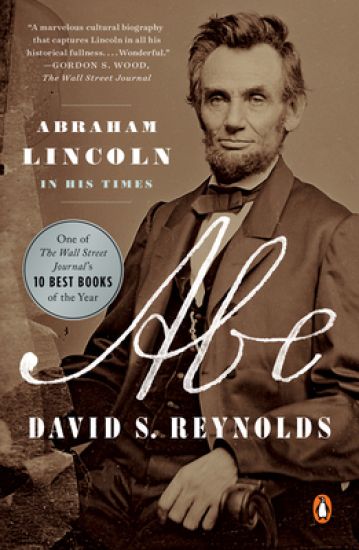
Abe: Abraham Lincoln in His Times

Abe: Abraham Lincoln in His Times

David S. Reynolds

PENGUIN BOOKS
2021
nidottu
Now an Apple TV+ documentary, Lincoln's Dilemma. One of the Wall Street Journal's Ten Best Books of the Year A Washington Post Notable Book A Christian Science Monitor and Kirkus Reviews Best Book of 2020 Winner of the Gilder Lehrman Abraham Lincoln Prize and the Abraham Lincoln Institute Book Award "A marvelous cultural biography that captures Lincoln in all his historical fullness. . . . using popular culture in this way, to fill out the context surrounding Lincoln, is what makes Mr. Reynolds's biography so different and so compelling . . . Where did the sympathy and compassion expressed in Lincoln's] Second Inaugural--'With malice toward none; with charity for all'--come from? This big, wonderful book provides the richest cultural context to explain that, and everything else, about Lincoln." --Gordon Wood, Wall Street Journal From one of the great historians of nineteenth-century America, a revelatory and enthralling new biography of Lincoln, many years in the making, that brings him to life within his turbulent age David S. Reynolds, author of the Bancroft Prize-winning cultural biography of Walt Whitman and many other iconic works of nineteenth century American history, understands the currents in which Abraham Lincoln swam as well as anyone alive. His magisterial biography Abe is the product of full-body immersion into the riotous tumult of American life in the decades before the Civil War. It was a country growing up and being pulled apart at the same time, with a democratic popular culture that reflected the country's contradictions. Lincoln's lineage was considered auspicious by Emerson, Whitman, and others who prophesied that a new man from the West would emerge to balance North and South. From New England Puritan stock on his father's side and Virginia Cavalier gentry on his mother's, Lincoln was linked by blood to the central conflict of the age. And an enduring theme of his life, Reynolds shows, was his genius for striking a balance between opposing forces. Lacking formal schooling but with an unquenchable thirst for self-improvement, Lincoln had a talent for wrestling and bawdy jokes that made him popular with his peers, even as his appetite for poetry and prodigious gifts for memorization set him apart from them through his childhood, his years as a lawyer, and his entrance into politics. No one can transcend the limitations of their time, and Lincoln was no exception. But what emerges from Reynolds's masterful reckoning is a man who at each stage in his life managed to arrive at a broader view of things than all but his most enlightened peers. As a politician, he moved too slowly for some and too swiftly for many, but he always pushed toward justice while keeping the whole nation in mind. Abe culminates, of course, in the Civil War, the defining test of Lincoln and his beloved country. Reynolds shows us the extraordinary range of cultural knowledge Lincoln drew from as he shaped a vision of true union, transforming, in Martin Luther King Jr.'s words, "the jangling discords of our nation into a beautiful symphony of brotherhood." Abraham Lincoln did not come out of nowhere. But if he was shaped by his times, he also managed at his life's fateful hour to shape them to an extent few could have foreseen. Ultimately, this is the great drama that astonishes us still, and that Abe brings to fresh and vivid life. The measure of that life will always be part of our American education.
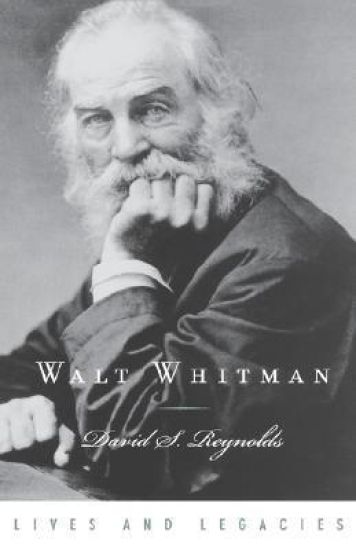
Walt Whitman

Walt Whitman

David S. Reynolds

Oxford University Press Inc
2005
sidottu
From the great events of the day to the patient workings of a spider, few poets responded to the life around them as powerfully as Walt Whitman. Now, in this brief but bountiful volume, David S. Reynolds offers a wealth of insight into the life and work of Whitman, examining the author through the lens of nineteenth-century America. Reynolds shows how Whitman responded to contemporary theater, music, painting, photography, science, religion, and sex. But perhaps nothing influenced Whitman more than the political events of his lifetime, as the struggle over slavery threatened to rip apart the national fabric. America, he believed, desperately needed a poet to hold together a society that was on the verge of unraveling. He created his powerful, all-absorbing poetic "I" to heal a fragmented nation that, he hoped, would find in his poetry new possibilities for inspiration and togetherness. Reynolds also examines the influence of theater, describing how Whitman's favorite actor, the tragedian Junius Brutus Booth--"one of the grandest revelations of my life"--developed a powerfully emotive stage style that influenced Leaves of Grass, which took passionate poetic expression to new heights. Readers will also discover how from the new medium of photography Whitman learned democratic realism and offered in his poetry "photographs" of common people engaged in everyday activities. Reynolds concludes with an appraisal of Whitman's impact on American letters, an influence that remains strong today. Solidly grounded in historical and biographical facts, and exceptionally wide-ranging in the themes it treats, Walt Whitman packs a dazzling amount of insight into a compact volume.
Beneath the American Renaissance

Beneath the American Renaissance

David S. Reynolds

Oxford University Press Inc
2011
nidottu
Hailed in The New York Times Book Review as "impressively informed and heroic" and in The Economist as "richly suggestive," the award-winning Beneath the American Renaissance is a classic work on American literature. It immeasurably broadens our knowledge of our most important literary period, as first identified by F.O. Matthiessen's American Renaissance. With its combination of sharp critical insight, engaging observation, and narrative drive, it represents the kind of masterful cultural history for which David Reynolds is known. Here the major works of Emerson, Thoreau, Whitman, Poe, Hawthorne, Melville, and Dickinson receive striking, original readings set against the rich backdrop of contemporary popular writing. Now back in print in an affordable paperback edition, the volume includes a new foreword by prominent historian Sean Wilentz that reveals the book's impact and influence. An exquisite jewel of criticism and cultural history, Beneath the American Renaissance is certain to find an appreciative new readership in those interested in the genesis of America's most significant literary epoch and the iconic figures who defined it.
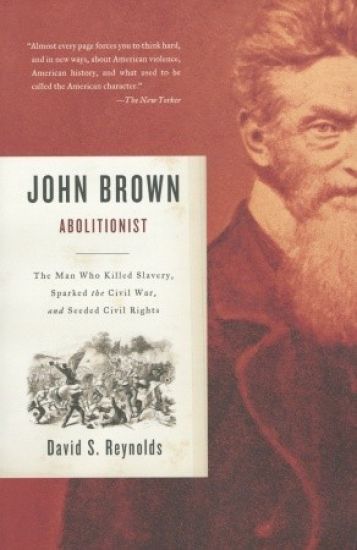
John Brown, Abolitionist: The Man Who Killed Slavery, Sparked the Civil War, and Seeded Civil Rights
A new biography by the award-winning author of Walt Whitman's America captures the turbulent life of John Brown, shedding new light on the controversial abolitionist who was responsible for the massacre of unarmed citizens in Kansas, liberation of slaves in Missouri, and raid on the federal arsenal in Harpers Ferry, Virginia, in his anti-slavery campaign. Reprint. 17,500 first printing.
Mightier than the Sword

Mightier than the Sword

David S. Reynolds

WW Norton Co
2011
sidottu
Uncle Tom's Cabin is likely the most influential novel ever written by an American. In a fitting tribute to the two hundredth anniversary of Harriet Beecher Stowe's birth, Bancroft Prize-winning historian David S. Reynolds reveals her book's impact not only on the abolitionist movement and the American Civil War but also on worldwide events, including the end of serfdom in Russia, down to its influence in the twentieth century. He explores how both Stowe's background as the daughter in a famously intellectual family of preachers and her religious visions were fundamental to the novel. And he demonstrates why the book was beloved by millions—and won over even some southerners—while fueling lasting conflicts over the meaning of America. Although vilified over the years as often as praised, it has remained a cultural landmark, proliferating in the form of plays, songs, films, and merchandise—a rich legacy that has both fed and contested American racial stereotypes.
Mightier than the Sword

Mightier than the Sword

David S. Reynolds

WW Norton Co
2013
nidottu
In this wide-ranging, brilliantly researched work, David S. Reynolds traces the factors that made Uncle Tom’s Cabin the most influential novel ever written by an American. Upon its 1852 publication, the novel’s vivid depiction of slavery polarized its American readership, ultimately widening the rift that led to the Civil War. Reynolds also charts the novel’s afterlife—including its adaptation into plays, films, and consumer goods—revealing its lasting impact on American entertainment, advertising, and race relations.
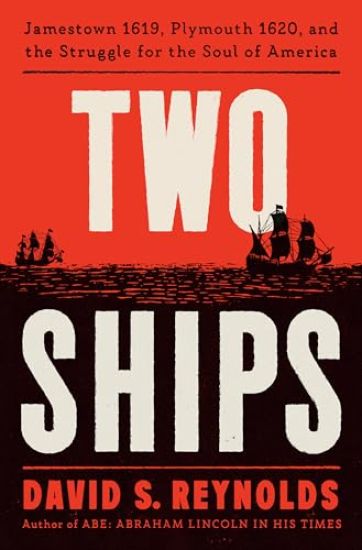
Two Ships: Jamestown 1619, Plymouth 1620, and the Struggle for the Soul of America
A revelatory history of American division through the prism of two ships, whose widespread use to define that division has been lost to memory despite their enduring legacy In the bitterly polarized decades leading up to the American Civil War, it was commonplace to argue that America's strife could be traced back to the arrival of two ships, less than a year apart--The White Lion, which brought the first enslaved Africans to Jamestown in 1619, and the Mayflower, which brought the Pilgrims to Plymouth Rock in 1620. In a deeper sense, David S. Reynolds shows us, in this magnificent book, those two ships, invoked by Frederick Douglass and many others, stood for two quite distinct realities: the Puritans and the Cavaliers, names and ideologies born in the bloodshed of the English Civil War. The Virginia colony, founded by royalists, was steeped in the ideas of divine right, which flowed down in rigid patriarchal hierarchies. Plymouth Colony's dissenters to the king and his church, while hardly perfect, carried the seeds of a more egalitarian political vision. These two ships of 1619 and 1620 played a key role in the battle of images and words that marked the roiling fight, and then war, over slavery. As Reynolds shows, there was a long stretch of time in America when everyone knew what Cavaliers and Puritans meant. It was North versus South, but more deeply, it was about whether social hierarchy was the natural order of things. But then, as America descended into the long night of Jim Crow, the metaphor of the two ships went to sleep as well. The meaning of the Mayflower and of Thanksgiving changed as they became mainstream, apolitical ideas. If the ships' status as cultural touchpoints before the Civil War tells us something vital about that conflict, their forgetting afterward tells us much about why the road to true equality has proved so stony. By dredging up these two ships' dueling images, the great David S. Reynolds enables us to make the same use of them that Frederick Douglass and his contemporaries did--to challenge us, and to give us hope that we are up to the task.
Abe: Abraham Lincoln in His Times

Abe: Abraham Lincoln in His Times

David S. Reynolds

PENGUIN PRESS
2020
sidottu
Now an Apple TV+ documentary, Lincoln's Dilemma, airing February 18, 2022. One of the Wall Street Journal's Ten Best Books of the Year A Washington Post Notable Book A Christian Science Monitor and Kirkus Reviews Best Book of 2020 Winner of the Gilder Lehrman Abraham Lincoln Prize and the Abraham Lincoln Institute Book Award "A marvelous cultural biography that captures Lincoln in all his historical fullness. . . . using popular culture in this way, to fill out the context surrounding Lincoln, is what makes Mr. Reynolds's biography so different and so compelling . . . Where did the sympathy and compassion expressed in Lincoln's] Second Inaugural--'With malice toward none; with charity for all'--come from? This big, wonderful book provides the richest cultural context to explain that, and everything else, about Lincoln." --Gordon Wood, Wall Street Journal From one of the great historians of nineteenth-century America, a revelatory and enthralling new biography of Lincoln, many years in the making, that brings him to life within his turbulent age David S. Reynolds, author of the Bancroft Prize-winning cultural biography of Walt Whitman and many other iconic works of nineteenth century American history, understands the currents in which Abraham Lincoln swam as well as anyone alive. His magisterial biography Abe is the product of full-body immersion into the riotous tumult of American life in the decades before the Civil War. It was a country growing up and being pulled apart at the same time, with a democratic popular culture that reflected the country's contradictions. Lincoln's lineage was considered auspicious by Emerson, Whitman, and others who prophesied that a new man from the West would emerge to balance North and South. From New England Puritan stock on his father's side and Virginia Cavalier gentry on his mother's, Lincoln was linked by blood to the central conflict of the age. And an enduring theme of his life, Reynolds shows, was his genius for striking a balance between opposing forces. Lacking formal schooling but with an unquenchable thirst for self-improvement, Lincoln had a talent for wrestling and bawdy jokes that made him popular with his peers, even as his appetite for poetry and prodigious gifts for memorization set him apart from them through his childhood, his years as a lawyer, and his entrance into politics. No one can transcend the limitations of their time, and Lincoln was no exception. But what emerges from Reynolds's masterful reckoning is a man who at each stage in his life managed to arrive at a broader view of things than all but his most enlightened peers. As a politician, he moved too slowly for some and too swiftly for many, but he always pushed toward justice while keeping the whole nation in mind. Abe culminates, of course, in the Civil War, the defining test of Lincoln and his beloved country. Reynolds shows us the extraordinary range of cultural knowledge Lincoln drew from as he shaped a vision of true union, transforming, in Martin Luther King Jr.'s words, "the jangling discords of our nation into a beautiful symphony of brotherhood." Abraham Lincoln did not come out of nowhere. But if he was shaped by his times, he also managed at his life's fateful hour to shape them to an extent few could have foreseen. Ultimately, this is the great drama that astonishes us still, and that Abe brings to fresh and vivid life. The measure of that life will always be part of our American education.
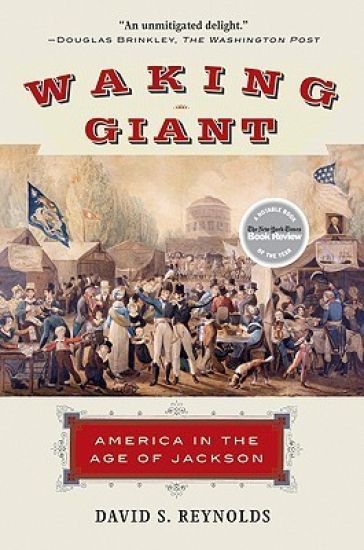
Waking Giant

Waking Giant

David S Reynolds

HARPERCOLLINS PUBLISHERS INC
2009
pokkari
A New York Times Notable Book"Far more than just a political story or, for that matter, a story of Andrew Jackson, Reynolds's book shines a bright light on the cultural, social, intellectual, and artistic currents buffeting the nation. . . . Reynolds is a thoughtful historian and Waking Giant is as engaging and insightful a narrative of this critical interregnum as any written in years."--New York Times Book Review A brilliant, definitive history of America's vibrant and tumultuous rise during the Jacksonian era, from the Bancroft Prize-winning author of Walt Whitman's AmericaAmerica experienced unprecedented growth and turmoil in the years between 1815 and 1848. It was an age when Andrew Jackson redefined the presidency and James K. Polk expanded the nation's territory. Historian and literary critic David S. Reynolds captures the turbulence of a democracy caught in the throes of the controversy over slavery, the rise of capitalism, and the birth of urbanization. He brings to life the reformers, abolitionists, and temperance advocates who struggled to correct America's worst social ills, and he reveals the shocking phenomena that marked the age: violent mobs, P. T. Barnum's freaks, all-seeing mesmerists, polygamous prophets, and rabble-rousing feminists. Meticulously researched and masterfully written, Waking Giant is a brilliant chronicle of America's vibrant and tumultuous rise.
Transatlantic Sensations

Transatlantic Sensations

John Cyril Barton; Kristin N. Huston; a Preface by David S. Reynolds

Routledge
2016
nidottu
Bringing together sensation writing and transatlantic studies, this collection makes a convincing case for the symbiotic relationship between literary works on both sides of the Atlantic. Transatlantic Sensations begins with the 'prehistories' of the genre, looking at the dialogue and debate generated by the publication of sentimental and gothic fiction by William Godwin, Susanna Rowson, and Charles Brockden Brown.Thus establishing a context for the treatment of works by Louisa May Alcott, Mary Elizabeth Braddon, Dion Boucicault, Wilkie Collins, Charles Dickens, George Lippard, Charles Reade, Harriet Beecher Stowe and George Thompson, the volumetakes up a wide range of sensational topics including sexuality, slavery, criminal punishment, literary piracy, mesmerism, and the metaphors of foreign literary invasion and diseased reading. Concluding essays offer a reassessment of the realist and domestic fiction of George Eliot, Charlotte Yonge, and Thomas Hardy in the context of transatlantic sensationalism, emphasizing the evolution of the genre throughout the century and mapping a new transatlantic lineage for this immensely popular literary form. The book's final essay examines an international kidnapping case that was a journalistic sensation at the turn of the twentieth century.
Transatlantic Sensations

Transatlantic Sensations

John Cyril Barton; Kristin N. Huston; a Preface by David S. Reynolds

Ashgate Publishing Limited
2012
sidottu
Bringing together sensation writing and transatlantic studies, this collection makes a convincing case for the symbiotic relationship between literary works on both sides of the Atlantic. Transatlantic Sensations begins with the 'prehistories' of the genre, looking at the dialogue and debate generated by the publication of sentimental and gothic fiction by William Godwin, Susanna Rowson, and Charles Brockden Brown.Thus establishing a context for the treatment of works by Louisa May Alcott, Mary Elizabeth Braddon, Dion Boucicault, Wilkie Collins, Charles Dickens, George Lippard, Charles Reade, Harriet Beecher Stowe and George Thompson, the volumetakes up a wide range of sensational topics including sexuality, slavery, criminal punishment, literary piracy, mesmerism, and the metaphors of foreign literary invasion and diseased reading. Concluding essays offer a reassessment of the realist and domestic fiction of George Eliot, Charlotte Yonge, and Thomas Hardy in the context of transatlantic sensationalism, emphasizing the evolution of the genre throughout the century and mapping a new transatlantic lineage for this immensely popular literary form. The book's final essay examines an international kidnapping case that was a journalistic sensation at the turn of the twentieth century.