Kirjahaku
Etsi kirjoja tekijän nimen, kirjan nimen tai ISBN:n perusteella.
1000 tulosta hakusanalla David Sloan
![[Brackets]](/covers/9781479187904.jpg)
Four men have done the improbable: predicted perfect March Madness brackets through to the Final Four. Each has chosen a different champion and receives a ticket to the final games to see who will win it all. But the tournament turns their lives upside down in ways they never could have predicted.Cole Kaman, a hapless receptionist in a dead-end job, fills out the bracket at random to impress a co-worker, only to attract the attention of a deranged serial arsonist. Perry Lynwood, a middle-aged gamer who spends his time as a warrior in a virtual city, becomes unhinged as events in the virtual world begin happening in reality. Neeson Faulkner, the ambitious founder of a green energy company, bets everything on the powerful software used to predict his bracket. And Tucker Barnes is a college student who just wants to watch a few games, but he can't seem to escape involvement in an international crisis on the other side of the world.These four men will collide against the backdrop of America's most exciting tournament in a story about genius, luck, ambition, and the unsettling truth that there is always a bigger game.Four men. Four perfect brackets. One tournament. Infinite possibilities.

An experienced teacher explores appropriate literature for each year of the Waldorf high school.He examines the unique developmental stages of each year, and gives rich examples of suitable literature.David Sloan's love for literature, and desire to inspire his adolescent students, shines through these pages. This is a book that will delight high school teachers.

A powerful treatise that demonstrates the existence of altruism in nature, with surprising implications for human society Does altruism exist? Or is human nature entirely selfish? In this eloquent and accessible book, famed biologist David Sloan Wilson provides new answers to this age-old question based on the latest developments in evolutionary science. From an evolutionary viewpoint, Wilson argues, altruism is inextricably linked to the functional organization of groups. “Groups that work” undeniably exist in nature and human society, although special conditions are required for their evolution. Humans are one of the most groupish species on earth, in some ways comparable to social insect colonies and multi-cellular organisms. The case that altruism evolves in all social species is surprisingly simple to make. Yet the implications for human society are far from obvious. Some of the most venerable criteria for defining altruism aren’t worth caring much about, any more than we care much whether we are paid by cash or check. Altruism defined in terms of thoughts and feelings is notably absent from religion, even though altruism defined in terms of action is notably present. The economic case for selfishness can be decisively rejected. The quality of everyday life depends critically on people who overtly care about the welfare of others. Yet, like any other adaptation, altruism can have pathological manifestations. Wilson concludes by showing how a social theory that goes beyond altruism by focusing on group function can help to improve the human condition.Co-published with Templeton Press

After decades of studying animals in their habitats, evolutionary biologist David Sloan Wilson had a radical idea-apply evolutionary science to the study of a city. Cities are like organisms, so why not study them as such?Inspired to become an agent of change in his post-industrial hometown, Wilson descended on its neighborhoods with a scientist's eye. What does bullying feed on? How can we give kids the best start in life? Is spirituality expanding into new areas, or shrinking? How does neighborhood quality affect test scores? After learning how these traits 'live' throughout a city, how can we improve the lives of its citizens?Populated with original research and the latest science and written in an appealing, personal narrative, THE NEIGHBORHOOD PROJECT is a significant book that strives to define how places define us.
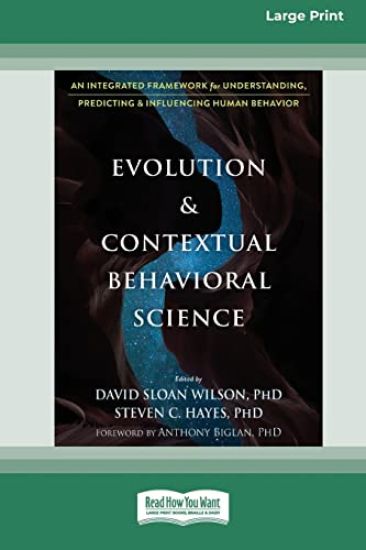
Evolution and Contextual Behavioral Science
David Sloan Wilson; Steven C Hayes
Readhowyouwant
2020
pokkari

Evolution for Everyone: How Darwin's Theory Can Change the Way We Think about Our Lives
David Sloan Wilson
Delta
2007
nidottu
A witty new approach to the study of evolution refutes the myths and misconceptions of Darwin's theory and demonstrates how evolutionary principles can be applied to almost every aspect of human life. Reprint. 22,500 first printing.

When a lost robot stumbles on a pile of bits and bobbles, can he build a rocket ship and end his lonely troubles? Robot's story begins in a world that has been abandoned by humankind. He finds himself alone, surrounded by all of our discarded belongings and junk. After spending years wondering why he was left behind, he finds a rusty piece of rocket. This single piece sparks an idea that takes Robot on a journey across the globe, in the hopes he will find enough pieces to build his own rocket ship and find his friends. A heartfelt tale of hope, perseverance, and finding the courage to push through adversity. A note from the author: From time to time, we all find ourselves in places or situations we never could have imagined, and finding our way through them can often seem impossible. Whether it's escaping a deserted planet by building a rocket ship or embarking on a creative venture, during a year unlike any other; all we need is the courage to begin, and the perseverance to succeed. I would specially like to thank the below luminaries for helping me take my first step - as through their words, came my courage. "Begin anywhere, preferably right now." - Elizabeth Gilbert, The Big Magic. I opened my mind to creativity and it found me, but your words inspired me to act. "Through the ashes of disaster, grow the roses of success." - The Sherman Brothers, The Roses Of Success, Chitty Chitty Bang Bang.Words that have stuck with me my entire life, and now live within Robot's story. Lastly, thank you. I hope Robot's story encourages you to always be on the lookout for that something (or someone) that inspires you.
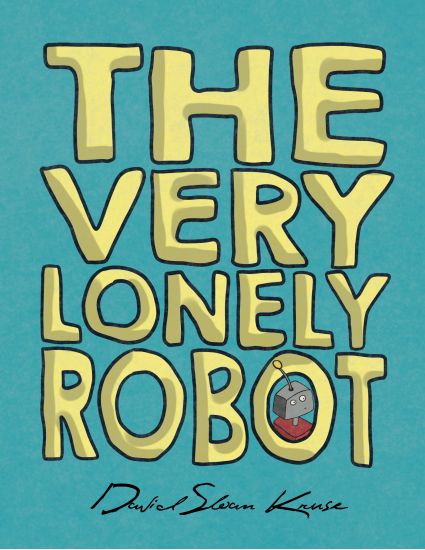
When a lost robot stumbles on a pile of bits and bobbles, can he build a rocket ship and end his lonely troubles? Robot's story begins in a world that has been abandoned by humankind. He finds himself alone, surrounded by all of our discarded belongings and junk. After spending years wondering why he was left behind, he finds a rusty piece of rocket. This single piece sparks an idea that takes Robot on a journey across the globe, in the hopes he will find enough pieces to build his own rocket ship and find his friends. A heartfelt tale of hope, perseverance, and finding the courage to push through adversity. A note from the author: From time to time, we all find ourselves in places or situations we never could have imagined, and finding our way through them can often seem impossible. Whether it's escaping a deserted planet by building a rocket ship or embarking on a creative venture, during a year unlike any other; all we need is the courage to begin, and the perseverance to succeed. I would specially like to thank the below luminaries for helping me take my first step - as through their words, came my courage. "Begin anywhere, preferably right now." - Elizabeth Gilbert, The Big Magic. I opened my mind to creativity and it found me, but your words inspired me to act. "Through the ashes of disaster, grow the roses of success." - The Sherman Brothers, The Roses Of Success, Chitty Chitty Bang Bang.Words that have stuck with me my entire life, and now live within Robot's story. Lastly, thank you. I hope Robot's story encourages you to always be on the lookout for that something (or someone) that inspires you.David

Felicia's planning a party The invitations have been made, the table is set, and she has spent all morning baking lots of delicious treats;Gooseberry muffins, a spiced rhubarb pie, and blueberry cupcakes as blue as the sky...But Felicia knows she forgot something - what could it be?Join Felicia and her forest friends, as they come together to save the day.

"Atlas Hugged signals a revolution in the way we see the world and our rightful place within it. Not a violent revolution, thankfully, but an intellectual revolution."With these words, David Sloan Wilson invites readers into a fictional world that mirrors events taking place in the real world-the rapid evolution of worldwide cooperation. Wilson is uniquely positioned to tell this story. As a scientist, he helped to lay the theoretical foundation for the intellectual revolution with books such as Unto Others (with philosopher Elliott Sober), Darwin's Cathedral, and Does Altruism Exist? As a nonfiction writer, his books Evolution for Everyone, The Neighborhood Project, and This View of Life already reach a wide audience. With Atlas Hugged, Wilson returns to his familial roots as the son of novelist Sloan Wilson, who helped to define the 1950s with his novels The Man in the Grey Flannel Suit and A Summer Place. There is nothing like a story for conveying a moral worldview. Atlas Hugged is many things, but above all it is a story of two young people trying to tell right from wrong without needing to peer through a tissue of lies.

It is widely understood that Charles Darwin's theory of evolution completely revolutionized the study of biology. Yet, according to David Sloan Wilson, the Darwinian revolution won't be truly complete until it is applied more broadly--to everything associated with the words human, culture, and policy. In a series of engaging and insightful examples--from the breeding of hens to the timing of cataract surgeries to the organization of an automobile plant--Wilson shows how an evolutionary worldview provides a practical tool kit for understanding not only genetic evolution but also the fast-paced changes that are having an impact on our world and ourselves. What emerges is an incredibly empowering argument: If we can become wise managers of evolutionary processes, we can solve the problems of our age at all scales--from the efficacy of our groups to our well-being as individuals to our stewardship of the planet Earth

Finnes den ekte, uselviske altruismen? Eller har den naturlige utvelgelsen gjort oss umedgjørlige og egoistiske i vår streben etter overlevelse? David Sloan Wilsons «kortfattede bok om et stort spørsmål» er ikke bare en invitasjon til å delta på en utfordrende reise gjennom evolusjonsbiologien, men også et ambisiøst og entusiastisk vitenskapelig forsvarsskrift for betydningen av altruisme – ikke bare for menneskeartens overlevelse, men også for fremtiden til global politikk, forretningsutvikling og utformingen av politiske retningslinjer. Uten å la seg avskrekke av den kompleksiteten som tidligere kjennetegnet biologivitenskapen gjennom dens legitimering av rasediskriminering, totalitær undertrykkelse og rå kapitalisme, foreslår Wilson et modig, vitenskapelig fundert paradigmeskifte: en overgang fra en verden preget av den konkurranselystne arten homo economicus til en verden hvor samarbeid og altruisme er garantister for menneskets overlevelse på jorda.Fra Nina Witoszeks etterord til Finnes altruisme?

No matter what we do, however kind or generous our deeds may seem, a hidden motive of selfishness lurks--or so science has claimed for years. This book, whose publication promises to be a major scientific event, tells us differently. In Unto Others philosopher Elliott Sober and biologist David Sloan Wilson demonstrate once and for all that unselfish behavior is in fact an important feature of both biological and human nature. Their book provides a panoramic view of altruism throughout the animal kingdom--from self-sacrificing parasites to insects that subsume themselves in the superorganism of a colony to the human capacity for selflessness--even as it explains the evolutionary sense of such behavior.Explaining how altruistic behavior can evolve by natural selection, this book finally gives credence to the idea of group selection that was originally proposed by Darwin but denounced as heretical in the 1960s. With their account of this controversy, Sober and Wilson offer a detailed case study of scientific change as well as an indisputable argument for group selection as a legitimate theory in evolutionary biology.Unto Others also takes a novel evolutionary approach in explaining the ultimate psychological motives behind unselfish human behavior. Developing a theory of the proximate mechanisms that most likely evolved to motivate adaptive helping behavior, Sober and Wilson show how people and perhaps other species evolved the capacity to care for others as a goal in itself.A truly interdisciplinary work that blends biology, philosophy, psychology, and anthropology, this book will permanently change not just our view of selfless behavior but also our understanding of many issues in evolutionary biology and the social sciences.
Perspectives on Mass Communication History
Wm. David Sloan
Routledge Member of the Taylor and Francis Group
1991
sidottu
This unique volume is based on the philosophy that the teaching of history should emphasize critical thinking and attempt to involve the student intellectually, rather than simply provide names, dates, and places to memorize. The book approaches history not as a cut-and-dried recitation of a collection of facts but as multifaceted discipline. In examining the various perspectives historians have provided, the author brings a vitality to the study of history that students normally do not gain. The text is comprised of 24 historiographical essays, each of which discusses the major interpretations of a significant topic in mass communication history. Students are challenged to evaluate each approach critically and to develop their own explanations. As a textbook designed specifically for use in graduate level communication history courses, it should serve as a stimulating pedagogical tool.

Perspectives on Mass Communication History
Wm. David Sloan
Routledge Member of the Taylor and Francis Group
1991
nidottu
This unique volume is based on the philosophy that the teaching of history should emphasize critical thinking and attempt to involve the student intellectually, rather than simply provide names, dates, and places to memorize. The book approaches history not as a cut-and-dried recitation of a collection of facts but as multifaceted discipline. In examining the various perspectives historians have provided, the author brings a vitality to the study of history that students normally do not gain. The text is comprised of 24 historiographical essays, each of which discusses the major interpretations of a significant topic in mass communication history. Students are challenged to evaluate each approach critically and to develop their own explanations. As a textbook designed specifically for use in graduate level communication history courses, it should serve as a stimulating pedagogical tool.

Pulitzer Prize Editorials
Wm. David Sloan; Laird B. Anderson
Iowa State University Press
2003
nidottu
Since Joseph Pulitzer first established a prize for the best editorial in1917, the award’s prestige has grown steadily. Today the Pulitzer is acknowledged as the most distinguished prize in journalism. All 87 years of these prize-winning pieces are collected in the updated third edition of Pulitzer Prize Editorials: America’s Best Writing, 1917-2003. This book is an impressive anthology that illustrates the evolution of editorial writing over the decades. Each entry contains the entire, unabridged text of the prize-winning editorial from that year, and is preceded by a succinct introduction from the editors. From students learning the craft to accomplished opinion writers, Pulitzer Prize Editorials makes it possible for all students of editorial writing to learn from the bestrs.
What Every Engineer Should Know About Digital Accessibility
Sarah Horton; David Sloan
TAYLOR FRANCIS LTD
2024
sidottu
Accessibility is a core quality of digital products to be deliberately addressed throughout the development lifecycle. What Every Engineer Should Know About Digital Accessibility will prepare readers to integrate digital accessibility into their engineering practices. Readers will learn how to accurately frame accessibility as an engineering challenge so they are able to address the correct problems in the correct way.Illustrated with diverse perspectives from accessibility practitioners and advocates, this book describes how people with disabilities use technology, the nature of accessibility barriers in the digital world, and the role of engineers in breaking down those barriers. Accessibility competence for current, emerging, and future technologies is addressed through a combination of guiding principles, core attributes and requirements, and accessibility-informed engineering practices.FEATURESDiscusses how technology can support inclusion for people with disabilities and how rigorous engineering processes help create quality user experiences without introducing accessibility barriersExplains foundational principles and guidelines that build core competency in digital accessibility as they are applied across diverse and emerging technology platformsHighlights practical insights into how engineering teams can effectively address accessibility throughout the technology development lifecycleUses international standards to define and measure accessibility qualityWritten to be accessible to non-experts in the subject area, What Every Engineer Should Know About Digital Accessibility is aimed at students, professionals, and researchers in the field of software engineering.A companion site supporting and extending the themes and topics from the book can be found at https://knowaboutaccessibility.org/
What Every Engineer Should Know About Digital Accessibility
Sarah Horton; David Sloan
TAYLOR FRANCIS LTD
2024
nidottu
Accessibility is a core quality of digital products to be deliberately addressed throughout the development lifecycle. What Every Engineer Should Know About Digital Accessibility will prepare readers to integrate digital accessibility into their engineering practices. Readers will learn how to accurately frame accessibility as an engineering challenge so they are able to address the correct problems in the correct way.Illustrated with diverse perspectives from accessibility practitioners and advocates, this book describes how people with disabilities use technology, the nature of accessibility barriers in the digital world, and the role of engineers in breaking down those barriers. Accessibility competence for current, emerging, and future technologies is addressed through a combination of guiding principles, core attributes and requirements, and accessibility-informed engineering practices.FEATURESDiscusses how technology can support inclusion for people with disabilities and how rigorous engineering processes help create quality user experiences without introducing accessibility barriersExplains foundational principles and guidelines that build core competency in digital accessibility as they are applied across diverse and emerging technology platformsHighlights practical insights into how engineering teams can effectively address accessibility throughout the technology development lifecycleUses international standards to define and measure accessibility qualityWritten to be accessible to non-experts in the subject area, What Every Engineer Should Know About Digital Accessibility is aimed at students, professionals, and researchers in the field of software engineering.A companion site supporting and extending the themes and topics from the book can be found at https://knowaboutaccessibility.org/