Kirjojen hintavertailu. Mukana 11 244 527 kirjaa ja 12 kauppaa.

Kirjahaku

Etsi kirjoja tekijän nimen, kirjan nimen tai ISBN:n perusteella.

1000 tulosta hakusanalla David Stephen Calonne

Beat Film, Beat Writers

Beat Film, Beat Writers

David Stephen Calonne

TAYLOR FRANCIS LTD
2024
sidottu
Beat Film, Beat Writers is the first monograph to analyze the films of Christopher Maclaine, Lawrence Jordan, ruth weiss, Ron Rice, Robert Frank, Barbara Rubin, Shirley Clarke, William S. Burroughs, and Joanne Kyger. The book is noteworthy for its emphasis on women filmmakers who have traditionally been excluded from close analysis by film scholars. Beat Film, Beat Writers also explores the ways Beat authors such as Philip Lamantia, Michael McClure, Diane di Prima, Wiliam S. Burroughs, Allen Ginsberg, Jack Kerouac, Peter Orlovsky, Gregory Corso, Joanne Kyger, and others became deeply involved with the film communities of New York and California. The book discusses their roles as both actors and participants in the making of these films and demonstrates how many of the same themes that characterized Beat literature surface in cinema. The anxiety over the possibilities of nuclear war, the search for deeper modes of spirituality in the study of Buddhism as well as occult and esoteric systems, the struggle for equality for the LGBTQ+ community, the beginnings of the ecological movement, and the fight against censorship and the open depiction of sexuality are all themes that occur both in Beat film and in Beat literature. Beat Film, Beat Writers also features an Epilogue on the cinema of singer and poet Jim Morrison, who, although not part of the Beat movement, was deeply influenced by Beat literature and carried on many of the aesthetic and philosophical aims of the Beats into the late sixties.
The Spiritual Imagination of the Beats

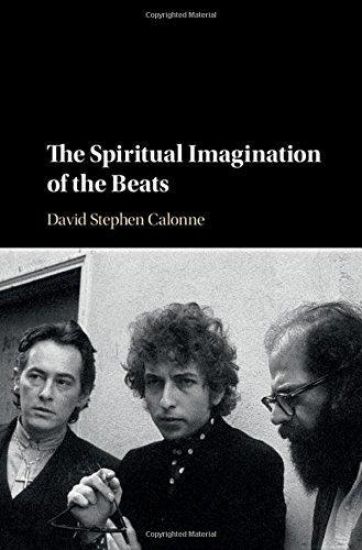
The Spiritual Imagination of the Beats

David Stephen Calonne

Cambridge University Press
2017
sidottu
The Spiritual Imagination of the Beats is the first comprehensive study to explore the role of esoteric, occult, alchemical, shamanistic, mystical and magical traditions in the work of eleven major Beat authors. The opening chapter discusses Kenneth Rexroth and Robert Duncan as predecessors and important influences on the spiritual orientation of the Beats. David Stephen Calonne draws comparisons throughout the book between various approaches individual Beat writers took regarding sacred experience - for example, Burroughs had significant objections to Buddhist philosophy, while Allen Ginsberg and Jack Kerouac both devoted considerable time to studying Buddhist history and texts. This book also focuses on authors who have traditionally been neglected in Beat Studies - Diane di Prima, Bob Kaufman, Philip Lamantia and Philip Whalen. In addition, several understudied work such as Gregory Corso's 'The Geometric Poem' - inspired by Corso's deep engagement with ancient Egyptian thought - are given close attention. Calonne introduces important themes from the history of heterodoxy - from Gnosticism, Manicheanism and Ismailism to Theosophy and Tarot - and demonstrates how inextricably these ideas shaped the Beat literary imagination.
R. Crumb

R. Crumb

David Stephen Calonne

University Press of Mississippi
2021
sidottu
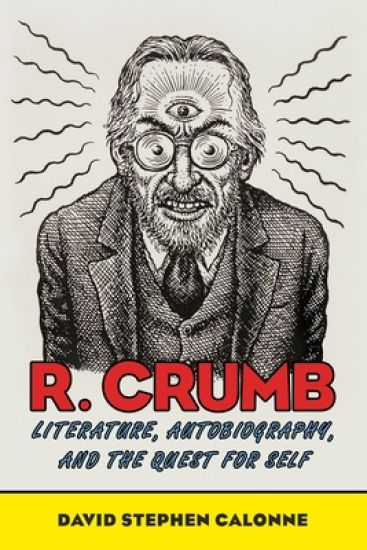
Robert Crumb (b. 1943) read widely and deeply a long roster of authors including Robert Louis Stevenson, Charles Dickens, J. D. Salinger, Jack Kerouac, William S. Burroughs, and Allen Ginsberg, as well as religious classics including biblical, Buddhist, Hindu, and Gnostic texts. Crumb's genius, according to author David Stephen Calonne, lies in his ability to absorb a variety of literary, artistic, and spiritual traditions and incorporate them within an original, American mode of discourse that seeks to reveal his personal search for the meaning of life. R. Crumb: Literature, Autobiography, and the Quest for Self contains six chapters that chart Crumb's intellectual trajectory and explore the recurring philosophical themes that permeate his depictions of literary and biographical works and the ways he responds to them through innovative, dazzling compositional techniques. Calonne explores the ways Crumb develops concepts of solitude, despair, desire, and conflict as aspects of the quest for self in his engagement with the book of Genesis and works by Franz Kafka, Jean-Paul Sartre, the Beats, Charles Bukowski, and Philip K. Dick, as well as Crumb's illustrations of biographies of musicians Jelly Roll Morton and Charley Patton. Calonne demonstrates how Crumb's love for literature led him to attempt an extremely faithful rendering of the texts he admired while at the same time highlighting for his readers the particular hidden philosophical meanings he found most significant in his own autobiographical quest for identity and his authentic self.
R. Crumb

R. Crumb

David Stephen Calonne

University Press of Mississippi
2021
nidottu
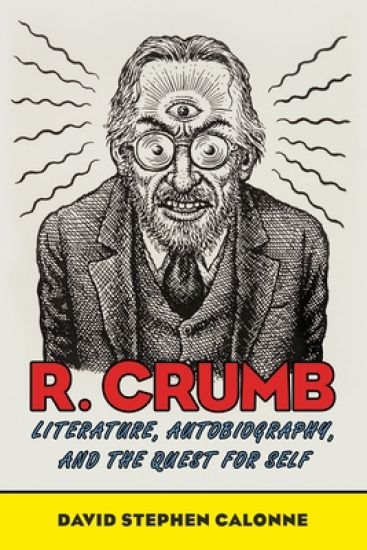
Robert Crumb (b. 1943) read widely and deeply a long roster of authors including Robert Louis Stevenson, Charles Dickens, J. D. Salinger, Jack Kerouac, William S. Burroughs, and Allen Ginsberg, as well as religious classics including biblical, Buddhist, Hindu, and Gnostic texts. Crumb's genius, according to author David Stephen Calonne, lies in his ability to absorb a variety of literary, artistic, and spiritual traditions and incorporate them within an original, American mode of discourse that seeks to reveal his personal search for the meaning of life. R. Crumb: Literature, Autobiography, and the Quest for Self contains six chapters that chart Crumb's intellectual trajectory and explore the recurring philosophical themes that permeate his depictions of literary and biographical works and the ways he responds to them through innovative, dazzling compositional techniques. Calonne explores the ways Crumb develops concepts of solitude, despair, desire, and conflict as aspects of the quest for self in his engagement with the book of Genesis and works by Franz Kafka, Jean-Paul Sartre, the Beats, Charles Bukowski, and Philip K. Dick, as well as Crumb's illustrations of biographies of musicians Jelly Roll Morton and Charley Patton. Calonne demonstrates how Crumb's love for literature led him to attempt an extremely faithful rendering of the texts he admired while at the same time highlighting for his readers the particular hidden philosophical meanings he found most significant in his own autobiographical quest for identity and his authentic self.
Diane di Prima

Diane di Prima

David Stephen Calonne

Bloomsbury Academic USA
2019
sidottu
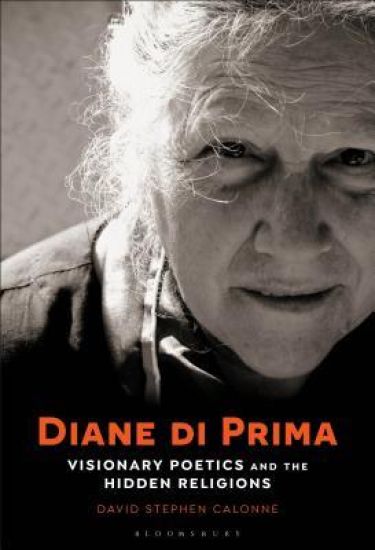
Diane di Prima: Visionary Poetics and the Hidden Religions reveals how central di Prima was in the discovery, articulation and dissemination of the major themes of the Beat and hippie countercultures from the fifties to the present.Di Prima (1934--) was at the center of literary, artistic, and musical culture in New York City. She also was at the energetic fulcrum of the Beat movement and, with Leroi Jones (Amiri Baraka), edited The Floating Bear (1961-69), a central publication of the period to which William S. Burroughs, Jack Kerouac, Allen Ginsberg, Charles Olson, and Frank O'Hara contributed. Di Prima was also a pioneer in her challenges to conventional assumptions regarding love, sexuality, marriage, and the role of women. David Stephen Calonne charts the life work of di Prima through close readings of her poetry, prose, and autobiographical writings, exploring her thorough immersion in world spiritual traditions and how these studies informed both the form and content of her oeuvre. Di Prima’s engagement in what she would call “the hidden religions” can be divided into several phases: her years at Swarthmore College and in New York; her move to San Francisco and immersion in Zen; her researches into the I Ching, Paracelsus, John Dee, Heinrich Cornelius Agrippa, alchemy, Tarot, and Kabbalah of the mid-sixties; and her later interest in Tibetan Buddhism. Diane di Prima: Visionary Poetics and the Hidden Religions is the first monograph devoted to a writer of genius whose prolific work is notable for its stylistic variety, wit and humor, struggle for social justice, and philosophical depth.
Diane di Prima

Diane di Prima

David Stephen Calonne

Bloomsbury Academic USA
2020
nidottu
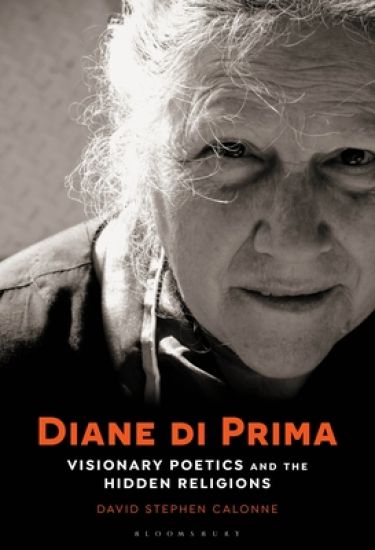
Diane di Prima: Visionary Poetics and the Hidden Religions reveals how central di Prima was in the discovery, articulation and dissemination of the major themes of the Beat and hippie countercultures from the fifties to the present.Di Prima (1934--) was at the center of literary, artistic, and musical culture in New York City. She also was at the energetic fulcrum of the Beat movement and, with Leroi Jones (Amiri Baraka), edited The Floating Bear (1961-69), a central publication of the period to which William S. Burroughs, Jack Kerouac, Allen Ginsberg, Charles Olson, and Frank O'Hara contributed. Di Prima was also a pioneer in her challenges to conventional assumptions regarding love, sexuality, marriage, and the role of women. David Stephen Calonne charts the life work of di Prima through close readings of her poetry, prose, and autobiographical writings, exploring her thorough immersion in world spiritual traditions and how these studies informed both the form and content of her oeuvre. Di Prima’s engagement in what she would call “the hidden religions” can be divided into several phases: her years at Swarthmore College and in New York; her move to San Francisco and immersion in Zen; her researches into the I Ching, Paracelsus, John Dee, Heinrich Cornelius Agrippa, alchemy, Tarot, and Kabbalah of the mid-sixties; and her later interest in Tibetan Buddhism. Diane di Prima: Visionary Poetics and the Hidden Religions is the first monograph devoted to a writer of genius whose prolific work is notable for its stylistic variety, wit and humor, struggle for social justice, and philosophical depth.
Charles Bukowski

Charles Bukowski

David Stephen Calonne

Reaktion Books
2012
nidottu
Born in Germany in 1920 and raised in the United States, the poet, short-story writer and novelist Charles Bukowski occupies a unique place in world literature. Bukowski’s prolific output sits at the confluence of a number of major literary, creative and intellectual traditions; this new interpretation of his life and work details the diverse fields that influenced him – a list that includes German philosophers (Nietzsche, Schopenhauer); Russian writers (Dostoevsky, Gorky); American poets (Whitman, Pound, the Beats); classical music; and the eighth-century Chinese poet Li Po.Also crucial to Bukowski’s development as a writer was his German-American heritage, and in this book David Stephen Calonne reveals this hybrid identity to be as critical to any understanding of Bukowski’s biography and oeuvre as his abusive childhood and discovery in adolescence of the ecstasy of alcohol. Exploring several little-known works of fiction and poetry dating from the early years of his career, his major works, including Post Office and Factotum, and the many volumes of poetry published with Black Sparrow Press, Calonne studies the numerous versions of Bukowski created by the writer himself and his followers.A concise yet comprehensive new account, Charles Bukowski will be of interest to those already fans of this influential figure and an invaluable introduction to those new to his work.
Henry Miller

Henry Miller

David Stephen Calonne

Reaktion Books
2014
nidottu
This new critical biography takes an innovative look at the life and work of the notorious American author (1891-1980). It examines Miller's intense immersion in esoteric and theosophical interests, charting the cultivation of these ideas from his boyhood and adolescence to late in his career and evaluating the way in which his writings and lifestyle were influenced by his spiritual quests. From astrology and Gnosticism to Nostradamus and the great thinkers of the East, Miller remained deeply engaged with a variety of distinct philosophies throughout his career. David Stephen Calonne explores the effects this had on the author's work in addition to Miller's own complex and volatile life, from his marriages and love affairs with Beatrice Wickens, June Mansfield and Anais Nin to his years in Paris, the journey to Greece which resulted in what Miller himself considered his greatest book - the travelogue The Colossus of Maroussi - and his subsequent residence in Big Sur and Pacific Palisades, California. Calonne discusses Miller's involvement in the arts, his love of painting and music, and his friendships with a number of classical musicians.Miller is revealed as a quirky, charismatic man of genius who continues to influence popular culture today, as, for example, in the work of award-winning graphic novelist Alison Bechdel. Highlighting many areas of Miller's life that have hitherto been neglected, Calonne's book takes a fascinating revisionary approach to the life and work of one of America's most controversial and iconic writers.
The Beats in Mexico

The Beats in Mexico

David Stephen Calonne

RUTGERS UNIVERSITY PRESS
2022
sidottu
Mexico features prominently in the literature and personal legends of the Beat writers, from its depiction as an extension of the American frontier in Jack Kerouac’s On the Road to its role as a refuge for writers with criminal pasts like William S. Burroughs. Yet the story of Beat literature and Mexico takes us beyond the movement’s superstars to consider the important roles played by lesser-known female Beat writers. The first book-length study of why the Beats were so fascinated by Mexico and how they represented its culture in their work, this volume examines such canonical figures as Kerouac, Burroughs, Ginsberg, Lamantia, McClure, and Ferlinghetti. It also devotes individual chapters to women such as Margaret Randall, Bonnie Bremser, and Joanne Kyger, who each made Mexico a central setting of their work and interrogated the misogyny they encountered in both American and Mexican culture. The Beats in Mexico not only considers individual Beat writers, but also places them within a larger history of countercultural figures, from D.H. Lawrence to Antonin Artaud to Jim Morrison, who mythologized Mexico as the land of the Aztecs and Maya, where shamanism and psychotropic drugs could take you on a trip far beyond the limits of the American imagination.
Journalister på besök : 18 intervjuer 1963-1993

Journalister på besök : 18 intervjuer 1963-1993

Charles Bukowski; David Stephen Calonne

Lindelöws bokförlag
2015
nidottu
I 18 intervjuer punkterar Charles Bukowski flera av myterna om hans person. Andra myter får genom hans öppenhet nytt bränsle. Han var en slugger, med timing och alltid svar på tal, en provokatör, estradören med humor och publiken i sin hand, en bildad och självlärd diversearbetare, som blev känd författare på båda sidor Atlanten.Under tidigt 60-tal kom fanzines och intervjuade Charles Bukowski, i småhyresrum i östra Hollywood. Hundratals dikter publiceradeundergroundförfattaren i tidskrifter som The Outsider och Trace.1970 slog romanen Post Office igenom över en natt. Fler böckerföljde. Amerikanska, brittiska, tyska och franska journalister kompå besök. Stora tidningar kom, journalister från Rolling Stone ochLondon Magazine. Charles Bukowskis vän Sean Penn och hans intervju iInterview från 1987 finns också här. Även en svensk besöktekultförfattaren, i hans villa med swimmingpool och BMW, söder omLos Angeles i San Pedro. En intervju som publicerades i den svenskafanzine Kannibal - och nu ännu en gång. I bokens förord skriver redaktören David Spephan Calonne: Bukowski var en mästare när det gällde en dialogs väsen och rytm: frågaoch svar, paus och rörelse. Överraskningen dold mellan raderna,sparsamma yttranden och verbala kontringar var hans styrka. Hansbästa dikter, berättelser och romaner härrör från denna perfektatonträff, från ett öra känsligt för en menings musik, frånmeningarnas dubbla budskap.
The Neo-Babylonian Empire and Babylon in the Latter Prophets
This present study seeks to clarify the character and functions of the Neo-Babylonian empire in its relationship to subjugated populations, and in particular to the population of Judah. Vanderhooft investigates Babylonian imperialism from two complementary perspectives: from native sources, which project the Babylonian imperial self-portrait, and from the writings of the biblical prophets, which provide a portrait from the perspective of a subjugated population.
Manual Of Sonography Or The Longhand-shorthand

Manual Of Sonography Or The Longhand-shorthand

David Stephen Davies

Palala Press
2018
pokkari
This work has been selected by scholars as being culturally important, and is part of the knowledge base of civilization as we know it. This work was reproduced from the original artifact, and remains as true to the original work as possible. Therefore, you will see the original copyright references, library stamps (as most of these works have been housed in our most important libraries around the world), and other notations in the work.This work is in the public domain in the United States of America, and possibly other nations. Within the United States, you may freely copy and distribute this work, as no entity (individual or corporate) has a copyright on the body of the work.As a reproduction of a historical artifact, this work may contain missing or blurred pages, poor pictures, errant marks, etc. Scholars believe, and we concur, that this work is important enough to be preserved, reproduced, and made generally available to the public. We appreciate your support of the preservation process, and thank you for being an important part of keeping this knowledge alive and relevant.
String Lug the Fox;

String Lug the Fox;

David 1910- Stephen

Hassell Street Press
2021
nidottu
This work has been selected by scholars as being culturally important and is part of the knowledge base of civilization as we know it.This work is in the public domain in the United States of America, and possibly other nations. Within the United States, you may freely copy and distribute this work, as no entity (individual or corporate) has a copyright on the body of the work.Scholars believe, and we concur, that this work is important enough to be preserved, reproduced, and made generally available to the public. To ensure a quality reading experience, this work has been proofread and republished using a format that seamlessly blends the original graphical elements with text in an easy-to-read typeface.We appreciate your support of the preservation process, and thank you for being an important part of keeping this knowledge alive and relevant.
The Last Champion of York

The Last Champion of York

Stephen David

Robert Hale Ltd
2019
sidottu
Between 1483 and 1485 Viscount Francis Lovell was one of the most important and influential men in the government of his childhood friend Richard III, becoming the King’s Chamberlain and a Knight of the Garter. Lovell continued to support a Ricardian claim to the throne long after Richard III’s death at Bosworth, and his elusive presence cast a dark shadow over the early years of Henry VII’s reign. He became Henry VII’s most persistent and dangerous enemy, orchestrating an assassination attempt on the new king. He was also architect of an international conspiracy that sought to replace Henry with a Ricardian pretender known as ‘Lambert Simnel’, which culminated in the battle of Stoke in 1487, the last true battle in the Wars of the Roses. Following Stoke, Lovell disappears from historical record and his fate is a mystery to this day. The eighteenth-century discovery at Minster Lovell of the skeletal remains of a medieval man in a sealed vault possibly reveals the final resting place of Francis Lovell – the last champion of York.