In the Japanese criminal justice system, the prosecutor has more control over life, liberty, and reputation than any other figure. Prosecutors make critical decisions about "who gets what" in Japan, chiefly by monopolizing decisions as to who will be charged with crimes, and for what. Based on extensive fieldwork inside a large prosecutors office in Japan and on numerous surveys and interviews, Johnson presents the first in-depth study in any language to describe and explain the role of Japan's 2000 prosecutors, the contexts in which they work, and the formidable powers they individually and collectively exercise.
Richard Linklater's filmmaking choices seem to defy basic patterns of authorship. From his debut with the inventive independent narrative Slacker, the Austin-based director's divergent films have included the sci-fi noir A Scanner Darkly, the socially conscious Fast Food Nation, the kid-friendly The School of Rock, the teen ensemble Dazed and Confused, and the twin romances Before Sunrise and Before Sunset. Yet throughout his varied career spanning two decades, Linklater has maintained a sense of integrity while working within a broad range of budgets, genres, and subject matters. Identifying a critical commonality among so much variation, David T. Johnson analyzes Linklater's preoccupation with the concept of time in many of his films, focusing on its many forms and aspects: the subjective experience of time and the often explicit, self-aware ways that characters discuss that experience; time and memory, and the ways that characters negotiate memory in the present; the moments of adolescence and early adulthood as crucial moments in time; the relationship between time and narrative in film; and how cinema, itself, may be becoming antiquated. While Linklater's focus on temporality often involves a celebration of the present that is not divorced from the past and future, Johnson argues that this attendance to the present also includes an ongoing critique of modern American culture. Crucially filling a gap in critical studies of this American director, the volume concludes with an interview with Linklater discussing his career.
Richard Linklater's filmmaking choices seem to defy basic patterns of authorship. From his debut with the inventive independent narrative Slacker, the Austin-based director's divergent films have included the sci-fi noir A Scanner Darkly, the socially conscious Fast Food Nation, the kid-friendly The School of Rock, the teen ensemble Dazed and Confused, and the twin romances Before Sunrise and Before Sunset. Yet throughout his varied career spanning two decades, Linklater has maintained a sense of integrity while working within a broad range of budgets, genres, and subject matters. Identifying a critical commonality among so much variation, David T. Johnson analyzes Linklater's preoccupation with the concept of time in many of his films, focusing on its many forms and aspects: the subjective experience of time and the often explicit, self-aware ways that characters discuss that experience; time and memory, and the ways that characters negotiate memory in the present; the moments of adolescence and early adulthood as crucial moments in time; the relationship between time and narrative in film; and how cinema, itself, may be becoming antiquated. While Linklater's focus on temporality often involves a celebration of the present that is not divorced from the past and future, Johnson argues that this attendance to the present also includes an ongoing critique of modern American culture. Crucially filling a gap in critical studies of this American director, the volume concludes with an interview with Linklater discussing his career.
This open access book provides a comparative perspective on capital punishment in Japan and the United States. Alongside the US, Japan is one of only a few developed democracies in the world which retains capital punishment and continues to carry out executions on a regular basis. There are some similarities between the two systems of capital punishment but there are also many striking differences. These include differences in capital jurisprudence, execution method, the nature and extent of secrecy surrounding death penalty deliberations and executions, institutional capacities to prevent and discover wrongful convictions, orientations to lay participation and to victim participation, and orientations to “democracy” and governance. Johnson also explores several fundamental issues about the ultimate criminal penalty, such as the proper role of citizen preferences in governing a system of punishment and the relevance of the feelings of victims and survivors.
This book explains Japan’s unique Prosecution Review Commission (PRC) which is composed of eleven lay people selected randomly from voter registration lists. Each of the country’s 165 PRCs reviews non-charge decisions made by professional prosecutors and determines which cases should be reinvestigated or charged. PRCs also provide prosecutors with general proposals and recommendations for improving their policies and practices. The book analyzes the history and operations of the PRC and uses statistics and case studies to examine its various impacts, from legitimation and shadow effects to kickbacks and mandatory prosecution.More broadly, this book explores a problem that is common in many criminal justice systems: how to hold prosecutors accountable for their non-charge decisions. It discusses the potential these panels have for improving the quality of criminal justice in Japan and other countries, and it will appeal to scholars and students studying prosecution and democracy, criminal justice, criminology, lay participation, justice reform, and Japanese studies.
This book explains Japan’s unique Prosecution Review Commission (PRC) which is composed of eleven lay people selected randomly from voter registration lists. Each of the country’s 165 PRCs reviews non-charge decisions made by professional prosecutors and determines which cases should be reinvestigated or charged. PRCs also provide prosecutors with general proposals and recommendations for improving their policies and practices. The book analyzes the history and operations of the PRC and uses statistics and case studies to examine its various impacts, from legitimation and shadow effects to kickbacks and mandatory prosecution.More broadly, this book explores a problem that is common in many criminal justice systems: how to hold prosecutors accountable for their non-charge decisions. It discusses the potential these panels have for improving the quality of criminal justice in Japan and other countries, and it will appeal to scholars and students studying prosecution and democracy, criminal justice, criminology, lay participation, justice reform, and Japanese studies.
Poverty, inequality and social welfare are defined in this book. Previous poverty studies are surveyed and a new index of poverty is developed based on everyday meanings, and stressing the individual and relative nature of poverty. Previous definitions of inequality and welfare are described and the relations between them and poverty are explored. New estimates of poverty are made for Australia. Conclusions are derived from comparisons between measured levels of poverty over time and across family types. Previous Australian studies of inequality and welfare are surveyed and new estimates are made for Australia for recent years.
Today, two-thirds of the world's nations have abolished the death penalty, either officially or in practice, due mainly to the campaign to end state executions led by Western European nations. Will this success spread to Asia, where over 95 percent of executions now occur? Do Asian values and traditions support capital punishment, or will development and democratization end executions in the world's most rapidly developing region? David T. Johnson, an expert on law and society in Asia, and Franklin E. Zimring, a senior authority on capital punishment, combine detailed case studies of the death penalty in Asian nations with cross-national comparisons to identify the critical factors for the future of Asian death penalty policy. The clear trend is away from reliance on state execution and many nations with death penalties in their criminal codes rarely use it. Only the hard-line authoritarian regimes of China, Vietnam, Singapore, and North Korea execute with any frequency, and when authoritarian states experience democratic reforms, the rate of executions drops sharply, as in Taiwan and South Korea. Debunking the myth of "Asian values," Johnson and Zimring demonstrate that politics, rather than culture or tradition, is the major obstacle to the end of executions. Carefully researched and full of valuable lessons, The Next Frontier is the authoritative resource on the death penalty in Asia for scholars, policymakers, and advocates around the world.
Today, two-thirds of the world's nations have abolished the death penalty, either officially or in practice, due mainly to the campaign to end state executions led by Western European nations. Will this success spread to Asia, where over 95 percent of executions now occur? Do Asian values and traditions support capital punishment, or will development and democratization end executions in the world's most rapidly developing region? David T. Johnson, an expert on law and society in Asia, and Franklin E. Zimring, a senior authority on capital punishment, combine detailed case studies of the death penalty in Asian nations with cross-national comparisons to identify the critical factors for the future of Asian death penalty policy. The clear trend is away from reliance on state execution and many nations with death penalties in their criminal codes rarely use it. Only the hard-line authoritarian regimes of China, Vietnam, Singapore, and North Korea execute with any frequency, and when authoritarian states experience democratic reforms, the rate of executions drops sharply, as in Taiwan and South Korea. Debunking the myth of "Asian values," Johnson and Zimring demonstrate that politics, rather than culture or tradition, is the major obstacle to the end of executions. Carefully researched and full of valuable lessons, The Next Frontier is the authoritative resource on the death penalty in Asia for scholars, policymakers, and advocates around the world.
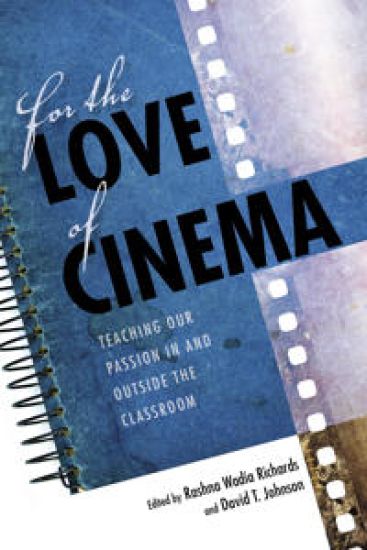
What role does love—of cinema, of cinema studies, of teaching and learning—play in teaching film? For the Love of Cinema brings together a wide range of film scholars to explore the relationship between cinephilia and pedagogy. All of them ask whether cine-love can inform the serious study of cinema. Chapter by chapter, writers approach this question from various perspectives: some draw on aspects of students' love of cinema as a starting point for rethinking familiar films or generating new kinds of analyses about the medium itself; others reflect on how their own cinephilia informs the way they teach cinema; and still others offer new ways of writing (both verbally and audiovisually) with a love of cinema in the age of new media. Together, they form a collection that is as much a guide for teaching cinephilia as it is an energetic dialogue about the ways that cinephilia and pedagogy enliven and rejuvenate one another.
What role does love—of cinema, of cinema studies, of teaching and learning—play in teaching film? For the Love of Cinema brings together a wide range of film scholars to explore the relationship between cinephilia and pedagogy. All of them ask whether cine-love can inform the serious study of cinema. Chapter by chapter, writers approach this question from various perspectives: some draw on aspects of students' love of cinema as a starting point for rethinking familiar films or generating new kinds of analyses about the medium itself; others reflect on how their own cinephilia informs the way they teach cinema; and still others offer new ways of writing (both verbally and audiovisually) with a love of cinema in the age of new media. Together, they form a collection that is as much a guide for teaching cinephilia as it is an energetic dialogue about the ways that cinephilia and pedagogy enliven and rejuvenate one another.
Bette Jean Davis is a young colored girl living in the southern Jim Crow state of Louisiana. she lives with her mother and father and siblings. They are farmers who also pick cotton to make ends meet. Her life is pretty much routine until her father dies. Then she decides to take an extra job to help her mother send her older sister to school. she decides to keep the job in order to help send herself to college, but she soon learns that things don't always go as planned.
This is the tale of two men.The first is Henry Tandey, an ordinary man later deemed to be ‘a hero of the old berserk type’, born and brought up in Leamington Spa, Warwickshire, who displayed extraordinary courage to emerge from the First World War as the most decorated British private to survive. The second is Adolf Hitler, who was highly decorated in his service to Germany in the First World War and went on to become one of the most infamous dictators in history, later bringing the world to the brink of destruction during the Second World War. It seems unlikely that their fates should collide. Yet in 1938 Hitler named Tandey as the soldier who spared his life on 28 September 1918 in the aftermath of the Battle of Marcoing – an assertion that came as a surprise to Tandey himself. The Man Who Didn’t Shoot Hitler tells the story of Tandey’s and Hitler’s Great War, the moment when their lives became intertwined – if in fact they did – and how Tandey lived with the stigma of being known not for his chestful of medals for gallantry in service of King and Country, but as the man who let Hitler live.
Jung's individuation process is founded on the fact that everything living dreams of Individuation. His path involves a specific concentration of a natural phenomenon of nature, which speeds up the process. This grounding in nature is a significant factor that distinguishes his spirituality and psychology from other spiritual and psychological disciplines and methods. The one major exception is the Integral Yoga of Sri Aurobindo and the Mother, which is why I use them both as my most significant hermeneutic references, and the former for insight into the evolution of consciousness. Jung's path involves the incarnation of the Divine through individuals that potentially leads to far-reaching transformation of both individuals and culture. This reflects his important challenge to Western and world culture at this critical turning point in human history. In addition to Sri Aurobindo and the Mother, I refer to the work of Jean Gebser to add insight into the phenomenon of the evolution of consciousness. I also refer to the study on the development of the Western mind by Richard Tarnas for understanding the unfolding Western psyche from a philosophic, religious and psychological perspective. Not only do I wish to represent Jung's challenge at this juncture in history, but I am particularly interested in differentiating Jung's approach to psychology from that of his prize pupil, Eric Neumann, as well as from that of a brilliant post-Jungian, James Hillman, in addition to Erich Fromm, a post-Freudian, and Charles Ponc , another post-Jungian. I believe these differentiations are important in helping to elucidate the deeper and higher nature of Jung's challenge.