Kirjojen hintavertailu. Mukana 11 627 373 kirjaa ja 12 kauppaa.

Kirjahaku

Etsi kirjoja tekijän nimen, kirjan nimen tai ISBN:n perusteella.

1000 tulosta hakusanalla David Waldstreicher; Matthew Mason

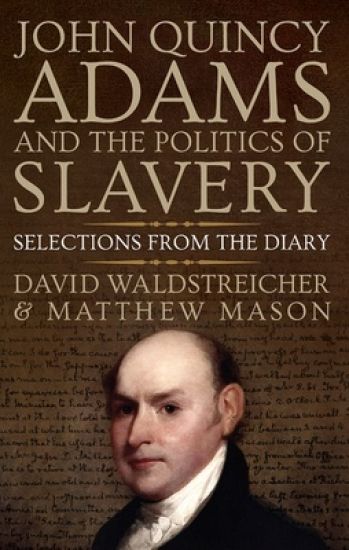
John Quincy Adams and the Politics of Slavery

John Quincy Adams and the Politics of Slavery

David Waldstreicher; Matthew Mason

Oxford University Press Inc
2019
nidottu
In the final years of his political career, President John Quincy Adams was well known for his objections to slavery, with rival Henry Wise going so far as to label him "the acutest, the astutest, the archest enemy of southern slavery that ever existed." As a young statesman, however, he supported slavery. How did the man who in 1795 told a British cabinet officer not to speak to him of "the Virginians, the Southern people, the democrats," whom he considered "in no other light than as Americans," come to foretell "a grand struggle between slavery and freedom"? How could a committed expansionist, who would rather abandon his party and lose his U.S. Senate seat than attack Jeffersonian slave power, later come to declare the Mexican War the "apoplexy of the Constitution," a hijacking of the republic by slaveholders? What changed? Entries from Adams's personal diary, more extensive than that of any American statesman, reveal a highly dynamic and accomplished politician in engagement with one of his generation's most challenging national dilemmas. Expertly edited by David Waldstreicher and Matthew Mason, John Quincy Adams and the Politics of Slavery offers an unusual perspective on the dramatic and shifting politics of slavery in the early republic, as it moved from the margins to the center of public life and from the shadows to the substance of Adams's politics. The editors provide a lucid introduction to the collection as a whole and frame the individual documents with brief and engaging insights, rendering both Adams's life and the controversies over slavery into a mutually illuminating narrative. By juxtaposing Adams's personal reflections on slavery with what he said-and did not say-publicly on the issue, the editors offer a nuanced portrait of how he interacted with prevailing ideologies during his consequential career and life. John Quincy Adams and the Politics of Slavery is an invaluable contribution to our understanding of the complicated politics of slavery that set the groundwork for the Civil War.
John Quincy Adams and the Politics of Slavery

John Quincy Adams and the Politics of Slavery

David Waldstreicher; Matthew Mason

Oxford University Press Inc
2017
sidottu
John Quincy Adams's remarkable diary is an unusually accessible window into the thinking of a president long before, during, and well after his own administration. It is enormous in scope--examining all subjects that came to Adams's interest and stretching from the late 1780s to his death in 1848. David Waldstreicher and Matthew Mason produce an edition of the diary that is not only of accessible length but also focused on one issue: the politics of slavery. Adams's long journey from nationalist diplomacy to culture war with the southern plantocracy is not well understood. How did the man who in 1795 told a British cabinet officer not to speak to him of the Virginians, the Southern people, the democrats, whom he considered in no other light than as Americans, come to predict a grand struggle between slavery and freedom? How could an expansionist who had left his party and lost his U.S. Senate seat rather than attack the Jeffersonian slave power, later come to declare the Mexican War the apoplexy of the Constitution, a hijacking of the republic by slaveholders? What changed? Entries in the diary touching on the politics of slavery increased over time and reflect national events as well as Adams' changes in attitude. The diary enables the reader to perceive and weigh the relative importance and interaction of ideology, politics, and personal ambition in one highly consequential life. The editors provide a lucid introduction to the collection as a whole and illuminate the individual documents with brief and engaging comments, deftly placing Adams's public statements alongside his private reflections. By juxtaposing Adams's personal reflections on slavery with what he said--and did not say--publicly on the issue, the editors offer a unique perspective on a topic historians of the early republic, and especially of Jacksonian democracy, have trouble integrating into their stories: the complicated politics of slavery.
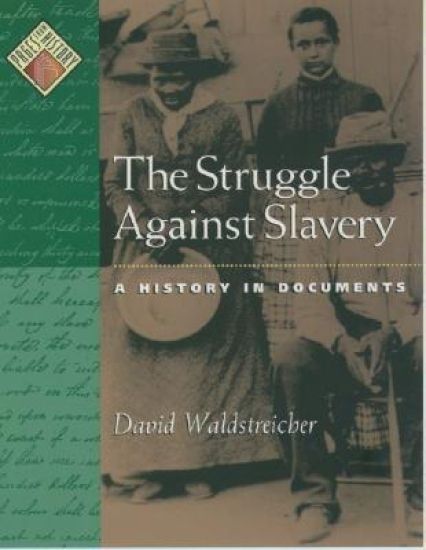
The Struggle against Slavery

The Struggle against Slavery

David Waldstreicher

Oxford University Press Inc
2002
sidottu
Presents and places in context original illustrations and documents about the origins of slavery, African Americans in the Revolution, antislavery movements, various types of resistance, and the coming of emancipation.
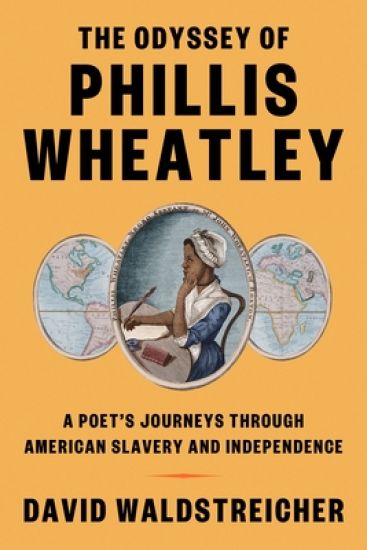
The Odyssey of Phillis Wheatley: A Poet's Journeys Through American Slavery and Independence
A New York Times notable book of 2023 A finalist for the Los Angeles Times Book Prize for biography Winner of the 2024 George Washington Prize" An] erudite, enlightening new biography . . . Waldstreicher's] interpretations equal Wheatley's own intentional verse, making it a joy to follow along as he unpacks her words and their arrangement." --Tiya Miles, The Atlantic"Thoroughly researched, beautifully rendered and cogently argued . . . The Odyssey of Phillis Wheatley is . . .] historical biography at its best." --Kerri Greenidge, The New York Times Book Review (Editors' Choice)A paradigm-shattering biography of Phillis Wheatley, whose extraordinary poetry set African American literature at the heart of the American Revolution. Admired by George Washington, ridiculed by Thomas Jefferson, published in London, and read far and wide, Phillis Wheatley led one of the most extraordinary American lives. Seized in West Africa and forced into slavery as a child, she was sold to a merchant family in Boston, where she became a noted poet at a young age. Mastering the Bible, Greek and Latin translations, and the works of Pope and Milton, she composed elegies for local elites, celebrated political events, praised warriors, and used her verse to variously lampoon, question, and assert the injustice of her enslaved condition. "Can I then but pray / Others may never feel tyrannic sway?" By doing so, she added her voice to a vibrant, multisided conversation about race, slavery, and discontent with British rule; before and after her emancipation, her verses shook up racial etiquette and used familiar forms to create bold new meanings. She demonstrated a complex but crucial fact of the times: that the American Revolution both strengthened and limited Black slavery. In this new biography, the historian David Waldstreicher offers the fullest account to date of Wheatley's life and works, correcting myths, reconstructing intimate friendships, and deepening our understanding of her verse and the revolutionary era. Throughout The Odyssey of Phillis Wheatley, he demonstrates the continued vitality and resonance of a woman who wrote, in a founding gesture of American literature, "Thy Power, O Liberty, makes strong the weak / And (wond'rous instinct) Ethiopians speak."
The Odyssey of Phillis Wheatley

The Odyssey of Phillis Wheatley

David Waldstreicher

St Martin's Press
2024
nidottu
Admired by George Washington, ridiculed by Thomas Jefferson, published in London, and read far and wide, Phillis Wheatley led one of the most extraordinary American lives. Seized in West Africa and forced into slavery as a child, she was sold to a merchant family in Boston, where she became a noted poet at a young age. Mastering the Bible, Greek and Latin translations, and the works of Pope and Milton, she composed elegies for local elites, celebrated political events, praised warriors, and used her verse to variously lampoon, question, and assert the injustice of her enslaved condition. “Can I then but pray / Others may never feel tyrannic sway?” By doing so, she added her voice to a vibrant, multisided conversation about race, slavery, and discontent with British rule; before and after her emancipation, her verses shook up racial etiquette and used familiar forms to create bold new meanings. She demonstrated a complex but crucial fact of the times: that the American Revolution both strengthened and limited Black slavery. In this new biography, the historian David Waldstreicher offers the fullest account to date of Wheatley’s life and works, correcting myths, reconstructing intimate friendships, and deepening our understanding of her verse and the revolutionary era. Throughout The Odyssey of Phillis Wheatley, he demonstrates the continued vitality and resonance of a woman who wrote, in a founding gesture of American literature, “Thy Power, O Liberty, makes strong the weak / And (wond’rous instinct) Ethiopians speak.”
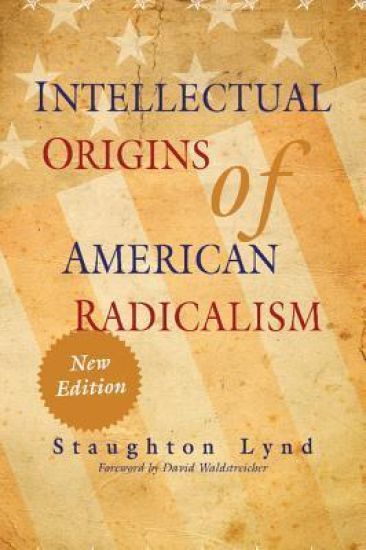
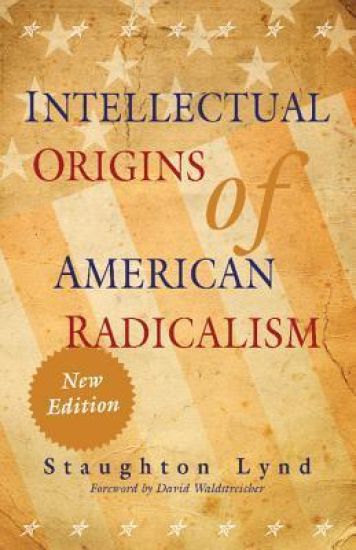
Intellectual Origins of American Radicalism

Intellectual Origins of American Radicalism

Staughton Lynd; David Waldstreicher

Cambridge University Press
2009
sidottu
Now an established classic, Intellectual Origins of American Radicalism was the first book to explore this alternative current of American political thought. Stemming back to the seventeenth-century English Revolution, many questioned private property, the sovereignty of the nation-state, and slavery, and affirmed the common man's ability to govern. By the time of the American Revolution, Thomas Paine was the great exemplar of the alternative intellectual tradition. In the nineteenth century, the antislavery movement took hold of Thomas Paine's ideas and fashioned them into an ideology that ultimately justified civil war. This updated edition contains a preface by the author, which describes the inquiries that he undertook in his books of the 1960s and their conclusions. David Waldstreicher has contributed a new historiographical essay that discusses the book's lasting importance and contrasts its ideas with the work of Bernard Bailyn and Gordon Wood.
Intellectual Origins of American Radicalism

Intellectual Origins of American Radicalism

Staughton Lynd; David Waldstreicher

Cambridge University Press
2009
pokkari
Now an established classic, Intellectual Origins of American Radicalism was the first book to explore this alternative current of American political thought. Stemming back to the seventeenth-century English Revolution, many questioned private property, the sovereignty of the nation-state, and slavery, and affirmed the common man's ability to govern. By the time of the American Revolution, Thomas Paine was the great exemplar of the alternative intellectual tradition. In the nineteenth century, the antislavery movement took hold of Thomas Paine's ideas and fashioned them into an ideology that ultimately justified civil war. This updated edition contains a preface by the author, which describes the inquiries that he undertook in his books of the 1960s and their conclusions. David Waldstreicher has contributed a new historiographical essay that discusses the book's lasting importance and contrasts its ideas with the work of Bernard Bailyn and Gordon Wood.
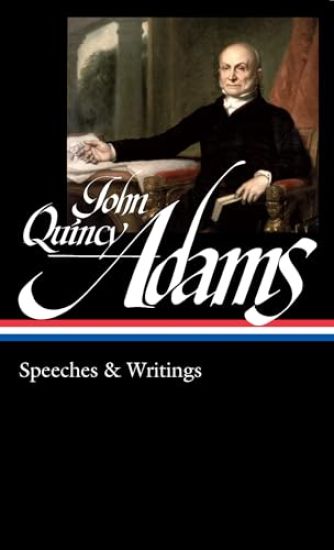
John Quincy Adams: Speeches & Writings (LOA #390)

John Quincy Adams: Speeches & Writings (LOA #390)

John Quincy Adams; David Waldstreicher

THE LIBRARY OF AMERICA
2025
sidottu
21 essential works trace a great statesman's lifelong engagement with the promise of America and the legacy of the Founding Fathers "Few presidents ever thought about words as carefully as John Quincy Adams. Thankfully, we can now hear his words again, in this instantly essential volume."--Ted Widmer, historian and former presidential speechwriter John Quincy Adams was one of the most accomplished American statesmen of his or any era. He brought all his eloquence, erudition, and fierce energy to bear on the politics of the nation over the course of a remarkable career that spanned from the founding era to the sectional crisis that preceded the Civil War. Despite a persistent interest in this pivotal figure, there has never been a single-volume collection of Adams's essential political writings, until now. Here, for the first time in an edition for general readers and students alike, are the profound insights of a far-seeing political leader who was also a consummate American stylist. From his prophetic college commencement address in 1787 to his vigorous denunciation of slavery in 1843, this Library of America volume offers a compact and compelling record of America's fractious evolution as a democratic republic, presenting some of the most important political writings in our history. These writings are more urgently needed than ever. In the words of biographer Fred Kaplan: "His values, his definition of leadership, and his vision for the nation's future--particularly the difficulty of transforming vision into reality in a country that often appears ungovernable--are as much about twenty-first century America as about Adams' life and times."
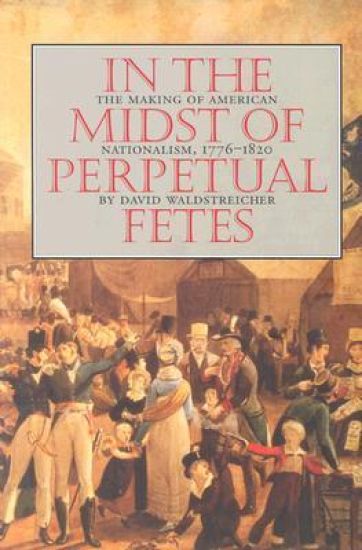
In the Midst of Perpetual Fetes

In the Midst of Perpetual Fetes

Waldstreicher David

The University of North Carolina Press
1997
nidottu
In this innovative study, David Waldstreicher investigates the importance of political festivals in the early American republic. Drawing on newspapers, broadsides, diaries, and letters, he shows how patriotic celebrations and their reproduction in a rapidly expanding print culture helped connect local politics to national identity. Waldstreicher reveals how Americans worked out their political differences in creating a festive calendar. Using the Fourth of July as a model, members of different political parties and social movements invented new holidays celebrating such events as the ratification of the Constitution, Washington's birthday, Jefferson's inauguration, and the end of the slave trade. They used these politicized rituals, he argues, to build constituencies and to make political arguments on a national scale. While these celebrations enabled nonvoters to participate intimately in the political process and helped dissenters forge effective means of protest, they had their limits as vehicles of democratization or modes of citizenship, Waldstreicher says. Exploring the interplay of region, race, class, and gender in the development of a national identity, he demonstrates that an acknowledgment of the diversity and conflict inherent in the process is crucial to any understanding of American politics and culture. |Together, and separately, black and white Baptists created different but intertwined cultures that profoundly shaped the South. Adopting a biracial and bicultural focus, Paul Harvey works to redefine southern religious history, and by extension southern culture, as the product of such interaction--the result of whites and blacks having drawn from and influenced each other even while remaining separate and distinct. In tracing the growth of Baptist churches from small outposts of radically democratic plain-folk religion in the mid-18th century to conservative and culturally dominant institutions in the 20th century, Harvey explores one of the most impressive evolutions of American religious and cultural history.
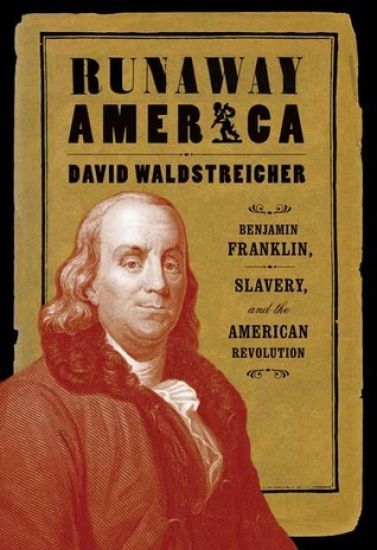
Runaway America

Runaway America

David Waldstricher

Hill Wang Inc.,U.S.
2005
nidottu
Scientist, abolitionist, revolutionary: that is the Benjamin Franklin we know and celebrate. To this description, the talented young historian David Waldstreicher shows we must add runaway, slave master, and empire builder. But "Runaway America" does much more than revise our image of a beloved founding father. Finding slavery at the center of Franklin's life, Waldstreicher proves it was likewise central to the Revolution, America's founding, and the very notion of freedom we associate with both.Franklin was the sole Founding Father who was once owned by someone else and was among the few to derive his fortune from slavery. As an indentured servant, Franklin fled his master before his term was complete; as a struggling printer, he built a financial empire selling newspapers that not only advertised the goods of a slave economy (not to mention slaves) but also ran the notices that led to the recapture of runaway servants. Perhaps Waldstreicher's greatest achievement is in showing that this was not an ironic outcome but a calculated one. America's freedom, no less than Franklin's, demanded that others forgo liberty.Through the life of Franklin, "Runaway America" provides an original explanation to the paradox of American slavery and freedom.
David

David

Spck

SPCK Publishing
2008
nidottu
The story of King David, his childhood, his battle with the Philistines, his women, and the tragedy of his son Absalom, is full of excitement, but yet is only a part of his life. His relationship with the Lord God was the key thing, and he danced before the Lord. He was also the first King of Israel, and our story starts at the time when Jerusalem was conquered by Babylon, and its people taken away into captivity. They started to look back at the foundation myths of their history, and the story of David and Solomon, when the kingdom was at the height of its glory, seemed to be just the story to tell. So that is how the collection of stories of David came to be compiled into the books we can read today.
David

David

Maggie Barfield

SPCK Publishing
2018
pahvisivuinen
A delightful retelling of how David is chosen as king, especially for under 5s. Featuring full-colour photographic spreads of the much- loved characters from The Big Bible Storybook, this board book is perfectly sized for small hands, with short text for a parent or carer to read to the child.
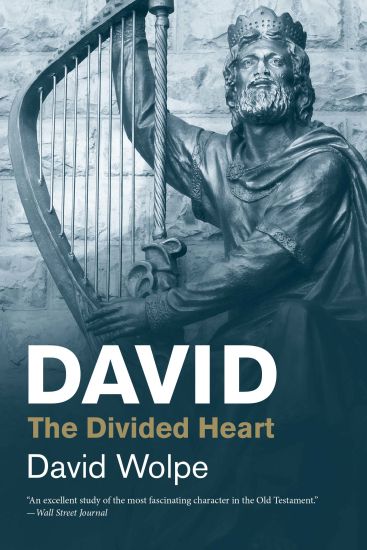
David

David

David Wolpe

Yale University Press
2017
pokkari
A reexamination of the biblical David, legendary warrior, poet, and king, by one of America’s most respected rabbis Of all the figures in the Bible, David arguably stands out as the most perplexing and enigmatic. He was many things: a warrior who subdued Goliath and the Philistines; a king who united a nation; a poet who created beautiful, sensitive verse; a loyal servant of God who proposed the great Temple and founded the Messianic line; a schemer, deceiver, and adulterer who freely indulged his very human appetites. David Wolpe, whom Newsweek called “the most influential rabbi in America,” takes a fresh look at biblical David in an attempt to find coherence in his seemingly contradictory actions and impulses. The author questions why David holds such an exalted place in history and legend, and then proceeds to unravel his complex character based on information found in the book of Samuel and later literature. What emerges is a fascinating portrait of an exceptional human being who, despite his many flaws, was truly beloved by God.
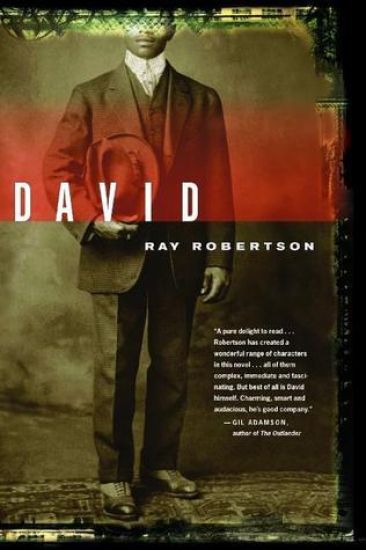
David

David

Ray Robertson

Thomas Allen Son Ltd
2009
sidottu
"God and whiskey have got me where I am. Too little of the one, too much of the other." - David King, Chatham, Canada, 1895. Born a slave in 1847, but raised as a free man on the world-renowned, African-American Elgin Settlement near present-day Chatham, Ontario, David King is a man whose life has been defined by his violent rebellion against the very person who freed him - the Reverend William King. Far from the pulpit he was intended to fill as the Reverend King's anointed successor, David has lost his faith in God and humanity. He has also turned his back on both his past and his own people by abandoning the Elgin Settlement for nearby Chatham after a final, shattering confrontation with the Reverend King. Undoubtedly, the most unconventional man in town, David is also - thanks to his illegal after-hours tavern, Sophia's, and his highly lucrative grave robbing business - one of Chatham's richest citizens, white or black, and certainly its best read. Triggered by the news of the elderly Reverend King's death, the middle-aged David is compelled to revisit a past he thought he left behind, but which - as evidenced by his inability to embrace the happiness he so dearly earned - he clearly has not. Ranging over the early years of the pioneering Elgin Settlement, David's wild, whiskey-fueled early years in Chatham as a factory worker and apprentice grave-robber, and his day-to-day life with his ex-prostitute German lover in present-day, 1895 Chatham, David is a portal to a fascinating, if mostly unknown piece of Canadian history, as well as, the story of one man's search for wisdom, peace, and forgiveness.
David

David

Charles Kingsley

Blurb
2023
pokkari
This classic text by Charles Kingsley presents five famous sermons by King David. David is described in the Hebrew Bible as a king of the United Monarchy of Israel and Judah. In the Books of Samuel, David is a young shepherd and harpist who gains fame by slaying the giant Goliath, a champion of the Philistines in southern Canaan. David becomes a favorite of the first king of united Israel, Saul, and forges a close friendship with Jonathan, a son of Saul.
David

David

Charles Kingsley

Anson Street Press
2025
pokkari
Explore the life and legacy of one of the Old Testament's most compelling figures in "David: Five Sermons" by Charles Kingsley. This collection offers a thoughtful examination of David, King of Israel, through a series of insightful sermons. Kingsley delves into the biblical biography of David, exploring his triumphs, struggles, and enduring faith. Drawing directly from scripture, these sermons illuminate the key moments in David's life, providing historical and religious context to his reign and his pivotal role in the history of Israel. A timeless exploration of faith, leadership, and the human condition, "David" provides a window into the life of a king whose story continues to resonate. Perfect for those interested in biblical studies, Old Testament history, and the lives of influential religious figures.This work has been selected by scholars as being culturally important, and is part of the knowledge base of civilization as we know it.This work is in the public domain in the United States of America, and possibly other nations. Within the United States, you may freely copy and distribute this work, as no entity (individual or corporate) has a copyright on the body of the work.Scholars believe, and we concur, that this work is important enough to be preserved, reproduced, and made generally available to the public. We appreciate your support of the preservation process, and thank you for being an important part of keeping this knowledge alive and relevant.