Kirjojen hintavertailu. Mukana 11 244 527 kirjaa ja 12 kauppaa.

Kirjahaku

Etsi kirjoja tekijän nimen, kirjan nimen tai ISBN:n perusteella.

1000 tulosta hakusanalla David Willem

Black Rood

Black Rood

David Willem

WHITTLES PUBLISHING
2022
nidottu
Black Rood tells the fascinating story of one of Scotland’s oldest and most significant crown jewels. Once as famous as the Stone of Scone, the Black Rood was a gold and jewel-studded reliquary for a piece of the True Cross. This profound and holy treasure was smuggled into Scotland after the Norman invasion by the sister of the last Anglo-Saxon king of England. On her marriage to King Malcolm III, the Black Rood passed into the Scottish royal family, and so became a symbol of the authority and legitimacy of Scotland’s kingship. Giving its name to the abbey and then the palace and now the parliament of Holyrood, the Black Rood was to help define Scotland as a kingdom which was at least the equal of England in the eyes of God, and in some ways superior to it. David Willem tells the story of the Black Rood though the lives of the kings and queens of Scotland and England who honoured it, treasured it, enacted themselves through it, fought over it, and who sometimes died clutching it, so creating a history in vivid human detail that ranges over a thousand years of Scottish and English history. At the same time, the author tells the story of two other similar reliquaries of the True Cross – the Croes Gneth of Wales and Ireland’s Cross of Cong. Like the Black Rood, these Irish and Welsh crown jewels helped define the autonomy and independence of their nations, and both were to follow similar trajectories through time. The book ends with the mystery of what happened to the Black Rood, and explores the possibility that, like the Cross of Cong, it might still exist and be waiting to be found. Together these stories create a new and compelling perspective on the relationships between Scotland, England, Wales and Ireland, just when those relationships are changing again for the first time in hundreds of years.
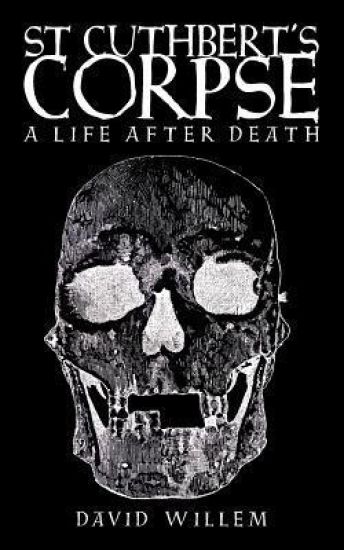
St Cuthbert's Corpse

St Cuthbert's Corpse

David Willem

Sacristy Press
2013
pokkari
The miracle of St Cuthbert's incorrupt corpse has been the subject of much fascination since his death over thirteen-hundred years ago, inspiring pilgrims, monks, and even the construction of Durham Cathedral itself. Throughout the centuries, Cuthbert's coffin has been opened on six occasions. For the first time, accounts of these openings have been brought together in a single volume, providing a unique history of the saint from his death to the present day. Including details of his death and burial, the moment when monks first discovered his remains to be incorrupt, and the most recent exhumation of his relics in 1899, David Willem brings alive the mystery and intrigue of the life of Cuthbert's corpse, and tries to answer questions such as, "When did the corpse decay?" and, "Is Cuthbert still buried in Durham Cathedral?" "Elegant, accessible, and movingly written." - Giles E. M. Gasper, Associate Director, Institute of Medieval and Early Modern Studies, Durham University "In Christian traditions, curiosity, piety, and awe almost inevitably frame that sensed affinity our own embodiment finds with holy bodies.St Cuthbert's body is no exception as this book shows in tracing varieties of hope, faith, and experience down the Christian centuries." - Prof. Douglas J. Davies, Director, Centre for Death and Life Studies, Durham University About the Author David Willem is the author of Kicking: Following the Fans to the Orient and a former correspondent for The Guardian and The Times.
Höhe und Ausmaß von Benefits

Höhe und Ausmaß von Benefits

David Willemsen

Grin Publishing
2011
pokkari
Studienarbeit aus dem Jahr 2009 im Fachbereich BWL - Personal und Organisation, Note: 1,3, Rheinisch-Westf lische Technische Hochschule Aachen (Lehrstuhl f r Internationales Personalmanagement), Veranstaltung: Nichtmonet re Anreiz- und Zielsysteme, Sprache: Deutsch, Abstract: "Um High Potentials zu gewinnen und an sich zu binden, zahlen sich Benefits klar aus ...] Es m ssen aber die richtigen sein" (Fiebers, 28.04.09). Dies haben mittelst ndische Betriebe und Gro unternehmen schon lange begriffen. Daher setzen sie solche Ma nahmen gezielt zur Personalakquise und Motivationssteigerung ein. Im Fokus stehen dabei besonders Akademiker und andere besonders qualifizierte Fachkr fte (Schm hl/B hm, 1994: 17 bzw. D ring, 1993: 302f.). Dennoch nimmt das Angebot an Soziall hnen seit 1996 in der Praxis ab. Das Ziel, das Unternehmen damit verfolgen, ist die Senkung der indirekten Lohnkosten und eine so gesteigerte Wettbewerbsf higkeit. Im Zuge dessen werden fortw hrend alternative Programme ganzheitlicher Entlohnung eingef hrt, die ihrerseits wiederum Komponenten nichtmonet rer Verg tung enthalten (Drumm, 2005: 616). Ma geblich f r die Einf hrung ist dabei die vorherrschende wirtschaftliche Situation der Unternehmen (Hemmer, 1994: 280f.). Was beim Angebot und der Gewichtung solcher Leistungen beachtet werden sollte, wird Untersuchungsgegenstand dieser Arbeit sein. Um die n tigen theoretischen Grundlagen f r das Verst ndnis der Untersuchung zu legen, beginnt diese Arbeit mit einer Einf hrung in die Thematik der Lohnzusatzleistungen und erl utert, welche Formen diese annehmen k nnen. Anschlie end werden die Effekte, die solche Verg tungsmodelle bewirken, aus Arbeitnehmer- sowie Arbeitgeberperspektive dargelegt. F r die empirischen Studien gen gt jedoch nicht nur eine rein qualitative Vorstellung ber die Einfl sse von Benefits. Vielmehr m ssen diese auch quantifiziert werden. Dazu zeigt ein Exkurs in die Mikro konomie einen Weg auf, Pr ferenzen von Arbeitnehmern mathematisch zu erf
The Late Roman World and Its Historian

The Late Roman World and Its Historian

Jan Willem Drijvers; David Hunt

Routledge
1999
sidottu
Ammianus Marcellinus, Greek by birth but writing in Latin c. AD 390, was the last great Roman historian. His writings are an indispensable basis for our knowledge of the late Roman world. This book represents a collection of papers analysing Ammianus's writings from a variety of perspective, including Ammianus as historian of, and participant in, Julian's Persian campaign, his identification with traditional religious attitudes and values in Rome and his view of the Persian Magi. The contributors engage especially with the concept of self-identification. They address the tension of Ammianus' dual role as both 'outside' external narrator and at the same time and 'insider' to the contemporary experiences and events which make up his surviving history.
The Late Roman World and Its Historian

The Late Roman World and Its Historian

Jan Willem Drijvers; David Hunt

Routledge
2012
nidottu
Ammianus Marcellinus, Greek by birth but writing in Latin c. AD 390, was the last great Roman historian. His writings are an indispensable basis for our knowledge of the late Roman world. This book represents a collection of papers analysing Ammianus's writings from a variety of perspective, including Ammianus as historian of, and participant in, Julian's Persian campaign, his identification with traditional religious attitudes and values in Rome and his view of the Persian Magi. The contributors engage especially with the concept of self-identification. They address the tension of Ammianus' dual role as both 'outside' external narrator and at the same time and 'insider' to the contemporary experiences and events which make up his surviving history.
The Great Pyramid of Giza

The Great Pyramid of Giza

Willem Witteveen; David Hatcher Childress

Adventures Unlimited Press
2016
sidottu
After extensive research Dutch researcher Willem Witteveen connects data from his own findings with that of other researchers, resulting in groundbreaking conclusions about the true function of the Great Pyramid and its place in history. The Greek mathematician Pythagoras stated: "All is number." The American prophet Edgar Cayce claimed: "Sound is the medicine of the future," and the late Egyptian wisdomkeeper Abd 'el Hakim Awyan always said: "It is all about sound." Willem Witteveen proves that all these men were right and that what we now regard as groundbreaking and new often originated in ancient Egypt, well before the first Egyptian dynasties. This book is divided into five main parts, four of which relate to the four earthly elements Earth, Water, Air and Fire. The fifth part relates to the element or quintessence called Aether. Within this circle all processes on Earth and beyond take place, and the element Aether represents the divine world and is the carrier of all information. The author demonstrates that the Great Pyramid is an enormous library of knowledge, intended for modern generations and containing the golden frequency of Giza, one of the basic values responsible for creation and the existence of life on Earth. We ourselves are the architects and builders of these magnificent ancient monuments. We ourselves in the future tense Witteveen discusses such topics as sound and resonance, antennas, the Schumann frequency, and the special abilities of quartz, hydrogen and wavelengths. A fascinating and visual book
The Political Economy of Poverty, Equity, and Growth: Nigeria and Indonesia

The Political Economy of Poverty, Equity, and Growth: Nigeria and Indonesia

David Bevan; Paul Collier; Jan Willem Gunning

Oxford University Press Inc
1999
sidottu
This volume analyses and compares economic growth in Nigeria and Indonesia during the period from 1950 to 1985, addressing questions as to why one country was so much more successful than the other. In providing some surprising answers for those who believed that the divergence would be found in deeply rooted, long term trends, the authors also offer insight into what has become a reversal of fortune in the late 1990's, as Indonesia has experienced decline, and the Nigerian economy had stabilized.
Peasants and Governments

Peasants and Governments

David Bevan; Paul Collier; Jan Willem Gunning

Clarendon Press
1990
sidottu
This book is the first of two companion volumes by these authors on trade shocks in controlled economies. Both theoretically innovative and drawing on extensive applied work, it addresses a number of issues in the forefront of economics, principally the relationship between macro and micro economics, by analysing the impact of an external macro shock - the coffee price boom - on each of two developing countries which have much in common but whose governmental organizations and objectives differ sharply. The authors focus on three important ways in which governments affect peasants: setting crop prices; controlling access to consumer goods; and provision of public services. They address these three areas using microeconomic analysis and household survey data collected in Kenya and Tanzania. Much of the analysis is relevant for a wide class of developing countries.
Modern Land Drainage

Modern Land Drainage

Willem Vlotman; Lambert Smedema; David Rycroft

CRC Press
2020
sidottu
Modern Land Drainage 2nd edition is a fully revised and updated edition of the 2004 edition. Modern Land Drainage describes traditional drainage formulas (Hooghoudt, Kirkham, Donnan, Ernst, Glover-Dumm) for rainfed agriculture in the humid temperature zone. Significant parts are devoted to drainage for salinity control of irrigated land in (semi-) arid zones, and to drainage of rice land in the humid tropics. Institutional, management and maintenance aspects are extensively covered, as well as the mitigation of adverse impacts of drainage interventions on the environment. The latest computer applications for drainage design in the context of integrated water management are described (DRAINMOD, HEC, SWAP, etc.). Field surveys are executed by governments, with the aid of consultants, but rarely are the end stakeholders (i.e., farmers and general public) involved from inception to planning to execution of a drainage system. Yet, during the Operation, Management and Maintenance (OMM) phase of a water management system, they are expected to takeover, run, bear and be responsible for the costs of OMM. The book describes successful methodologies and processes to be followed for engagement of stakeholders at all levels, from government to farm, from minister to farmer, and, from beginning to end. The book covers all aspects needed for sustainable drainage. The latest survey methodologies with satellites and drones are suggested to assess cause and effect. Waterlogging and salinity are the effect of something caused most likely upstream of the drainage problem location. Hence treating the cause may be more cost-effective. Triple Bottom Line (social, environmental and financial considerations) and the water-food-energy nexus are an integral part of the drainage design process. Controlled drainage, i.e. the balance of removal and conservation of drainage water and minimising solute transport as low as reasonably achievable (ALARA principle) is extensively described. This work is intended for use both as a university level textbook and as a professional handbook; it is of particular value to professionals engaged in drainage development in the context of integrated water resources and river basin management, civil and agricultural engineers, government officials, university students and libraries.
Modern Land Drainage

Modern Land Drainage

Willem Vlotman; Lambert Smedema; David Rycroft

CRC Press
2020
nidottu
Modern Land Drainage 2nd edition is a fully revised and updated edition of the 2004 edition. Modern Land Drainage describes traditional drainage formulas (Hooghoudt, Kirkham, Donnan, Ernst, Glover-Dumm) for rainfed agriculture in the humid temperature zone. Significant parts are devoted to drainage for salinity control of irrigated land in (semi-) arid zones, and to drainage of rice land in the humid tropics. Institutional, management and maintenance aspects are extensively covered, as well as the mitigation of adverse impacts of drainage interventions on the environment. The latest computer applications for drainage design in the context of integrated water management are described (DRAINMOD, HEC, SWAP, etc.). Field surveys are executed by governments, with the aid of consultants, but rarely are the end stakeholders (i.e., farmers and general public) involved from inception to planning to execution of a drainage system. Yet, during the Operation, Management and Maintenance (OMM) phase of a water management system, they are expected to takeover, run, bear and be responsible for the costs of OMM. The book describes successful methodologies and processes to be followed for engagement of stakeholders at all levels, from government to farm, from minister to farmer, and, from beginning to end. The book covers all aspects needed for sustainable drainage. The latest survey methodologies with satellites and drones are suggested to assess cause and effect. Waterlogging and salinity are the effect of something caused most likely upstream of the drainage problem location. Hence treating the cause may be more cost-effective. Triple Bottom Line (social, environmental and financial considerations) and the water-food-energy nexus are an integral part of the drainage design process. Controlled drainage, i.e. the balance of removal and conservation of drainage water and minimising solute transport as low as reasonably achievable (ALARA principle) is extensively described. This work is intended for use both as a university level textbook and as a professional handbook; it is of particular value to professionals engaged in drainage development in the context of integrated water resources and river basin management, civil and agricultural engineers, government officials, university students and libraries.
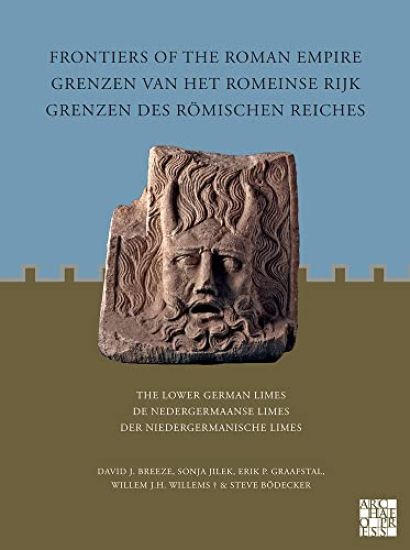
Frontiers of the Roman Empire: The Lower German Limes

Frontiers of the Roman Empire: The Lower German Limes

David J. Breeze; Sonja Jilek; Erik P. Graafstal; Willem J.H. Willems; Steve Bödecker

Archaeopress
2022
nidottu
The frontiers of the Roman empire together form the largest surviving monument of one of the world’s greatest states. They stretch for some 7,500 km through 20 countries which encircle the Mediterranean Sea. The remains of these frontiers have been studied by visitors and later by archaeologists for several centuries. Many of the inscriptions and sculpture, weapons, pottery and artefacts created and used by the soldiers and civilians who lived on the frontier can be seen in museums. Equally evocative of the lost might of Rome are the physical remains of the frontiers themselves. The aim of this series of booklets is not only to inform the interested visitor about the history of the frontiers but to act as a guidebook as well. The frontier in Lower Germany was one of the earliest to be created; surviving into the early 5th century, it illustrates the whole range of Roman military installations. In the Rhine delta, the watery nature of the landscape has ensured incredible survivals in the form of organic remains including ships. Upstream are great military bases created for the army poised to invade Germany, supported by forts and fortlets, all modified over time.
Decision Diagrams for Optimization

Decision Diagrams for Optimization

David Bergman; Andre A. Cire; Willem-Jan van Hoeve; John Hooker

Springer International Publishing AG
2016
sidottu
This book introduces a novel approach to discrete optimization, providing both theoretical insights and algorithmic developments that lead to improvements over state-of-the-art technology. The authors present chapters on the use of decision diagrams for combinatorial optimization and constraint programming, with attention to general-purpose solution methods as well as problem-specific techniques. The book will be useful for researchers and practitioners in discrete optimization and constraint programming. "Decision Diagrams for Optimization is one of the most exciting developments emerging from constraint programming in recent years. This book is a compelling summary of existing results in this space and a must-read for optimizers around the world." [Pascal Van Hentenryck]
Decision Diagrams for Optimization

Decision Diagrams for Optimization

David Bergman; Andre A. Cire; Willem-Jan van Hoeve; John Hooker

Springer International Publishing AG
2018
nidottu
This book introduces a novel approach to discrete optimization, providing both theoretical insights and algorithmic developments that lead to improvements over state-of-the-art technology. The authors present chapters on the use of decision diagrams for combinatorial optimization and constraint programming, with attention to general-purpose solution methods as well as problem-specific techniques. The book will be useful for researchers and practitioners in discrete optimization and constraint programming. "Decision Diagrams for Optimization is one of the most exciting developments emerging from constraint programming in recent years. This book is a compelling summary of existing results in this space and a must-read for optimizers around the world." [Pascal Van Hentenryck]
Changing Space, Changing City

Changing Space, Changing City

Peter Ahmad; Badenhorst Willem; Beavon Keith; Claire Bénit-Gbaffou; Charlton Sarah; Yasmeen Dinath; Teresa Dirsuweit; Everatt David; Gotz Graeme; Kirsten Harrison; Harrison Philip; Huchzermeyer Marie; Hilton Judin; Karam Aly; Kihato Caroline; Neil Klug; Kuljian Christa; Karina Landman; Pauline Larsen; Hannah le Roux; Mabin Alan; Miriam Maina; Puleng Makhetha; Malaza Nqobile; Adrian Masson; Mathetha Mokonyama; Khangelani Moyo; Brian Mubiwa; Yusuf Patel; Herman Pienaar; Naomi Roux; Margot Rubin; Samadia Sadouni; Rashid Seedat

Wits University Press
2014
sidottu
As the dynamo of South Africa’s economy, Johannesburg commands a central position in the nation’s imagination, and scholars throughout the world monitor the city as an exemplar of urbanity in the global South.This richly illustrated study offers detailed empirical analyses of changes in the city’s physical space, as well as a host of chapters on the character of specific neighbourhoods and the social identities being forged within them. Informing all of these is a consideration of underlying economic, social and political processes shaping the wider Gauteng region.A mix of respected academics, practising urban planners and experienced policymakers offer compelling overviews of the rapid and complex spatial developments that have taken place in Johannesburg since the end of apartheid, along with tantalising glimpses into life on the streets and behind the high walls of this diverse city.The book has three sections. Section A provides an overview of macro spatial trends and the policies that have infl uenced them. Section B explores the shaping of the city at district and suburban level, revealing the peculiarity of processes in different areas. This analysis elucidates thelarger trends, while identifying shifts that are not easily detected at the macro level. Section C is an assembly of chapters and short vignettes that focus on the interweaving of place and identity at a micro level.With empirical data supported by new data sets including the 2011 Census, the city’s Development Planning and Urban Management Department’s information system, and Gauteng City-Region Observatory’s substantial archive, the book is an essential reference for planning practitioners, urban geographers, sociologists, and social anthropologists, among others.