Featuring Christopher Hitchens, Sam Harris, David Wolpe, and Bradley Shavit Artson, and moderated by Rob Eshman, this debate about whether there is an afterlife took place in Los Angeles, California, USA, on 15 February 2011. Having found no transcripts of this debate online, I decided in March 2012 to transcribe it verbatim myself. This task was completed six months later in September 2012. In response to popular demand, I have compiled my transcript of the discussion in a soft-bound, 53-page, A5-size book. There is more than one YouTube video of this debate online; the one I used is just over 1 hour and 37 minutes long, had over 160,000 views in February 2014, and is available at the following web address: http://www.youtube.com/watch?v=UjKJ92b9Y04 (Accessed February 2014). I have entitled my transcript: 'Transcription: The Afterlife Debate with Christopher Hitchens, Sam Harris, David Wolpe, Bradley Shavit Artson' by Catherine O'Brien.
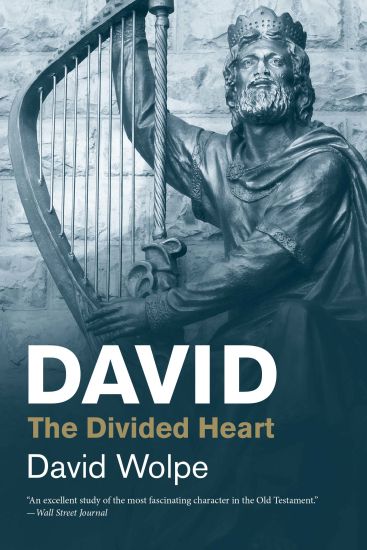
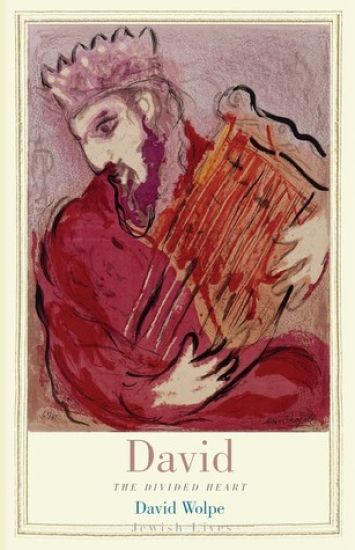
A reexamination of the biblical David, legendary warrior, poet, and king, by one of America’s most respected rabbis Of all the figures in the Bible, David arguably stands out as the most perplexing and enigmatic. He was many things: a warrior who subdued Goliath and the Philistines; a king who united a nation; a poet who created beautiful, sensitive verse; a loyal servant of God who proposed the great Temple and founded the Messianic line; a schemer, deceiver, and adulterer who freely indulged his very human appetites. David Wolpe, whom Newsweek called “the most influential rabbi in America,” takes a fresh look at biblical David in an attempt to find coherence in his seemingly contradictory actions and impulses. The author questions why David holds such an exalted place in history and legend, and then proceeds to unravel his complex character based on information found in the book of Samuel and later literature. What emerges is a fascinating portrait of an exceptional human being who, despite his many flaws, was truly beloved by God.
From the prizewinning Jewish Lives series, a reexamination of the biblical David, legendary warrior, poet, and king, by one of America’s most respected rabbis "An excellent study of the most fascinating character in the Old Testament."—Wall Street Journal "A portrait of David that is vibrant and nuanced, full of the complications that marked his life."—Jewish Week Of all the figures in the Bible, David arguably stands out as the most perplexing and enigmatic. He was many things: a warrior who subdued Goliath and the Philistines; a king who united a nation; a poet who created beautiful, sensitive verse; a loyal servant of God who proposed the great Temple and founded the Messianic line; a schemer, deceiver, and adulterer who freely indulged his very human appetites. David Wolpe, whom Newsweek called “the most influential rabbi in America,” takes a fresh look at biblical David in an attempt to find coherence in his seemingly contradictory actions and impulses. The author questions why David holds such an exalted place in history and legend, and then proceeds to unravel his complex character based on information found in the book of Samuel and later literature. What emerges is a fascinating portrait of an exceptional human being who, despite his many flaws, was truly beloved by God. About Jewish Lives: Jewish Lives is a prizewinning series of interpretative biography designed to explore the many facets of Jewish identity. Individual volumes illuminate the imprint of Jewish figures upon literature, religion, philosophy, politics, cultural and economic life, and the arts and sciences. Subjects are paired with authors to elicit lively, deeply informed books that explore the range and depth of the Jewish experience from antiquity to the present. In 2014, the Jewish Book Council named Jewish Lives the winner of its Jewish Book of the Year Award, the first series ever to receive this award. More praise for Jewish Lives: "Excellent" –New York Times "Exemplary" –Wall Street Journal "Distinguished" –New Yorker "Superb" –The Guardian
This book discusses new techniques for detecting, controlling, and exploiting the impacts of temperature variations on nanoscale circuits and systems. A new sensor system is described that can determine the temperature dependence as well as the operating temperature to improve system reliability. A new method is presented to control a circuit’s temperature dependence by individually tuning pull-up and pull-down networks to their temperature-insensitive operating points. This method extends the range of supply voltages that can be made temperature-insensitive, achieving insensitivity at nominal voltage for the first time.
This book discusses new techniques for detecting, controlling, and exploiting the impacts of temperature variations on nanoscale circuits and systems. A new sensor system is described that can determine the temperature dependence as well as the operating temperature to improve system reliability. A new method is presented to control a circuit’s temperature dependence by individually tuning pull-up and pull-down networks to their temperature-insensitive operating points. This method extends the range of supply voltages that can be made temperature-insensitive, achieving insensitivity at nominal voltage for the first time.
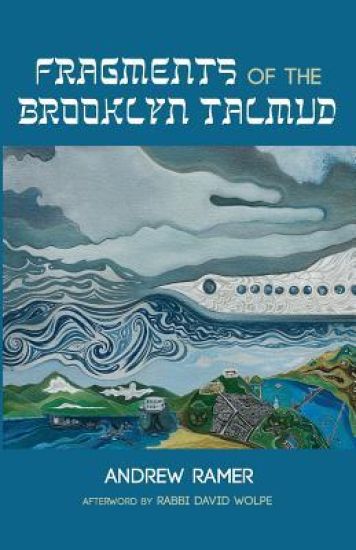
Eighty years from now, in a time of increasing environmental degradation and after one-sixth of the Earth's population has died in a vast pandemic, a noted woman rabbi in Brooklyn hosts a convocation for Jewish clergy and scholars from every background to create a new Talmud for living in such dangerous times. Over the course of five years, the attendees work to compile a text in multiple genres--but their text is never completed. Eighty years later, a single laptop is discovered that contains fragments of their text--and that is what this book contains. There are poems, stories, legal texts, and conversations, on belief, practice, liturgy, all designed for beleaguered people living in what seems to them the end of time. There are texts of hope, humor, despair, rage, and simple witnessing of the dying world around them (which may or may not be our world). ""Andrew Ramer has taken us deep into our collective Jewish past, but with Fragments, he takes us into our future. He whimsically envisions a future world in which ancient Jewish texts continue to inform our choices, our laments, an d our responsibilities. At times wistful, at times comical, Ramer takes us on a journey of what could be if we continue down our present global path. He calls us to task; he calls God to task as well."" --Rabbi Mychal Copeland, Congregation Sha'ar Zahav, San Francisco, co-editor of Struggling in Good Faith, LGBTQI Inclusion from 13 American Religious Perspectives ""A courageous, brilliant, visionary work In Fragments of the Brooklyn Talmud, Andrew Ramer dares to imagine the future after climatological, environmental, and nuclear catastrophes render human life nearly unrecognizable. It is a heartbreaking vision that manages to offer hope in its portrait of Jewish resilience."" --Rabbi Jacob Staub, Professor of Jewish Philosophy and Spirituality at the Reconstructionist Rabbinical College ""In this creative, imaginative, original, and provocative work, Andrew Ramer once again challenges us to rethink our assumptions about Jewish life. Set in a futuristic moment seemingly unrelated to debates in contemporary Jewish life, Fragments of the Brooklyn Talmud predicts the past as much as the future. It investigates traditional rabbinic authority by offering Ramer's view of a new progressive halachah. Read forward in time, we learn how a future generation crafts its own Talmud. Read backward in time, we get to re-imagine the potential of a Babylonian or Palestinian Talmud interpreted with a more expansive, inclusive, and pluralist frame. Packed with scores of rhetorical nuggets that deepen meaning, Ramer gifts us a hopeful vision of the world's future even as he describes an era marked by the most challenging day-to-day circumstance."" --Marc Dollinger, Professor of Jewish Studies, San Francisco State University Andrew Ramer is the author of Queering the Text: Biblical, Medieval, and Modern Jewish Stories; Torah Told Different: Stories for a Pan/Poly/Post-Denominational Era; and Deathless: The Complete, Uncensored, Heartbreaking, and Amazing Autobiography of Serach bat Asher, the Oldest Woman in the World. The world's first ordained interfaith maggid (sacred storyteller), he lives in Oakland, California.
Today there are more than seven million Jews in the United States. As with Americans of all ethnicities and religious persuasions, Jews can identify with and embrace their heritage in any number of ways. Alternatively, they can choose to distance themselves from anything distinctively Jewish.For millennia, the Torah – literally, instruction – the first five books of the Hebrew Bible, has been a centerpiece of Jewish study, thought, and action. Throughout the years, the Torah has been interpreted and applied to life in varying times and places. It has long been customary for Jews to read chapters of the Torah each week as part of an annual cycle of study and synagogue ritual. In the third decade of the twenty-first century, there are Jews who question or doubt the continuing relevance of Jewish texts to their lives. Yet, the search for meaning is enduring, and most American Jews are interested in engaging with a heritage in which they take pride. It is, primarily, for such readers that this book is designed. At the same time, there are people who are not Jewish for whom a book unpacking a Jewish understanding of the Torah might be of interest.The aim of this work is to share ideas, themes, values, and practices that are all part of the living Torah, with full awareness that personal meaning is, by definition, unique to each individual. “Living Torah” describes both Torah as a vibrant text and those who lead Torah-informed lives. “Torah-informed” by no means implies uniformity of life-style. There are a number of books that explore the meaning that Judaism can hold for contemporary Jews and others interested in the wisdom expressed in its classical texts. While these books draw upon classical sources and offer interesting perspectives, none undertakes to systematically introduce the reader to the richness of the Torah text. The uniqueness of this very accessible volume is that it identifies a central theme in each of the five books of the Torah, and, following exploration of the substance of each book, looks at implications of the book’s key theme for the lives of contemporary readers The book is comprised of ten chapters, organized as follows: a chapter synopsizing a book of the Torah and identifying its central theme, followed by a chapter applying that theme to the lived experience of Jews in the twenty-first century. The themes explored are: (a) the Jews’ relationship to the land of Israel; (b) purpose in history; (c) the pursuit of holiness; (d) living in community; (e) Jewish learning.
With a New Foreword by Dara HornRead it again for the very first time.In a powerful foreword that considers the events of October 7, acclaimed writer Dara Horn invites us to look beyond the theme of assimilation vs traditionalism and read As A Driven Leaf now to explore the challenge of maintaining a distinct Jewish culture while engaging with an outside world that is too often bent on conquest.Like Rabbi David Wolpe and Chaim Potok, the foreword authors for previous editions of this enduring classic, Horn views the novel’s themes through the lens of contemporary experience, offering interpretations and insights for a whole new generation of readers while inviting a refreshing reread by those for whom it is already beloved. All three forewords, as well as two discussion guides and a note from the publisher, are included in this updated version.A literary masterpiece, As A Driven Leaf is still regarded as a major influence on contemporary Jewish life and thought. Its gripping tale of renegade Talmudic sage Elisha Ben Abuyah’s struggle to reconcile his faith with the allure of Hellenic culture during the Rabbinic age in Roman Palestine transcends its historical setting with its depiction of a timeless, perennial feature of the Jewish experience: the inevitable conflict between the call of tradition and the glamour of the surrounding culture.As a Driven Leaf is an ideal selection for adult education classes and as recommended reading for congregational lay leadership.
Jesus the Jewish Theologian establishes Jesus firmly within the context of first-century Judaism and shows how understanding Jesus' Jewishness is crucial for interpreting the New Testament and for understanding the nature of Christian faith. Insights from Jewish literature, archeology, and tradition help modern readers place Jesus within his original context. Particular attention is given to the Jewish roots of Jesus' teaching concerning the kingdom of God.
"All beginnings require that you unlock new doors."--Rabbi Nachman of BratslavIn this short and inspiring text, Rabbi David J. Wolpe addresses all who seek to enlarge the spiritual side of their lives. For those considering a return to the faith of their forebears, for those drawn to conversion, " Why Be Jewish?" is a learned, graceful, and welcoming introduction beckoning readers into the heart of this venerable and enduring religion.
Many parents find it easier to talk to their children about sex and other intimate matters than to answer questions about God, prayer, good, and evil. In fact, parents may feel they don't know the answers to such questions for themselves, much less for their young children. In Teaching Your Children About God, Rabbi David Wolpe shows Jewish parents how to openly explore the idea of God with their children. Through poignant anecdotes and practical exercises, Wolpe teaches how parents can guide children in the practice of prayer and create an atmosphere in which children feel comfortable questioning and wondering about God, life, and death. Wolpe also offers invaluable insights into children's spiritual needs, reveals the powerful effect faith can have on a child's self-esteem, and enables parents to understand their children's fears, dreams, and hopes. Perhaps most important, this wise and potentially life-changing book shows parents who may feel something missing In their own spiritual lives that it is possible to nourish their own souls even as they nurture their children's.
This compact introduction to today's political and economic realities in Africa sets forth a foreign policy to fill the post-Cold War ideological void. From the stable rise of Ghana and Botswana to the violence and disintegration of Sudan and Nigeria, African nations present a wide range of opportunities and problems to which the United States has reacted with little consistency.
In Why Faith Matters, Rabbi David J. Wolpe blends the powerful personal story of his struggles with his own faith with a poignant response to the new atheists that reveals just how important faith in modern society. With a foreword by Rick Warren, New York Times bestselling author of The Purpose Driven Life, Why Faith Matters is an articulate and much-needed nondenominational defense of established religion in America by the man Newsweek magazine named the #1 Pulpit Rabbi in America.
We are taught to study, to learn, and to let ourselves grow Jewishly. But where does being the "people of the book" get us in the real world?David Wolpe's collection of essays responds to this question by exploring how Jewish values, such as scholarship and compassion, together with Jewish practice, enhance an individual's private and public life. How does Shabbat help deflect us from the pressures of the societal rat-race? How can Jewish learning subdue political unrest? Rabbi Wolpe draws the lessons of this collection from a variety of religious and historical sources, finding the importance of Israel in a Robert Frost poem, the nature of God in the words of Beowulf, and parenting lessons in the fatherly techniques of King David. The essays address diverse topics ranging from assimilation to Zionism to Jewish concepts of life and death.Rabbi Wolpe asks the questions, sometimes profound, sometimes light-hearted, that challenge us to consider how we live as Jews, how our Jewish lives are influenced by our secular surroundings, and how we can develop our Jewish souls by continuing to learn from new sources while remaining open to spiritual growth. Some of these questions include:Is it wrong to admire Kant, Voltaire, and Roald Dahl if they were anti-Semitic?How can we reconcile our American family traditions with our Jewish family traditions?In an evolutionary debate, do God and Steven Pinker stand behind opposite podiums?Do we need such a thing as a Jewish home? A Jewish homeland?Why does Walt Whitman think we should stay awake during the rabbi's sermon?What lessons of aging gracefully can we learn from Rabbi Akiba and Grandma Moses?An ideal gift for teachers, Confirmation students, grads, and new families that join the congregation.
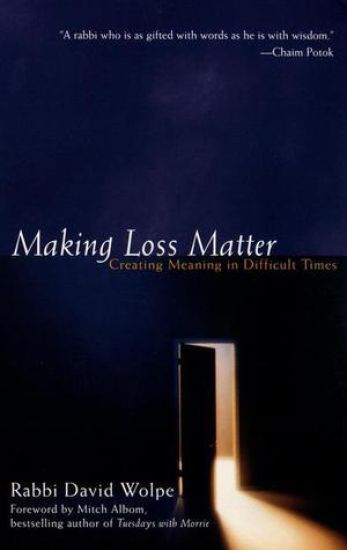
Some losses are so subtle they go unnoticed, some so overwhelming and cruel they seem unbearable. Coping with grief and experiencing loss overwhelms us in ways that seem both hopeless and endless. In painful moments like these, we must make a choice: Will we allow the difficulties we face to become forces of destruction in our lives, or will we find a way to begin learning from loss, transforming our suffering into a source of strength? A theologian with the heart of a poet, Rabbi David Wolpe explores the meaning of loss, and the way we can use its inevitable appearance in our lives as a source of strength rather than a source of despair. In this national bestseller, Wolpe creates a remarkably fluid account of how we might find a way out of overwhelming feelings of helplessness and instead begin understanding grief in all its forms and learn to create meaning in difficult times.
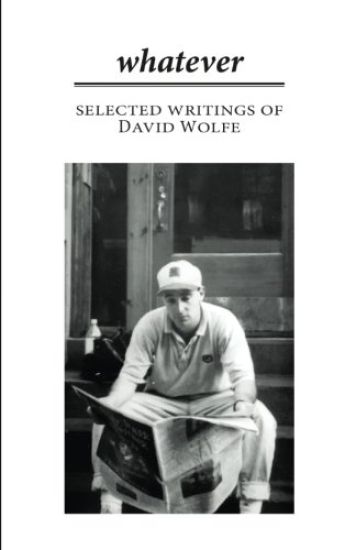
The worst tragedy that any parent can endure is the death of their child. In this collection of David Wolfe's writing his parents have honored his memory by collating a selection of his writings from childhood to his untimely death at 29 years of age.