Kirjojen hintavertailu. Mukana 11 244 527 kirjaa ja 12 kauppaa.

Kirjahaku

Etsi kirjoja tekijän nimen, kirjan nimen tai ISBN:n perusteella.

1000 tulosta hakusanalla David Wright O'Brien

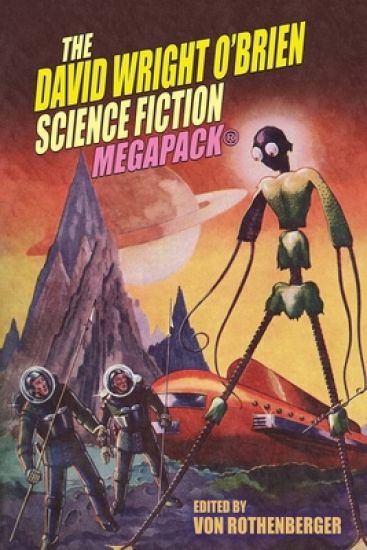
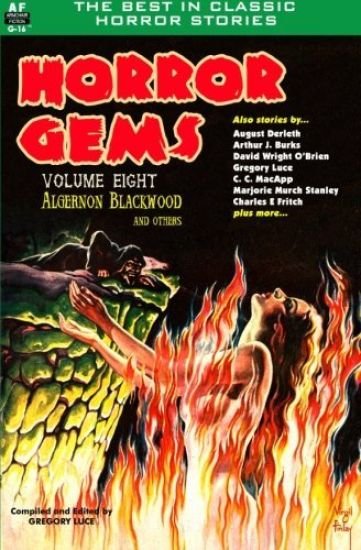
The David Wright O'Brien MEGAPACK(R)

The David Wright O'Brien MEGAPACK(R)

David Wright O'Brien

Wildside Press
2019
pokkari
In just a few years, David Wright O'Brien became one of the mainstays of Ray Palmer's Amazing Stories and Fantastic Adventures magazines. Called to duty in World War II, he continued writing even as he flew bomber missions. He died in combat, a casualty of war, but he left behind a legacy of more than 75 great fantasy and science fiction stories. This volume collects some of the best: TRUTH IS A PLAGUE THE MAN THE WORLD FORGOT TRAPPED ON TITAN JOHN BROWN'S BODY SUICIDE SQUADRONS OF SPACE THE STRANGE VOYAGE OF HECTOR SQUINCH BILL OF RIGHTS, 5,000 A.D BEYOND THE TIME DOOR SHARBEAU'S STARTLING STATUE THE SOFTLY SILKEN WALLET THE PLACE IS FAMILIAR
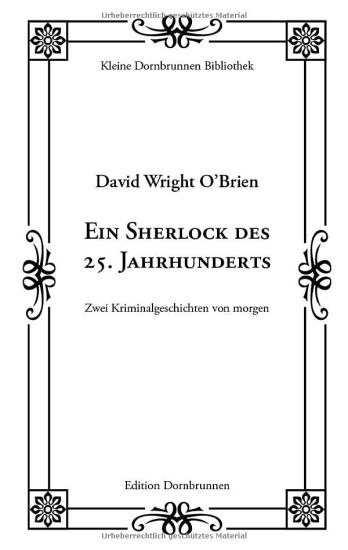
Once Is Enough

Once Is Enough

David Wright O'Brien

Wildside Press
2020
pokkari
As consciousness returned to him, Thane fought to push aside the thick curtain of nausea and pain which blanketed his mind. Somewhere in the distance a telephone was ringing with evenly spaced insistence, and Thane tried to struggle to his feet to answer it."A minute...jus' minute," Thane mumbled thickly.He managed somehow to push himself upward on his elbows. Pain lanced molten shafts of agony into his temples and he groaned, clutching tightly to the cool, hard object in his right hand.The telephone still rang."A minute--" Thane began. And then he saw the gun. It was the cool, hard object he clutched in his right hand. Instinctively his fingers released it, and it thudded softly to the thick brown carpet.The ringing of the telephone jarred him again, its clamor not to be denied; and Thane released his grasp on the davenport, taking an unsteady step in the direction of the sound. He almost stumbled over the body.The telephone had stopped ringing.Thane's eyes went to the gun he had dropped. It lay less than a yard from the dead man's hand. In the terrible silence that was louder than noise, Thane stared ashenly at the body.
David O. McKay and the Rise of Modern Mormonism

David O. McKay and the Rise of Modern Mormonism

Gregory Prince; Wm Wright

University of Utah Press,U.S.
2005
sidottu
Ordained as an apostle in 1906, David O. McKay served as president of the Church of Jesus Christ of Latter-day Saints from 1951 until his death in 1970. Under his leadership, the church experienced unparalleled growth - nearly tripling in total membership - and becoming a significant presence throughout the world. The first book to draw upon the David O. McKay Papers at the J. Willard Marriott Library at the University of Utah, in addition to some two hundred interviews conducted by the authors, David O. McKay and the Rise of Modern Mormonism focuses primarily on the years of McKay's presidency. During some of the most turbulent times in American and world history, McKay navigated the church through uncharted waters as it faced the challenges of worldwide growth in an age of communism, the civil rights movement, and ecumenism. Gregory Prince and Robert Wright have compiled a thorough history of the presidency of a much-loved prophet who left a lasting legacy within the LDS Church.
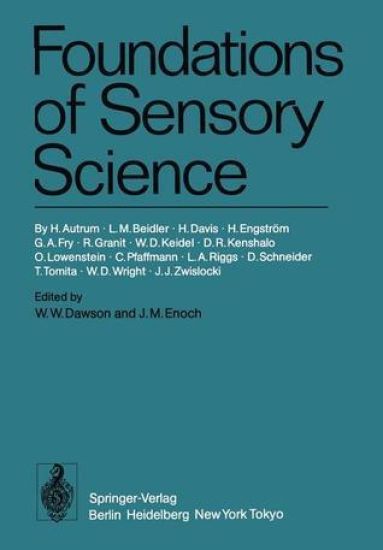
Foundations of Sensory Science

Foundations of Sensory Science

H. Autrum; L.M. Beidler; H. Davis; H. Engström; G.A. Fry; R. Granit; W.D. Keidel; D.R. Kenshalo; O. Lowenstein; C. Pfaffmann; L.A. Riggs; D. Schneider; T. Tomita; W.D. Wright; J.J. Zwislocki

Springer-Verlag Berlin and Heidelberg GmbH Co. K
2011
nidottu
When seen from an outsider's vantage point, the development of knowledge in the sensory sciences must appear massive and the result of some carefully followed master plan. In reality, it is the result of numerous relatively independent human endeavors shaped by application of the scientific method. The comprehensive construction of quantitative theories of sense organ function has occurred only recently -but at an explosive rate prefaced by centuries of expansion in the physical sciences. Predicated on this growth, the twentieth century may become known as the age of the biological sciences. With the exception of a modest number of intellectual giants, there were few contributors to the foundations of the sensory sciences before the dawn of this century. At least 90% of existing knowledge has been produced by scientists working in laboratories founded since 1920. If any single scientist and his laboratory may be identified with the growth in the sensory sciences, it is EDGAR DOUGLAS ADRIAN, First Baron of Cambridge and leader of the Physiological Laboratory at Cambridge University, England. Lord ADRIAN'S influence upon the sensory sciences was great, not only in terms of his contribution to knowledge itself but also through the influence which he exerted upon numerous young scientists who spent weeks or years at the Cambridge laboratory and who later returned to their homelands and colleagues with the seeds of vigorous research and quantitative inquiry firmly implanted.
Sirens: The Pin-Up Art of David Wright

Sirens: The Pin-Up Art of David Wright

Terry Parker

Titan Books Ltd
2013
sidottu
David Wright was one of the leading pin-up artists of the 20th Century. Unlike his American contemporaries Alberto Vargas and Gil Elvgren, the British-born Wright brought a sense of realism to his willowy beauties, who appeared in publications on both sides of the Atlantic, especially during WW2. Now, finally, access has been granted to his archive, and this is the first ever collection of his work.
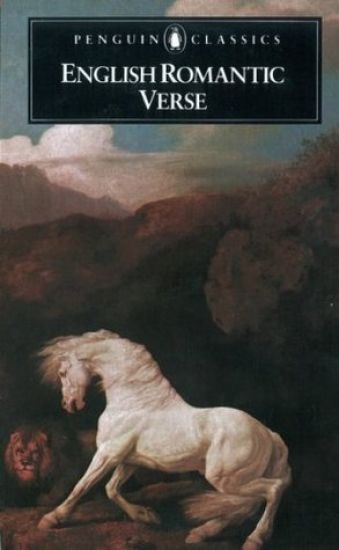
English Romantic Verse

English Romantic Verse

David Wright

Penguin Classics
1973
nidottu
English Romantic poetry from its beginnings and its flowering to the first signs of its decadence. Nearly all the famous pieces de resistance will be found here - 'Intimations of Immortality', 'The Ancient Mariner', 'The Tyger', excerpts from 'Don Juan' - as well as some less familiar poems. As far as possible the poets are arranged in chronological order, and their poems in order of composition, beginning with eighteenth-century precursors such as Gray, Cowper, Burns and Chatterton. Naturally most space has been given over to the major Romantics - Blake, Wordsworth, Coleridge, Byron, Shelley, Clare and Keats - although their successors, poets such as Beddoes and Poe, are included too, as well as early poems by Tennyson and Browning. In an excellent introduction David Wright discusses the Romantics as a historical phenomenon, and points out their central ideals and themes.
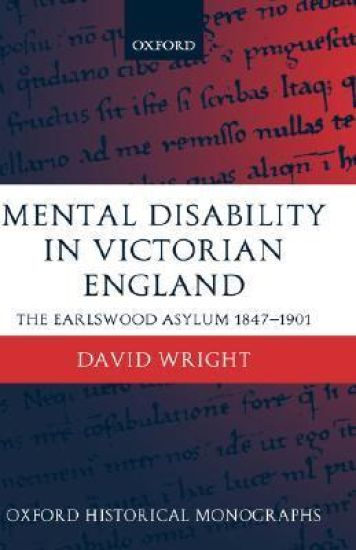
Mental Disability in Victorian England

Mental Disability in Victorian England

David Wright

Clarendon Press
2001
sidottu
This book contributes to the growing scholarly interest in the history of disability by investigating the emergence of 'idiot' asylums in Victorian England. Using the National Asylum for Idiots, Earlswood, as a case-study, it investigates the social history of institutionalization, privileging the relationship between the medical institution and the society whence its patients came. By concentrating on the importance of patient-centred admission documents, and utilizing the benefits of nominal record linkage to other, non-medical sources, David Wright extends research on the confinement of the 'insane' to the networks of care and control that operated outside the walls of the asylum. He contends that institutional confinement of mentally disabled and mentally ill individuals in the nineteenth century cannot be understood independently of a detailed analysis of familial and community patterns of care. In this book, the family plays a significant role in the history of the asylum, initiating the identification of mental disability, participating in the certification process, mediating medical treatment, and facilitating discharge back into the community. By exploring the patterns of confinement to the Earlswood Asylum, Professor Wright reveals the diversity of the 'insane' population in Victorian England and the complexities of institutional committal in the nineteenth century. Moreover, by investigating the evolution of the Earlswood Asylum, it examines the history of the institution where John Langdon Down made his now famous identification of 'Mongolism', later renamed Down's Syndrome. He thus places the formulation of this archetype of mental disability within its historical, cultural, and scientific contexts.
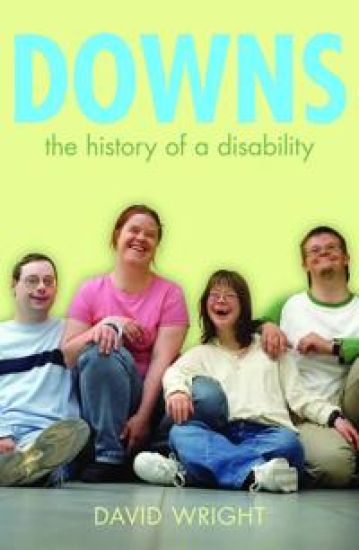
Downs

Downs

David Wright

Oxford University Press
2011
sidottu
For 150 years, Down's Syndrome has constituted the archetypal mental disability, easily recognisable by distinct facial anomalies and physical stigmata. In a narrow medical sense, Down's syndrome is a common disorder caused by the presence of all or part of an extra 21st chromosome. It is named after John Langdon Down, the British asylum medical superintendent who described the syndrome as Mongolism in a series of lectures in 1866. In 1959, the disorder was identified as a chromosome 21 trisomy by the French paediatrician and geneticist Jérôme Lejeune and has since been known as Down's Syndrome (in the English-speaking world) or Trisomy 21 (in many European countries). But children and adults born with this chromosomal abnormality have an important collective history beyond their evident importance to the history of medical science. David Wright, a Professor in the History of Medicine at McMaster University, looks at the care and treatment of Down's sufferers - described for much of history as 'idiots', - from Medieval Europe to the present day. The discovery of the genetic basis of the condition and the profound changes in attitudes, care, and early identification of Down's in the genetic era, reflects the fascinating medical and social history of the disorder.
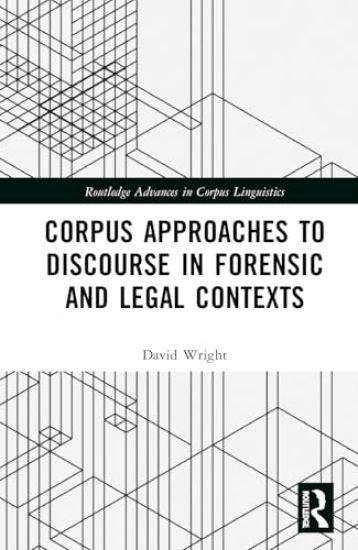
Corpus Approaches to Discourse in Forensic and Legal Contexts
This book is the first of its kind to bridge the gap between corpus linguistics and forensic linguistics, illustrating the value of applying corpus linguistic data, tools, and methods in the analysis of language in the law, evidence, crime, and justice.The volume begins by taking stock of the use of corpus linguistics in the field of forensic and legal linguistics over its roughly thirty-year history as a foundation for critically reflecting on the current state-of play within the discipline. Wright uses this discussion as a jumping-off point from which to demonstrate the opportunities and challenges of using corpora and corpus methods to analyse language in legal and forensic contexts and offers possible solutions to collecting and analysing types of data that are typically not in the public domain. The five analysis chapters that follow apply corpus method to both established and emerging areas of forensic and legal linguistics, summarized in a concluding chapter which also looks ahead to future directions for the interface of the two fields.This book will be key reading for graduate students and researchers in forensic linguistics and corpus linguistics methods as well as scholars working across disciplines interested in the intersection between language and the law.
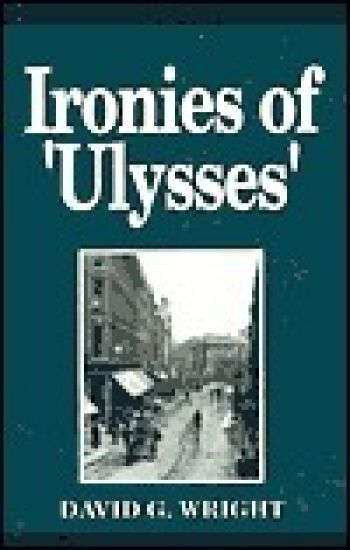
Ironies in Ulysses

Ironies in Ulysses

David Wright

Rowman Littlefield
1992
sidottu
This book brings a new perspective to the study of Joyce's great novel. The author argues the case for employing the concept of irony as an explicatory tool in the study of Ulyssesóand indeed of the whole Joycean canon. Moreover he uses modern critical theory to enlarge our understanding of irony itself and to suggest how such theory has an appropriate object of attention in Joyce. Wright defines irony as "the use of a 'false' textual surface to direct a reader's attention towards initially concealed premises or implications". Thus an author lays a partly false trail, but one which usually leads towards a more authenthic or appropriate understanding of the subject under discussion. Joyce's work is full of this kind of semantic counterpoint. Indeed, it is essential to his whole comic method. Both Portrait of the Artist As a Young Man and Ulysses are full of ironic contrasts between the desire for order, certainty and stability on the one hand and random meetings and perverse associations. The author argues that Joyce's other favorite techniques of ambiguity and punning are so closely related to that of irony that all three may legitimately be considered as a unity, specially formed and deployed by Joyce in his mature work. ; Contents: Preface; List of Abbreviations; Introduction; Local Ironies; Single-Episode Ironies; Inter-Episode Ironies; Ironies from Early Joyce; Ironies from Homer to Shakespeare; Bibliography; Index.
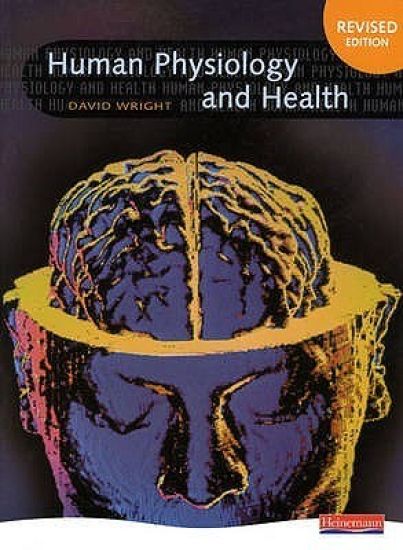
Human Physiology and Health

Human Physiology and Health

David Wright

pearson education limited
2007
nidottu
Human Physiology and Health provides complete coverage of the content for the GCSE specifications in Human Physiology and Health, and Human biology. It is also a valuable resource for students studying any of the BTEC or OCR Nationals in Health and Social Care, or Science. Advanced level Biology, Human Biology, and Health and Social Care students will also find it useful for background information to many of the topics. Clear 'bite-sized' presentation of topics in double page spreads with clear summaries of what students should know at the end of each. Plenty of clear illustrations in full colour, which explain the biological concepts visually. Discussion of real life applications and some of the ethical and social issues with which science must deal. Examination type questions at the end of each chapter, to provide practice and to check up on learning.
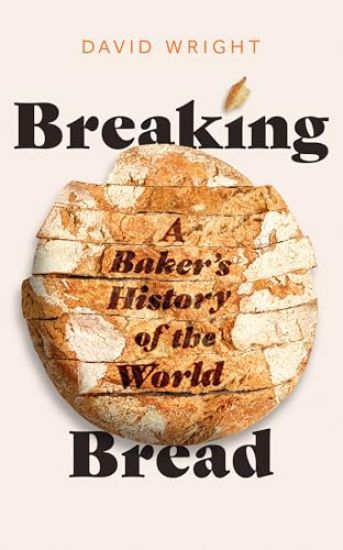
Breaking Bread

Breaking Bread

David Wright

Quarto Publishing Plc
2025
sidottu
‘An amazing book.’ Dan Lepard‘The rich and fascinating story of bread.’ Lily Vanilli‘A brilliant, timely and important book full of compassion.’ Olia Hercules‘A fascinating exploration of our universal love of bread. David traces the past, present and future of bread through his personal lens as a third generation baker.’ Edd KimberIn Breaking Bread, third generation baker, food writer and presenter David Wright examines the universal questions about bread and baking. About the people who make and shape the bread we buy and the difficulties that social and cultural change, food fads and health directives have had, and are having, on the baking industry. After his family bakery sadly closed its doors after seventy-five years, Wright asks if the the closure of the bakery underlines the very idea that bread is a dying foodstuff. Is bread good or bad? And what does the future hold for bread?Bread is an essential part of our story, our health, our very being. Every civilisation has a form of bread, and how we create, make and bake it, how we sell it and buy it, our food security, our access to it, affects everything: our physical and mental well-being, the ingredients, the seeds, the very earth we grow our grains in, the water we use and how we treat and sustain these natural resources, impact on the very health and future of our planet.Chapters include:1 Why Bread? – Creating, making, baking2: The Wheel of Life – A loaf’s cycle3: Frankenloaf – Science and the perfect loaf4: Sicker by the Slice – A marriage not made in heaven5: Big Bread – Industrial vs artisan bakeries6: The Breadline – The economics of crust7: Flour Power – The politics of bread8: Bloody Bread – The costs of conquest9: Our Daily Bread – What the gods want10: Breaking bread - A once ropey baker looks to the futureBreaking Bread contains interviews and expert contributions from Olia Hercules - Food Writer, Dan Lepard - Baker and Writer, Felicity Spector - Writer and Baker, Kateryna Kalyuzhna – Baker, Brad Leone - Food Personality, Chris Cowie – Philosopher, Zara Mohammed - Religious Leader, William Kendall - Food Producer, Andy Cato/George Lamb – Wildfarmed, Daisy Terry - Dusty Knuckle, Ollie Hornsey-Pennell - Hylsten Bakery, Tim Williams - Regenerative Farmer, Matt Burgess – Chef, Martha Delacey - Teacher and Writer, Karl De Smedt - Sourdough Librarian, Vanessa Kimbell – Baker, Chris Young - Real Bread Campaign, Ben MacKinnon - Baker E5, Ben Glazer - Coombeshead Bakery, Andrew Gilespy - Fresh Flour, OJ Borg - Radio 2 DJ and Presenter, Christopher Tan - Baker and Writer, Martin Bricknell - War Studies Professor KCL, Wing Mon Cheung - Cereal Bakery