Kirjojen hintavertailu. Mukana 11 244 527 kirjaa ja 12 kauppaa.

Kirjahaku

Etsi kirjoja tekijän nimen, kirjan nimen tai ISBN:n perusteella.

1000 tulosta hakusanalla David Young

National improvements upon agriculture, in twenty-seven essays, by David Young, ...
The 18th century was a wealth of knowledge, exploration and rapidly growing technology and expanding record-keeping made possible by advances in the printing press. In its determination to preserve the century of revolution, Gale initiated a revolution of its own: digitization of epic proportions to preserve these invaluable works in the largest archive of its kind. Now for the first time these high-quality digital copies of original 18th century manuscripts are available in print, making them highly accessible to libraries, undergraduate students, and independent scholars.Medical theory and practice of the 1700s developed rapidly, as is evidenced by the extensive collection, which includes descriptions of diseases, their conditions, and treatments. Books on science and technology, agriculture, military technology, natural philosophy, even cookbooks, are all contained here.++++The below data was compiled from various identification fields in the bibliographic record of this title. This data is provided as an additional tool in helping to insure edition identification: ++++British LibraryT078088With a list of subscribers.Edinburgh: printed for, and sold by the author, and by John Bell, 1785. xx,412p., III plates; 8
National Improvements Upon Agriculture, in Twenty-seven Essays, by David Young,
The 18th century was a wealth of knowledge, exploration and rapidly growing technology and expanding record-keeping made possible by advances in the printing press. In its determination to preserve the century of revolution, Gale initiated a revolution of its own: digitization of epic proportions to preserve these invaluable works in the largest archive of its kind. Now for the first time these high-quality digital copies of original 18th century manuscripts are available in print, making them highly accessible to libraries, undergraduate students, and independent scholars.Medical theory and practice of the 1700s developed rapidly, as is evidenced by the extensive collection, which includes descriptions of diseases, their conditions, and treatments. Books on science and technology, agriculture, military technology, natural philosophy, even cookbooks, are all contained here.++++The below data was compiled from various identification fields in the bibliographic record of this title. This data is provided as an additional tool in helping to insure edition identification: ++++British LibraryT078088With a list of subscribers.Edinburgh: printed for, and sold by the author, and by John Bell, 1785. xx,412p., III plates; 8

David Youngman: Missionary Runaway

David Youngman: Missionary Runaway

Randy Pilz

Boletus Media
2017
nidottu
David Youngman: Runaway Missionary tells the fictional story of David Youngman, a troubled Rhode Island college student. A chance visit to a rural church leads David into personal spiritual revival. Encouraged by a dear friend, David attends an informal student prayer meeting. There he senses the unmistakable call of God to bring the Gospel to Native Americans on the western frontier. A brutal raid on his parent's mission station years before left David orphaned and harboring a bitter hatred for all Native Americans. David struggles within his storm-tossed soul but cannot reconcile God's call with his personal hatred. Like Jonah, David decides to runaway. And like Jonah, finds that there is no fleeing God presence and purpose for his life. Captured and impressed into the British Navy, accidents and mishaps mount around David until he is thrown into the ship's brig. There David prays to God for forgiveness and deliverance from both his hatred and his confinement. The British release David and send him ashore, happy to be rid of him and God's judgement he has brought upon them. David determines now to go on and fulfill the call of God in his life to preach the Gospel to the Indians his parents once ministered among.
Unto the Right Honourable, the Lords of Council and Session, the Petition of William and Henry Foggoes, and David Young, Merchants in Glasgow, in Company, James Weir Late Commander of the Ship, The Diamond of Glasgow
The 18th century was a wealth of knowledge, exploration and rapidly growing technology and expanding record-keeping made possible by advances in the printing press. In its determination to preserve the century of revolution, Gale initiated a revolution of its own: digitization of epic proportions to preserve these invaluable works in the largest archive of its kind. Now for the first time these high-quality digital copies of original 18th century manuscripts are available in print, making them highly accessible to libraries, undergraduate students, and independent scholars.This collection reveals the history of English common law and Empire law in a vastly changing world of British expansion. Dominating the legal field is the Commentaries of the Law of England by Sir William Blackstone, which first appeared in 1765. Reference works such as almanacs and catalogues continue to educate us by revealing the day-to-day workings of society.++++The below data was compiled from various identification fields in the bibliographic record of this title. This data is provided as an additional tool in helping to insure edition identification: ++++National Library of ScotlandT229075Dated at head of the drop-head title on p. 3]: November 16th, 1739. Signed: William Grant. With a half-title. Edinburgh, 1739]. 16p.; 4
Young, Corker and Summers on Abuse of Process in Criminal Proceedings
Setting out the whole spectrum of circumstances where abuse of process is litigated in criminal law, barrister David Young and his co-authors use their wealth of experience in the UK and international courts to identify and describe the many different strands of the abuse jurisdiction.The authors provide you with a thorough understanding of the different forms of abuse of process, in areas such as lost evidence, delay, abuse of executive power, entrapment, extradition, double jeopardy and breach of promise. Additionally, the new edition features the first published chapter on abuse of process in International criminal proceedings, for those working in international criminal law.This Fifth Edition is updated to include:- New case law on prosecution disclosure failings in the context of abuse of process, and the courts approach to unavailable evidence in R v PR, Hamilton v PO, and R v E- An Entrapment chapter analysing the Syed (Haroon) decision on ECHR jurisprudence post Looseley, and the potential for abuse of process in cases of private entrapment- Abuse of power by the Executive’s key Norman decision which sets out the law comprehensively- The developing abuse case law on private prosecutions, reviewing cases where prosecutors may hold improper motives for bringing private prosecutions- Detailed analysis of the abuse jurisdiction in extradition proceedings in Jasvins v General Prosecutor’s Office Latvia- New Guidance on challenging interlocutory decisions by judicial review in Parashar, and analysis of R v Asiedu on defence appeals following guilty pleas- The revised Attorney General’s Guidelines on Disclosure 2020 and the CPIA Code of Practice
A Manager's Guide to Creative Cost Cutting

A Manager's Guide to Creative Cost Cutting

David Young

McGraw-Hill Professional
2002
nidottu
Cisco has done it. Motorola has done it. And now Hewlett-Packard is doing it. Company layoffs are growing as the economy weakens and companies are looking for ways to reduce costs and expand profits. Efforts to improve a company's bottom line can take one of two forms: increasing revenues or decreasing expenses. Increasing revenues is risky. Managers must make assumptions about a host of matters including purchasing patterns, competitors' moves, price resistance, product obsolescence, and manufacturing capabilities. Decreasing expenses, by contrast, is a sure thing. Once an employee is gone, so is his or her salary. This explains why almost all cost cutting efforts we read about involve employee layoffs. But cost cutting can be much more creative than that. A Manager's Guide to Creative Cost Cutting shows managers and business leaders that there are numerous ways to reduce costs without reducing staff. A Manager's Guide to Creative Cost Cutting presents the strategies and creative solutions for cutting both short-term and long-term costs to produce both immediate and continuous results.A practical, hands-on reference, this book shows business leaders and managers how to leverage all resources within their organization to improve profits, reduce costs, and create a better place to work. Filled with engaging examples and efficient techniques to reduce expenses and, thus, expand profits, A Manager's Guide to Creative Cost Cutting; - Presents creative solutions to cutting costs such as eliminating redundant activities - Highlights real-world cases, from Intel's unpaid leave to Goodyear's debt negotiation - Shows how to uncover hidden costs - Identifies the 21 cost-reduction prohibitors Each cost-cutting method covers a two-page spread, for quick and easy reading. The book is organized into two major divisions, and each division has several parts. Each part contains a variety of two-page cost-cutting methods. There is also a closing section on what not to cut. In this day of company layoffs and a weakening economy, managers and business leaders have the seemingly impossible objective of improving the bottom line and reducing costs - without killing morale.A Manager's Guide to Creative Cost Cutting makes this goal possible with the strategies and tools managers need to set the plans in motion.
F. D. Maurice and Unitarianism

F. D. Maurice and Unitarianism

David Young

Clarendon Press
1992
sidottu
F. D. Maurice (1805-72) was one of Victorian Britain's most controversial thinkers. Although he came from a Unitarian family and counted leading Unitarians as his friends, their influence on his work has never been seriously examined. The purpose of this new book is to look at his life and teaching in the light of Unitarianism. Maurice's faith had a distinctly Christological emphasis, but he continued to value his Unitarian heritage. His concern with the Fatherhood of God and the dignity of the human race owes much to his family background. Dr Young's study opens with a compact history of Unitarianism during the lives of F. D. Maurice and his father, a Unitarian minister. A series of biographical sketches draws on hitherto unpublished material to set Maurice's work in its historical context. The final chapters compare the central themes of his theology with the teaching of his Unitarian contemporaries.
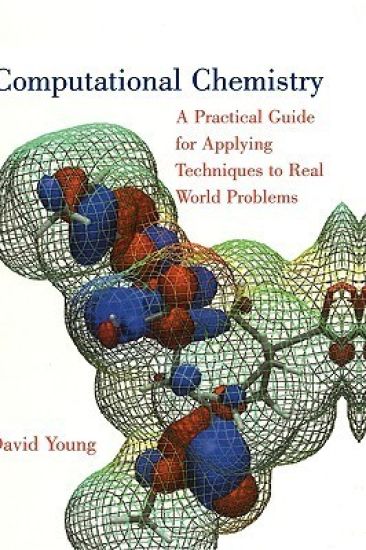
Computational Chemistry

Computational Chemistry

David Young

John Wiley Sons Inc
2001
sidottu
A practical, easily accessible guide for bench-top chemists, this book focuses on accurately applying computational chemistry techniques to everyday chemistry problems. Provides nonmathematical explanations of advanced topics in computational chemistry. * Focuses on when and how to apply different computational techniques. * Addresses computational chemistry connections to biochemical systems and polymers. * Provides a prioritized list of methods for attacking difficult computational chemistry problems, and compares advantages and disadvantages of various approximation techniques. * Describes how the choice of methods of software affects requirements for computer memory and processing time.
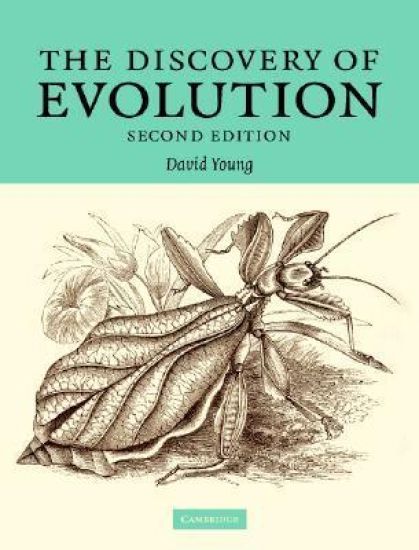
The Discovery of Evolution

The Discovery of Evolution

David Young

Cambridge University Press
2007
pokkari
Originally published in 2007, The Discovery of Evolution explains what the theory of evolution is all about by providing a historical narrative of discovery. Some of the major puzzles that confront anyone studying living things are discussed and it details how these were solved from an evolutionary perspective. Beginning with the emergence of the early naturalists in the seventeenth century, the scientific discoveries that led up to and then flowed from Darwin and Wallace's theory of evolution by natural selection are then discussed, and finally the modern evolutionary studies at the close of the twentieth century are detailed. This new edition of The Discovery of Evolution is fully updated and contains a new chapter on the evolutionary studies of the twentieth century. By approaching the topic of evolution in this way, it is made accessible to the non-specialist and no previous study of biology is required in order to read and understand this book.
The Concept of Canon in the Reception of the Epistle to the Hebrews
David Young argues that the reception of the Epistle to the Hebrews in early Christianity was influenced by a number of factors which had little to do with debates about an authoritative canon of Christian writings, and which were primarily the concern of a relatively small group of highly educated scholars. Through careful study of the quotations and reproductions of Hebrews in their own rhetorical and material context, Young stresses that the concept of canon had little bearing on its early reception. By exploring the transformation of authorship into authority, the patristic citations of Hebrews, the Epistle’s position in edited collections of the Pauline corpus and the consequences of translation, this complex reception history illustrates the myriad ways in which early Christians thought of and interacted with their scriptures.
The Concept of Canon in the Reception of the Epistle to the Hebrews
David Young argues that the reception of the Epistle to the Hebrews in early Christianity was influenced by a number of factors which had little to do with debates about an authoritative canon of Christian writings, and which were primarily the concern of a relatively small group of highly educated scholars. Through careful study of the quotations and reproductions of Hebrews in their own rhetorical and material context, Young stresses that the concept of canon had little bearing on its early reception. By exploring the transformation of authorship into authority, the patristic citations of Hebrews, the Epistle’s position in edited collections of the Pauline corpus and the consequences of translation, this complex reception history illustrates the myriad ways in which early Christians thought of and interacted with their scriptures.
Agape: The Infinite, Ultimate Love of God

Agape: The Infinite, Ultimate Love of God

David Young

Independently Published
2019
nidottu
In the English language, the word "love" is so feeble that it requires the help of a bushel basket of adjectives. As a result, it also is easily misconstrued or misused. The Greek language has four words for love: agapē, storge, eros and philia. And, four words are needed. Very briefly-Agapē unconditional love. Storge: family love. Philia: friend love. Eros: marital love.Agapē is the mother of the other three. They are her children. The more agapē that you have the more of the others you will have. Agapē enriches everything.David weaves together personal experiences, shared experiences, Old Testament verses, New Testament verses, lyrics from old hymns, lyrics from new faith songs and quotes from theologians and pastors old and new to bring a deep understanding of agapē.You want to love unconditionally (agapē)? Read this book.You want to love your spouse more (eros)? Read this book.You want to love your mother, father, siblings, cousins more (storge)? Read this book.You want to love your friends more (philia)? Read this book.You truly want to understand the depth of agapē. Read this book.Agapē, "The Infinite, Ultimate Love of God". The most amazing thing is that God will equip you to love like this.You want more of David's insight? Read his books, Faith and Hope.