

Kirjahaku
Etsi kirjoja tekijän nimen, kirjan nimen tai ISBN:n perusteella.
1000 tulosta hakusanalla Davis Stephen T.
Attempting to prove the existence of God is an ancient and venerable tradition within the discipline known as the philosophy of religion. But can we truly prove the existence of God using human reason alone? Just how do we prove the existence of God? Why try? Which, if any, of the various theistic proofs are persuasive? God, Reason, and Theistic Proofs tackles these fundamental questions head-on. Stephen T. Davis examines a cross-section of theistic proofs that have been offered by theologians and thinkers from Anselm to Paley, explaining in clear terms what theistic proofs are and what they try to accomplish. He then goes on to explore in depth the relationship between theistic proofs and religious realism, the ontological argument for the existence of God, the cosmological and teleological arguments, the position known as foundationalism, and the argument from religious experience. Wisely structured and clearly written, this volume will make an excellent resource for those looking for a comprehensive introduction to the debate surrounding the existence of God, or for those seeking intellectual validation for their faith.
For keen minds looking for a philosophical look at whether faith in God is a practical way to find meaning in life. Idea for proving meat to debates of belief, Rational Faith gives you a chance to take an honest and serious look at what modern and classical thought have to say about what faith is, and mean, and whether it's truly possible. If God exists, why doesn't he eliminate suffering and evil? Does evolution disprove Christianity? Can religion be explained by cognitive science? People have grappled for ages with these kinds of questions. And many in today's academic world find Christian belief untenable. But renowned philosopher Stephen Davis argues that belief in God is indeed a rational and intellectually sound endeavour. Drawing on a lifetime of rigorous reflection and critical thinking, he explores perennial and contemporary challenges to Christian faith. Davis appraises objections fairly and openly, offering thoughtful approaches to common intellectual problems. Real questions warrant reasonable responses. Examine for yourself the rationality of the Christian faith.
How do we prove the existence of God? The second volume in the Reason and Religion series tackles head-on this fundamental question. It examines a cross-section of theistic proofs (ways of proving the existence of God) which have been offered by theologians and thinkers from Anselm to Paley, explaining in clear terms what theistic proofs are and what they try to accomplish. The book goes on to explain the relationship between theistic proofs and religious realism, the cosmological and teleological arguments for the existence of God, the position known as foundationalism and the argument from religious experience.
Why believe in God? Renowned philosopher Stephen Davis argues that belief in God is indeed a rational and intellectually sound endeavor. Drawing on a lifetime of rigorous reflection and critical thinking, he appraises objections fairly and openly, offering thoughtful approaches to common intellectual problems. Examine for yourself the rationality of the Christian faith.


Christian Philosophical Theology constitutes a Christian philosopher's look at various crucial topics in Christian theology, including belief in God, the nature of God, the Trinity, christology, the resurrection of Jesus, the general resurrection, redemption, and theological method. The book is tightly argued, and amounts to a coherent explanation of and case for the Christian world view. While the work is written from a broadly Reformed Protestant perspective and the author does not avoid controversial topics, the aim is to present a 'merely Christian' world view (to adapt slightly C. S. Lewis's famous term). That is, Stephen T. Davis attempts to write as much as possible from the perspective of the broad centre of Christian understanding.
Christian Philosophical Theology constitutes a Christian philosopher's look at various crucial topics in Christian theology, including belief in God, the nature of God, the Trinity, christology, the resurrection of Jesus, the general resurrection, redemption, and theological method. The book is tightly argued, and amounts to a coherent explanation of and case for the Christian world view. Although written from a broadly Reformed Protestant perspective, and although the author does not avoid controversial topics, the aim is to present a `merely Christian' world view (to adapt slightly C. S. Lewis's famous term). That is, Stephen T. Davis attempts to write as much as possible from the perspective of the broad centre of Christian understanding.
An Introduction to Christian Philosophical Theology
Stephen T. Davis; Eric T. Yang
Zondervan
2020
nidottu
An accessible introduction to Christian philosophical theologyPhilosophical or analytic theology seeks to employ philosophical tools while studying topics in Christian theology and examining the logical consistency or intelligibility of some of the key doctrines of the Christian faith. In this accessible primer, An Introduction to Christian Philosophical Theology, authors Stephen T. Davis and Eric T. Yang first explain the scope, relevance, and value of philosophical theology and then applies its conceptual tools to examine each of the core Christian doctrines:Revelation and ScriptureThe TrinityThe IncarnationRedemption and the atonement,Resurrection and life after deathThe final chapter briefly addresses some additional theological issues including petitionary prayer, eschatology, and original sin.Designed for beginning students and non-specialists this guide provides the ideal entry point for not only understanding what philosophical theology is but also for how it can provide valuable insights for how we think about the core doctrines of the Christian faith.

An Introduction to Christian Philosophical Theology Video Lectures
Stephen T. Davis; Eric T. Yang
ZONDERVAN
2020
sidottu
The book '... should be assured of the attention of the many on both sides of the Atlantic who are fascinated by this subject.' John Hick
The book '... should be assured of the attention of the many on both sides of the Atlantic who are fascinated by this subject.' John Hick
This book began as a series of papers at a conference called "Death and Afterlife" held in Claremont, California in January, 1987 under the auspices of the Department of Religion of the Claremont Graduate School. The responses to each paper and several comments are also included.
In After We Die, philosopher Stephen T. Davis subjects one of Christianity's key beliefs - that Christians not only will survive death but also will enjoy bodily resurrection - to searching philosophical analysis. Facing each critique squarely, Davis contends that traditional, historic belief about the eschatological future is philosophically defensible. Davis examines personal extinction, reincarnation, and immortality of the soul. By juxtaposing two systems of salvation - reincarnation/karma and resurrection/grace - Davis explores the Christian claim that humans will be raised from the dead, as well as the radical Christian assertions of Jesus' resurrection, ascension, and long-anticipated return. Davis finally addresses Christian thinking about heaven, hell, and purgatory. The philosophical defense of Christianity's core beliefs enables Davis to render a reasonable answer to the eternal question of what happens to us after we die. After We Die is essential reading for teachers and students of philosophy, theology, and Bible, as well as anyone interested in a reasoned analysis of historic Christian faith, particularly as it pertains to the inevitable end of each and every human being.
Disputed Issues is a collection of essays reflecting Professor Steven Davis's thinking--developed over a long and illustrious career--on a host of widely-contested issues essential to Christian philosophy, theology, and belief. These thoughtful and highly readable essays explore a range of topics, from those central to basic Christian belief (such as issues about resurrection and the survival of death), to others focused on more specific questions (such as whether Mark copied Homer and whether exegesis should be presuppositionless). Intended as a useful, instructive resource for believers and unbelievers alike, Disputed Issues is essential to understanding what a thoughtful orthodox Christian believes--and why.
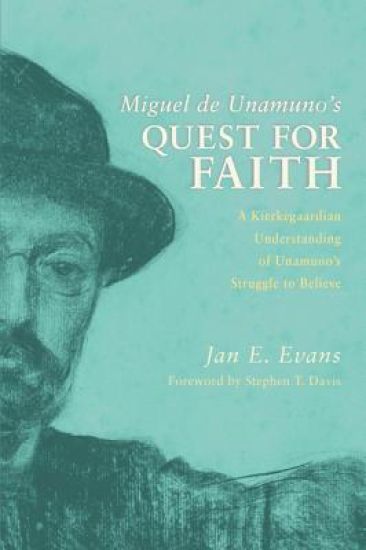
Miguel de Unamuno's Quest for Faith
Jan E. Evans; Stephen T. Davis
Wipf Stock Publishers
2013
pokkari
50 Studies Every Pediatrician Should Know
Ashaunta T. Anderson; Nina L. Shapiro; Stephen C. Aronoff; Jeremiah Davis; Michael Levy
Oxford University Press Inc
2016
nidottu
50 Studies Every Pediatrician Should Know presents key studies that have shaped the current clinical practice of pediatrics. Selected using a rigorous methodology, the studies cover topics including: allergy immunology, behavioral, cardiology, dermatology, endocrinology, ENT, general pediatrics, hematology, infectious disease, neonatology, nephrology, neurology, oncology, ophthalmology, orthopedics, and pulmonary. For each study, a concise summary is presented with an emphasis on the results and limitations of the study, and its implications for practice. An illustrative clinical case concludes each review, followed by brief information on other relevant studies. This is one of the only books of its kind to present a collection of the most influential clinical trials in pediatrics that are detailed enough to be used on rounds, but still easily digestible.

Building Networks and Public Safety Communications
Stephen J. Treado; William D. Davis; Steven T. Bushby
Createspace Independent Publishing Platform
2008
nidottu
Hi-Cat: What can't happen at Camp David...just did.
Stephen Schwambach
Independently Published
2019
nidottu
He got away with murder once. Now he needs to do it again. The only problem? It has to be done inside the most heavily guarded military facility on the planet: Camp David - where U.S. presidents go to heal and get away.This time, however, the president's retreat is anything but. For the first time in history, during a looming international crisis, the first lady of the United States has decided to divorce her husband while he's in office. The way she's about to do it will destroy his presidency. It's all coming down. Now. ...and then the wrong person shows up.