Kirjojen hintavertailu. Mukana 11 244 527 kirjaa ja 12 kauppaa.

Kirjahaku

Etsi kirjoja tekijän nimen, kirjan nimen tai ISBN:n perusteella.

1000 tulosta hakusanalla Deborah G. Felder

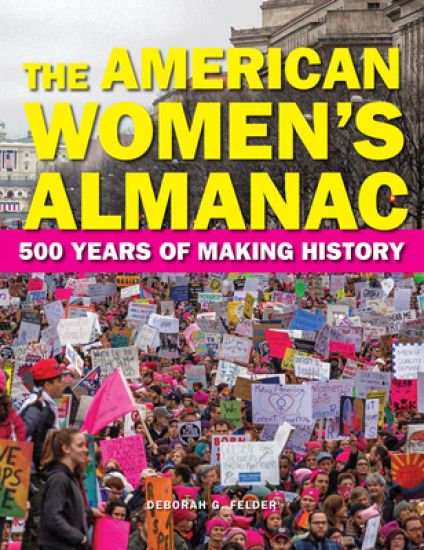
The American Women's Almanac

The American Women's Almanac

Deborah G. Felder

Visible Ink Press
2020
nidottu
The most complete and affordable single-volume reference on women's history available today, this almanac is a unique and valuable resource devoted to illustrating the moving and often lost history of women in America. It will be of interest to history buffs, students, and teachers, as well as general readers. It is a fascinating mix of biographies, little-known or misunderstood historical facts, enlightening essays on significant legislation and movements, and numerous photographs and illustrations.
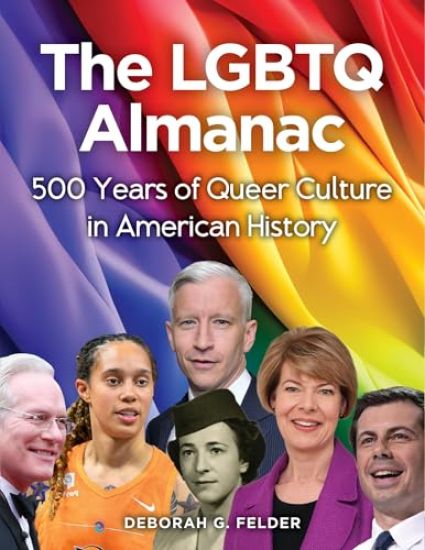
The LGBTQ Almanac

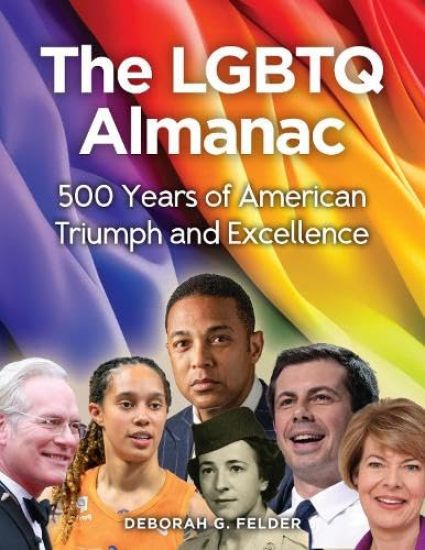
The LGBTQ Almanac

Deborah G. Felder

Visible Ink Press
2026
pokkari
Influential Remarkable Groundbreaking Discover and celebrate the amazing stories and achievements of some of America's most inspiring artists, athletes, scholars, advocates and activists, political and civic leaders, entrepreneurs, physicians, educators, and more. Explore the vibrant experiences and vital roles of LGBTQ people in America Honoring the history and the impact of LGBTQ people on the United States across a variety of fields, The LGBTQ Almanac: 500 Years of American Triumph and Excellence is a fascinating mix of biographies, little-known or misunderstood historical facts, enlightening essays on significant legislation, and cultural changes. It features a large collection of 425 biographies of both celebrated and lesser-known influencers in the community, such as ... Julie Dorf , Human Rights ActivistRuth Ellis, EntrepreneurCecilia Gentili and Shirley Willer, ActivistsLucy Diggs Slowe, Educator, AthleteJohn J. McNeill, Catholic Priest, TheologianBrandan Robertson, Religious leaderJasper Johns, Painter, Graphic ArtistTim Gunn, Fashion Mentor, TV PersonalityNathan Lane, ActorDon Lemon, Journalist, Television HostBen Barres, NeurobiologistWilliam Masters and Virginia Johnson, Scientists, SexologistsTammy Baldwin, SenatorPete Buttigieg, Secretary of TransportationPhyllis Frye, Lawyer, JudgeJames Hormel, Business Executive, DiplomatMary Barra, Chair and CEO, General MotorsBeth Ford, President and CEO, Land O'Lakes, Inc.Peter Thiel, Entrepreneur, Venture CapitalistEric Fanning, Secretary of the ArmyHelen G. James, Airman Second ClassBilly Bean, Baseball PlayerBrittney Griner, WNBA Basketball PlayerCarl Nassib, NFL Football PlayerLia Thomas, SwimmerAnd many, many more Celebrating Queer history and achievements, The LGBTQ Almanac is a unique and valuable resource. This fascinating read is devoted to illustrating the moving and often lost history of LGBTQ people in business, politics, the military, art, entertainment, sports, media, religion, science, and across America life and throughout its history. Commemorating and honoring Queer achievements, honors, and influence, this important book brings to light all there is to admire and discover about LGBTQ Americans Numerous photographs and illustrations, a helpful bibliography, a timeline, and an extensive index add to its usefulness.
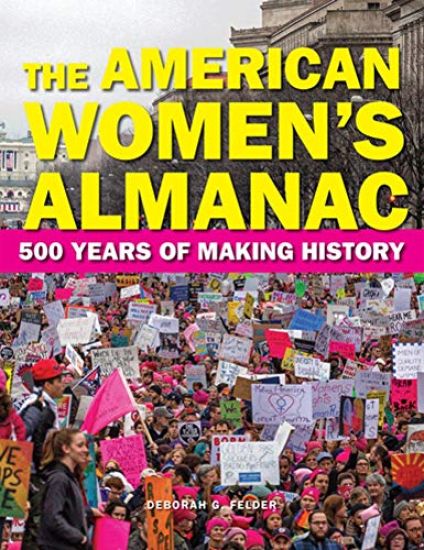
The American Women's Almanac

The American Women's Almanac

Deborah G. Felder

Visible Ink Press
2020
sidottu
Celebrate the vital roles and vibrant experiences of women in America! The most complete and affordable single-volume reference on women’s history available today, The American Women’s Almanac: 500 Years of Vitality, Triumph and Excellence is a unique and valuable resource devoted to illustrating the moving and often lost history of women in America. It is a fascinating mix of biographies, little-known or misunderstood historical facts, enlightening essays on significant legislation and movements, and numerous photographs and illustrations. Honoring and celebrating achievements from the First Nations women and the French Huguenot Women of Fort Caroline to the unprecedented number of ethnically diverse women running for modern office, it provides insights on the long-ignored influence, inspiration, and impact of women on U.S. society and culture. From the first indigenous women in North America and the dangers and hardships of the 15th, 16th, and 17th century journeys to the New World to the continual push against patriarchal political, military, corporate, and societal systems and expectations, this essential book illustrates the important events and figures surrounding the suffrage movement; literature, art, and music; business leaders and breakthroughs; political history and office holders; advances in science and medicine; and other vital topics. Learn about the Nineteenth Amendment; Title IX; the legalization of birth control in 1966; the dramatic increase in women attending colleges and universities in the United States; the limitations of 19th-century women’s fashion on athletes; and so much more. The most illustrious figures, as well as less-known stars, are revealed in The American Women’s Almanac, including Abigail Adams, Louisa May Alcott, Maya Angelou, Susan B. Anthony, Ruth Asawa, Clara Barton, Sara Blakely, Nellie Bly, Tarana Burke, Annie Jump Cannon, Hattie Wyatt Caraway, Carrie Chapman Catt, Bessie Coleman, Rebecca Harding Davis, Maya Deren, Amelia Earhart, Sarah Emma Edmonds, Carly Fiorina, Dian Fossey, Helen Frankenthaler, Aretha Franklin, Temple Grandin, Mia Hamm, Anna Mae Hays, Grace Hopper, Mary Harris “Mother” Jones, Barbara Jordan, Helen Keller, Julie Krone, Juliette Gordon Low, Dolley Madison, Maria Montoya Martinez, Lucretia Mott, Sara Nelson, Lynn Nottage, Sandra Day O’Connor, Pocahontas, Letty Cotton Pogrebin, E. Annie Proulx, Sally Ride, Sacagawea, Bernice Sandler, Margaret Sanger, Elizabeth Ann Seton, Elizabeth Cady Stanton, Gloria Steinem, Lucy Stone, Pat Summitt, Amy Tan, Martha Washington, Randi Weingarten, Gladys West, Susan Wojcicki, Kristi Yamaguchi, and approximately 350 others. This important reference also has a helpful bibliography, an extensive index, a timeline, and 550 photos, adding to its usefulness. Commemorating and honoring the achievements, people, and essential influence of women in American history, The American Women’s Almanac brings to light all there is to admire and discover about these incredible women.
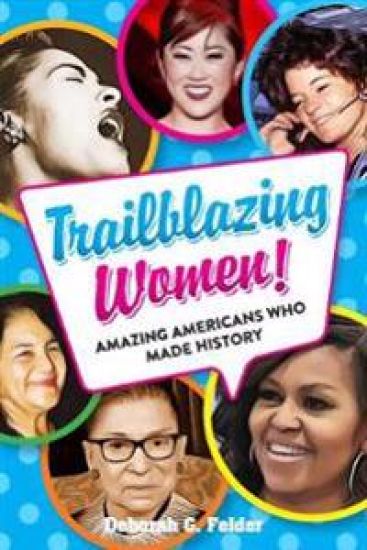
Trailblazing Women!

Trailblazing Women!

Deborah G. Felder

Visible Ink Press
2021
nidottu
Women have accomplished incredible things throughout American history. They've made and changed history. They've contributed revolutionary new ideas and moved science forward. Their inventions, businesses, literature, art, and activism helped build the nation. They've succeeded in a whole host of professions, including media, medicine, politics, government, education, sports, and the military. TRAILBLAZING WOMEN! shines a welcome light on some of America's most remarkable women and their enduring stories and amazing accomplishments.
Trailblazing Women!

Trailblazing Women!

Deborah G. Felder

Visible Ink Press
2021
sidottu
Impressive Innovative Influential Discover and celebrate the amazing stories and achievements of 120 of America's most inspiring women Women have accomplished incredible things throughout American history. They've made and changed history. They've contributed revolutionary new ideas and moved science forward. Their inventions, businesses, literature, art, and activism helped build the nation. They've succeeded in a whole host of professions, including media, medicine, politics, government, education, sports, and the military. Trailblazing Women Amazing Americans Who Made History shines a welcome light on some of America's most remarkable women and their enduring stories and amazing accomplishments. This fun and fascinating read covers the long history of America's heroic women. It brings you the biographies of some of America's boldest and bravest. Read about obstacles they overcame and how they flourished. It covers the lasting legacies of well-known and lesser-known stars, including ... For her efforts to promote world peace, she was awarded the Nobel Peace Prize in 1931, the first American woman to receive the award. (Jane Addams (1860-1935), Social Reformer) Like the March girls in her classic novel Little Women, she and her sisters called their mother "Marmee." (Louisa May Alcott (1832-1888), Novelist) As a young child, she sang solos and duets with her Aunt Mary at the Union Baptist Church and by the age of 6 was earning money singing at local functions throughout her hometown of Philadelphia. (Marian Anderson (1897-1993), Singer) This celebrated women's rights activist was one of very few famous women to have a ship named after her. (Susan B. Anthony (1820-1906), Suffragist) Called the "Angel of the Battlefield" for nursing soldiers during Civil War battles, she went on to establish the American Red Cross (Clara Barton (1821-1912), Army Nurse) She made headlines when she became the first woman to receive a Ph.D. in the science of geology from the elite Baltimore research university, Johns Hopkins. (Florence Bascom (1862-1945), Geologist) The first American woman to receive the Nobel Prize for Literature, she grew up in a village in China, where her parents were missionaries. As a child, she spoke Chinese before she learned English. (Pearl S. Buck (1892-1973), Novelist) She said about the "me too" movement she founded: "When one person says, 'Yeah, me, too, ' it gives permission for others to open up." (Tarana Burke (1973-), Civil Rights Activist) She published articles under the gender-neutral name R.L. Carson, because she feared that readers would dismiss her pro-environment message if they knew the writer was a woman. (Rachel Carson (1907-1964), Biologist) The nation's first four-star woman general has a long family history of U.S. military service--going back five generations. (Ann E. Dunwoody (1953-), Army Officer) This famous aviator organized an all-women group of pilots called the Ninety-Nines. She even designed the pilots' uniforms, which were advertised in Vogue magazine. (Amelia Earhart (1897-1937), Aviator) She was the first African American tennis champ, and she paved the way for future Black stars in the sport. "I hope that I have accomplished one thing: that I have been a credit to tennis and my country." (Althea Gibson (1927-2003), Tennis Player) When this celebrated U.S. Supreme Court justice served on the high court with Justice Sandra Day O'Connor as one of only two women justices, she and O'Connor decided to wear special collars on decision days to carve out their visual space in a sea of black robes and ties. (Ruth Bader Ginsburg (1933-2020), Attorney, U.S. Supreme Court Justice) She made many discoveries in physics, but the most important was identifying the "magic numbers" that make protons or neutrons stable within an atomic nucleus. She was awarded the Nobel Prize in Physics for her work. (Maria Goeppert-Mayer (1906-1972), Physicist) A soccer icon who was the first woman inducted into the World Football Hall of Fame, she started playing the sport at the age of two, while her family was living in Italy. (Mia Hamm (1972-), Soccer Player) Her first name means "lotus" in the Sanskrit langauge, and her name, Devi, means "goddess." (Kamala Harris (1964-), Vice President of the United States of America) She coined the term "bug" to describe computer errors after she found a moth inside one of her team's computers. (Grace Hopper (1906-1992), Computer Scientist, Navy Rear Admiral) When this physician and astronaut became the first African American woman in space, she carried with her a photo of pioneering Black aviator Bessie Coleman. (Mae Carol Jemison (1956-), Astronaut, Physician, Scientist) An acclaimed architect and artist best known for designing Washington, D.C.'s Vietnam Veterans Memorial, Lin once said, "I try to give people a different way of looking at their surroundings. That's art to me." (Maya Lin (1959-), Architect) When this former first lady was growing up, she was a great athlete, but she didn't like playing competitive sports. The reason, her big brother said, was that "she hated losing." (Michelle Obama (1964-), Attorney, First Lady) When she was appointed the nation's first woman Supreme Court justice, she said, "The power I exert on the court depends on the power of my arguments, not on my gender." (Sandra Day O'Connor (1930-), Attorney, U.S. Supreme Court Justice) A Cuban American and the first Latinx elected to the U.S. House of Representatives, she delivered a Spanish version of the Republican rebuttal to President Barack Obama's State of the Union Address in 2014. (Ileana Ros-Lehtinen (1952-), Congresswoman) This famed Shoshone Indian guide brought her infant son, Jean-Baptiste, with her on the Lewis and Clark expedition to the American West. (Sacagawea (c. 1786-c. 1812), Frontier Guide) This acclaimed prima ballerina was the daughter of an Osage Indian father and a white mother. The Osage people gave her the name Wa-Xthe-Thomba, meaning "Woman of Two Worlds." (Maria Tallchief (1925-2013), Ballet Dancer) This mathematician, whose work has been described as one of the most important in 20th-century mathematics, used the complex shapes of soap film in her work to advance the field of geometry. (Karen Uhlenbeck (1942-), Mathematician) America's first black self-made millionaire, she was the child of former slaves who attained her success by creating and marketing an innovative line of beauty products and hair-care techniques to African American women. (Madame C. J. Walker (1867-1919), Entrepreneur) A labor leader and educator, she is the current president of the American Federation of Teachers (AFT), the former president of the United Federation of Teachers (UFT), and she became the first openly gay individual to be elected president of a national American labor union. (Randi Weingarten (1957-), Educator, Labor Leader) This mathematician is the hidden hero behind the development of GPS apps on cell phones. (Gladys West (1930-), Mathematician) Raised during the Great Depression of the 1930s, this Nobel Prize-winning medical physicist had the chance to realize her dream of becoming a scientist because she was able to attend Hunter College, a free all-women school in New York City. (Rosalyn Sussman Yalow (1921-2011), Medical Physicist) And many more. America has had more than its share of amazing women. The influence, inspiration, and impact of women on U.S. society and culture cannot be ignored. Explore the vital roles and vibrant experiences of some of the most impressive women in American history with Trailblazing Women Amazing Americans Who Made History. It brings to light all there is to admire and discover about these extraordinary women.
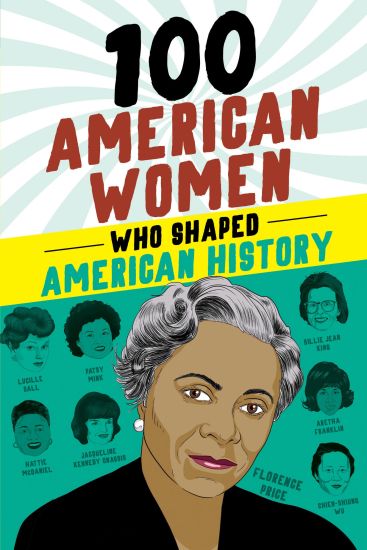
100 American Women Who Shaped American History

100 American Women Who Shaped American History

Deborah G. Felder

Sourcebooks Explore
2023
nidottu
Incredible stories of 100 extraordinary American women, for kids 8 and upThe perfect history gift for curious kids, this biography collection includes: 100 easy-to-read one-page biographies: Find out how these incredible women changed the course of history Illustrated portraits: Each biography includes an illustration to help bring history to life A timeline, trivia questions, project ideas and more: Boost your learning and test your knowledge with fun activities and resources From Betsy Ross to Florence Price, Georgia O'Keeffe to Katherine Johnson, Ruth Bader Ginsburg to Kamala Harris and many more, readers will meet artists, activists, scientists, and icons throughout history. Organized chronologically, 100 American Women Who Shaped American History offers a look at the prominent role women have played, and how their talents, ideas, and expertise have influenced the country from its very beginning, all the way up to today.
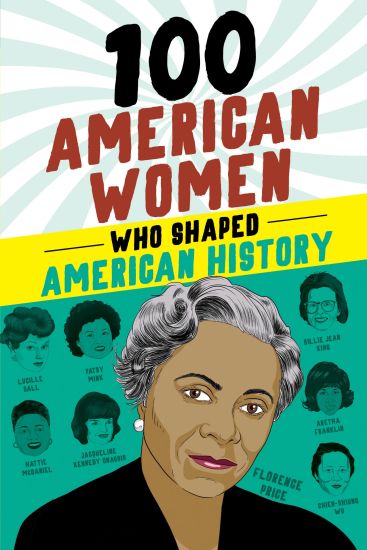
100 American Women Who Shaped American History

100 American Women Who Shaped American History

Deborah G. Felder

Sourcebooks Incorporated
2023
sidottu
Incredible stories of 100 extraordinary American women, for kids 8 and upThe perfect history gift for curious kids, this biography collection includes: 100 easy-to-read one-page biographies: Find out how these incredible women changed the course of history Illustrated portraits: Each biography includes an illustration to help bring history to life A timeline, trivia questions, project ideas and more: Boost your learning and test your knowledge with fun activities and resources From Betsy Ross to Florence Price, Georgia O'Keeffe to Katherine Johnson, Ruth Bader Ginsburg to Kamala Harris and many more, readers will meet artists, activists, scientists, and icons throughout history. Organized chronologically, 100 American Women Who Shaped American History offers a look at the prominent role women have played, and how their talents, ideas, and expertise have influenced the country from its very beginning, all the way up to today.
The Handy Literature Answer Book

The Handy Literature Answer Book

Daniel S. Burt; Deborah G. Felder

Visible Ink Press
2018
sidottu
Get the most out of reading with this an engaging and fun guide to the deeper meanings in great works of literature! From the epic of Gilgamesh to Aristotle and Cicero, and from Shakespeare and the King James Bible to Wuthering Heights, War and Peace, The Adventures of Huckleberry Finn and the Nobel-winning lyrics of Bob Dylan, the world of literature is an integral part of our lives. Great literature can shape and form thoughts and opinions as well as influence politics and predict the future. Reading can truly enrich our lives, but it can sometimes be daunting to get the most out of a great work of literature. The Handy Literature Answer Book: Understand and Enjoy Meanings, Symbolism, and Signs in Great Works is an engaging, easy-to-read look at literature basics such as themes, symbols, context, and other literary devices. Different literary forms, including novels, poems, plays, short stories, memoirs, and literary nonfiction are analyzed. Hundreds of important stories and great works are used as illustrative examples. Learn about the five basic questions for any work of literature, including “What is the significance of a title?” “What is conflict?” “What is character development?” “What is point of view?” “How does a setting affect a story?” “What are the different schools of literary criticism?” and many more. Bringing the most out of the reading experience, The Handy Literature Answer Book deciphers and analyzes stories, novels, and verses through insightful in-depth answers to nearly 400 common questions. You will also read about such fascinating tidbits as … What are the key components of literature? How is reading literature different from other kinds of reading? Why is artful reading so hard? What do poems do? How should a poem be read for its comparisons—metaphors and similes? What, according to Poe, should be the method of the short story writer? How do you recognize the difference between story and plot in a short story? How can you recognize a symbol? What are the defining characteristics of the novel? How did the novel evolve from a popular literary entertainment to the modern novel? What is the difference between drama and theater? What is the best way to understand and appreciate Shakespearean drama? What approaches should you take in reading an essay? What are characteristics of a memoir? This handy primer from two highly regarded experts also includes a glossary of essential literary terms, a timeline, a helpful bibliography, and an extensive index, adding to its usefulness. Making reading more enriching, rewarding, and enjoyable, The Handy Literature Answer Book is a wonderful, eye-opening read!
Of Greed and Glory

Of Greed and Glory

Deborah G. Plant

HARPERCOLLINS PUBLISHERS INC
2024
sidottu
A ground-breaking, personal exploration of America’s obsession with continuing human bondage from the editor of the New York Times–bestselling Barracoon.Freedom and equality are the watchwords of American democracy. But like justice, freedom and equality are meaningless when there is no corresponding practical application of the ideals they represent. Physical, bodily liberty is fundamental to every American’s personal sovereignty. And yet, millions of Americans—including author Deborah Plant’s brother, whose life sentence at Angola Prison reveals a shocking current parallel to her academic work on the history of slavery in America—are deprived of these basic freedoms every day.In her studies of Zora Neale Hurston, Deborah Plant became fascinated by Hurston’s explanation for the atrocities of the international slave trade. In her memoir, Dust Tracks on a Road, Hurston wrote: “But the inescapable fact that stuck in my craw, was: my people had sold me and the white people had bought me. . . . It impressed upon me the universal nature of greed and glory.” We look the other way when the basic human rights of marginalized and stigmatized groups are violated and desecrated, not realizing that only the practice of justice everywhere secures justice, for any of us, anywhere.An active vigilance is required of those who would be and remain free; with Of Greed and Glory, Deborah Plant reveals the many ways in which slavery continues in America today and charts our collective course toward personal sovereignty for all.
Error and the Growth of Experimental Knowledge

Error and the Growth of Experimental Knowledge

Deborah G. Mayo

University of Chicago Press
1996
sidottu
We may learn from our mistakes, but this work argues that, where experimental knowledge is concerned, we haven't begun to learn enough. It provides a critique of the subjective Bayesian view of statistical inference, and proposes the author's own error-statistical approach as a more robust framework for the epistemology of experiment. Deborah Mayo seeks to address the needs of researchers who work with statistical analysis, and simultaneously engages the basic philosophical problems of objectivity and rationality. Mayo has argued for an account of learning from error that goes beyond detecting logical inconsistencies. In this book, she presents her complete programme for how we learn about the world by being "shrewd inquisitors of error, white gloves off." Her approach should be relevant to philosophers, historians and sociologists of science, as well as researchers in the physical, biological and social sciences whose work depends upon statistical analysis.
Error and the Growth of Experimental Knowledge

Error and the Growth of Experimental Knowledge

Deborah G. Mayo

University of Chicago Press
1996
nidottu
We may learn from our mistakes, but this work argues that, where experimental knowledge is concerned, we haven't begun to learn enough. It provides a critique of the subjective Bayesian view of statistical inference, and proposes the author's own error-statistical approach as a more robust framework for the epistemology of experiment. Deborah Mayo seeks to address the needs of researchers who work with statistical analysis, and simultaneously engages the basic philosophical problems of objectivity and rationality. Mayo has argued for an account of learning from error that goes beyond detecting logical inconsistencies. In this book, she presents her complete programme for how we learn about the world by being "shrewd inquisitors of error, white gloves off." Her approach should be relevant to philosophers, historians and sociologists of science, as well as researchers in the physical, biological and social sciences whose work depends upon statistical analysis.
Every Tub Must Sit on Its Own Bottom

Every Tub Must Sit on Its Own Bottom

Deborah G. Plant

University of Illinois Press
1995
sidottu
"Plant's study is sorely needed at this point in the evolving critical assessment of Hurston. It is a paradigm for the study of individual African American women writers." -- Alice Deck, University of Illinois at Urbana-Champaign In a ground-breaking study of Zora Neale Hurston, Deborah Plant takes issue with current notions of Hurston as a feminist and earlier impressions of her as an intellectual lightweight who disregarded serious issues of race in American culture. Instead, Plant calls Hurston a "writer of resistance" who challenged the politics of domination both in her life and in her work. One of the great geniuses of the Harlem Renaissance, Hurston stands out as a strong voice for African-American women. Her anthropological inquiries as well as her evocative prose provide today's readers with a rich history of African American folk culture, a folk culture through which Hurston expressed her personal and political strategy of resistance and self-empowerment. Through readings of Hurston's fiction and autobiographical writings, Plant offers one of the first book-length discussions of Hurston's personal philosophy of individualism and self-preservation. From a discussion of Hurston's preacher father and influential mother, whose guiding philosophy is reflected in the title of this book, to the influence of Spinoza and Nietzsche, Plant puts into perspective the driving forces behind Hurston's powerful prose. This fresh look at one of the most important writers of the twentieth century is sure to shape future study of Hurston and her work.
The Social Construction of Technological Systems
An anniversary edition of an influential book that introduced a groundbreaking approach to the study of science, technology, and society.This pioneering book, first published in 1987, launched the new field of social studies of technology. It introduced a method of inquiry-social construction of technology, or SCOT-that became a key part of the wider discipline of science and technology studies. The book helped the MIT Press shape its STS list and inspired the Inside Technology series. The thirteen essays in the book tell stories about such varied technologies as thirteenth-century galleys, eighteenth-century cooking stoves, and twentieth-century missile systems. Taken together, they affirm the fruitfulness of an approach to the study of technology that gives equal weight to technical, social, economic, and political questions, and they demonstrate the illuminating effects of the integration of empirics and theory. The approaches in this volume-collectively called SCOT (after the volume's title) have since broadened their scope, and twenty-five years after the publication of this book, it is difficult to think of a technology that has not been studied from a SCOT perspective and impossible to think of a technology that cannot be studied that way.
Technology and Society

Technology and Society

Deborah G. Johnson; Jameson M. Wetmore

MIT Press
2021
nidottu
Writings by thinkers ranging from Rokeya Sakhawat Hossain to Bruno Latour that focus on the interconnections of technology, society, and values. Technological change does not happen in a vacuum; decisions about which technologies to develop, fund, market, and use engage ideas about values as well as calculations of costs and benefits. In order to influence the development of technology for the better, we must first understand how technology and society are inextricably bound together. These writings--by thinkers ranging from Bruno Latour to Francis Fukuyama--help us do just that, examining how people shape technology and how technology shapes people. This second edition updates the original significantly, offering twenty-one new essays along with fifteen from the first edition. The book first presents visions of the future that range from technological utopias to cautionary tales and then introduces several major STS theories. It examines human and social values and how they are embedded in technological choices and explores the interesting and subtle complexities of the technology-society relationship. Remedying a gap in earlier theorizing in the field, many of the texts illustrate how race and gender are intertwined with technology. Finally, the book offers a set of readings that focus on the sociotechnical challenges we face today, treating topics that include cybersecurity, geoengineering, and the myth of neutral technology.
Zora Neale Hurston

Zora Neale Hurston

Deborah G. Plant

Praeger Publishers Inc
2007
sidottu
This new biography takes into account the whole woman—not just the prolific author of such great works as Their Eyes Were Watching God , Moses, Man of the Mountain, Jonah's Gourd Vine, Mules and Men, as well as essays, folklore, short stories, and poetry—but the philosopher and the spiritual soul, examining how each is reflected in her career, fiction and nonfiction publications, social and political activity, and, ultimately, her death. When we ask what animated the woman who achieved all that she did, we must necessarily probe further. Not one of the other existing biographies discusses or analyzes Hurston's spirituality in any sustained sense, even though this spirituality played a significant role in her life and works. As author Deborah G. Plant shows, Zora Neale Hurston's ability to achieve and to endure all she did came from the courage of her convictions—a belief in self that was profoundly centered and anchored in spirituality.
Engineering Ethics

Engineering Ethics

Deborah G. Johnson

Yale University Press
2020
pokkari
An engaging, accessible survey of the ethical issues faced by engineers, designed for students The first engineering ethics textbook to use debates as the framework for presenting engineering ethics topics, this engaging, accessible survey explores the most difficult and controversial issues that engineers face in daily practice. Written by a leading scholar in the field of engineering and computer ethics, Deborah Johnson approaches engineering ethics with three premises: that engineering is both a technical and a social endeavor; that engineers don’t just build things, they build society; and that engineering is an inherently ethical enterprise.
Alice Walker

Alice Walker

Deborah G. Plant

Praeger Publishers Inc
2017
sidottu
This biography explores Alice Walker's life experiences and her lifework in context of her philosophical thought, and celebrates the author's creative genius and heroism.Born in Eatonton, GA, in 1944, a daughter of sharecroppers, Alice Walker has lived a remarkable and courageous life, and she continues to do so as an elder. Taking inspiration from her great-great-great-great grandmother who lived enslaved in the American South and died at age 125, Walker's activism stems from a philosophy that embraces all life and expresses itself through courageous truth-telling, a resolute stand for freedom, and radical love.Alice Walker: A Woman for Our Times offers a full examination of the intellectual underpinnings of Walker's life and her oeuvre from a philosophical standpoint. This philosophical biography draws a portrait of the author that reveals the nuances of her character, clarifies the relationship between her life experiences and her lifework, and the philosophical thought that underlies both. This work will be essential reading to those interested in Black studies, women's studies, the Civil Rights and Black Arts movements, peace studies, the American South, philosophy, psychology, sociology, spirituality and New Age literature, and ecology and eco-feminism.