Kirjahaku
Etsi kirjoja tekijän nimen, kirjan nimen tai ISBN:n perusteella.
1000 tulosta hakusanalla Deborah J. Bennett
Penetrating and practical, Logic Made Easy is filled with anecdotal histories detailing the often muddy relationship between language and logic. Complete with puzzles you can try yourself and questions you can use to raise your test scores, Logic Made Easy invites readers to identify and ultimately remedy logical slips in everyday life. Even experienced logicians will be surprised by Deborah Bennett's ability to identify the illogical in everything from maddening street signs to tax forms that make April the cruelest month. Designed with dozens of visual examples, the book guides readers through those hair-raising times when logic is at odds with common sense. Logic Made Easy is indeed one of those rare books that will actually make you a more logical human being.
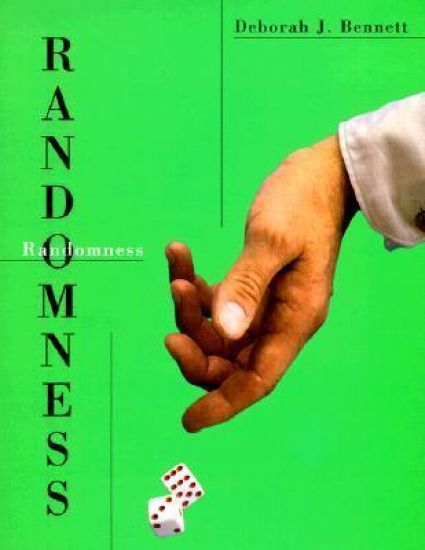
From the ancients’ first readings of the innards of birds to your neighbor’s last bout with the state lottery, humankind has put itself into the hands of chance. Today life itself may be at stake when probability comes into play—in the chance of a false negative in a medical test, in the reliability of DNA findings as legal evidence, or in the likelihood of passing on a deadly congenital disease—yet as few people as ever understand the odds. This book is aimed at the trouble with trying to learn about probability. A story of the misconceptions and difficulties civilization overcame in progressing toward probabilistic thinking, Randomness is also a skillful account of what makes the science of probability so daunting in our own day.To acquire a (correct) intuition of chance is not easy to begin with, and moving from an intuitive sense to a formal notion of probability presents further problems. Author Deborah Bennett traces the path this process takes in an individual trying to come to grips with concepts of uncertainty and fairness, and also charts the parallel path by which societies have developed ideas about chance. Why, from ancient to modern times, have people resorted to chance in making decisions? Is a decision made by random choice “fair”? What role has gambling played in our understanding of chance? Why do some individuals and societies refuse to accept randomness at all? If understanding randomness is so important to probabilistic thinking, why do the experts disagree about what it really is? And why are our intuitions about chance almost always dead wrong?Anyone who has puzzled over a probability conundrum is struck by the paradoxes and counterintuitive results that occur at a relatively simple level. Why this should be, and how it has been the case through the ages, for bumblers and brilliant mathematicians alike, is the entertaining and enlightening lesson of Randomness.
Descartes and the Ontology of Everyday Life
Deborah J. Brown; Calvin G. Normore
Oxford University Press
2019
sidottu
The seventeenth century was a period of extraordinary invention, discovery and revolutions in scientific, social and political orders. It was a time of expansive automation, biological discovery, rapid advances in medical knowledge, of animal trials and a questioning of the boundaries between species, human and non-human, between social classes, and of the assumed naturalness of political inequality. This book gives a tour through those objects, ordinary and extraordinary, which captivated the philosophical imagination of the single most important French philosopher of this period, René Descartes. Deborah J. Brown and Calvin G. Normore document Descartes' attempt to make sense of the complex, composite objects of human and divine invention, consistent with the fundamental tenets of his metaphysical system. Their central argument is that, far from reducing all the categories of ordinary experience to the two basic categories of substance, mind and body, Descartes' philosophy recognises irreducible composites that resist reduction, and require their own distinctive modes of explanation.
Architecting the Future Enterprise
Deborah J. Nightingale; Donna H. Rhodes
MIT PRESS LTD
2024
pokkari
This book surveys current archaeological and historical thinking about the dimly understood characteristics of daily life in Great Britain during the fifth and sixth centuries.Arthurian legends are immensely popular and well known despite the lack of reliable documentation about this time period in Britain. As a result, historians depend upon archaeologists to accurately describe life during these two centuries of turmoil when Britons suffered displacement by Germanic immigrants. Daily Life in Arthurian Britain examines cultural change in Britain through the fifth and sixth centuries—anachronistically known as The Dark Ages—with a focus on the fate of Romano-British culture, demographic change in the northern and western border lands, and the impact of the Germanic immigrants later known as the Anglo-Saxons. The book coalesces many threads of current knowledge and opinion from leading historians and archaeologists, describing household composition, rural and urban organization, food production, architecture, fashion, trades and occupations, social classes, education, political organization, warfare, and religion in Arthurian times. The few available documentary sources are analyzed for the cultural and historical value of their information.
Implications of Disaster Preparedness for Nursing, An Issue of Nursing Clinics of North America
Deborah J. Persell
Elsevier - Health Sciences Division
2017
sidottu
According to the Center for Research and Epidemiology of Disasters, the frequency and severity of disasters has increased over 300% in the last decade. Healthcare systems and individual healthcare practitioners, including nurses, are now fulfilling multiple roles in disaster preparedness in the whole of community: planning, preparedness, risk identification, mitigation, response and recovery. Nurses are considered first responders for biological events or when the disaster occurs where they are working. Nurses act as first receivers when accepting patients/victims for care whose injuries result from non-biological events occurring outside the nurse's workplace. The vast majority of practicing nurses received no disaster preparedness education in their basic nursing education program. Nurses graduating in the 21st century are exposed to some of the concepts of disaster nursing but have little experience unless there is a disaster or emergency where they work or go to school. Readers will be updated on this topic because articles in this edition demonstrate a vast array of implications for nurses in disaster preparedness around the world: chemical, biological, radiological/nuclear, explosives (CBRNE); natural disasters; new models of training and educating nurses for disasters, military nurse response, mental health issues as well as non-government organizations.
The Israeli-Palestinian conflict has once again captured world attention?this time because of the coming together of Arafat and Rabin as a result of the secret Oslo Accords and the reactions ensuing from this historic?and challenging?event. One Land, Two Peoples, originally published in the throes of the intifada, now brings its wide readership up to date on progress in the peace negotiations, beginning with their breakdown and subsequent stalemate following the Gulf War and the ensuing renaissance stimulated by the Oslo Accords. One Land, Two Peoples describes the Israeli-Palestinian dynamic as a conflict ?rooted in its own reality''?a struggle that, despite its international dimensions, must be resolved by the principals themselves. Throughout, Deborah Gerner shows how what is happening today is steeped in the history of the region and illustrates ways that theories of international relations can help address questions about the politics of national identity and the roles of economics, culture, religion, and outside actors in fueling or quelling the conflict.In its first edition, this text was commended for its clarity, conciseness, and balanced viewpoint. It has been used in college classrooms ranging from international relations and foreign policy to Middle East studies, religious studies, peace studies, history, English, and many more. This new and fully revised second edition includes updated maps, tables, photos, illustrations, media resources, chronology, and glossary, all of which add to the superb text presentation.
Therapeutic Assessment with Children
Deborah J. Tharinger; Dale I. Rudin; Marita Frackowiak; Stephen E. Finn
TAYLOR FRANCIS LTD
2022
sidottu
Therapeutic Assessment with Children presents a ground-breaking paradigm of psychological assessment in which children and families collaborate with the psychologist assessor to understand persistent problems and find new ways of repairing their relationships and moving forward with their lives. This paradigm is systemic, client-centered, and culturally sensitive and is applicable to families from many different backgrounds who often feel misunderstood and disempowered by traditional assessment methods. In this book, the reader will find a step-by-step description of Therapeutic Assessment with Children (TA-C), with ample teaching examples to make each step come alive. Each chapter includes detailed transcripts of assessment sessions with Henry, a ten-year-old boy, and his parents as they progress through a Therapeutic Assessment and find new ways of appreciating each other and being together. The combination of didactic and clinical material will give even new clinicians a groundwork from which to begin to practice TA-C. The volume demonstrates how the core values of TA-C—collaboration, respect, humility, compassion, openness, and curiosity—can be embedded in psychological assessment with children and families.Therapeutic Assessment with Children will be invaluable for graduate assessment courses in clinical, counseling, and school psychology and for seasoned professionals wanting to learn the TA-C model.
Therapeutic Assessment with Children
Deborah J. Tharinger; Dale I. Rudin; Marita Frackowiak; Stephen E. Finn
TAYLOR FRANCIS LTD
2022
nidottu
Therapeutic Assessment with Children presents a ground-breaking paradigm of psychological assessment in which children and families collaborate with the psychologist assessor to understand persistent problems and find new ways of repairing their relationships and moving forward with their lives. This paradigm is systemic, client-centered, and culturally sensitive and is applicable to families from many different backgrounds who often feel misunderstood and disempowered by traditional assessment methods. In this book, the reader will find a step-by-step description of Therapeutic Assessment with Children (TA-C), with ample teaching examples to make each step come alive. Each chapter includes detailed transcripts of assessment sessions with Henry, a ten-year-old boy, and his parents as they progress through a Therapeutic Assessment and find new ways of appreciating each other and being together. The combination of didactic and clinical material will give even new clinicians a groundwork from which to begin to practice TA-C. The volume demonstrates how the core values of TA-C—collaboration, respect, humility, compassion, openness, and curiosity—can be embedded in psychological assessment with children and families.Therapeutic Assessment with Children will be invaluable for graduate assessment courses in clinical, counseling, and school psychology and for seasoned professionals wanting to learn the TA-C model.
Now adopted by over 40 states, the Common Core State Standards provide a clear and consistent framework for public school systems as they develop student learning goals that define the path to readiness for college, careers, and informed citizenship. While each state is developing its own procedures for adoption of the Standards, individual teachers will continue to hold the ultimate responsibility for devising lesson plans and tailoring instruction to meet these benchmarks. Making Language Matter will help prospective and practicing teachers develop lessons to meet the benchmarks enumerated in the Standards for the English Language Arts categories: language, speaking and listening, writing, and reading. A timely text for literacy education courses, it explores language topics within these categories and suggests pedagogical approaches and activities for use in 9-12 language arts classrooms. Using a linguistics approach to unify the study of all the language arts, it engages readers in learning how to help students make purposeful language choices essential for both academic and workplace success.
The convict women who built a continent..."A moving and fascinating story." -Adam Hochschild, author of King Leopold's Ghost The Tin Ticket takes readers to the dawn of the nineteenth century and into the lives of three women arrested and sent into suffering and slavery in Australia and Tasmania-where they overcame their fates unlike any women in the world. It also tells the tale of Elizabeth Gurney Fry, a Quaker reformer who touched all their lives. Ultimately, this is a story of women who, by sheer force of will, became the heart and soul of a new nation.
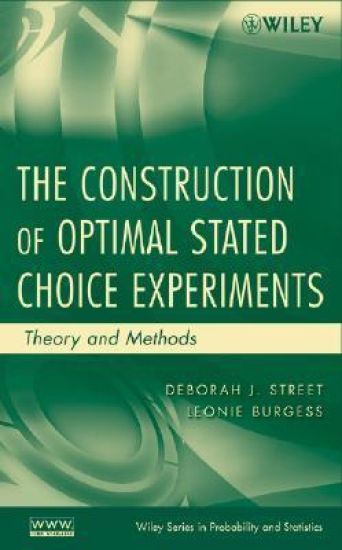
The Construction of Optimal Stated Choice Experiments
Deborah J. Street; Leonie Burgess
John Wiley Sons Inc
2007
sidottu
The most comprehensive and applied discussion of stated choice experiment constructions available The Construction of Optimal Stated Choice Experiments provides an accessible introduction to the construction methods needed to create the best possible designs for use in modeling decision-making. Many aspects of the design of a generic stated choice experiment are independent of its area of application, and until now there has been no single book describing these constructions. This book begins with a brief description of the various areas where stated choice experiments are applicable, including marketing and health economics, transportation, environmental resource economics, and public welfare analysis. The authors focus on recent research results on the construction of optimal and near-optimal choice experiments and conclude with guidelines and insight on how to properly implement these results. Features of the book include: Construction of generic stated choice experiments for the estimation of main effects only, as well as experiments for the estimation of main effects plus two-factor interactions Constructions for choice sets of any size and for attributes with any number of levels A discussion of designs that contain a none option or a common base option Practical techniques for the implementation of the constructions Class-tested material that presents theoretical discussion of optimal design Complete and extensive references to the mathematical and statistical literature for the constructions Exercise sets in most chapters, which reinforce the understanding of the presented material The Construction of Optimal Stated Choice Experiments serves as an invaluable reference guide for applied statisticians and practitioners in the areas of marketing, health economics, transport, and environmental evaluation. It is also ideal as a supplemental text for courses in the design of experiments, decision support systems, and choice models. A companion web site is available for readers to access web-based software that can be used to implement the constructions described in the book.
The ideal supplement and study guide for students preparing for advanced statistics Packed with fresh and practical examples appropriate for a range of degree-seeking students, Statistics II For Dummies helps any reader succeed in an upper-level statistics course. It picks up with data analysis where Statistics For Dummies left off, featuring new and updated examples, real-world applications, and test-taking strategies for success. This easy-to-understand guide covers such key topics as sorting and testing models, using regression to make predictions, performing variance analysis (ANOVA), drawing test conclusions with chi-squares, and making comparisons with the Rank Sum Test.
The Federal Judiciary and Institutional Change
Deborah J. Barrow; Gary Zuk; Gerard S. Gryski
Univ of Michigan Pr
1996
sidottu
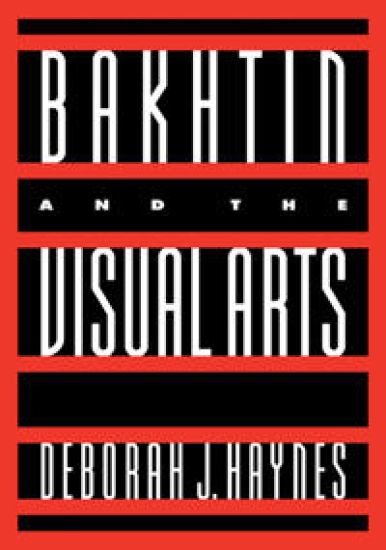
Bakhtin and the Visual Arts assesses the relevance of Mikhail Bakhtin's ideas as they relate to painting and sculpture. First published in the 1960s, Bakhtin's writings introduced the concepts of carnival and dialogue or dialogism, which have had significant impact in such diverse fields as literature and literary theory, philosophy, theology, biology and psychology. In his four early aesthetic essays, written between 1919 and 1926, and before he began to focus on linguistic and literary categories, Bakhtin worked on a larger philosophy of creativity, which was never completed. Deborah Haynes's in-depth 1995 study of his aesthetics, especially his theory of creativity, analyses its applicability to contemporary art theory and criticism. The author argues that Bakhtin, with such categories as answerability, outsideness and unfinalizability, offers a conceptual basis for interpreting the moral dimensions of creative activity.
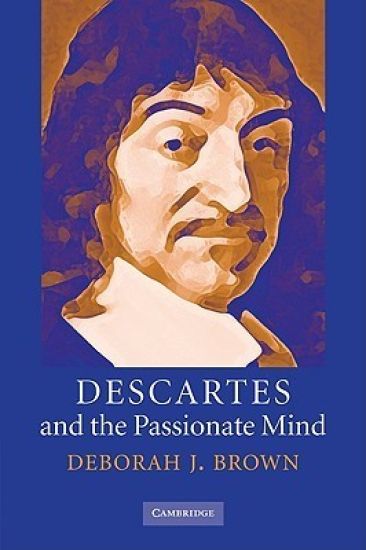
Descartes is often accused of having fragmented the human being into two independent substances, mind and body, with no clear strategy for explaining the apparent unity of human experience. Deborah Brown argues that, contrary to this view, Descartes did in fact have a conception of a single, integrated human being, and that in his view this conception is crucial to the success of human beings as rational and moral agents and as practitioners of science. The passions are pivotal in this, and in a rich and wide-ranging discussion she examines Descartes' place in the tradition of thought about the passions, the metaphysics of actions and passions, sensory representation, and Descartes' account of self-mastery and virtue. Her study is an important and original reading not only of Descartes' account of mind-body unity but also of his theory of mind.
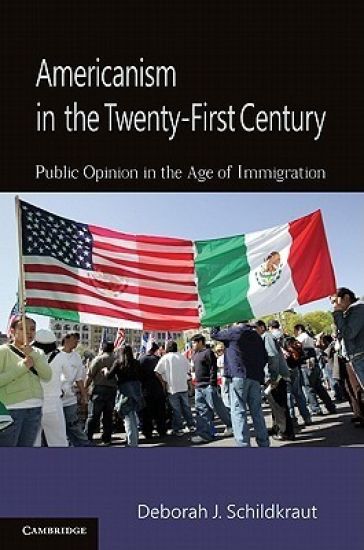
Americanism in the Twenty-First Century
Deborah J. Schildkraut
Cambridge University Press
2010
pokkari
This book explores public opinion about being and becoming American, and its implications for contemporary immigration debates. It focuses on the causes and consequences of two aspects of American identity: how people define being American and whether people think of themselves primarily as American rather than as members of a panethnic or national origin group. Importantly, the book evaluates the claim – made by scholars and pundits alike – that all Americans should prioritize their American identity instead of an ethnic or national origin identity. It finds that national identity within American democracy can be a blessing or a curse. It can enhance participation, trust, and obligation. But it can be a curse when perceptions of deviation lead to threat and resentment. It can also be a curse for minorities who are attached to their American identity but also perceive discrimination.
Americanism in the Twenty-First Century
Deborah J. Schildkraut
Cambridge University Press
2010
sidottu
This book explores public opinion about being and becoming American, and its implications for contemporary immigration debates. It focuses on the causes and consequences of two aspects of American identity: how people define being American and whether people think of themselves primarily as American rather than as members of a panethnic or national origin group. Importantly, the book evaluates the claim – made by scholars and pundits alike – that all Americans should prioritize their American identity instead of an ethnic or national origin identity. It finds that national identity within American democracy can be a blessing or a curse. It can enhance participation, trust, and obligation. But it can be a curse when perceptions of deviation lead to threat and resentment. It can also be a curse for minorities who are attached to their American identity but also perceive discrimination.
Bakhtin and the Visual Arts is the first book to assess the relevance of Mikhail Bakhtin’s ideas as they relate to painting and sculpture. First published in the 1960s, Bakhtin’s writings introduced the concepts of carnival and dialogue or dialogism, which have had significant impact in such diverse fields as literature and literary theory, philosophy, theology, biology, and psychology. In his four early aesthetic essays, written between 1919 and 1926, and before he began to focus on linguistic and literary categories, Bakhtin worked on a larger philosophy of creativity, which was never completed. Deborah Haynes’s in-depth study of his aesthetics, especially his theory of creativity, analyses its applicability to contemporary art theory and criticism. The author argues that Bakhtin, with such categories as answerability, outsideness and unfinalisability, offers a conceptual basis for interpreting the moral dimensions of creative activity.