Kirjojen hintavertailu. Mukana 11 244 527 kirjaa ja 12 kauppaa.

Kirjahaku

Etsi kirjoja tekijän nimen, kirjan nimen tai ISBN:n perusteella.

1000 tulosta hakusanalla Deborah L Roeger

God Still Speaks

God Still Speaks

Deborah L Roeger

Energion Publications
2022
pokkari
Can I hear God's voice? How can I be sure I am hearing correctly if I do? What does the Bible say about this? In this thoroughly Scripture-based guide, Bible teacher Debbie Roeger says we can. Building on a biblical foundation, she provides clear testimonies from people of various walks of life, not only hearing God speak, but putting what God says into action in more effective discipleship. God Still Speaks joins God's growing arsenal of resources about hearing His voice. A feature that distinguishes this book from others previously published is the more than 80 personal testimonies from family and friends describing their experiences of hearing God. Those testimonies make this book a valuable resource for everyone without regard to the level of experience they have hearing God's voice. The book's centerpiece is an extended discussion differentiating God's voice and the voice of the accuser. Because hearing and obeying God is how we come to know Him, proficiency is key to effective discipleship as Christ-followers.This book is suitable for individual reading but will find its most powerful role as a study for small groups, or for church-wide use.

The Power of Obedience

The Power of Obedience

Deborah L Roeger

Lost in Translation
2022
pokkari
What does God require of you? Many Christians are asking this question, and looking for an answer that is biblically founded. You can find the answer in this book.In her previous book, God Still Speaks, Deborah Roeger outlined a sound basis for hearing from God, discerning His voice, and following Him more closely as we develop the habit of listening. In this first volume of her series "Lost in Translation," she studies biblical obedience. Rather than speaking of obedience as a list of duties, she presents it as a uniquely powerful way to live.This book is rooted in the stories of Scripture, especially of the Old Testament. From those roots the study unfolds a practical, life-changing approach to discipleship based on finding God's will and joyfully joining Him.Each chapter provides a key verse and a number of scriptural examples to follow as we seek to become more effective disciples. We do this not to earn God's favor, but to align with His will and to enjoy a life of peace and communion with the God who loves us.The book contains well researched word studies which link the lessons with specific key words in Scripture. Each word study provides helpful insight into how that word is used biblically and how it informs our discipleship.This book is intended for group study, but can also be read and studied individually. It is a resource for Christian education classes wanting to dig deeper into God's Word presented in the Bible.
The Power of Hope

The Power of Hope

Deborah L Roeger

Energion Publishing
2023
pokkari
When you speak of hope, do you use the world's definition or the biblical meaning? Did you know God designed hope to empower our lives? On what do you base your hope as a Christian?In this second book under the Lost in Translation imprint, Deborah Roeger examines scripture in the light of hope. In doing so, she takes the reader through a meaningful study of all aspects of a Christian's hope. Yet this study is much more than that. As you learn about the truth of biblical hope, you will discover how understanding hope helps you appreciate and apply the teachings of scripture more effectively, both in your life and in the life of your church.There are 21 individual word studies, looking at key words in scripture that relate to hope and its application, along with an appendix explaining how to do word studies. Easy to understand guidance is provided to help avoid common pitfalls and make word studies more effective in your study.This book uses an extensive bibliography and is comprehensively referenced with hundreds of detailed footnotes. The footnotes provide the reader with the opportunity to walk through the steps the author has taken in studying this subject. It's a treasure-trove for modern Bereans who want to "search the scriptures every day to see whether these things were true" (Acts 17:11).This book is well suited for group study, but can also be read and studied individually. It is a valuable resource for Christian education classes wanting to dig deeper into the subject of biblical hope as it is presented in God's Word.
My Dwelling Place

My Dwelling Place

Deborah L Roeger

Lost in Translation
2024
pokkari
The concept of God's presence is deeply embedded in Christian teaching from God's presence in the Garden of Eden, through the hope of God's presence in the New Earth. But what does it that mean?Many Christians find it difficult to explain what is meant by God's presence. We hear of God being especially present in a worship service, or of specific places where God's presence is expected by the pilgrims who travel there. We know that God's presence was somehow in the tabernacle, and will be part of the new earth when Jesus returns. It is also taught that God is omnipresent, that is, present everywhere and always.But what is God's presence? What does it take for Him to dwell among His people and why does it matter?In this third volume under the Lost in Translation imprint, Deborah Roeger applies her in-depth and detailed yet extremely practical approach to Bible study to look at God's presence in its many forms and manifestations from the creation to the restoration of God's creation. As she traces God's dwelling presence through the pages of Scripture she looks thoughtfully at what God requires of us so He can be present among us.In the process, she provides a thematic look at the whole of scripture that can be used as a guide to study other topics with full attention to the overall context of the story we find in Scripture. It is the story of God, who created for His glory and longs for the restoration of His dwelling presence among His creation. This understanding of the broad context will help you put other events in their proper place in the history of God's plan of salvation.My Dwelling Place is not just an explanation of biblical terms. It is first of all an explanation of what it takes for God to come and dwell among us. It is then a call to take up our mission and the gifts God has given us and to learn to practice His presence at all times.As in each volume in this series, there is a valuable added resource in the appendix discussing how to do word studies and how to use both available tools for Bible study and to take the context of each passage seriously when doing so.This study can be read individually, but it is especially valuable as a resource for small group study or for a transforming church-wide study.
The Power of My Spirit

The Power of My Spirit

Deborah L Roeger

Energion Publications
2024
pokkari
Many Christians are unsure how to responsibly relate to the Holy Spirit. Two extremes are found in the church today. One extreme is to virtually ignore the Holy Spirit. The other is to focus on Holy Spirit activity to the point where the written Word is virtually pushed to the background.In this 4th volume in the Lost in Translation Bible Study Series, author Debbie Roeger seeks a God-honoring balance between these extremes. She aims to bridge the gap between conservative evangelicals and Pentecostal/charismatics, who often differ in their emphasis on the written word versus the power and ministry of the Holy Spirit.The Power of My Spirit searches both the Old Testament and the New Testament to highlight the activity of God's Spirit. As in other volumes, the topic is illuminated straight from Scripture. The use of Word Studies helps the reader gain a perspective that is both culturally and historically accurate. The frequent reliance on sound scholarly research results in a unique orientation that inseparably joins well-researched Bible study with Holy Spirit-inspired counsel. In the process, the reader learns how indispensable Holy Spirit is to every Christ-follower. A strong focus in the study is on learning how to let Him lead in every life circumstance.As with each volume in this series, there is a valuable added resource in the appendix discussing how to do Hebrew and Greek word studies using reliable internet sources.This 12-lesson study can be read individually, but it is especially valuable as a resource for small group study or for a transforming church-wide study.
Women, Girls & Psychotherapy

Women, Girls & Psychotherapy

Carol Gilligan; Annie G Rogers; Deborah L Tolman

Routledge
2016
nidottu
Adolescent girls’special needs in the teen-age years are thoroughly examined in Women, Girls & Psychotherapy, a compelling book focusing on the vitality of resistance in young girls. Drawing on studies of women’s and girls’development, clinical work with girls and women, and their personal experiences, the voices of adolescent girls are used to reframe and greater understand their resistance against debilitating conventions of feminine behavior. As adolescent girls are often overlooked in feminist books in psychotherapy, this is an important volume as it looks positively at resistance, both as a political strategy and a health-sustaining process.The chapters cover such diverse topics as reconceptualizations of women’s and girls’psychological development and the psychotherapy relationship; adolescent female sexuality; new approaches to psychological problems commonly seen in girls and women; female adolescent health; and diverse perspectives and experiences of growing up female. The voices of young women are increasingly important in the exploration of the field of psychotherapy and among the voices included are those from African-Americans, Asian-Americans, and lesbians. An enlightening look at resistance in females in the growing up years, this volume provides valuable insight on their experiences. The work of many researchers,therapists, and educators with diverse backgrounds, Women, Girls & Psychotherapy is an informative book on distinct psychological issues facing young females.
Women, Girls & Psychotherapy

Women, Girls & Psychotherapy

Carol Gilligan; Annie G Rogers; Deborah L Tolman

Routledge Member of the Taylor and Francis Group
1991
sidottu
Adolescent girls’special needs in the teen-age years are thoroughly examined in Women, Girls & Psychotherapy, a compelling book focusing on the vitality of resistance in young girls. Drawing on studies of women’s and girls’development, clinical work with girls and women, and their personal experiences, the voices of adolescent girls are used to reframe and greater understand their resistance against debilitating conventions of feminine behavior. As adolescent girls are often overlooked in feminist books in psychotherapy, this is an important volume as it looks positively at resistance, both as a political strategy and a health-sustaining process.The chapters cover such diverse topics as reconceptualizations of women’s and girls’psychological development and the psychotherapy relationship; adolescent female sexuality; new approaches to psychological problems commonly seen in girls and women; female adolescent health; and diverse perspectives and experiences of growing up female. The voices of young women are increasingly important in the exploration of the field of psychotherapy and among the voices included are those from African-Americans, Asian-Americans, and lesbians. An enlightening look at resistance in females in the growing up years, this volume provides valuable insight on their experiences. The work of many researchers,therapists, and educators with diverse backgrounds, Women, Girls & Psychotherapy is an informative book on distinct psychological issues facing young females.
Introduction to Humans in Engineered Systems

Introduction to Humans in Engineered Systems

Roger Remington; Charles L. Folk; Deborah A. Boehm-Davis

John Wiley Sons Inc
2012
sidottu
Fully up-to-date coverage of human factors engineering?plus online access to interactive demonstrations and exercises Engineering accomplishments can be as spectacular as a moon landing or as mundane as an uneventful drive to the local grocery store. Their failures can be as devastating as a plane crash or a massive oil spill. Over the past decade, psychologists and engineers have made great strides in understanding how humans interact with complex engineered systems?human engineering. Introduction to Humans in Engineered Systems provides historical context for the discipline and an overview of some of the real-world settings in which human engineering has been successfully applied, including aviation, medicine, computer science, and ground transportation. It presents findings on the nature and variety of human-engineering environments, human capabilities and limitations, and how these factors influence system performance. Important features include: Contents organized around the interaction of the human operator with the larger environment to guide the analysis of real-world situationsA web-based archive of interactive demonstrations, exercises, and links to additional readings and tools applicable to a range of application domainsWeb content customizable for focus on particular areas of study or research
The Trouble with Lawyers

The Trouble with Lawyers

Deborah L. Rhode

Oxford University Press Inc
2015
sidottu
By any measure, the law as a profession is in serious trouble. Americans' trust in lawyers is at a low, and many members of the profession wish they had chosen a different path. Law schools, with their endlessly rising tuitions, are churning out too many graduates for the jobs available. Yet despite the glut of lawyers, the United States ranks 67th (tied with Uganda) of 97 countries in access to justice and affordability of legal services. The upper echelons of the legal establishment remain heavily white and male. Most problematic of all, the professional organizations that could help remedy these concerns instead jealously protect their prerogatives, stifling necessary innovation and failing to hold practitioners accountable. Deborah Rhode's The Trouble with Lawyers is a comprehensive account of the challenges facing the American bar. She examines how the problems have affected (and originated within) law schools, firms, and governance institutions like bar associations; the impact on the justice system and access to lawyers for the poor; and the profession's underlying difficulties with diversity. She uncovers the structural problems, from the tyranny of law school rankings and billable hours to the lack of accountability and innovation built into legal governance-all of which do a disservice to lawyers, their clients, and the public. The Trouble with Lawyers is a clear call to fix a profession that has gone badly off the rails, and a source of innovative responses.
Women and Leadership

Women and Leadership

Deborah L. Rhode

Oxford University Press Inc
2016
sidottu
For most of recorded history, men have held nearly all of the most powerful leadership positions. Today, although women occupy an increasing percentage of leadership positions, in America they hold less than a fifth of positions in both the public and private sectors. The United States ranks 78th in the world for women's representation in political office. In politics, although women constitute a majority of the electorate, they account for only 18 percent of Congress, 10 percent of governors, and 12 percent of mayors of the nation's 100 largest cities. In academia, women account for a majority of college graduates, but only about a quarter of full professors and university presidents. In law, women are almost half of law school graduates, but only 17 percent of the equity partners of major firms, and 22 percent of Fortune 500 general counsels. In business, women constitute a third of MBA graduates, but only 5 percent of Fortune 500 CEOs. In Women and Leadership, the eminent legal scholar Deborah L. Rhode focuses on women's underrepresentation in leadership roles and asks why it persists and what we can do about it. Although organizations generally stand to gain from increasing gender equity in leadership, women's underrepresentation is persistent and pervasive. Rhode explores the reasons, including women's family roles, unconscious gender bias, and exclusion from professional development networks. She stresses that we cannot address the problem at the individual level; instead, she argues that we need broad-based strategies that address the deep-seated structural and cultural conditions facing women. She surveys a range of professions-politics, management, law, and academia-and draws from a survey of prominent women to develop solutions that can successfully chip away at the imbalance. These include developing robust women-to-women networks, enacting laws and policies that address work/life imbalances, and training programs that start at an earlier age. Rhode's clear exploration of the leadership gap and her compelling policy prescriptions will make this an essential book for anyone interested in leveling the playing field for women leaders in America.
What Women Want

What Women Want

Deborah L. Rhode

Oxford University Press Inc
2017
nidottu
What Women Want is a trenchant examination of the struggle for women's equality, and a prescription for what to focus on next in order to ensure maximum success. Feminism today is a movement that lacks leadership, unity, and definition, and it has gotten stuck in a boom and bust cycle when it comes to public opinion and action. Despite significant progress over the last fifty years, equality is still a distant goal in the political, social, and economic spheres. Only by identifying the barriers (both internal and external) that remain, Deborah Rhode argues, can we begin to identify solutions. A rigorously researched and well-written answer to the glut of gender-related books that have come onto the market recently, What Women Want comprehensively analyzes the challenges the feminist movement faces today. Combining sharp academic analysis and interviews with notable figures such as Sheryl Sandberg, Rhode focuses on five main topics: employment issues such as pay discrimination, work-life balance and the government's pitiful response, the assault on women's reproductive rights and the limits it places on their economic mobility, sexual harassment and violence, and the detrimental effect that the unfashionable label "feminist" can have, especially in attracting young women to the movement. Despite these formidable obstacles, the goals and principles of feminism are widely accepted by the American mainstream, and Rhode, herself a pathbreaker in the fields of law and education, offers effective strategies for redefining and advancing the feminist agenda, thereby creating a movement that truly recognizes, and is responsive to, what all women want.
Cheating

Cheating

Deborah L. Rhode

Oxford University Press Inc
2018
sidottu
Cheating is deeply embedded in everyday life. The costs of the most common forms of cheating total close to a trillion dollars annually. Part of the problem is that many individuals fail to see such behavior as a serious problem. "Everyone does it" is a common rationalization, and one that comes uncomfortably close to the truth. That perception is also self-perpetuating. The more that individuals believe that cheating is widespread, the easier it becomes to justify. Yet what is most notable about analysis of the problem is how little there is of it. Whether or not Americans are cheating more, they appear to be worrying about it less. In Cheating, eminent legal scholar Deborah Rhode offers the only recent comprehensive account of cheating in everyday life and the strategies necessary to address it. Because cheating is highly situational, Rhode drills down on its most common forms in sports, organizations, taxes, academia, copyright infringement, marriage, and insurance and mortgages. Cheating also reviews strategies necessary to address the pervasiveness and persistence of cheating in these contexts. We clearly need more cultural reinforcement of ethical conduct. Efforts need to begin early, with values education by parents, teachers, and other role models who can display and reinforce moral behaviors. Organizations need to create ethical cultures, in which informal norms, formal policies, and reward structures all promote integrity. People also need more moral triggers that remind them of their own values. Equally important are more effective enforcement structures, including additional resources and stiffer sanctions. Finally, all of us need to take more responsibility for combatting cheating. We need not only to subject our own conduct to more demanding standards, but also to assume a greater obligation to prevent and report misconduct. Sustaining a culture that actively discourages cheating is a collective responsibility, and one in which we all have a substantial stake.
Lawyers as Leaders

Lawyers as Leaders

Deborah L. Rhode

Oxford University Press Inc
2018
nidottu
No occupation in America supplies a greater proportion of leaders than law. They obviously lead law firms, but they also sit at the helm of a vast and diverse array of businesses across America, including 10 percent of S & P 500 firms. And of course, a strikingly large percentage of our political leaders are attorneys, including half the members of Congress. This raises two obvious questions: why do we look to lawyers to lead, and why do so many of them prove to be so untrustworthy and unprepared? In Lawyers as Leaders, eminent law professor Deborah Rhode not only answers these questions but crafts an essential manual for attorneys who need to develop better leadership skills. She contends that the legal profession attracts a large number of individuals with the ambition and analytic capabilities to be leaders, but often fails to develop other qualities that are essential to their effectiveness. The focus of legal education and the reward structure of legal practice undervalue the interpersonal skills and ethical commitments necessary for successful leadership. Although some lawyers are sufficiently gifted to need little reinforcement, Rhode shows that the vast majority of law school graduates need to develop the leadership characteristics that she profiles. They know it too. According to one survey, almost 90 percent of attorneys stated that their law schools did not teach them leadership skills. Given the importance of the topic, it is surprising how little the profession has done to develop leadership skills. The first serious treatment of the subject, Lawyers as Leaders will be essential to law school instructors who teach leadership courses (a growing field) and any attorney who finds him or herself in a management position.
Character

Character

Deborah L. Rhode

Oxford University Press Inc
2019
sidottu
Americans claim to care about character. Over four fifths want it taught in public schools, and 95 percent think that a president's character is important. And historically, philosophers, educators, politicians, religious leaders, judges, and the general public have agreed that character should be valued and reinforced. Yet in the United States, the institutions charged with that mission have consistently fallen short. Simply put, too little effort has been made to understand the importance of character and the strategies that can best develop and support it. After first exploring the history of the concept over time, Deborah Rhode turns her focus to the institutions that have traditionally fostered good character: families, schools, youth organizations, civic groups, and political organizations. However, as we have increasingly de-emphasized the subject-a trend that is most evident in our politics-our awareness of its shaping influence has waned. Indeed, we often focus on the wrong things when it comes to fostering good character. For instance, almost a third of the workforce is covered by licensing laws requiring good moral character, even occupations where the need for screening is not self-evident: florist, fortune teller, and frog farmers. Character also plays a pivotal role in the criminal justice system, in defining guilt, punishment, and eligibility for parole. All too often, these legal requirements are idiosyncratic, inequitable, and subject to race and class bias. Millions of Americans who have convictions for minor offenses are excluded from a vast range of occupations and benefits without evidence that such exclusion serves the public interest. We can do better, she stresses, and outlines a powerful program for reform. Rhode punctuates the book through a series of portraits of exemplary individuals whose good character made them who they were: Ida B. Wells, Jane Addams, Martin Luther King, Mother Teresa, Nelson Mandela, Albert Schweitzer, and Thurgood Marshall. All of these individuals had flaws, but through their commitments to both social justice and helping the less fortunate, they all demonstrate the power and importance of strong character.
Women and Leadership

Women and Leadership

Deborah L. Rhode

Oxford University Press Inc
2019
nidottu
For most of recorded history, men have held nearly all of the most powerful leadership positions. Today, although women occupy an increasing percentage of leadership positions, in America they hold less than a fifth of positions in both the public and private sectors. The United States ranks 78th in the world for women's representation in political office. In politics, although women constitute a majority of the electorate, they account for only 18 percent of Congress, 10 percent of governors, and 12 percent of mayors of the nation's 100 largest cities. In academia, women account for a majority of college graduates, but only about a quarter of full professors and university presidents. In law, women are almost half of law school graduates, but only 17 percent of the equity partners of major firms, and 22 percent of Fortune 500 general counsels. In business, women constitute a third of MBA graduates, but only 5 percent of Fortune 500 CEOs. In Women and Leadership, the eminent legal scholar Deborah L. Rhode focuses on women's underrepresentation in leadership roles and asks why it persists and what we can do about it. Although organizations generally stand to gain from increasing gender equity in leadership, women's underrepresentation is persistent and pervasive. Rhode explores the reasons, including women's family roles, unconscious gender bias, and exclusion from professional development networks. She stresses that we cannot address the problem at the individual level; instead, she argues that we need broad-based strategies that address the deep-seated structural and cultural conditions facing women. She surveys a range of professions in politics, management, law, and academia and draws from a survey of prominent women to develop solutions that can successfully chip away at the imbalance. These include developing robust women-to-women networks, enacting laws and policies that address work/life imbalances, and training programs that start at an earlier age. Rhode's clear exploration of the leadership gap and her compelling policy prescriptions will make this an essential book for anyone interested in leveling the playing field for women leaders in America.
The Trouble with Lawyers

The Trouble with Lawyers

Deborah L. Rhode

Oxford University Press Inc
2019
nidottu
By any measure, the law as a profession is in serious trouble. Americans' trust in lawyers is at a low, and many members of the profession wish they had chosen a different path. Law schools, with their endlessly rising tuitions, are churning out too many graduates for the jobs available. Yet despite the glut of lawyers, the United States ranks 67th (tied with Uganda) of 97 countries in access to justice and affordability of legal services. The upper echelons of the legal establishment remain heavily white and male. Most problematic of all, the professional organizations that could help remedy these concerns instead jealously protect their prerogatives, stifling necessary innovation and failing to hold practitioners accountable. In light of these circumstances, it is unsurprising that law ranked the lowest of ten occupations in a 2013 Pew survey of which profession or occupation contributes the most to society's well being. Deborah Rhode's The Trouble with Lawyers is a comprehensive account of the challenges facing the American bar. She examines how the problems have affected (and originated within) law schools, firms, and governance institutions like bar associations; the impact on the justice system and access to lawyers for the poor; and the profession's underlying difficulties with diversity. She uncovers the structural problems, from the tyranny of law school rankings and billable hours to the legal profession's almost entirely reactive response to claims of misconduct-all of which do a disservice to lawyers, their clients, and the public. A clear and pointed account of a profession that has gone badly off the rails, The Trouble with Lawyers is both an essential guide to America's legal crisis and a tool that can help fix it.
Access to Justice

Access to Justice

Deborah L. Rhode

Oxford University Press Inc
2004
sidottu
"Equal Justice Under Law." This promise appears on courthouse doors across the land. But it by no means describes what goes on inside them. Equal access to justice is one of America's most proudly proclaimed principles. And one of its most frequently violated. In theory, the United States is deeply committed to individual rights. Yet few Americans can afford the legal representation necessary to exercise them. Only one percent of the nation's lawyers serve our poorest citizens, translating to one lawyer for every 1,400 poor people. The nation with the world's greatest concentration of lawyers has one of the least accessible systems of justice. Written by America's leading expert on legal ethics, Access to Justice vividly chronicles the wide gap between the lofty aspirations and harsh realities of American justice. As Deborah L. Rhode demonstrates, America is overlawyered and underrepresented: there is too much law for those who can afford it and too little for everyone else. Although indigent defendants are entitled to legal representation, what satisfies that standard is an affront to the civilized world, and especially shameful for a nation that considers itself a world leader in human rights. Convictions are regularly upheld when lawyers are asleep, on drugs, mentally incapacitated, or even parking their car during the prosecution's case. The justice system is not only inaccessible for the poor; it is increasingly out of reach for the American middle class as well. Rhode's analysis also includes on the first comprehensive national study of lawyers' charitable pro bono work ever conducted, encompassing some 3,000 attorneys. The average lawyer, she finds, contributes less than half an hour a week and fifty cents a day in support of representation for those who cannot afford it. Access to Justice avoids both simplistic lawyer-bashing and liberal lament. Rhode outlines what could and should be done to curb frivolous litigation, but focuses her attention squarely on the far greater problem of unnecessary expense and unaffordable remedies. A scathing indictment of America's legal status quo, Access to Justice presents no mere manifesto but a reasoned and realistic agenda for lasting reform.
In the Interests of Justice

In the Interests of Justice

Deborah L. Rhode

Oxford University Press Inc
2003
nidottu
Two thousand years ago, Seneca described advocates not as seekers of truth but as accessories to injustice, "smothered by their prosperity." This unflattering assessment has only worsened over time. The vast majority of Americans now perceive lawyers as arrogant, unaffordable hired guns whose ethical practices rank just slightly above those of used car salesmen. In this penetrating new book, Deborah L. Rhode goes beyond the commonplace attacks on lawyers to provide the first systematic study of the structural problems confronting the legal profession. A past president of the Association of American Law Schools and senior counsel for the House Judiciary Committee during Clinton's impeachment proceedings, Rhode brings an insider's knowledge to the labyrinthine complexities of how the law works, or fails to work, for most Americans and often for lawyers themselves. She sheds much light on problems with the adversary system, the commercialization of practice, bar disciplinary processes, race and gender bias, and legal education. She argues convincingly that the bar's current self-regulation must be replaced by oversight structures that would put the public's interests above those of the profession. She insists that legal education become more flexible, by offering less expensive degree programs that would prepare paralegals to provide much needed low cost assistance. Most important, she calls for a return to ethical standards that put public service above economic self-interest. Elegantly written and touching on such high profile cases as the O.J. Simpson trial and the Starr investigation, In the Interests of Justice uncovers fundamental flaws in our legal system and proposes sweeping reforms.
Access to Justice

Access to Justice

Deborah L. Rhode

Oxford University Press Inc
2006
nidottu
"Equal Justice Under Law" is one of America's most proudly proclaimed and widely violated legal principles. But it comes nowhere close to describing the legal system in practice. Millions of Americans lack any access to justice, let alone equal access. Worse, the increasing centrality of law in American life and its growing complexity has made access to legal assistance critical for all citizens. Yet according to most estimates about four-fifths of the legal needs of the poor, and two- to three-fifths of the needs of middle-income individuals remain unmet. This book reveals the inequities of legal assistance in America, from the lack of access to educational services and health benefits to gross injustices in the criminal defense system. It proposes a specific agenda for change, offering tangible reforms for coordinating comprehensive systems for the delivery of legal services, maximizing individual's opportunities to represent themselves, and making effective legal services more affordable for all Americans who need them.
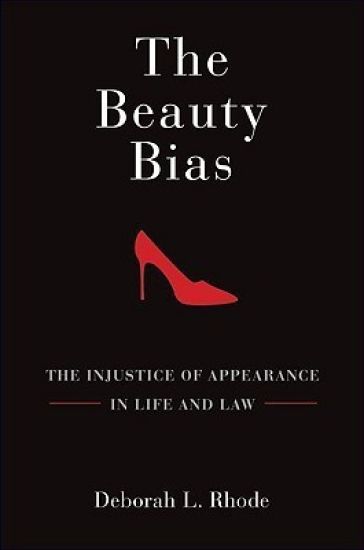
The Beauty Bias

The Beauty Bias

Deborah L. Rhode

Oxford University Press Inc
2010
sidottu
It hurts to be beautiful has been a cliché for centuries. What has been far less appreciated is how much it hurts not to be beautiful. The Beauty Bias explores our cultural preoccupation with attractiveness, the costs it imposes, and the responses it demands. Beauty may be only skin deep, but the damages associated with its absence go much deeper. Unattractive individuals are less likely to be hired and promoted, and are assumed less likely to have desirable traits, such as goodness, kindness, and honesty. Three quarters of women consider appearance important to their self image and over a third rank it as the most important factor. Although appearance can be a significant source of pleasure, its price can also be excessive, not only in time and money, but also in physical and psychological health. Our annual global investment in appearance totals close to $200 billion. Many individuals experience stigma, discrimination, and related difficulties, such as eating disorders, depression, and risky dieting and cosmetic procedures. Women bear a vastly disproportionate share of these costs, in part because they face standards more exacting than those for men, and pay greater penalties for falling short. The Beauty Bias explores the social, biological, market, and media forces that have contributed to appearance-related problems, as well as feminism's difficulties in confronting them. The book also reviews why it matters. Appearance-related bias infringes fundamental rights, compromises merit principles, reinforces debilitating stereotypes, and compounds the disadvantages of race, class, and gender. Yet only one state and a half dozen localities explicitly prohibit such discrimination. The Beauty Bias provides the first systematic survey of how appearance laws work in practice, and a compelling argument for extending their reach. The book offers case histories of invidious discrimination and a plausible legal and political strategy for addressing them. Our prejudices run deep, but we can do far more to promote realistic and healthy images of attractiveness, and to reduce the price of their pursuit.