
Kirjahaku
Etsi kirjoja tekijän nimen, kirjan nimen tai ISBN:n perusteella.
1000 tulosta hakusanalla Deborah Lynn Sutton

Historical Reflections of the Maughon and Norton Family of Pike County Alabama
Deborah Lynn Sutton
Outskirts Press
2020
pokkari

This is a "How to" set yourself free from the devil's devices that comes to attack you in areas of your life. God wants you to be free. Whom the son set free, is free indeed. This is my true life story that God told me to write to help others in need from the Devils schemes and lies.






Collective Trauma and the Psychology of Secrets in Transnational Film
Deborah Lynn Porter
Routledge
2020
nidottu
Collective Trauma and the Psychology of Secrets in Transnational Film advances a methodological line of inquiry based on a fresh insight into the ways in which cinematic meaning is generated and can be ascertained. Premised on a critical reading strategy informed by a metapsychology of secrets, the book features analyses of internationally acclaimed films—Guillermo del Torro’s Pan’s Labyrinth, Andrey Zvyagintsev’s The Return, Jee-woon Kim’s A Tale of Two Sisters, and Alejandro Amenábar’s The Others. It demonstrates how a rethinking of the figure of the secret in national film yields a new vantage point for examining heretofore unrecognized connections between collective historical experience, cinematic production and a transnational aesthetic of concealment and hiding.
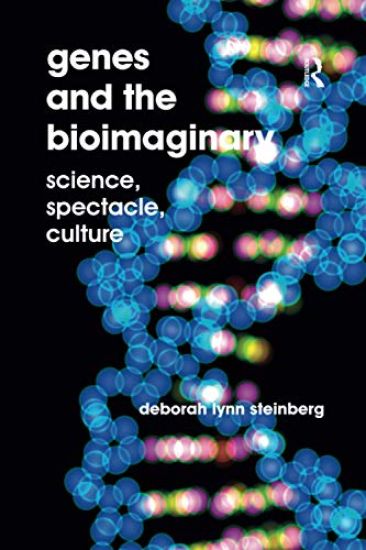
Genes and the Bioimaginary examines the dramatic rise and contemporary cultural apotheosis of 'the gene'. The book traces not only the genetification of modern life but is also a journey through the complex relationship between science and culture. At the heart of this book are three interlinked questions. The first concerns the paradigmatic transformations of the 'genetics revolution': how can we understand the impact of genes on social arenas as diverse as law and agriculture, politics and medicine, genealogy and jurisprudence? Second, how has the language of genes come to pervade public discourse - as much a trope of personal narrative as of the popular imaginary? And third, how can we gain critical purchase not only on the conditions and consequences of a particular science, but on its projective seductions, the terms of its persuasion, and the dilemmas and anxieties provoked in its wake? Through a series of illuminating case studies ranging from 'gay genes' to 'Jew genes', to genes for crime; from CSI to the Innocence Project, from genetics (post)racial imaginary to its phantasies of redemption, the book examines the emergence of the gene as a pre-eminent locus of both scientific and social explanation, and as a powerful object of spectacle, projective phantasy and attachment. Genes and the Bioimaginary makes a distinctive contribution to our understanding of how knowledge comes to be not only powerful, but plausible.


Collective Trauma and the Psychology of Secrets in Transnational Film
Deborah Lynn Porter
CRC Press Inc
2018
sidottu
Collective Trauma and the Psychology of Secrets in Transnational Film advances a methodological line of inquiry based on a fresh insight into the ways in which cinematic meaning is generated and can be ascertained. Premised on a critical reading strategy informed by a metapsychology of secrets, the book features analyses of internationally acclaimed films—Guillermo del Torro’s Pan’s Labyrinth, Andrey Zvyagintsev’s The Return, Jee-woon Kim’s A Tale of Two Sisters, and Alejandro Amenábar’s The Others. It demonstrates how a rethinking of the figure of the secret in national film yields a new vantage point for examining heretofore unrecognized connections between collective historical experience, cinematic production and a transnational aesthetic of concealment and hiding.

This unique book brings a fresh interdisciplinary approach to the analysis of ancient Chinese history, creating a historical model for the emergence of cultural mainstays by applying recent dramatic findings in the fields of neuroscience and cultural evolution. The centrality in Chinese culture of a deep reverence for the lives of preceding generations, filial piety, is conventionally attributed to Confucius (551-479 B.C.), who viewed hierarchical family relations as foundational for social order. Here, Porter argues that Confucian conceptions of filiality themselves evolved from a systemized set of behaviors and thoughts, a mental structure, which descended from a specific Neolithic mindset, and that this psychological structure was contoured by particular emotional conditions experienced by China’s earliest farmers. Using case study analysis from Neolithic sky observers to the dynastic cultures of the Shang and Western Zhou, the book shows how filial piety evolved as a structure of feeling, a legacy of a cultural predisposition toward particular moods and emotions that were inherited from the ancestral past. Porter also brings new urgency to the topic of ecological grief, linking the distress central to the evolution of the filial structure to its catalyst in an environmental crisis.With a blended multidisciplinary approach combining social neuroscience, cultural evolution, cognitive archaeology, and historical analysis, this book is ideal for students and researchers in neuropsychology, religion, and Chinese culture and history.
This unique book brings a fresh interdisciplinary approach to the analysis of ancient Chinese history, creating a historical model for the emergence of cultural mainstays by applying recent dramatic findings in the fields of neuroscience and cultural evolution. The centrality in Chinese culture of a deep reverence for the lives of preceding generations, filial piety, is conventionally attributed to Confucius (551-479 B.C.), who viewed hierarchical family relations as foundational for social order. Here, Porter argues that Confucian conceptions of filiality themselves evolved from a systemized set of behaviors and thoughts, a mental structure, which descended from a specific Neolithic mindset, and that this psychological structure was contoured by particular emotional conditions experienced by China’s earliest farmers. Using case study analysis from Neolithic sky observers to the dynastic cultures of the Shang and Western Zhou, the book shows how filial piety evolved as a structure of feeling, a legacy of a cultural predisposition toward particular moods and emotions that were inherited from the ancestral past. Porter also brings new urgency to the topic of ecological grief, linking the distress central to the evolution of the filial structure to its catalyst in an environmental crisis.With a blended multidisciplinary approach combining social neuroscience, cultural evolution, cognitive archaeology, and historical analysis, this book is ideal for students and researchers in neuropsychology, religion, and Chinese culture and history.

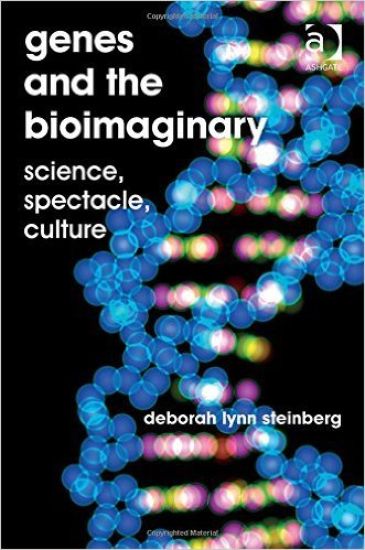
Genes and the Bioimaginary examines the dramatic rise and contemporary cultural apotheosis of 'the gene'. The book traces not only the genetification of modern life but is also a journey through the complex relationship between science and culture. At the heart of this book are three interlinked questions. The first concerns the paradigmatic transformations of the 'genetics revolution': how can we understand the impact of genes on social arenas as diverse as law and agriculture, politics and medicine, genealogy and jurisprudence? Second, how has the language of genes come to pervade public discourse - as much a trope of personal narrative as of the popular imaginary? And third, how can we gain critical purchase not only on the conditions and consequences of a particular science, but on its projective seductions, the terms of its persuasion, and the dilemmas and anxieties provoked in its wake? Through a series of illuminating case studies ranging from 'gay genes' to 'Jew genes', to genes for crime; from CSI to the Innocence Project, from genetics (post)racial imaginary to its phantasies of redemption, the book examines the emergence of the gene as a pre-eminent locus of both scientific and social explanation, and as a powerful object of spectacle, projective phantasy and attachment. Genes and the Bioimaginary makes a distinctive contribution to our understanding of how knowledge comes to be not only powerful, but plausible.


The Twain Shall Meet: The Mysterious Legacy of Samuel L. Clemens' Granddaughter, Nina Clemens Gabrilowitsch
Deborah Lynn Gosselin; Susan Madeline Bailey
Createspace Independent Publishing Platform
2014
nidottu

Upsize Woman in a Downsize World: How to Create High Self-esteem and a Positive Body Image in 21 Days
Deborah Lynn Darling
Createspace Independent Publishing Platform
2015
nidottu