Kirjojen hintavertailu. Mukana 11 244 527 kirjaa ja 12 kauppaa.

Kirjahaku

Etsi kirjoja tekijän nimen, kirjan nimen tai ISBN:n perusteella.

1000 tulosta hakusanalla Deborah Youdell

School Trouble

School Trouble

Deborah Youdell

Routledge
2010
sidottu
What is the trouble with schools and why should we want to make ‘school trouble’?Schooling is implicated in the making of educational and social exclusions and inequalities as well as the making of particular sorts of students and teachers. For this reason schools are important sites of counter- or radical- politics. In this book, Deborah Youdell brings together theories of counter-politics and radical traditions in education to make sense of the politics of daily life inside schools and explores a range of resources for thinking about and enacting political practices that make ‘school trouble’.The book offers a solid introduction to the much-debated issues of ‘intersectionality’ and the limits of identity politics and the relationship between schooling and the wider policy and political context. It pieces together a series of tools and tactics that might destabilize educational inequalities by unsettling the knowledges, meanings, practices, subjectivities and feelings that are normalized and privileged in the ‘business as usual’ of school life. Engaging with curriculum materials, teachers’ lesson plans and accounts of their pedagogy, and ethnographic observations of school practices, the book investigates a range of empirical examples of critical action in school, from overt political action pursued by educators to day-to-day pedagogic encounters between teachers and students. The book draws on the work of Michel Foucault, Judith Butler, Ernesto Laclau and Chantel Mouffe, and Gilles Deleuze and Felix Guattari to make sense of these practices and identify the political possibilities for educators who refuse to accept the everyday injustices and wide-reaching social inequalities that face us.School Trouble appears at a moment of political and economic flux and uncertainty, and when the policy moves that have promoted markets and private sector involvement in education around the globe have been subject to intense scrutiny and critique. Against this backdrop, renewed attention is being paid to the questions of how politics might be rejuvenated, how societies might be made fair, and what role education might have in pursing this. This book makes an important intervention into this terrain. By exploring a politics of discourse, an anti-identity politics, a politics of feeling, and a politics of becoming, it shows how the education assemblage can be unsettled and education can be re-imagined. The book will be of interest to advanced undergraduate and postgraduate students and scholars in the fields of education, sociology, cultural studies, and social and political science as well as to critical educators looking for new tools for thinking about their practice.
School Trouble

School Trouble

Deborah Youdell

Routledge
2010
nidottu
What is the trouble with schools and why should we want to make ‘school trouble’?Schooling is implicated in the making of educational and social exclusions and inequalities as well as the making of particular sorts of students and teachers. For this reason schools are important sites of counter- or radical- politics. In this book, Deborah Youdell brings together theories of counter-politics and radical traditions in education to make sense of the politics of daily life inside schools and explores a range of resources for thinking about and enacting political practices that make ‘school trouble’.The book offers a solid introduction to the much-debated issues of ‘intersectionality’ and the limits of identity politics and the relationship between schooling and the wider policy and political context. It pieces together a series of tools and tactics that might destabilize educational inequalities by unsettling the knowledges, meanings, practices, subjectivities and feelings that are normalized and privileged in the ‘business as usual’ of school life. Engaging with curriculum materials, teachers’ lesson plans and accounts of their pedagogy, and ethnographic observations of school practices, the book investigates a range of empirical examples of critical action in school, from overt political action pursued by educators to day-to-day pedagogic encounters between teachers and students. The book draws on the work of Michel Foucault, Judith Butler, Ernesto Laclau and Chantel Mouffe, and Gilles Deleuze and Felix Guattari to make sense of these practices and identify the political possibilities for educators who refuse to accept the everyday injustices and wide-reaching social inequalities that face us.School Trouble appears at a moment of political and economic flux and uncertainty, and when the policy moves that have promoted markets and private sector involvement in education around the globe have been subject to intense scrutiny and critique. Against this backdrop, renewed attention is being paid to the questions of how politics might be rejuvenated, how societies might be made fair, and what role education might have in pursing this. This book makes an important intervention into this terrain. By exploring a politics of discourse, an anti-identity politics, a politics of feeling, and a politics of becoming, it shows how the education assemblage can be unsettled and education can be re-imagined. The book will be of interest to advanced undergraduate and postgraduate students and scholars in the fields of education, sociology, cultural studies, and social and political science as well as to critical educators looking for new tools for thinking about their practice.
Impossible Bodies, Impossible Selves: Exclusions and Student Subjectivities
Looking across national contexts and drawing on ethnographic studies of schools in the UK and Australia, the book explores the implications of the contemporary education policy context and processes and practices inside schools for students as learners and for educational inequalities. The book uses tools offered by post-structural theory to read ethnographic data and show how the discourses that circulate inside schools at once mobilise and elide gender, sexuality, social class, ability, disability, race, ethnicity, religious and cultural belongings at the same time as they open up and close down 'who' students can be as learners. In demonstrating these processes the book offers new insights into how these 'truths' about students and learners are created and how they come to be bound so tightly to the educational inclusions, privileges and successes that some students enjoy and the exclusions, disadvantages and 'failures' that other students face.
Impossible Bodies, Impossible Selves: Exclusions and Student Subjectivities
Looking across national contexts and drawing on ethnographic studies of schools in the UK and Australia, the book explores the implications of the contemporary education policy context and processes and practices inside schools for students as learners and for educational inequalities. The book uses tools offered by post-structural theory to read ethnographic data and show how the discourses that circulate inside schools at once mobilise and elide gender, sexuality, social class, ability, disability, race, ethnicity, religious and cultural belongings at the same time as they open up and close down 'who' students can be as learners. In demonstrating these processes the book offers new insights into how these 'truths' about students and learners are created and how they come to be bound so tightly to the educational inclusions, privileges and successes that some students enjoy and the exclusions, disadvantages and 'failures' that other students face.
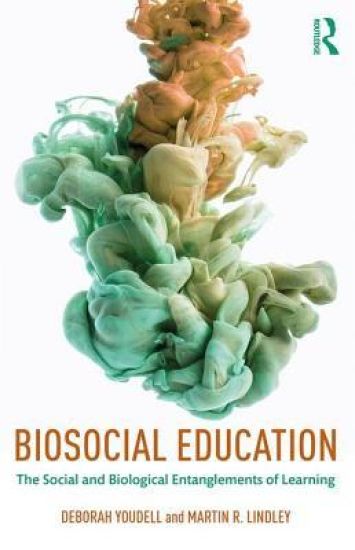
Biosocial Education

Biosocial Education

Deborah Youdell; Martin R. Lindley

Routledge
2018
sidottu
In this groundbreaking text, Youdell and Lindley bring together cutting-edge research from the fields of biology and social science to explore the complex interactions between the diverse processes which impact on education and learning.Transforming the way we think about our students, our classrooms, teaching and learning, Biosocial Education draws on advances in genetics and metabolomics, epigenetics, biochemistry and neuroscience, to illustrate how new understandings of how bodies function can and must inform educational theory, policy and everyday pedagogical practices. Offering detailed insight into new findings in these areas and providing a compelling account of both the implications and limits of this new-found knowledge, the text confronts the mechanisms of interaction between multiple biological and social factors, and explores how educators might mobilize these ‘biosocial’ influences to enhance learning and enable each child to attain educational success.By seeking out transdisciplinary and multi-factor answers to the question of how education works and how children learn, this book lays the foundations for a step-change in the way we approach learning. It is an essential read for researchers, teachers and practitioners involved in educational policy and practice at any level.
Biosocial Education

Biosocial Education

Deborah Youdell; Martin R. Lindley

Routledge
2018
nidottu
In this groundbreaking text, Youdell and Lindley bring together cutting-edge research from the fields of biology and social science to explore the complex interactions between the diverse processes which impact on education and learning.Transforming the way we think about our students, our classrooms, teaching and learning, Biosocial Education draws on advances in genetics and metabolomics, epigenetics, biochemistry and neuroscience, to illustrate how new understandings of how bodies function can and must inform educational theory, policy and everyday pedagogical practices. Offering detailed insight into new findings in these areas and providing a compelling account of both the implications and limits of this new-found knowledge, the text confronts the mechanisms of interaction between multiple biological and social factors, and explores how educators might mobilize these ‘biosocial’ influences to enhance learning and enable each child to attain educational success.By seeking out transdisciplinary and multi-factor answers to the question of how education works and how children learn, this book lays the foundations for a step-change in the way we approach learning. It is an essential read for researchers, teachers and practitioners involved in educational policy and practice at any level.
RATIONING EDUCATION

RATIONING EDUCATION

David Gillborn; Deborah Youdell

Open University Press
1999
nidottu
"This research should make us extremely sceptical that the constant search for 'higher standards' and for ever-increasing achievement scores can do much more than put in place seemingly neutral devices for restratification." - Michael W Apple, John Bascom Professor of Curriculum and Instruction and Educational Policy Studies, University of Wisconsin, MadisonRecent educational reforms have raised standards of achievement but have also resulted in growing inequalities based on 'race' and social class. School-by-school 'league tables' play a central role in the reforms. These have created an A-to-C economy where schools and teachers are judged on the proportion of students attaining five or more grades at levels A-to-C. To satisfy these demands schools are embracing new and ever more selective attempts to identify 'ability'. Their assumptions and practices embody a new IQism: a simple , narrow and regressive ideology of intelligence that labels working class and minority students as likely failures and justifies rationing provision to support those (often white, middle class boys) already marked for success. This book reports detailed research in two secondary schools showing the real costs of reform in terms of the pressures on teachers and the rationing of educational opportunity. It will be important reading for any teacher, researcher or policymaker with an interest in equality in education.
Deborah

Deborah

Cathy Phythian

Trilogy Christian Publishing
2020
pokkari
God is calling mature women of faith to rise up and pray for the younger generations. Also, we need to tell them what we have learned about God and His wonders. This is our time to use the preparation we have experienced to lead the young army of God into battle as Deborah did with confidence.
Deborah

Deborah

Phyllis J Stevens

Illumify Media
2023
pokkari
The children of Israel lived in fear of evil commander Sisera and the Canaanite army. Every day, the army stole their food and abused the people.Then the Spirit of the Lord came upon Deborah to deliver Israel. She sent word to Barak to lead the Israelite army in battle against the Canaanites. But Barak was afraid."If you will go with me, then I will go," he said. "But if you do not go, I will not go.""I'll go with you," Deborah said. "But the victory will not lead to your glory. It will be given to a woman."In Deborah, Phyllis Stevens retells the story of the courageous judge, prophetess, and military commander. You'll discover- Why God sent Deborah along with Barak to lead the Israelite army.- How God used the force of nature to fight for Israel.- How God used a single woman to kill Sisera.Read Deborah because the highest form of worship is obedience.
Deborah

Deborah

Gene Allen Groner

Createspace Independent Publishing Platform
2018
pokkari
Deborah: Prophetess and Warrior is a unique little book to keep or to give as a gift to friends and family. A New Commentary on an Old Testament heroine, the author's unusual approach will be sure to provide enjoyment for study and meditation.
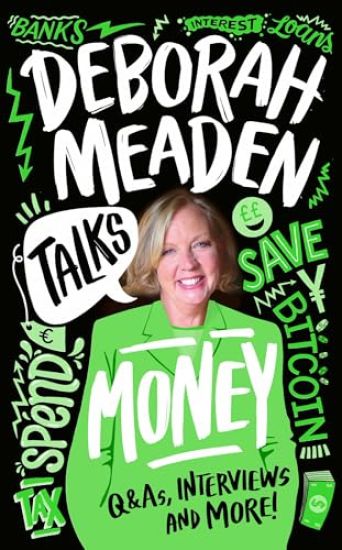
Deborah Meaden Talks Money

Deborah Meaden Talks Money

Deborah Meaden

HARPERCOLLINS PUBLISHERS
2024
nidottu
THE empowering intro to money and finance that EVERY young person needs right now, from Dragons’ Den investor and entrepreneur DEBORAH MEADEN. **Shortlisted for The Week Junior Book Awards 2025: Factual** **Longlisted for the SLA Information Book Award 2025** Finance made fun? YES, REALLY! Dragons' Den investor and entrepreneur, Deborah Meaden, makes finance exciting, relatable and personal – AT LAST! Money is such a huge part of our lives, so learning how to make it work best for YOU is a crucial skill. Knowledge is power! Whether you want to earn money, save money, set goals, or set up and grow a business, Deborah will be your personal guide, demystifying the world of finance, and sharing the knowledge and insights that have made her one of the UK’s most successful entrepreneurs. Fearful of finance? You are not alone! TALKS MONEY is packed with podcast-style interviews with ordinary young people, as well as top business people and personalities, including STEVEN BARTLETT, JOE LYCETT, GARY NEVILLE and SOPHIE ELLIS-BEXTOR, who reveal the secrets to their success – and the mistakes they’ve made along the way. Create great money habits! With Q&As, quizzes, tips and challenges, TALKS MONEY is the ONLY guide you need to building the skills and confidence you need to manage finances and reduce money worries. The empowering finance book that EVERY young person needs right now. ‘Deborah Meaden Talks Money' was a Sunday Times bestseller w/c 2024-05-21. Also available in the series: • Alastair Campbell Talks Politics – ?978-0008666125