Kirjojen hintavertailu. Mukana 11 717 486 kirjaa ja 12 kauppaa.

Kirjahaku

Etsi kirjoja tekijän nimen, kirjan nimen tai ISBN:n perusteella.

1000 tulosta hakusanalla Debra J. Rosenthal

Performatively Speaking

Performatively Speaking

Debra J. Rosenthal

University of Virginia Press
2015
sidottu
In Performatively Speaking, Debra Rosenthal draws on speech act theory to open up the current critical conversation about antebellum American fiction and culture and to explore what happens when writers use words not just to represent action but to constitute action itself. Examining moments of discursive action in a range of canonical and noncanonical works—T. S. Arthur's temperance tales, Fanny Fern's Ruth Hall, Nathaniel Hawthorne's The Scarlet Letter, Harriet Beecher Stowe's Uncle Tom's Cabin, and Herman Melville's Moby-Dick—she shows how words act when writers no longer hold to a difference between writing and doing.The author investigates, for example, the voluntary self-binding nature of a promise, the formulaic but transformative temperance pledge, the power of Ruth Hall's signature or name on legal documents, the punitive hate speech of Hester Prynne's scarlet letter A, the prohibitory vodun hex of Simon Legree's slave Cassy, and Captain Ahab's injurious insults to second mate Stubb. Through her comparative methodology and historicist and feminist readings, Rosenthal asks readers to rethink the ways that speech and action intersect.
Performatively Speaking

Performatively Speaking

Debra J. Rosenthal

University of Virginia Press
2015
nidottu
In Performatively Speaking, Debra Rosenthal draws on speech act theory to open up the current critical conversation about antebellum American fiction and culture and to explore what happens when writers use words not just to represent action but to constitute action itself. Examining moments of discursive action in a range of canonical and noncanonical works—T. S. Arthur's temperance tales, Fanny Fern's Ruth Hall, Nathaniel Hawthorne's The Scarlet Letter, Harriet Beecher Stowe's Uncle Tom's Cabin, and Herman Melville's Moby-Dick—she shows how words act when writers no longer hold to a difference between writing and doing.The author investigates, for example, the voluntary self-binding nature of a promise, the formulaic but transformative temperance pledge, the power of Ruth Hall's signature or name on legal documents, the punitive hate speech of Hester Prynne's scarlet letter A, the prohibitory vodun hex of Simon Legree's slave Cassy, and Captain Ahab's injurious insults to second mate Stubb. Through her comparative methodology and historicist and feminist readings, Rosenthal asks readers to rethink the ways that speech and action intersect.
Race Mixture in Nineteenth-Century U.S. and Spanish American Fictions

Race Mixture in Nineteenth-Century U.S. and Spanish American Fictions

Rosenthal Debra J.

The University of North Carolina Press
2004
nidottu
Race mixture has played a formative role in the history of the Americas, from the western expansion of the United States to the political consolidation of emerging nations in Latin America. Debra J. Rosenthal examines nineteenth-century authors in the United States and Spanish America who struggled to give voice to these contemporary dilemmas about interracial sexual and cultural mixing. Rosenthal argues that many literary representations of intimacy or sex took on political dimensions, whether advocating assimilation or miscegenation or defending the status quo. She also examines the degree to which novelists reacted to beliefs about skin differences, blood taboos, incest, desire, or inheritance laws. Rosenthal discusses U.S. authors such as James Fenimore Cooper, Catharine Maria Sedgwick, Walt Whitman, William Dean Howells, and Lydia Maria Child as well as contemporary novelists from Cuba, Peru, and Ecuador, such as Gertrudis Gomez de Avellaneda, Clorinda Matto de Turner, and Juan Leon Mera. With her multinational approach, Rosenthal explores the significance of racial hybridity to national and literary identity and participates in the wider scholarly effort to broaden critical discussions about America to include the Americas.
Teacher Supervision that Works

Teacher Supervision that Works

Debra J. Anderson; Robert Major; Richard Mitchell

Praeger Publishers Inc
1992
sidottu
The need for outstanding university supervisors who balance the needs and interests of the student teacher, the university, and the K-12 school has never been greater. Teacher supervisors are the link between institutions of higher learning and public and private schools. This work is a practical guide for university supervisors that examines the supervisory process, the preparation necessary for supervision, the responsibilities of the university supervisor, the historical assumption underlying the supervisory role, and what research tells us about effective supervision. This work also provides background information on topics such as discipline in the schools and curricular concerns, and summarizes research about what the supervisor needs to know on the philosophical, psychological, and sociological foundations of education. Practical suggestions and sound advice are provided on major questions and issues such as: What should I tell the cooperating teacher about writing final evaluations? What should I tell the student teacher about presenting incorrect information? What do I look for while observing the student teacher? How do I conduct an effective conference? How should I plan a seminar? University supervisors will gain a better understanding of their own role and responsibilities in working with student and cooperating teachers as well as an appreciation of the work of the cooperating teacher. Likewise, student and cooperating teachers will gain similar understandings.
Hope, Intolerance, and Greed

Hope, Intolerance, and Greed

Debra J. Anderson; Robert Major; Richard Mitchell

Praeger Publishers Inc
1995
sidottu
In many ways America is in worse shape than before the first Watts riots occurred over 25 years ago. Intolerance is still abundant; greed is very much alive; and hope held by many at the bottom has been dimmed, if not extinguished. For our country to become everything it is capable of becoming and everything our ancestors dreamed, education cannot continue as usual. Ours is a great country, but when even one of its citizens is made to feel less than human or is robbed of their dignity, something is wrong. Hope, Intolerance, and Greed: A Reality Check for Teachers encourages teachers to question the status quo and to reexamine their power to influence the direction our country takes into the 21st century. It also encourages teachers to acknowledge the realities that exist, teach the rejection of violence, and promote an awareness and understanding of people as individuals.
An American Story

An American Story

Debra J. Dickerson

Random House USA Inc
2001
pokkari
A profoundly courageous and insightful memoir, An American Story documents the events that have shaped journalist Debra Dickerson's conscience. The daughter of former sharecroppers, Dickerson never imagined she would emerge from her squalid St. Louis neighborhood to become an acclaimed journalist with a Harvard Law degree. A constant reader and a straight-A student, nevertheless Dickerson's lack of confidence kept her from accepting the many colleges offers she received. Instead she enlisted in the U.S. Air Force, quickly rising through the ranks. In spite of her success, she recognized within herself deep-seated conflict at being a working class black woman living in a white man's world. Her path to self-acceptance is at the heart of this refreshing narrative.
Energy Lines

Energy Lines

Debra J Robinson

Purple Flower Films
2017
pokkari
"Energy Lines" is a collection of short stories that reflect on death by considering how the challenges of life are really the machinery that moves life along. The stories are from the different phases of reaching adulthood and understanding life choices. Love and death come together in sometimes humorous situations to advance the characters to a new level in their lives. The story "May" is comical yet tells the sad story of a man without definition. His niece uncovers the mystery of his death and is able to make some definite decisions about her life."Lucky Dog" is about opening up to the pain of love in order to have love.In "Shadows of Life" a teenage girl losses her narcissism when she experiences the suicide death of a friend."Cures" deals with the obsession of alternatives to what ails us and finally making the effort to jump in feet first and deal with the ills of the world.The send out a message of growth, understanding through family relationships.
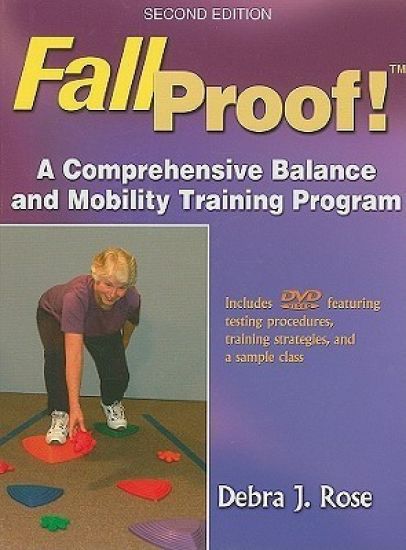
Fallproof!

Fallproof!

Debra J. Rose

Human Kinetics
2009
muu
The second edition of FallProof! continues to be the only text to address the multiple dimensions that contribute to balance and mobility. By exploring the reasons underlying falls, readers gain the knowledge to offer more comprehensive assessment and programming. This research-based approach is field tested and has shown considerable success in a range of instructional settings, including community-based and residential care environments. The FallProof! program is customizable for individual clients, with exercise progressions for early, middle, and late class modules. In addition, it offers the following benefits: • Flexibility. Program participants can engage in group activities that take into account their individual abilities so that the program is not too easy or too difficult for them. • Guidance. Safe and easy ways of presenting each of the program’s exercise components are illustrated, addressing issues ranging from safety concerns to the best ways to offer feedback to participants. • Supplemental materials. Reproducible health, assessment, and program-related questionnaires help instructors gather crucial information for effective programming. • Results. The FallProof! program has been proven to reduce the risk of falling in participants who’ve completed one or more rotations of the program. Now packaged with a DVD, this second edition makes the information in the text applicable to real situations. The bound-in DVD shows how to administer key screening and assessment tests, demonstrates selected exercise progressions for the major program modules, and features a sample FallProof! class session in action.
Managing Elites

Managing Elites

Debra J. Schleef

Rowman Littlefield Publishers
2005
sidottu
How does one become a member of an elite profession? Managing Elites examines how elites-in-training contest, rationalize and ultimately enthusiastically embrace their dominant positions in society. Using interviews with 79 law and MBA students, the author argues that elite socialization requires both accommodation and resistance to professional ideologies. Students develop a collective cynicism about elements of their education, learning that their discipline imparts esoteric knowledge — but also claiming that they didn't learn anything. They struggle with the idea that fellow students are all equally intelligent and therefore deserving of elite status, and the continuing emphasis on activities that sort students. Students resist that paths to success promoted by school cultures—investment banking, consulting, or becoming partner in a large law firm. Such cynicism is indeed ultimately revealed to be temporary, as most students end up in full support of these "jobs of least resistance". Their critiques do, however, create tensions: between competition and cooperation, between the individual and the collective, and between egalitarianism and elitism. Part of elite socialization is learning to deal with these tensions, or more specifically, to hold contradictory ideals at the same time.
Managing Elites

Managing Elites

Debra J. Schleef

Rowman Littlefield Publishers
2005
nidottu
How does one become a member of an elite profession? Managing Elites examines how elites-in-training contest, rationalize and ultimately enthusiastically embrace their dominant positions in society. Using interviews with 79 law and MBA students, the author argues that elite socialization requires both accommodation and resistance to professional ideologies. Students develop a collective cynicism about elements of their education, learning that their discipline imparts esoteric knowledge — but also claiming that they didn't learn anything. They struggle with the idea that fellow students are all equally intelligent and therefore deserving of elite status, and the continuing emphasis on activities that sort students. Students resist that paths to success promoted by school cultures—investment banking, consulting, or becoming partner in a large law firm. Such cynicism is indeed ultimately revealed to be temporary, as most students end up in full support of these 'jobs of least resistance'. Their critiques do, however, create tensions: between competition and cooperation, between the individual and the collective, and between egalitarianism and elitism. Part of elite socialization is learning to deal with these tensions, or more specifically, to hold contradictory ideals at the same time.
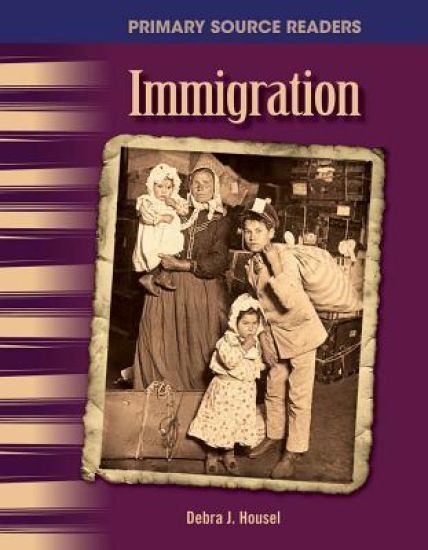
Immigration

Immigration

Debra J. Housel

Teacher Created Materials
2007
nidottu
Immigrants from all over Europe flocked to America in the 1800s, bringing their hopes and their dreams with them. This fascinating title allows readers to discover topics such as Ellis Island, Angel Island, and assimilation. The influx of immigrants enriched the American culture but also provided challenges to the United States. Through appealing images, a vibrant scrapbook layout, stunning facts, intriguing sidebars, and a helpful glossary and index, readers will be excited and engaged from cover to cover
Historical Dictionary of U.S. Diplomacy from the Revolution to Secession
Historical Dictionary of U.S. Diplomacy from the Revolution to Secession covers the period from 1776, when the nation declared its independence from Great Britain, through 1861, when the Civil War presented the biggest challenge to the continuation of the “republican experiment.” Probably the most common misconception about the diplomatic history of this period is that American leaders tried to stay isolated from world events, when in fact the early United States was part of “one grand, interwoven tapestry” of nations. The Historical Dictionary of U.S. Diplomacy from the Revolution to Secession relates the events of this crucial period in American history through a chronology, an introductory essay, and several hundred cross-referenced dictionary entries on key persons, places, events, institutions, and organizations. This book is an excellent access point for students, researchers, and anyone wanting to know more about American diplomacy.
Maria Martin's World

Maria Martin's World

Debra J. Lindsay

The University of Alabama Press
2018
sidottu
The first book-length treatment of one of John James Audubon’s background painters.Maria Martin (1796–1863) was an evangelical Lutheran from Charleston, South Carolina, who became an accomplished painter within months of meeting John James Audubon. Martin met Audubon through her brother-in-law, Reverend John Bachman, who befriended Audubon while passing through Charleston on route to Florida where he expected to find new avian species. Martin was an amateur artist, but by the time Audubon left, she had familiarized herself with his style of drawing. Six months after their initial meeting, her background botanicals were deemed good enough to embellish Audubon’s exquisite bird paintings.Martin’s botanicals and insects appeared in volumes two and four of The Birds of America (1830–1838). She painted snakes for John Edwards Holbrook’s North American Herpetology (1842) and assisted in drafting the descriptive taxonomies prepared by John Bachman—who later became her husband in 1848 following the death of her older sister—for The Viviparous Quadrupeds of North America (1846–1854). Until now, her contributions have been unknown to all but the most astute students of natural history and art history and a close circle of family and friends.Maria Martin’s World is a heavily illustrated volume examining how Maria Martin learned to paint aesthetically beautiful botanicals with exacting accuracy. Drawing on deep research into archival documents and family-held artifacts, Debra Lindsay brings Maria Martin out from behind the curtain of obscurity and disinformation that has previously shrouded her and places her centrally in her own time and milieu. In the telling of Maria Martin’s story, Lindsay also uncovers many nuances of the behavior and actions of the two prominent men in her life that readers interested in Audubon and Bachman will find noteworthy.Martin was a gifted artist recognized for having contributed beautiful paintings to a natural history. But beyond the natural world this is a biography of an evangelical Lutheran steeped in the faith of her German ancestors and raised to respect the patriarchal norms of her time. Maria Martin pursued her scientific and artistic interests only when they did not conflict with her religious and familial responsibilities.
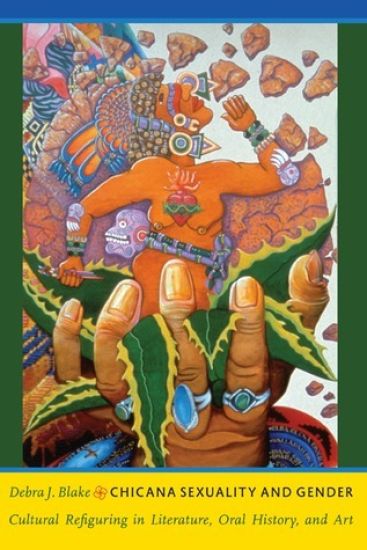
Chicana Sexuality and Gender

Chicana Sexuality and Gender

Debra J. Blake

Duke University Press
2008
sidottu
Since the 1980s Chicana writers including Gloria Anzaldúa, Cherríe Moraga, Sandra Cisneros, Ana Castillo, and Alma Luz Villanueva have reworked iconic Mexican cultural symbols such as mother earth goddesses and La Llorona (the Wailing Woman of Mexican folklore), re-imagining them as powerful female figures. After reading the works of Chicana writers who created bold, powerful, and openly sexual female characters, Debra J. Blake wondered how everyday Mexican American women would characterize their own lives in relation to the writers’ radical reconfigurations of female sexuality and gender roles. To find out, Blake gathered oral histories from working-class and semiprofessional U.S. Mexicanas. In Chicana Sexuality and Gender, she compares the self-representations of these women with fictional and artistic representations by academic-affiliated, professional intellectual Chicana writers and visual artists, including Alma M. López and Yolanda López.Blake looks at how the Chicana professional intellectuals and the U.S. Mexicana women refigure confining and demeaning constructions of female gender roles and racial, ethnic, and sexual identities. She organizes her analysis around re-imaginings of La Virgen de Guadalupe, La Llorona, indigenous Mexica goddesses, and La Malinche, the indigenous interpreter for Hernán Cortés during the Spanish conquest. In doing so, Blake reveals how the professional intellectuals and the working-class and semiprofessional women rework or invoke the female icons to confront the repression of female sexuality, limiting gender roles, inequality in male and female relationships, and violence against women. While the representational strategies of the two groups of women are significantly different and the U.S. Mexicanas would not necessarily call themselves feminists, Blake nonetheless illuminates a continuum of Chicana feminist thinking, showing how both groups of women expand lifestyle choices and promote the health and well-being of women of Mexican origin or descent.
Chicana Sexuality and Gender

Chicana Sexuality and Gender

Debra J. Blake

Duke University Press
2008
pokkari
Since the 1980s Chicana writers including Gloria Anzaldúa, Cherríe Moraga, Sandra Cisneros, Ana Castillo, and Alma Luz Villanueva have reworked iconic Mexican cultural symbols such as mother earth goddesses and La Llorona (the Wailing Woman of Mexican folklore), re-imagining them as powerful female figures. After reading the works of Chicana writers who created bold, powerful, and openly sexual female characters, Debra J. Blake wondered how everyday Mexican American women would characterize their own lives in relation to the writers’ radical reconfigurations of female sexuality and gender roles. To find out, Blake gathered oral histories from working-class and semiprofessional U.S. Mexicanas. In Chicana Sexuality and Gender, she compares the self-representations of these women with fictional and artistic representations by academic-affiliated, professional intellectual Chicana writers and visual artists, including Alma M. López and Yolanda López.Blake looks at how the Chicana professional intellectuals and the U.S. Mexicana women refigure confining and demeaning constructions of female gender roles and racial, ethnic, and sexual identities. She organizes her analysis around re-imaginings of La Virgen de Guadalupe, La Llorona, indigenous Mexica goddesses, and La Malinche, the indigenous interpreter for Hernán Cortés during the Spanish conquest. In doing so, Blake reveals how the professional intellectuals and the working-class and semiprofessional women rework or invoke the female icons to confront the repression of female sexuality, limiting gender roles, inequality in male and female relationships, and violence against women. While the representational strategies of the two groups of women are significantly different and the U.S. Mexicanas would not necessarily call themselves feminists, Blake nonetheless illuminates a continuum of Chicana feminist thinking, showing how both groups of women expand lifestyle choices and promote the health and well-being of women of Mexican origin or descent.
Engaging Babies in the Library

Engaging Babies in the Library

Debra J. Knoll; Virginia A. Walter

ALA Editions
2016
nidottu
Public libraries across the nation continue to transform themselves into learning centers for infants, toddlers, and preschoolers. There are many resources available to help librarians create baby-friendly play spaces and enhanced storytimes, but until now there has been gap in the literature addressing the developmental needs and changing behaviors of babies and toddlers. Parents and caregivers can also present unique service challenges. Focusing squarely on the how of providing quality library service to babies and families, Knoll’s new book provides sensible, sensitive advice on meeting their physical, emotional, intellectual, and social needs. Geared towards helping public libraries foster healthy growth and development for their littlest patrons, this book:explores multiple aspects in the developing life of a baby, discussing physical needs, emotional expressions, intellectual pursuits, and social development;highlights real-life examples from public libraries that relate to how these developmental processes present themselves while babies and families interact in the library;presents Baby Steps for each topical area, providing service tips and suggestions that can be easily or inexpensively put into practice;offers Big Steps, conversational points that invite librarians to think creatively about further investment, support, funding, and collaborative efforts; andincludes carefully selected research findings and other information that can be used for planning, policymaking, and advocacy. With Knoll’s guidance, children‘s librarians will be informed and inspired to rise to the challenge of providing quality service to babies, toddlers, and care providers.
Pilgrimage to Rome in the Middle Ages

Pilgrimage to Rome in the Middle Ages

Debra J. Birch

The Boydell Press
1998
pokkari
Year 2000 is a Jubilee year for the Catholic church and very large numbers are expected to make the pilgrimage to Rome. Debra Birch's lively account of pilgrimage to Rome throughout the medieval period is well-documented and clearly presented. HISTORY TODAY [Emma Mason]Well researched, clearly written, and, quite apart from the eternal city, provides an excellent introduction to pilgrimage as a whole. CHURCH TIMES [Nicholas Orme] Rome was one of the major pilgrim destinations in the middle ages. The belief that certain objects and places were a focus of holiness where pilgrims could come closer to God had a long history in Christian tradition; in the case of Rome, the tradition developed around two of the city's most important martyrs, Christ's apostles Peter and Paul. So strong were the city'sassociations with these apostles that pilgrimage to Rome was often referred to as pilgrimage `to the threshold of the apostles'. Debra Birch conveys a vivid picture of the world of the medieval pilgrim to Rome - the Romipetae, or `Rome-seekers' - covering all aspects of their journey, and their life in the city itself. DEBRA BIRCH is assistant secretary at the Institute of Historical Research. CONTENTS The Cult of Saints and Pilgrimage to Rome. The Journey to Rome . Obligations and Privileges . Rome of the Pilgrim I . Rome of the Pilgrim II . Welfare Provisions for Pilgrims in Rome . The Popularity of Pilgrimage to Rome in the 12th Century . The 13th-Century Revival.